


Metal Filter Compressor
In the landscape of industrial compressed air and gas systems, the integrity of filtration components directly dictates the operational efficiency and longevity of the entire system. While disposable media such as paper or synthetic fibers are common in light-duty applications, heavy-duty industrial environments require the robustness of a metal filter compressor solution. These components, primarily constructed from high-grade stainless steel, provide the mechanical strength, thermal stability, and chemical resistance necessary to handle the rigorous demands of reciprocating, screw, and centrifugal compressors.
For engineers and procurement professionals, selecting the correct filtration media involves balancing particulate removal efficiency with energy consumption and maintenance cycles. As a specialized manufacturer of custom stainless steel filtration solutions, Kaifil provides the technical expertise required to navigate these complexities. Detailed product specifications and application support can be found on our Main Page.
The Critical Role of Filtration in Compressor Systems
Compressors are inherently susceptible to contamination from three primary sources: the ambient intake air, the internal mechanical wear of the compressor itself, and the lubricants used within the system. A metal filter compressor assembly is typically deployed in several critical stages to mitigate these risks.
Intake Air Filtration
At the point of entry, filters must remove atmospheric dust, pollen, and other airborne particulates. If these contaminants enter the compression chamber, they can cause abrasive wear on pistons, vanes, and screws, leading to premature mechanical failure. Metal mesh filters are often preferred here for their high flow capacity and ability to be cleaned and reused.
Oil-Gas Separation
In oil-injected screw compressors, the lubricant must be separated from the compressed air before it reaches the downstream processes. Metal filter elements, often utilizing sintered mesh or multi-layer wire cloth, provide the structural rigidity required to withstand the high-pressure differentials encountered during the separation process.
Discharge and Point-of-Use Filtration
Once the air is compressed, it may still contain trace amounts of oil aerosols or fine particulates generated by internal friction. Metal filters located in the discharge line ensure that the air meeting the final application—whether it is pneumatic tool operation, food processing, or pharmaceutical manufacturing—is free of harmful contaminants.
Engineering Advantages of Stainless Steel Media
Choosing a metal filter compressor element over a disposable alternative is driven by specific engineering requirements that non-metallic media cannot meet. Stainless steel, particularly AISI 304 and 316L, offers several distinct advantages.
High Pressure and Differential Pressure Resistance
Industrial compressors operate under significant internal pressures. Disposable filters can collapse or bypass if the pressure differential ($ΔP$) becomes too high due to loading. Metal filters are engineered with internal support cores and outer protective shrouds, allowing them to maintain structural integrity even under extreme pressure surges.
Thermal Stability
The process of compression generates significant heat. While synthetic fibers may soften or degrade at elevated temperatures, stainless steel filters maintain their mechanical properties and filtration accuracy at temperatures exceeding 400°C. This makes them indispensable for high-temperature gas compression and steam filtration.
Chemical Compatibility
In chemical processing or offshore environments, the compressed medium may be corrosive. Stainless steel provides excellent resistance to a wide range of acids, alkalis, and salts. For highly aggressive environments, specialized alloys like Hastelloy or Monel can be utilized in the filter construction to prevent oxidation and material degradation.
Types of Metal Filter Media for Compressors
Not all metal filters are created equal. The specific construction of the media determines its filtration efficiency, dirt-holding capacity, and flow resistance.
Sintered Wire Mesh
Sintered mesh is created by bonding multiple layers of woven wire cloth together using a high-temperature vacuum sintering process. This results in a porous material that combines the fine filtration of the inner layers with the mechanical strength of the outer support layers. It is an ideal choice for a metal filter compressor element that requires precise micron ratings and high durability.
Pleated Metal Cloth
To maximize the surface area within a compact filter housing, stainless steel wire cloth can be pleated. This design significantly increases the dirt-holding capacity and reduces the initial pressure drop. Pleated elements are frequently used in high-flow compressor discharge lines where energy efficiency is a primary concern.
Sintered Metal Fiber (Felt)
For applications requiring ultra-fine filtration (down to 1 micron or less), sintered metal fibers provide a high-porosity depth media. This structure offers a higher dirt-holding capacity than traditional woven mesh, extending the service life of the filter between cleaning cycles.
Performance Evaluation and Selection Criteria
When specifying a metal filter for a compressor system, engineers must evaluate several performance metrics to ensure the component is fit for purpose.
Micron Rating: Absolute vs. Nominal
It is critical to distinguish between nominal and absolute micron ratings. A nominal rating indicates the filter's ability to retain a major percentage of particles of a certain size, whereas an absolute rating (determined through bubble point testing) signifies the diameter of the largest hard spherical particle that will pass through the filter. For critical compressor components, absolute-rated filters are generally required to prevent any bypass of damaging particulates.
Pressure Drop and Energy Efficiency
The pressure drop across a filter element represents a direct energy cost. A higher $ΔP$ requires the compressor to work harder to maintain the desired discharge pressure. Metal filters, with their precisely controlled pore structures, can be engineered to provide the required filtration efficiency with the lowest possible resistance to flow.
Flow Rate and Velocity
The velocity of the gas or air passing through the filter media affects both the filtration efficiency and the mechanical stress on the media. Filters must be sized correctly to ensure that the face velocity does not exceed the manufacturer's recommendations, which could lead to particle migration or media deformation.
Customization and OEM Integration
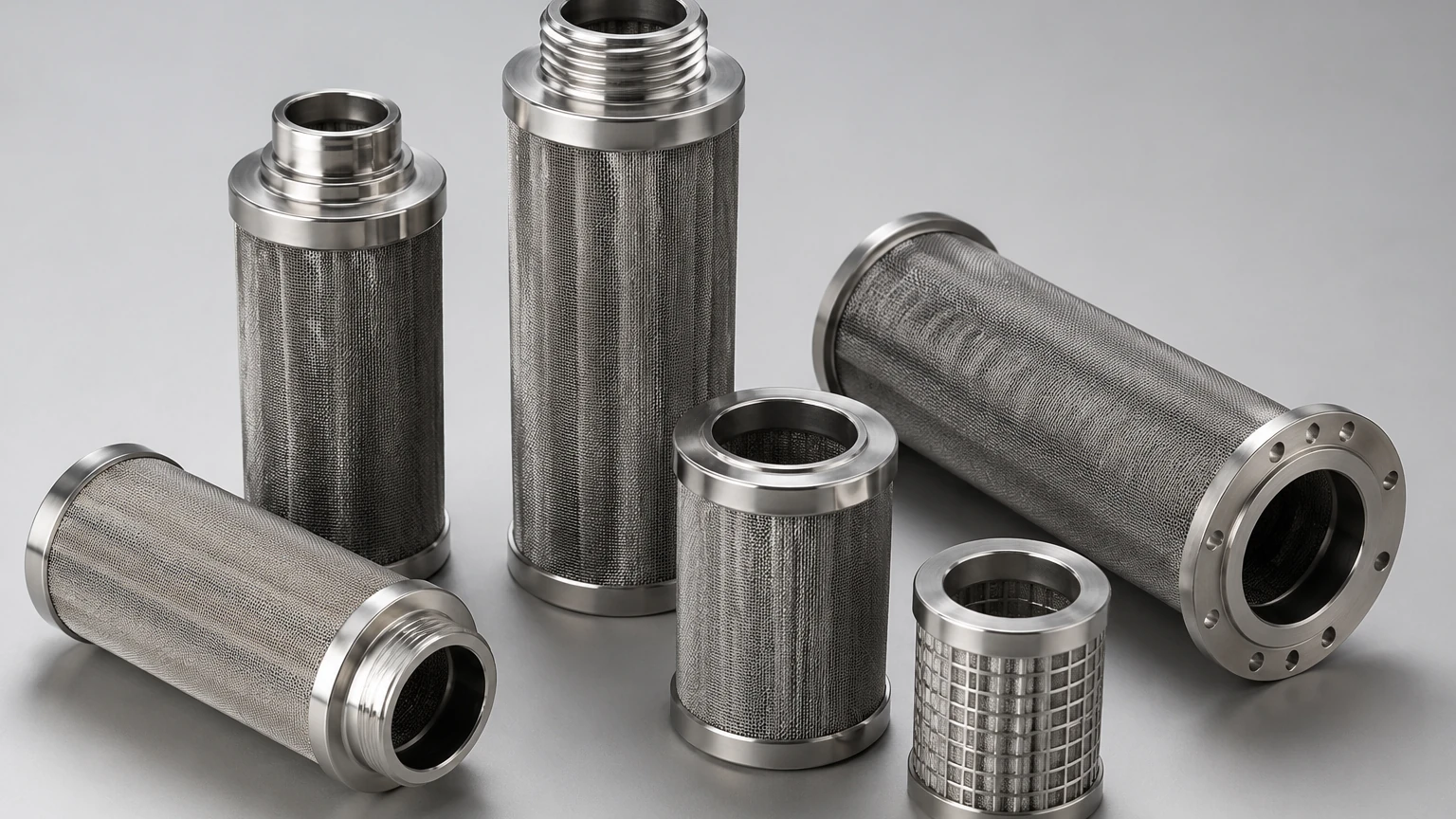
Industrial compressors often feature proprietary housing designs that require custom-engineered filter elements. Standard off-the-shelf filters may not provide the necessary fit or performance characteristics. Kaifil specializes in the development of bespoke metal filter compressor components tailored to specific OEM requirements.
Customization options include:
* Dimensional Accuracy: Custom lengths, diameters, and end-cap configurations (e.g., threaded, flange, or O-ring seals).
* Material Selection: Choosing the appropriate grade of stainless steel or specialized alloys based on the operating environment.
* Reinforced Structures: Adding internal or external support cages to handle high-vibration or high-pulsation environments common in reciprocating compressors.
* Layer Configuration: Optimizing the number and type of sintered layers to achieve the perfect balance of strength and filtration fineness.
By working closely with engineering teams, we ensure that the filtration component is fully integrated into the compressor's design, optimizing both space and performance. For more information on our engineering capabilities, please visit our Main Page.
Maintenance, Cleaning, and Total Cost of Ownership
One of the most compelling arguments for adopting metal filters in compressor systems is the reduction in the Total Cost of Ownership (TCO). While the initial purchase price of a stainless steel filter is higher than that of a disposable one, the long-term savings are substantial.
Cleanability and Reusability
Unlike disposable filters that must be discarded once they reach their terminal pressure drop, metal filters can be cleaned and returned to service. Common cleaning methods include:
* Ultrasonic Cleaning: High-frequency sound waves create cavitation bubbles that dislodge contaminants from deep within the pore structure.
* Backwashing: Reversing the flow of a cleaning fluid or gas through the filter to push out trapped particles.
* Chemical Cleaning: Using compatible solvents or acids to dissolve accumulated oils or mineral deposits.
Reduced Downtime and Waste
The durability of metal filters means fewer filter changes and less system downtime. Additionally, the elimination of disposable filter waste aligns with corporate sustainability goals and reduces disposal costs, especially if the filters are contaminated with hazardous oils or chemicals.
Monitoring Filter Health
To maximize the life of a metal filter compressor element, it is essential to monitor the differential pressure across the filter. Installing $ΔP$ gauges or sensors allows maintenance teams to clean the filters at the optimal time—preventing both unnecessary cleaning cycles and the risk of filter bypass or collapse due to excessive loading.
Conclusion
The selection of a metal filter compressor solution is a strategic decision that impacts the reliability, efficiency, and operating cost of industrial compressed air systems. By utilizing high-grade stainless steel and advanced manufacturing techniques like sintering and pleating, these filters provide a level of performance that disposable media cannot match. Whether for intake protection, oil separation, or high-purity discharge, metal filters offer the mechanical strength and thermal stability required for the most demanding industrial environments.
As a dedicated manufacturer, Kaifil is committed to providing the engineering support and high-quality components necessary to optimize your filtration processes. We invite you to explore our full range of custom stainless steel filtration solutions and technical resources on our Main Page to find the ideal match for your specific compressor application.
