


Metal Filter Mesh
In industrial filtration, the selection of the correct medium is a critical engineering decision that directly impacts operational efficiency, product purity, and equipment longevity. Metal filter mesh stands as one of the most versatile and durable solutions for high-demand environments. Unlike synthetic or paper-based media, metal mesh offers a unique combination of mechanical strength, thermal stability, and chemical resistance, making it the preferred choice for industries ranging from chemical processing to pharmaceutical manufacturing.
As a professional manufacturer, Kaifil specializes in custom stainless steel filtration solutions, providing precision-engineered metal filter mesh components designed to meet the rigorous standards of global industrial applications. Understanding the technical nuances of mesh selection is essential for engineers and procurement teams who must balance filtration accuracy with long-term cost-effectiveness.
The Engineering Principles of Metal Filter Mesh
At its core, metal filter mesh is a structured fabric of woven metal wires. The performance of this mesh is dictated by the material properties of the wire and the geometry of the weave. In industrial settings, the primary goal is to achieve a specific micron rating while maintaining structural integrity under pressure.
Metal mesh operates primarily through surface filtration, where particles larger than the pore size are trapped on the upstream side of the medium. However, complex weave patterns can also provide a degree of depth filtration. The choice of weave—whether plain, twill, or Dutch weave—determines the mesh's flow characteristics and its ability to withstand mechanical stress.
For engineers, the selection process begins with identifying the "absolute" versus "nominal" filtration rating. An absolute rating refers to the diameter of the largest spherical particle that can pass through the mesh under specified test conditions, whereas a nominal rating represents an approximate value indicating the mesh's ability to retain the majority of particles. For critical applications in the pharmaceutical or food and beverage sectors, absolute ratings are typically required to ensure safety and compliance.
Material Selection: Beyond Stainless Steel
While stainless steel is the industry standard for metal filter mesh, the specific grade of steel is paramount. Kaifil utilizes high-grade alloys to ensure compatibility with various process fluids and environmental conditions.
1. AISI 304 Stainless Steel: This is the most common grade, offering excellent corrosion resistance and durability for general industrial use. It is suitable for water treatment and standard chemical applications where extreme acidity or alkalinity is not present.
2. AISI 316 and 316L Stainless Steel: These grades contain molybdenum, which significantly enhances resistance to pitting and crevice corrosion, particularly in chloride-rich environments. 316L, the low-carbon version, is preferred for welded components to prevent carbide precipitation.
3. Specialty Alloys: In environments involving extreme temperatures or highly corrosive chemicals, alloys such as Monel, Inconel, or Hastelloy may be required. These materials maintain their mechanical properties at temperatures where standard stainless steel would fail.
When selecting a material, engineers must consider the chemical composition of the filtrate, the operating temperature, and the potential for galvanic corrosion if the mesh is in contact with dissimilar metals within the housing.
Weave Types and Their Functional Applications
The geometry of the weave influences the mesh's mechanical strength, the effective filtration area, and the ease of cleaning. Different applications demand different weave structures:
* Plain Weave: The simplest and most common weave, where each warp wire crosses over and under each shute wire. It provides a high open area and low pressure drop, making it ideal for high-flow applications with relatively large particle sizes.
* Twill Weave: This pattern allows for a heavier wire diameter to be used for a given mesh count. Each warp wire passes over and under two shute wires, resulting in a more robust mesh suitable for higher pressure loads.
* Plain Dutch Weave: This weave uses a larger diameter warp wire and a smaller diameter shute wire, woven closely together. This creates a dense, strong mesh with small, curved openings. It is excellent for fine filtration and high-pressure applications where mechanical strength is critical.
* Dutch Twill Weave: Combining the features of twill and Dutch weaves, this structure allows for the finest filtration levels (down to 5-10 microns) while maintaining the ability to withstand significant differential pressure.
Kaifil’s manufacturing capabilities allow for the customization of these weave patterns to optimize the balance between flow rate and filtration precision for specific OEM requirements.
Performance Evaluation: Flow Rate and Pressure Drop
One of the most common challenges in industrial filtration is managing the pressure drop ($ΔP$) across the filter. As metal filter mesh captures contaminants, the effective open area decreases, leading to an increase in differential pressure. If the initial pressure drop is too high due to poor mesh selection, the service life of the filter will be prematurely shortened.
Engineers must evaluate the "clean pressure drop" of the mesh at the intended flow rate. This calculation involves considering the fluid's viscosity, the velocity of the fluid, and the mesh's percentage of open area. A well-designed metal filter mesh system maximizes the surface area—often through pleating—to distribute the flow and reduce the rate of pressure buildup. This ensures that the system remains operational for longer periods between cleaning or replacement cycles.
Structural Integrity and Durability
In industries such as hydraulics or oil and gas, filters are often subjected to high-pressure surges and mechanical vibrations. Metal filter mesh is uniquely suited for these conditions because it can be sintered. Sintering is a process where multiple layers of mesh are bonded together using heat and pressure without the use of binders or adhesives.
Sintered metal mesh provides several advantages:
* Structural Stability: The wires are fused at every contact point, preventing wire migration and ensuring consistent pore size even under extreme pressure.
* High Strength: Sintered laminates can withstand high differential pressures that would deform or rupture a single-layer mesh.
* Ease of Fabrication: Sintered mesh can be easily cut, welded, and formed into complex shapes like pleated cartridges or conical filters without losing its integrity.
For many industrial applications, the durability of the mesh directly translates to a lower total cost of ownership. While the initial investment in a high-quality metal filter may be higher than disposable alternatives, the ability to clean and reuse the component multiple times offers significant long-term savings.
Customization and OEM Filtration Solutions
No two industrial processes are identical, which is why customization is a core component of Kaifil’s service model. Standard off-the-shelf filters often fail to meet the specific requirements of specialized machinery or unique chemical processes. Customization of metal filter mesh involves several variables:
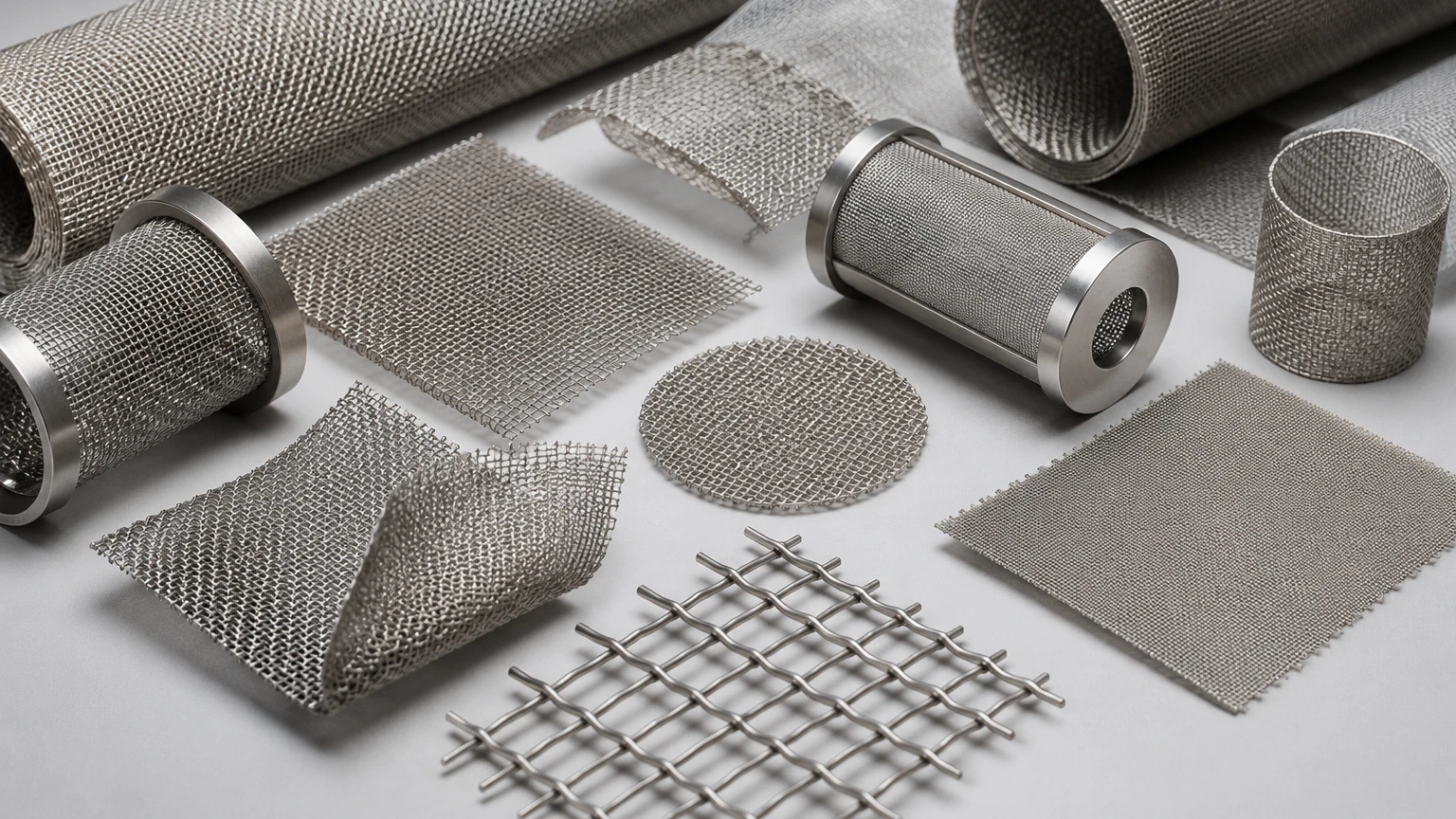
* Dimensional Specifications: Filters can be manufactured as flat discs, cylinders, pleated cartridges, or custom-molded shapes to fit existing housings.
* Layer Configuration: Combining different mesh counts into a multi-layer structure allows for graduated filtration, where outer layers catch larger debris and inner layers provide the final precision cut.
* End Fittings and Support: Custom filters can be equipped with various end caps (e.g., 222, 226, or NPT threaded fittings) and internal support cores to ensure a secure fit and prevent collapse under high-pressure differentials.
By working closely with an OEM manufacturer, purchasing teams can ensure that the filtration components are perfectly aligned with the technical specifications of their equipment, reducing the risk of bypass or system failure.
Maintenance, Cleaning, and Replacement Cycles
A significant advantage of metal filter mesh is its cleanability. Depending on the nature of the contaminant, metal filters can be cleaned using several methods:
1. Backwashing: Reversing the flow of the fluid to dislodge particles from the surface of the mesh. This is often automated in continuous process systems.
2. Ultrasonic Cleaning: Using high-frequency sound waves in a cleaning solvent to remove fine particles trapped deep within the weave or sintered layers.
3. Chemical Cleaning: Utilizing specific solvents or acids to dissolve organic or inorganic deposits, provided the mesh material is chemically compatible with the cleaning agent.
4. Thermal Burn-off: In applications like polymer filtration, high temperatures can be used to carbonize and remove organic residues.
Determining the replacement cycle requires monitoring the differential pressure. Once the mesh can no longer be cleaned to a satisfactory "clean $ΔP$," or if the structural integrity of the wire is compromised by erosion or corrosion, the filter must be replaced. Regular inspection of the mesh for signs of fraying, hole enlargement, or mechanical fatigue is a standard part of industrial maintenance protocols.
Technical Checklist for Procurement
Before finalizing a purchase of metal filter mesh, engineers and technical professionals should confirm the following data points to ensure the product is fit for purpose:
* Fluid Compatibility: Is the alloy resistant to the process fluid at the maximum operating temperature?
* Micron Rating: Is the rating absolute or nominal? Does it meet the downstream protection requirements of the system?
* Operating Pressure: What is the maximum operating pressure and the maximum allowable differential pressure ($ΔP$)?
* Flow Rate: Can the mesh handle the required volume without excessive initial pressure drop?
* Cleaning Protocol: Is the filter designed for the intended cleaning method (e.g., backpulsing vs. ultrasonic)?
* Compliance: Does the material meet industry-specific certifications (e.g., FDA compliance for food and beverage or USP Class VI for pharmaceuticals)?
By addressing these factors, procurement teams can avoid common risks such as premature filter failure, fluid contamination, or unplanned system downtime.
Conclusion
Metal filter mesh is a cornerstone of modern industrial filtration, offering unmatched durability and precision. Whether used in a simple strainer or a complex sintered multi-layer cartridge, the quality of the mesh determines the reliability of the entire filtration system. As a specialist in custom stainless steel filtration, Kaifil provides the engineering expertise and manufacturing precision required to solve the most challenging filtration problems.
For more information on our specific product capabilities and to explore how our customized solutions can optimize your industrial processes, please visit our Main Page. By focusing on quality materials, advanced weave geometries, and robust structural designs, we help our global partners achieve efficient and cost-effective filtration performance in every application.
