


Metal Mesh for Filters
In the landscape of industrial filtration, the selection of filter media is a critical decision that directly impacts process efficiency, product purity, and operational costs. While polymer-based filters are common in light-duty applications, heavy industrial processes require the durability and precision offered by metal mesh. Metal mesh for filters serves as the backbone for various filtration systems, providing a robust, heat-resistant, and chemically stable solution for separating solids from liquids or gases.
Understanding the technical nuances of metal mesh—from weave patterns and material grades to structural integrity and flow dynamics—is essential for engineers and procurement teams tasked with optimizing filtration performance. This guide explores the engineering considerations, material science, and application-specific factors involved in selecting and implementing metal mesh filtration components.
Understanding the Fundamentals of Metal Mesh for Filters
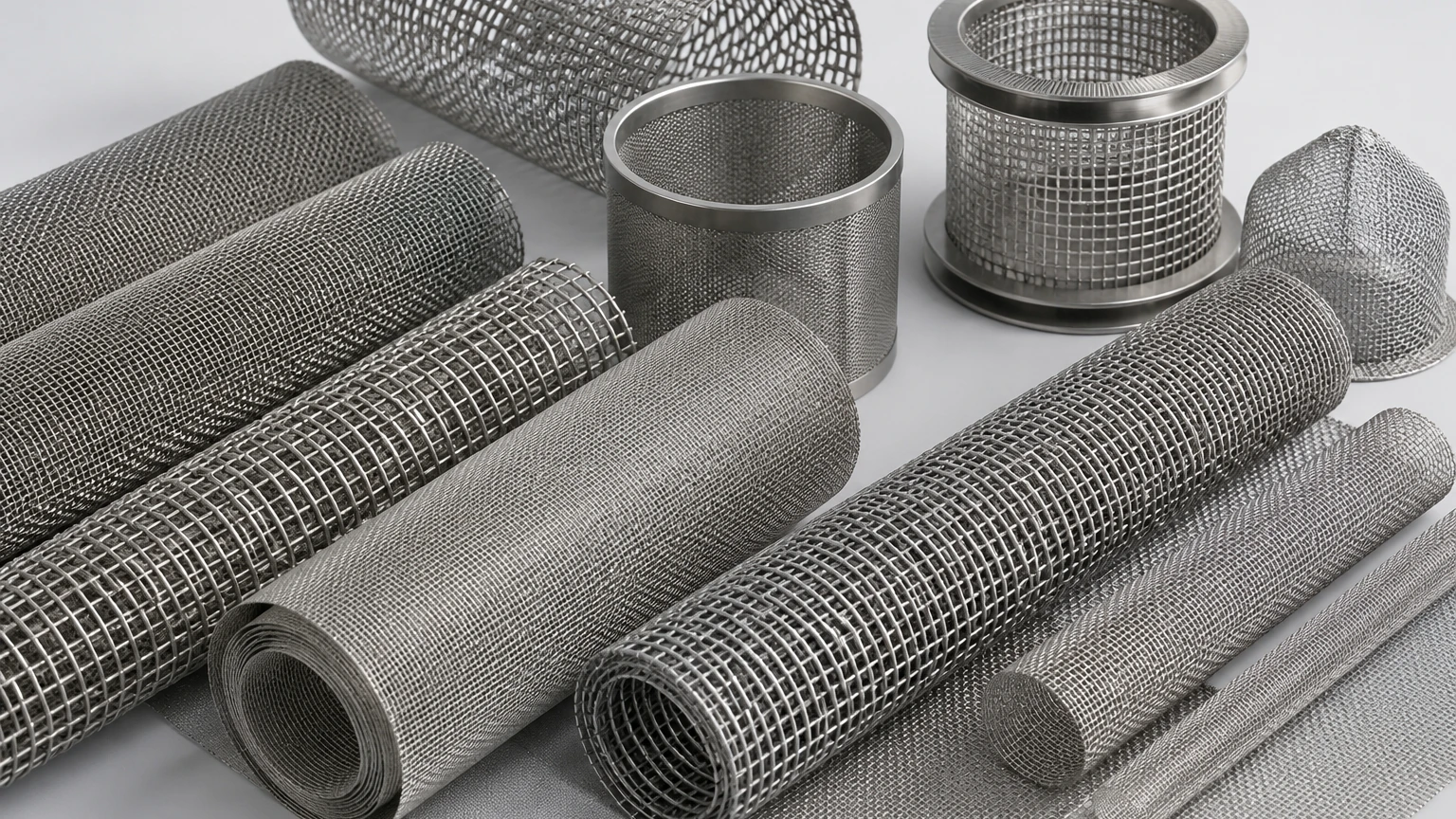
Industrial metal mesh is a versatile material manufactured by weaving or bonding metallic wires to create precise openings. Unlike disposable synthetic filters, metal mesh is designed for longevity and reuse. Its primary advantage lies in its mechanical strength, which allows it to withstand high differential pressures and extreme temperatures that would cause polymer filters to fail.
Metal mesh for filters is typically categorized by its manufacturing method:
* Woven Wire Mesh: Created on looms, this involves weaving longitudinal (warp) and transverse (shute) wires. It offers a wide range of micron ratings and is the most common form of metal filtration media.
* Sintered Metal Mesh: This involves bonding multiple layers of woven mesh through a high-temperature diffusion bonding process. Sintering locks the wires in place, preventing wire migration and significantly increasing the material's structural rigidity and pressure resistance.
* Expanded and Perforated Metal: While often used as support structures (cores or shrouds) rather than the primary filtration media, these provide the necessary mechanical backing for finer meshes in high-pressure environments.
The choice between these types depends on the specific demands of the application, including the required filtration accuracy and the physical stresses the filter will encounter during operation.
Key Material Specifications and Engineering Considerations
The performance of metal mesh for filters is heavily dependent on the alloy used. In industrial environments, stainless steel is the standard due to its corrosion resistance and mechanical properties.
Stainless Steel Grades
* AISI 304: The most common grade, offering good corrosion resistance for general industrial applications, including water treatment and basic chemical processing.
* AISI 316L: Containing molybdenum, 316L provides superior resistance to chlorides and pitting. The "L" denotes low carbon content, which improves weldability and prevents intergranular corrosion in the heat-affected zones of welded filter components.
* Specialty Alloys: For highly aggressive environments, alloys such as 904L, Monel, or Inconel may be utilized to resist extreme acids, high-salinity fluids, or temperatures exceeding 500°C.
Weave Patterns and Their Impact
Engineers must select a weave pattern that balances filtration efficiency with flow capacity:
* Plain Weave: A simple over-under pattern. It provides high flow rates and is easy to clean, making it ideal for coarse filtration.
* Twill Weave: Each shute wire passes over and under two warp wires. This allows for thicker wires and higher strength, suitable for heavier loads.
* Plain Dutch Weave: Uses a combination of large warp wires and smaller shute wires driven closely together. This creates a dense, tortuous path for particles, providing high-strength filtration for fine particles.
* Dutch Twill Weave: Combines twill and Dutch weaving techniques to achieve the finest filtration levels (down to 1-5 microns) while maintaining a robust structure.
Evaluating Filtration Performance: Micron Rating and Flow Dynamics
When specifying metal mesh for filters, the micron rating is the most critical performance metric. However, it is important to distinguish between nominal and absolute ratings.
Absolute vs. Nominal Filtration
* Nominal Rating: An indicative value representing the ability of the mesh to retain a majority of particles of a certain size (typically 60% to 90%). It does not guarantee that no larger particles will pass through.
* Absolute Rating: The diameter of the largest spherical particle that will pass through the filter under laboratory conditions. For critical applications in the pharmaceutical or aerospace sectors, absolute-rated mesh is mandatory to ensure process integrity.
Pressure Drop (Delta P) and Flow Rate
The geometric configuration of the mesh—specifically the open area percentage—determines the pressure drop across the filter. A higher open area reduces the initial pressure drop and allows for higher flow rates, but it may compromise the structural integrity or the filtration fineness. Engineers must calculate the "clean pressure drop" to ensure the system's pump or compressor can maintain the required flow as the filter begins to load with contaminants.
Industrial Applications and Compatibility Requirements
Metal mesh for filters is utilized across diverse sectors, each with unique regulatory and technical requirements.
Chemical and Petrochemical Processing
In these environments, filters must resist aggressive solvents, acids, and high-pressure differentials. Stainless steel filter cartridges using sintered mesh are often employed here because they can be chemically cleaned and returned to service, reducing the total cost of ownership compared to disposable cartridges.
Food and Beverage Industry
Filtration components in this sector must comply with hygienic standards (such as FDA or 3-A). Metal mesh is preferred because it does not shed fibers and can withstand Clean-in-Place (CIP) procedures involving steam or caustic chemicals. Common applications include the filtration of syrups, edible oils, and carbonated beverages.
Pharmaceutical and Biotechnology
Precision is paramount in pharmaceutical manufacturing. Sintered metal mesh provides the necessary pore size control for catalyst recovery and sterile gas filtration. The smooth surface of the metal also minimizes product holdup and facilitates thorough sterilization.
Hydraulic and Lubrication Systems
Metal mesh filters protect sensitive valves and pumps from wear-inducing particles. In hydraulic systems, the mesh must be pleatable to increase the surface area within a compact housing, allowing for high dirt-holding capacity without excessive pressure buildup.
Customization and OEM Solutions for Complex Systems
Standard off-the-shelf filters rarely meet the specific needs of complex industrial machinery. Customization is often required to ensure the filter fits the existing housing, meets specific flow requirements, and survives the unique stresses of the application.
Customization options for metal mesh filters include:
* End Cap Configurations: Threaded, flanged, or bayonet-style fittings to ensure a leak-proof seal.
* Reinforcement: Adding internal perforated cores or external mesh shrouds to prevent the primary filter media from collapsing or bursting under high pressure.
* Pleating: Increasing the effective filtration area by pleating the mesh, which extends the service life between cleanings.
* Surface Treatments: Electropolishing or specialized coatings to improve corrosion resistance or reduce particle adhesion.
For businesses seeking reliable, high-performance filtration components, partnering with a specialized manufacturer is essential. You can Review product options and application support to understand how custom engineering can solve specific filtration challenges.
Maintenance, Cleaning, and Total Cost of Ownership
One of the primary drivers for choosing metal mesh for filters is the ability to clean and reuse the media. While the initial acquisition cost of a stainless steel filter is higher than a polymer equivalent, the long-term savings are significant due to reduced waste and lower replacement frequency.
Cleaning Methods
* Backwashing: Reversing the flow of the fluid to dislodge particles from the surface of the mesh. This is often automated in continuous process systems.
* Ultrasonic Cleaning: Using high-frequency sound waves in a cleaning solution to remove fine particles trapped deep within the mesh pores. This is particularly effective for sintered mesh.
* Chemical Cleaning: Using acids, alkalis, or solvents to dissolve organic or inorganic scaling. The material compatibility of the mesh (e.g., 316L) ensures the filter remains undamaged during this process.
Determining Replacement Cycles
While metal mesh is durable, it is not infinite. Fatigue from pressure cycling, erosion from high-velocity abrasive particles, or repeated aggressive cleaning can eventually degrade the mesh. Monitoring the pressure drop across the filter is the most effective way to determine when a filter requires cleaning or, eventually, replacement. If the pressure drop remains high even after a thorough cleaning cycle, it indicates that the mesh pores are permanently blinded or the structure has been compromised.
Conclusion: Selecting the Right Filtration Partner
The effectiveness of an industrial filtration system depends on the synergy between the filter media and the application environment. Metal mesh for filters offers the precision, strength, and longevity required for demanding B2B applications, provided the material and weave specifications are correctly aligned with the process requirements.
When evaluating suppliers, engineers should look for manufacturers who offer deep technical expertise in material selection and customization. A provider that understands the nuances of fluid dynamics and metallurgical properties can help optimize filtration performance, reduce downtime, and lower the total cost of ownership. By focusing on quality manufacturing and precise engineering, industrial operations can achieve reliable and efficient separation results even in the most challenging conditions.
