


Micron Mesh Filter
In industrial liquid and gas processing, the precision of particle separation is often the determining factor in product quality, equipment longevity, and process efficiency. A micron mesh filter serves as a critical component in these systems, providing a physical barrier designed to arrest particles of a specific size while allowing the carrier medium to pass through. For engineers and technical procurement teams, selecting the correct micron mesh filter involves a deep understanding of material science, fluid dynamics, and the specific mechanical stresses of the application environment.
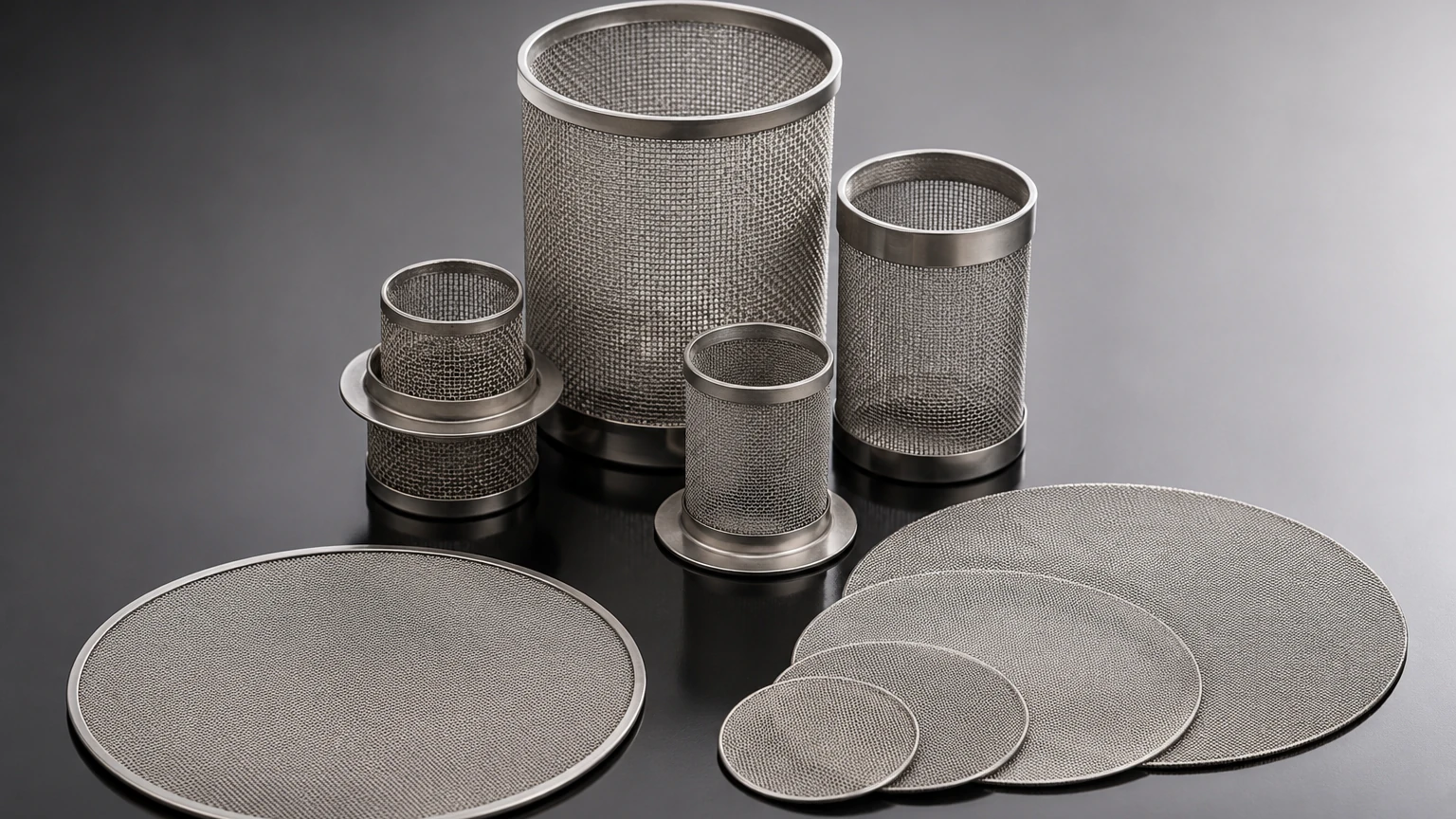
Kaifil specializes in the manufacture of stainless steel filtration solutions, where the integration of high-grade wire mesh into robust filter structures allows for precise control over filtration accuracy. This guide examines the technical parameters, engineering considerations, and selection criteria essential for implementing micron mesh filters in demanding industrial sectors.
Understanding Micron Ratings and Filtration Accuracy
The term "micron" (micrometer) refers to one-millionth of a meter. In the context of industrial filtration, the micron rating defines the ability of a filter to remove particles of a certain size. However, for a micron mesh filter to be effectively integrated into a system, engineers must distinguish between nominal and absolute ratings.
Nominal vs. Absolute Ratings
* Nominal Micron Rating: This represents an approximate filtration level, indicating that the mesh can trap a large percentage (typically 60% to 90%) of particles at the specified micron size. Nominal filters are often used in pre-filtration stages where total particle removal is less critical than protecting downstream components from heavy loading.
* Absolute Micron Rating: This refers to the diameter of the largest hard spherical particle that will pass through the mesh under specified test conditions. For critical applications in the pharmaceutical or chemical industries, absolute-rated micron mesh filters are required to ensure that no particles above the threshold enter the clean stream.
The Role of Mesh Geometry
The geometry of the weave significantly impacts the micron rating. While plain weaves are common for coarser filtration, specialized weaves like Twilled Dutch Weave or Plain Dutch Weave are utilized for fine micron mesh filters. These weaves allow for a higher density of wires, creating a tortuous path that enhances particle retention without excessively compromising the open area required for flow.
Material Selection for Industrial Durability
The performance of a micron mesh filter is heavily dependent on its material composition. While various polymers and exotic alloys exist, stainless steel remains the industry standard for high-performance industrial filtration due to its mechanical strength and chemical resistance.
Stainless Steel Grades
1. 304 Stainless Steel: Suitable for general industrial applications, providing good corrosion resistance and structural integrity at a cost-effective price point. It is commonly used in water treatment and basic hydraulic systems.
2. 316L Stainless Steel: The "L" denotes low carbon, which improves weldability and reduces the risk of sensitization. 316L contains molybdenum, which significantly enhances resistance to pitting and crevice corrosion in chloride-rich environments. This makes it the preferred choice for food and beverage, pharmaceutical, and marine applications.
3. Specialty Alloys: In environments involving extreme temperatures or highly aggressive chemicals, alloys such as Monel, Inconel, or Hastelloy may be employed to ensure the micron mesh filter does not degrade prematurely.
Thermal and Chemical Compatibility
Unlike synthetic filters, stainless steel micron mesh filters can operate across a wide temperature spectrum, often ranging from cryogenic levels to over 500°C (depending on the alloy and housing). When selecting a filter, engineers must verify that the mesh, the support structures, and the bonding agents (such as welds or epoxy) are compatible with the process fluid's pH levels and operating temperatures.
Engineering Considerations for Filter Design
Integrating a micron mesh filter into an industrial process requires more than just matching a micron size to a particle. The physical design of the filter element must account for the system's operational parameters.
Pressure Drop (Delta P)
Every filter introduces resistance to flow, known as pressure drop. As the micron rating becomes finer, the open area of the mesh typically decreases, leading to a higher initial pressure drop. Engineers must calculate the "Clean Pressure Drop" to ensure the system pump can maintain the required flow rate. Furthermore, the "Terminal Pressure Drop"—the point at which the filter is considered blinded and must be cleaned or replaced—must be defined to prevent system failure or mesh rupture.
Structural Integrity and Pleating
Fine micron mesh is often delicate. To withstand high differential pressures, the mesh is frequently supported by coarser mesh layers or perforated metal cores.
* Pleated Designs: By pleating the micron mesh, the effective surface area is significantly increased within the same footprint. This reduces the face velocity of the fluid, lowers the initial pressure drop, and extends the dirt-holding capacity, thereby lengthening the service interval.
* Cylindrical and Conical Shapes: Depending on the housing, filters may be configured as simple cylinders or cones. The choice depends on the flow direction (inside-out or outside-in) and the space constraints of the installation.
Customization Options
For many OEM applications, standard off-the-shelf filters are insufficient. Customization may involve specific end-cap configurations (such as 222 or 226 O-ring styles), specialized lengths, or reinforced frames to handle high-viscosity fluids. As a dedicated manufacturer, Kaifil provides tailored solutions that align with these specific engineering requirements. For more information on customization and technical specifications, visit the Main Page.
Applications Across Key Industries
The versatility of the micron mesh filter makes it indispensable across various sectors where fluid purity is paramount.
Chemical and Petrochemical Processing
In chemical synthesis, catalysts are often expensive and must be recovered. Micron mesh filters are used to capture catalyst fines from the product stream. Additionally, they protect high-pressure injection nozzles from particulate contamination that could cause erosion or clogging.
Food and Beverage Production
Filtration in this sector demands materials that are non-toxic and easy to sanitize. Stainless steel micron mesh filters are used for clarifying syrups, filtering oils, and ensuring that bottled beverages are free from sediment. The ability to withstand Steam-In-Place (SIP) and Clean-In-Place (CIP) procedures is a critical requirement for these filters.
Pharmaceutical and Biotechnology
Precision is non-negotiable in pharmaceutical manufacturing. Micron mesh filters are utilized in the filtration of active pharmaceutical ingredients (APIs), solvents, and sterile air. The use of 316L stainless steel ensures that there is no metallic leaching into the product, maintaining the highest levels of purity.
Hydraulic and Lubrication Systems
In heavy machinery, even microscopic particles can cause catastrophic wear on valves and bearings. Micron mesh filters in hydraulic return lines or suction lines ensure that the oil remains within the specified ISO cleanliness codes, significantly extending the life of the equipment.
Maintenance, Cleaning, and Total Cost of Ownership
One of the primary advantages of a stainless steel micron mesh filter over disposable media is its cleanability. While the initial capital expenditure (CAPEX) for a metal filter is higher than for a polypropylene or paper filter, the total cost of ownership (TCO) is often lower due to the extended service life.
Cleaning Methods
1. Backwashing: Reversing the flow of the fluid to dislodge particles trapped on the surface of the mesh. This is often automated in continuous process systems.
2. Ultrasonic Cleaning: Using high-frequency sound waves in a cleaning solvent to create cavitation bubbles that remove deeply embedded particles from the mesh pores.
3. Chemical Cleaning: Using acids, alkalis, or solvents to dissolve organic or inorganic scaling. This must be done with careful consideration of the mesh material's chemical resistance.
Evaluating Replacement Cycles
Despite being cleanable, all filters eventually reach a point where they can no longer be restored to their original clean pressure drop. Factors such as particle morphology (e.g., needle-like vs. spherical) and the presence of deformable contaminants (like gels) can impact how easily a micron mesh filter can be cleaned. Monitoring the time between cleaning cycles allows maintenance teams to predict when a replacement element is necessary.
Selection Guide for Engineers and Purchasing Teams
Before finalizing a procurement order for micron mesh filters, technical teams should confirm several key data points to ensure the product is fit for purpose:
* Fluid Characteristics: What is the viscosity, density, and chemical composition of the medium?
* Contaminant Profile: What is the expected particle size distribution and concentration? Is the contaminant hard, soft, or fibrous?
* Operating Conditions: What are the maximum and minimum operating pressures and temperatures? Are there pressure surges or mechanical vibrations to consider?
* Regulatory Compliance: Does the filter need to meet specific standards, such as FDA compliance for food contact or PED for pressure vessels?
* Connection Type: Does the filter interface correctly with existing housings (e.g., threaded, flanged, or specialized O-ring seals)?
By addressing these questions, engineers can avoid common pitfalls such as premature blinding, bypass leakage, or structural failure. Kaifil’s engineering team works closely with global customers to navigate these variables, ensuring that every micron mesh filter delivered meets the rigorous demands of the intended application.
In conclusion, the micron mesh filter is a sophisticated engineering tool that requires careful selection of material, weave, and structure. Whether protecting sensitive hydraulic components or ensuring the purity of a pharmaceutical batch, the right filtration solution balances precision with durability. For technical professionals seeking reliable, high-performance filtration components, reviewing product options and application support on the Main Page is the first step toward optimizing process performance.
