


Micron Steel Filter Netting
In industrial filtration, the transition from coarse separation to precision particle control requires media that can withstand mechanical stress while maintaining exact aperture dimensions. Micron steel filter netting, primarily manufactured from high-grade stainless steel, serves as the critical component in high-performance filtration systems. Unlike synthetic meshes, steel netting provides the thermal stability, chemical resistance, and structural integrity necessary for demanding environments such as chemical processing, pharmaceutical manufacturing, and high-pressure hydraulic systems.
Selecting the appropriate micron steel filter netting involves more than simply identifying a required micron rating. Engineers must evaluate weave patterns, wire diameters, material grades, and the physical dynamics of the fluid or gas being filtered. As a specialized manufacturer, Kaifil provides technical insights into these variables to ensure that the chosen filtration solution aligns with specific operational requirements and longevity goals.
Understanding the Construction of Micron Steel Filter Netting
The performance of micron steel filter netting is fundamentally determined by its weave architecture. The way individual wires are interlaced dictates the pore size, the strength of the mesh, and its permeability. For applications requiring filtration at the micron level (typically ranging from 1 micron to 500 microns), three primary weave types are utilized:
Plain Weave and Twill Weave
Plain weave is the most straightforward construction, where each warp wire crosses over and under each weft wire. While highly stable, plain weave is limited in how fine it can go because the wire diameter must be small enough to allow for the tight spacing. Twill weave allows for a heavier wire to be used for a given micron rating by having the wires pass over two and under two, which increases the mesh's durability and allows for finer filtration than plain weave of the same wire thickness.
Dutch Weave (Plain and Twill)
Dutch weaves are the standard for high-precision micron steel filter netting. In a Dutch weave, the warp wires are thicker and spaced further apart, while the weft wires are thinner and driven closely together. This creates a "triangular" pore structure rather than a square one.
* Plain Dutch Weave: Offers high mechanical strength and a relatively low pressure drop.
* Twill Dutch Weave: Allows for the smallest pore sizes (down to 1–5 microns) by layering the weft wires so closely that they overlap. This results in a dense, tortuous path for particles, providing superior filtration efficiency for fine contaminants.
Material Selection: Stainless Steel Grades and Compatibility
The choice of alloy is critical for ensuring the longevity of the micron steel filter netting, especially when exposed to corrosive fluids or extreme temperatures. While various metals can be woven into mesh, stainless steel remains the industry standard due to its versatility.
1. AISI 304: The most common grade, offering good corrosion resistance and mechanical properties. It is suitable for most water treatment and general industrial applications where high acidity or chloride levels are not present.
2. AISI 316/316L: Containing molybdenum, these grades offer significantly better resistance to pitting and crevice corrosion, particularly in chloride-rich environments. 316L (low carbon) is preferred for welded filter components to prevent carbide precipitation.
3. Specialty Alloys: For highly aggressive chemical environments, alloys like 904L or Duplex stainless steel may be used to prevent stress corrosion cracking and ensure the structural integrity of the filter netting over long service cycles.
For technical professionals evaluating these options, the Main Page of our resource center provides detailed material compatibility charts and engineering specifications for various stainless steel grades used in filtration.
Performance Evaluation: Micron Ratings and Filtration Efficiency
When specifying micron steel filter netting, it is essential to distinguish between nominal and absolute micron ratings. This distinction often determines whether a filter will meet the stringent purity standards of industries like pharmaceuticals or food and beverage.
* Nominal Micron Rating: This represents the average pore size of the netting. A 10-micron nominal filter might stop 60% to 90% of particles 10 microns or larger. It is suitable for non-critical applications where some particle bypass is acceptable.
* Absolute Micron Rating: This refers to the diameter of the largest hard spherical particle that will pass through the mesh under laboratory conditions. For critical processes, such as protecting high-pressure fuel injectors or ensuring the sterility of a liquid, an absolute-rated micron steel filter netting is required to guarantee that no particles above the specified size enter the downstream flow.
Engineers must also consider the "open area" percentage. A higher open area results in a lower initial pressure drop and higher flow rates but may compromise the mechanical strength of the mesh. Balancing these factors is a key part of the design phase for any custom filtration component.
Engineering Considerations: Flow Rate and Pressure Drop
The relationship between flow rate and pressure drop ($ΔP$) is a primary concern in system design. As fluid passes through the micron steel filter netting, the resistance of the mesh creates a pressure differential. If the $ΔP$ is too high, it can lead to mesh deformation, increased energy consumption for pumps, or premature system shutdown.
Several factors influence the pressure drop:
* Fluid Viscosity: Higher viscosity fluids require larger surface areas or coarser mesh to maintain acceptable flow rates.
* Contaminant Loading: As particles accumulate on the surface of the netting, the effective open area decreases, causing the pressure drop to rise. This is known as the "dirt-holding capacity."
* Velocity: High-velocity flows can cause turbulence at the mesh surface, increasing resistance and potentially forcing particles through the pores.
To optimize performance, Kaifil recommends calculating the required surface area based on the maximum allowable pressure drop at the end of the filter's service life, rather than just the clean pressure drop.
Industrial Applications of Micron Steel Filter Netting
Due to its precision and durability, micron steel filter netting is utilized across a broad spectrum of industrial sectors. Each application presents unique challenges that dictate the mesh configuration.
Chemical and Petrochemical Processing
In these environments, filters must withstand aggressive solvents and high temperatures. Micron steel filter netting is used in catalyst recovery, polymer filtration, and the removal of impurities from corrosive acids. The ability to clean and reuse stainless steel netting makes it more cost-effective than disposable synthetic filters in high-volume chemical lines.
Food and Beverage Industry
Filtration in this sector requires compliance with hygienic standards (such as FDA or 3-A). Micron steel filter netting is used to clarify juices, filter vegetable oils, and protect bottling equipment from particulates. Stainless steel is the preferred material because it does not leach chemicals into the product and can withstand Clean-in-Place (CIP) procedures involving steam or caustic agents.
Hydraulic and Lubrication Systems
Precision hydraulic valves and pumps are highly sensitive to particulate contamination. Micron steel filter netting is integrated into suction strainers and high-pressure line filters to remove wear particles and environmental dust. The high collapse strength of steel netting is vital here, as hydraulic systems often experience sudden pressure spikes.
Customization and OEM Capabilities
Standard off-the-shelf mesh often fails to meet the specific geometric or performance requirements of specialized industrial equipment. Kaifil specializes in the production of custom micron steel filter netting solutions, including:
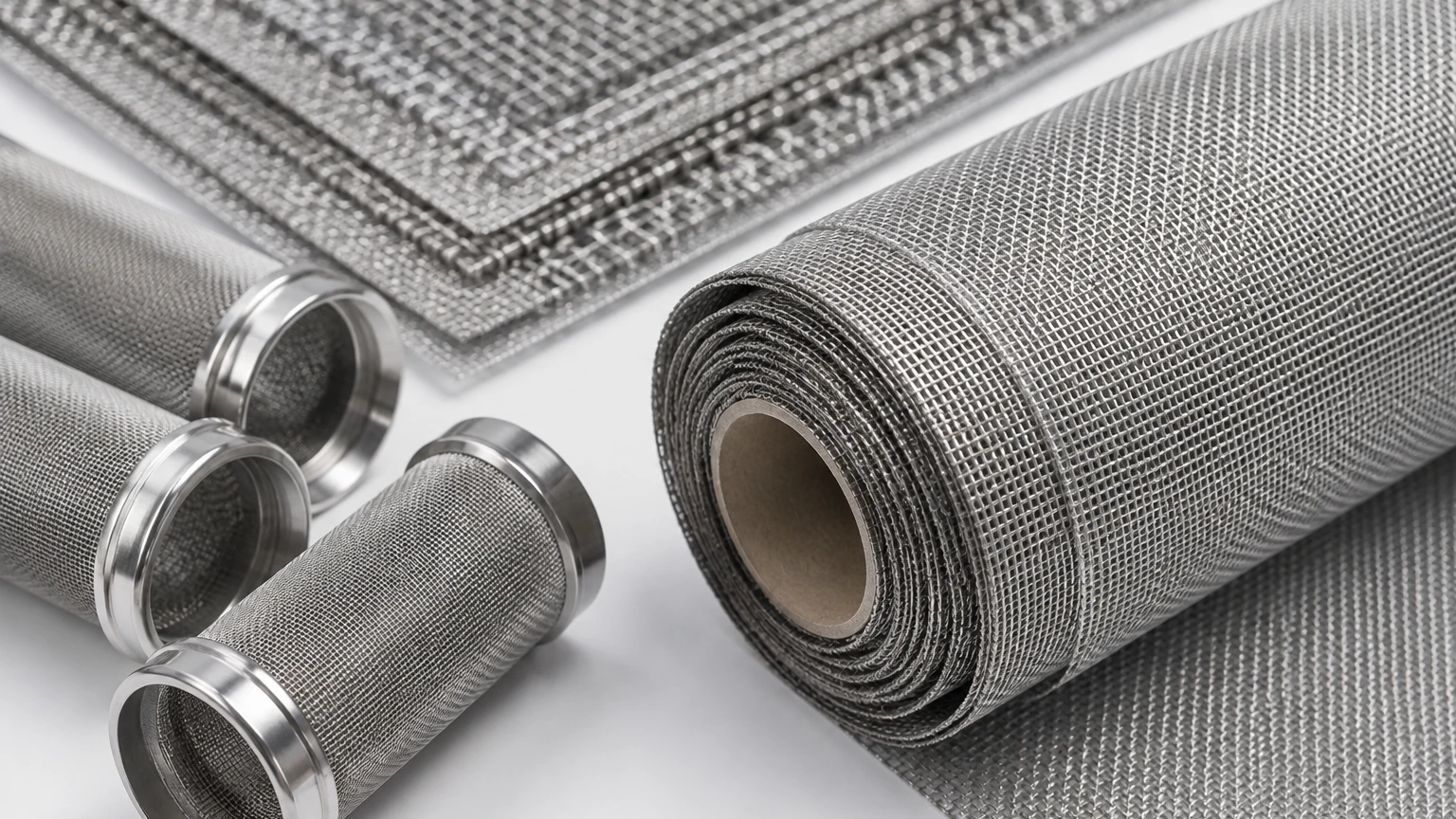
* Multi-layer Sintered Mesh: Combining multiple layers of micron steel filter netting through a heat-and-pressure process to create a single, robust filtration plate. This provides the precision of fine mesh with the structural support of heavy mesh.
* Custom Geometric Shapes: Netting can be fabricated into pleated cartridges, cylindrical strainers, conical filters, or flat discs to fit specific housing designs.
* Edge Treatments: To prevent fraying and ensure a secure fit within a housing, netting can be provided with welded borders, plastic overmolding, or metal flanges.
By working closely with OEM partners, Kaifil ensures that the filtration component is optimized for both the manufacturing process and the end-use environment.
Maintenance, Cleaning, and Total Cost of Ownership
One of the most significant advantages of micron steel filter netting over disposable media is its cleanability. In many B2B applications, the total cost of ownership (TCO) is lower for stainless steel filters because they eliminate the recurring costs of replacement cartridges and the environmental impact of waste disposal.
Cleaning Methods
* Backwashing: Reversing the flow of the fluid to dislodge particles trapped on the surface of the mesh.
* Ultrasonic Cleaning: Using high-frequency sound waves in a cleaning solvent to remove fine particles from deep within the weave of Dutch-style meshes.
* Chemical Cleaning: Using compatible acids or bases to dissolve organic or mineral deposits without damaging the stainless steel substrate.
Replacement Cycles
While durable, micron steel filter netting is not infinite. Over time, repeated cleaning cycles and mechanical stress can lead to "wire shifting" or fatigue. Engineers should monitor the pressure drop after cleaning; if the "clean" $ΔP$ begins to rise steadily, it indicates that the mesh is becoming permanently blinded and requires replacement.
Conclusion: Selecting the Right Filtration Partner
Micron steel filter netting is a sophisticated engineering material that requires a deep understanding of metallurgy, fluid dynamics, and weaving technology. Whether you are designing a new system for a pharmaceutical plant or seeking to optimize the filtration in a hydraulic circuit, the choice of netting will directly impact your operational efficiency and product quality.
Kaifil provides the technical expertise and manufacturing precision necessary to deliver high-performance stainless steel filtration solutions. By focusing on quality materials and customized designs, we help our global customers achieve reliable and cost-effective filtration. For more information on our full range of products and to discuss your specific application requirements, please visit our Main Page.
