


Oil and Gas Air Filtration
In the oil and gas industry, air filtration is not merely a matter of environmental compliance; it is a critical engineering requirement for protecting high-value assets and ensuring operational continuity. From offshore platforms exposed to salt-laden mist to inland refineries facing heavy dust and sand, the performance of gas turbines, compressors, and pneumatic systems depends entirely on the quality of the intake air. Effective oil and gas air filtration systems must withstand extreme pressures, corrosive atmospheres, and fluctuating temperatures while maintaining precise filtration efficiency.
For engineers and procurement professionals, selecting the right filtration media involves balancing technical performance with long-term durability. While disposable synthetic filters may suffice for light-duty applications, demanding industrial environments often require the robustness of stainless steel and precision-engineered metal components. As a specialized manufacturer, Kaifil provides the technical expertise and custom manufacturing capabilities necessary to meet these rigorous standards.
The Critical Role of Air Filtration in Oil and Gas Operations
The air found in oil and gas environments is rarely clean. Depending on the geographical location and the specific process, intake air can carry a variety of contaminants that pose a direct threat to rotating equipment and sensitive instrumentation.
Protecting Rotating Equipment
Gas turbines and centrifugal compressors are the workhorses of the industry. These machines ingest massive volumes of air. Even microscopic particulates can cause catastrophic damage over time. Hard particles like silica sand lead to erosion of turbine blades and compressor impellers, altering their aerodynamic profiles and reducing efficiency. Furthermore, in coastal or offshore environments, salt particles can lead to hot corrosion, where molten salts attack the protective coatings of high-temperature components.
Maintaining Pneumatic and Instrumentation Integrity
Many control systems in refineries and processing plants rely on compressed air. If the air filtration system fails to remove moisture, oil aerosols, or fine particulates, it can lead to the sticking of valves, clogging of small orifices, and premature failure of actuators. High-performance oil and gas air filtration ensures that the "instrument air" remains within the ISO 8573-1 quality classes required for reliable automation.
Materials and Engineering for Harsh Environments
Standard filtration materials often fail when exposed to the chemical and thermal stresses of the oil and gas sector. This is why stainless steel and specialized alloys are the preferred materials for high-performance filter elements.
Corrosion Resistance
In offshore environments, the presence of chlorides makes standard carbon steel or low-grade stainless steel susceptible to pitting and stress corrosion cracking. Kaifil utilizes high-grade materials such as 316L stainless steel, which offers superior resistance to marine environments. For even more aggressive chemical exposures, such as those involving high concentrations of hydrogen sulfide (H2S), specialized alloys can be employed to ensure the structural integrity of the filter mesh and housing.
Thermal Stability
Air filtration in the oil and gas sector often involves high-temperature streams, particularly in downstream processing or heat recovery systems. Unlike polymer-based filters that soften or degrade at temperatures above 100°C, stainless steel filter cartridges can operate reliably at temperatures exceeding 500°C. This thermal stability allows for filtration closer to the process source, reducing the need for extensive cooling infrastructure.
Mechanical Strength and Pressure Differential
Filters in this industry must handle significant pressure differentials, especially during "slug" events or when the filter becomes loaded with contaminants. Sintered wire mesh and perforated metal supports provide the necessary mechanical strength to prevent media migration or collapse. This durability is essential for preventing downstream contamination should a system surge occur.
Filtration Technologies for Oil and Gas Air Streams
Selecting the correct filtration technology requires an understanding of the particle size distribution and the physical state of the contaminants (solid vs. liquid).
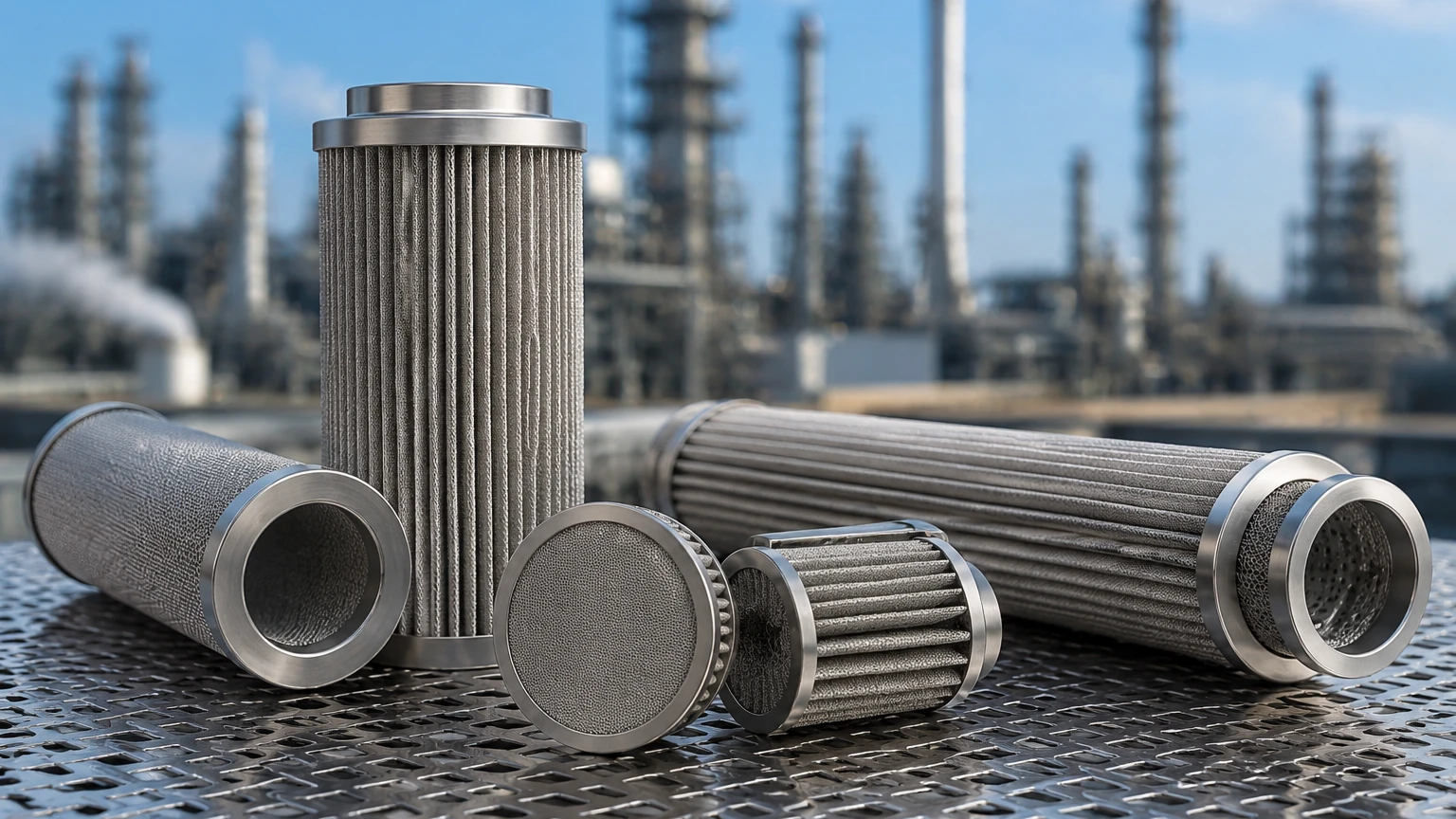
Stainless Steel Wire Mesh Filters
Wire mesh is a versatile medium for air filtration. By varying the weave pattern—such as plain weave, twilled weave, or Dutch weave—engineers can achieve specific micron ratings while maintaining high permeability. Dutch weave patterns, in particular, are excellent for air filtration as they provide a tortuous path that captures fine particulates while offering high mechanical strength. These filters are often used as pre-filters or in applications where high flow rates are required with low initial pressure drop.
Sintered Metal Filter Elements
For applications requiring high precision and the ability to withstand extreme backpressure, sintered metal filters are the industry standard. Sintering involves bonding multiple layers of wire mesh or metallic fibers through a high-temperature heat treatment process. This creates a rigid, porous structure that does not shed fibers and maintains a consistent pore size. Sintered elements are ideal for fine particulate removal in critical gas streams.
Pleated Filter Cartridges
To maximize the filtration surface area within a compact footprint, stainless steel mesh is often pleated. Pleating significantly increases the "dirt-holding capacity" of the filter, which extends the service interval between cleanings. In oil and gas air filtration, pleated cartridges are frequently used in intake systems for large engines and compressors where space is limited but high efficiency is non-negotiable.
Technical Specifications and Performance Evaluation
When evaluating filtration solutions, engineers must look beyond the initial cost and focus on technical performance metrics that impact the total cost of ownership.
1. Micron Rating (Absolute vs. Nominal): It is vital to distinguish between these two. An absolute rating indicates the size of the largest particle that can pass through the filter under specific test conditions, whereas a nominal rating is an average. In critical oil and gas applications, absolute ratings are typically required to ensure equipment protection.
2. Pressure Drop (ΔP): This is the resistance to flow. A high initial pressure drop means the system must work harder, increasing energy consumption. Engineering a filter with high porosity and optimized pleat geometry helps maintain a low ΔP.
3. Permeability: This defines how easily air can pass through the medium. High permeability is essential for maintaining the required flow rates in large-scale industrial intake systems.
4. Cleaning and Regenerability: One of the primary advantages of stainless steel filters is that they are cleanable. Methods such as ultrasonic cleaning, backflushing, or chemical cleaning can restore the filter to near-original performance, significantly reducing waste compared to disposable filters.
Maintenance, Cleaning, and Total Cost of Ownership
In the B2B industrial sector, the "Total Cost of Ownership" (TCO) is a more accurate metric than the initial purchase price. Disposable air filters may seem cost-effective initially, but the ongoing costs of replacement, disposal of contaminated media, and the labor required for frequent change-outs quickly add up.
Stainless steel filtration solutions, while requiring a higher upfront investment, offer several long-term economic benefits:
* Extended Service Life: A well-maintained stainless steel filter can last for years, even in the harshest oil and gas environments.
* Reduced Downtime: Because these filters are designed for durability, the risk of unexpected failure is minimized. Furthermore, the ability to clean and reuse elements means that facilities do not need to maintain massive inventories of disposable spares.
* Environmental Sustainability: Reducing the volume of spent filter media sent to landfills or incineration is a key goal for many modern energy companies. Cleanable metal filters align with corporate sustainability initiatives by minimizing waste.
Selecting the Right Filtration Solution
Before finalizing a filtration design, engineers should confirm several key parameters with their manufacturer. A custom approach is often necessary because no two oil and gas sites are identical.
Application Checklist for Engineers:
* Gas Composition: Are there corrosive gases like H2S or CO2 present? This dictates the choice of alloy.
* Particle Loading: Is the environment prone to sudden dust storms or high humidity? This influences the choice of pre-filtration and the required dirt-holding capacity.
* Flow Dynamics: What is the maximum and minimum flow rate? Filters must be sized to prevent excessive face velocity, which can pull contaminants through the media.
* Regulatory Compliance: Does the filter need to meet specific industry standards (e.g., ASME, API, or ISO)?
By addressing these factors during the design phase, purchasing teams can ensure they receive a solution that is optimized for their specific operational challenges. Kaifil works closely with global customers to develop these customized designs, ensuring that every filter element meets the precise requirements of the application.
Conclusion
Oil and gas air filtration is a complex engineering discipline that requires a deep understanding of material science, fluid dynamics, and environmental challenges. Whether the goal is to protect a multi-million dollar gas turbine or to ensure the purity of instrument air, the choice of filtration media is paramount. Stainless steel wire mesh and sintered metal components provide the durability, precision, and cleanability required to excel in this demanding industry.
For those seeking reliable, high-performance filtration components, partnering with a manufacturer that understands the nuances of industrial applications is essential. To explore technical specifications and discuss custom engineering requirements for your next project, Review product options and application support on our Main Page. By focusing on quality manufacturing and technical expertise, Kaifil helps industrial operators achieve efficient, durable, and cost-effective filtration performance.
