


Oil Water Filter
In industrial environments, the separation of oil and water is a fundamental requirement for equipment protection, process efficiency, and environmental compliance. Whether the objective is to remove water contamination from lubricating oils or to extract oil from process water before discharge, the selection of an appropriate oil water filter is a critical engineering decision. Unlike standard particulate filters, oil-water separation requires an understanding of fluid dynamics, surface chemistry, and material science to ensure that the two phases are effectively isolated without compromising the flow or integrity of the system.
As a specialized manufacturer of stainless steel filtration solutions, Kaifil provides precision-engineered components designed to handle the rigors of industrial oil-water separation. This guide explores the technical considerations, material advantages, and selection criteria essential for engineers and procurement teams looking to optimize their filtration systems.
Understanding the Role of Oil-Water Filtration in Industrial Systems
Water is one of the most common and damaging contaminants in industrial oils. In hydraulic systems, turbines, and gearboxes, the presence of water—whether in dissolved, emulsified, or free form—leads to a cascade of mechanical failures. It reduces the lubricating film thickness, promotes the oxidation of the oil, and causes the corrosion of internal metal surfaces. Furthermore, water can react with oil additives to form sludge and acids, which further degrade the system.
Conversely, many industrial processes generate wastewater contaminated with oils and hydrocarbons. Environmental regulations strictly limit the amount of oil that can be discharged into municipal sewers or natural water bodies. In these scenarios, an oil water filter acts as the final barrier, ensuring that the effluent meets legal standards for purity.
For engineers, the challenge lies in selecting a filter that can handle the specific state of the mixture. Free oil or water will eventually separate due to gravity, but emulsified mixtures—where one fluid is dispersed as microscopic droplets within the other—require specialized mechanical or coalescing media to break the emulsion and achieve separation.
Core Technologies for Oil and Water Separation
Effective oil-water separation typically relies on one of two primary mechanisms: mechanical barriers and coalescing media. The choice between these depends on the concentration of the fluids and the required purity levels.
Mechanical Filtration and Hydrophobic Barriers
In many applications, a stainless steel wire mesh filter is treated or engineered to be hydrophobic (water-repelling) or oleophobic (oil-repelling). By utilizing the difference in surface tension between oil and water, the filter media allows one fluid to pass through while blocking the other. This is particularly effective for removing large droplets of free water from fuel or hydraulic oil.
Coalescing Filtration
Coalescing is the process by which small droplets of a liquid are brought together to form larger droplets. In an oil water filter designed for coalescing, the fluid passes through a dense matrix of media—often involving multiple layers of stainless steel mesh or sintered metal fibers. As the tiny droplets of water (in oil) or oil (in water) travel through the tortuous path of the filter, they collide with the media and each other, growing in size. Once the droplets reach a sufficient mass, they either sink to the bottom or rise to the top of the filter housing, where they can be drained away.
Engineering Advantages of Stainless Steel Filtration Media
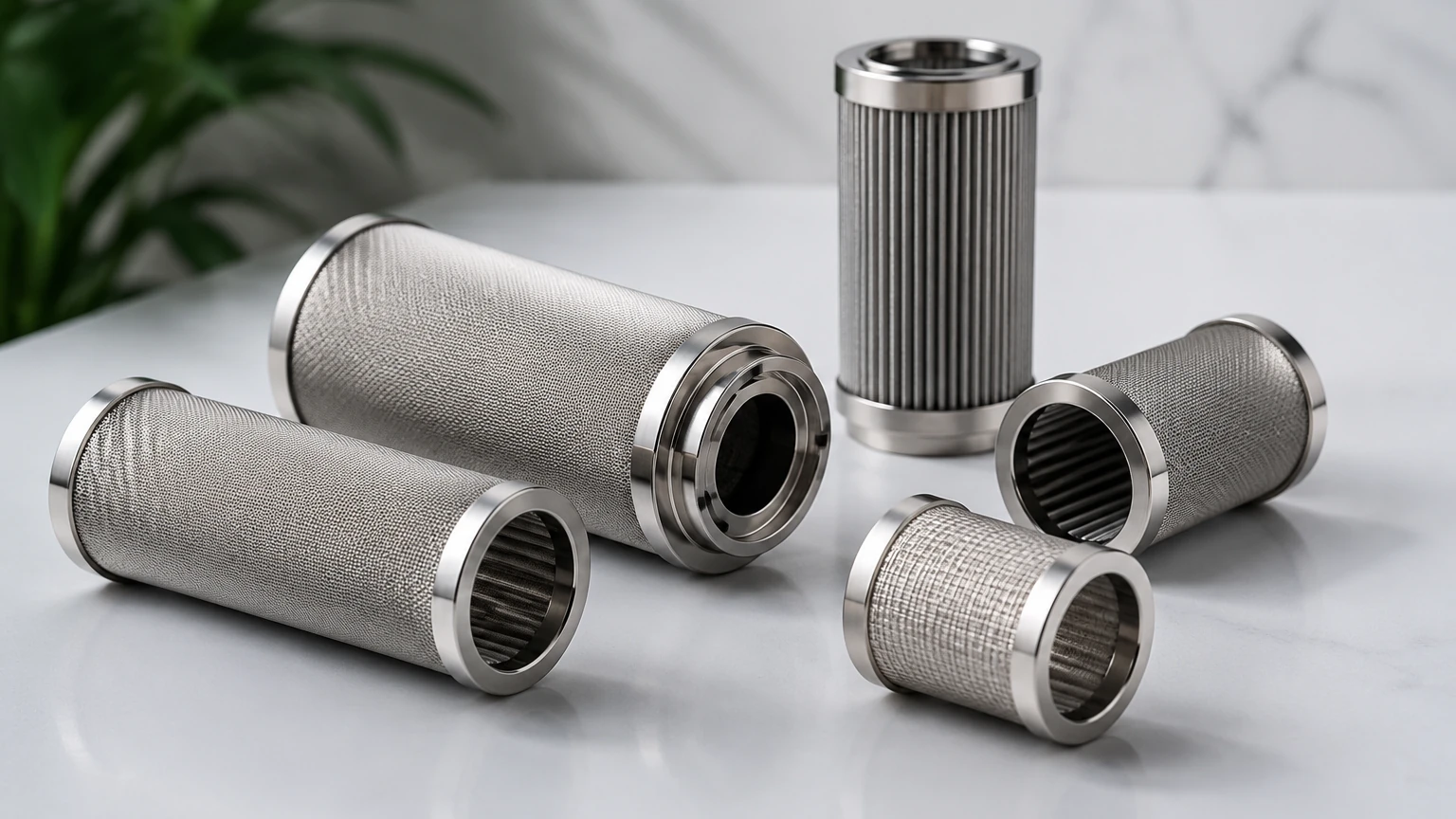
While synthetic materials like cellulose or polymer fibers are common in light-duty applications, industrial-grade oil water filters increasingly rely on stainless steel. At Kaifil, we focus on the use of 304 and 316L stainless steel for several technical reasons:
1. Chemical Compatibility: Industrial oils often contain aggressive additives, and process water may have varying pH levels or chemical contaminants. Stainless steel resists corrosion and chemical degradation that would cause synthetic filters to soften or fail.
2. Thermal Stability: Many oil systems operate at elevated temperatures to maintain proper viscosity. Stainless steel maintains its structural integrity and filtration accuracy at temperatures far exceeding the limits of plastic-based media.
3. Pressure Resistance: Oil-water separation often involves high-viscosity fluids or high-pressure hydraulic lines. Metal mesh filters can withstand significant differential pressures without deforming, ensuring consistent filtration performance.
4. Cleanability and Reusability: Unlike disposable cartridges, stainless steel filter elements can often be cleaned via backwashing, ultrasonic cleaning, or chemical baths. This significantly reduces the total cost of ownership and minimizes industrial waste.
Critical Selection Criteria for Engineers and Procurement Teams
When specifying an oil water filter, engineers must look beyond simple micron ratings. A successful installation requires a holistic view of the operating environment. Key factors to confirm before purchase include:
Fluid Viscosity and Flow Rate
The viscosity of the oil significantly impacts the pressure drop (Delta P) across the filter. High-viscosity oils require a larger surface area or a coarser mesh to maintain the required flow rate without triggering bypass valves. Engineers should calculate the maximum expected flow rate and ensure the filter housing and element are sized to handle it at the lowest expected operating temperature.
Separation Efficiency and Micron Rating
What is the target purity level? For hydraulic systems, even trace amounts of water can be catastrophic. In these cases, a multi-stage system involving a primary particulate filter followed by a high-efficiency coalescing oil water filter is often necessary. The micron rating must be fine enough to capture the smallest droplets targeted for coalescence without becoming prematurely blinded by solid contaminants.
Total Solids Loading
If the fluid contains significant particulate matter (dust, metal shavings, or carbon deposits) in addition to oil/water contamination, the filter will clog quickly. In such environments, using a pleated stainless steel element can increase the available surface area, extending the service life between cleanings.
Housing and Seal Compatibility
The filter element is only as effective as the housing it sits in. Engineers must ensure that seals (O-rings and gaskets) are compatible with the specific type of oil (e.g., mineral-based vs. synthetic esters). Viton or PTFE seals are frequently paired with stainless steel filters for high-performance applications.
Application-Specific Requirements for Oil-Water Filters
The demands placed on an oil water filter vary significantly across different sectors. Understanding these nuances is essential for selecting the right OEM solution.
* Hydraulic and Lubrication Systems: Here, the primary goal is removing moisture from oil. Filters are often integrated into the return line or used in "kidney loop" filtration systems to continuously polish the oil.
* Marine and Offshore: Bilge water treatment requires robust separation to meet international MARPOL standards. Stainless steel components are preferred here due to their resistance to salt-air corrosion.
* Food and Beverage Processing: In applications where vegetable oils are processed or where machinery must be washed down, filters must meet stringent hygiene standards. 316L stainless steel is the industry standard for these food-contact environments.
* Chemical and Petrochemical: These filters must handle volatile organic compounds (VOCs) and aggressive solvents. The durability of metal mesh ensures that the filtration system does not become a point of failure in a high-risk process.
Maintenance, Cleaning, and Operational Longevity
One of the most frequent questions from purchasing teams concerns the replacement cycle of industrial filters. While disposable filters have a lower initial purchase price, the long-term costs of replacement labor, disposal fees, and downtime can be substantial.
Stainless steel oil water filters offer a sustainable alternative. Because the media is mechanically robust, it can be cleaned and returned to service multiple times. Maintenance teams should monitor the differential pressure across the filter; a steady increase indicates that the media is accumulating captured contaminants. By implementing a regular cleaning schedule, the operational life of a Kaifil filter can span several years, providing a much higher return on investment than synthetic alternatives.
Customization and OEM Solutions
No two industrial systems are identical. Factors such as space constraints, unique flow patterns, and specific contamination profiles often necessitate a customized approach. Kaifil specializes in working with engineering teams to develop bespoke filtration components that fit seamlessly into existing infrastructure. From custom dimensions and specialized mesh weaves to integrated support structures for high-pressure environments, our manufacturing capabilities ensure that the filtration solution is optimized for the specific application.
When evaluating potential suppliers, it is important to confirm their ability to provide technical documentation, material certifications, and performance data. This transparency allows engineers to verify that the filter will perform as expected under real-world conditions.
For a comprehensive overview of available configurations and technical specifications, engineers and purchasing professionals are encouraged to visit our Main Page to review product options and application support. Whether you are designing a new system or looking to upgrade the efficiency of an existing process, selecting the right oil water filter is the first step toward long-term operational reliability.
