


Pes Filters
In the landscape of industrial liquid processing, the selection of filtration media is a critical decision that impacts product purity, process efficiency, and overall operational costs. Polyethersulfone (PES) filters have emerged as a primary choice for applications requiring high flow rates, low protein binding, and reliable microbial retention. As a high-performance thermoplastic membrane, PES offers a unique combination of chemical resistance and thermal stability, making it indispensable in sectors ranging from pharmaceuticals to food and beverage production.
For engineers and procurement professionals, understanding the technical nuances of pes filters is essential for optimizing filtration systems. While Kaifil specializes in custom stainless steel filtration solutions, the integration of membrane technology with precision metal housing is a common requirement in advanced industrial setups. This guide explores the engineering principles, performance characteristics, and selection criteria for PES filtration media.
Understanding Polyethersulfone (PES) Membrane Technology
Polyethersulfone is a synthetic polymer characterized by its repeating units of ether and sulfone groups. This chemical structure imparts several key physical properties that define its performance as a filtration medium. Unlike some other polymers, PES is inherently hydrophilic, meaning it has a natural affinity for water. This eliminates the need for surface active agents or wetting treatments that could potentially leach into the process fluid.
Asymmetric Pore Structure
One of the most significant engineering features of modern pes filters is the asymmetric pore structure. In an asymmetric membrane, the pore size changes across the cross-section of the material. Typically, the "upstream" side of the membrane has larger pores that act as a pre-filter, while the "downstream" side contains the tightest pores that determine the absolute filtration rating.
This gradient density provides two major advantages:
1. High Dirt-Holding Capacity: Larger particles are trapped in the outer layers, preventing the fine filtration layer from clogging prematurely.
2. Superior Flow Rates: The more open structure on the upstream side reduces resistance to flow, allowing for higher flux compared to symmetric membranes of the same micron rating.
Chemical and Thermal Stability
PES is known for its robustness. It can withstand a wide pH range (typically pH 1–14 depending on the specific grade and temperature) and is resistant to many common cleaning agents and solvents. Furthermore, PES membranes maintain their structural integrity at elevated temperatures, often up to 90°C (194°F) for continuous operation, and can endure multiple sterilization cycles via autoclaving or steam-in-place (SIP) processes.
Key Performance Characteristics of PES Filters
When evaluating pes filters for industrial use, engineers focus on several performance metrics that dictate the efficiency of the filtration stage.
Flux and Throughput
Flux refers to the rate of flow per unit area of the filter membrane at a given pressure. Due to the high porosity and asymmetric structure mentioned earlier, PES filters generally offer higher flux than alternatives like PVDF (Polyvinylidene Fluoride) or Nylon. High throughput—the total volume of fluid processed before the filter reaches its terminal pressure drop—is equally important. In large-scale manufacturing, high throughput reduces the frequency of filter change-outs, thereby minimizing downtime.
Low Protein Binding
The hydrophilic nature of PES results in extremely low non-specific binding of proteins and other biomolecules. This is a critical factor in pharmaceutical and biotechnological applications where the loss of expensive active ingredients to the filter surface must be avoided. By minimizing adsorption, PES ensures that the concentration of the filtrate remains consistent with the starting material.
Absolute vs. Nominal Ratings
In critical applications, pes filters are typically rated as "absolute." An absolute rating means the filter is designed to remove 99.9% or more of particles at the specified micron size (often validated using bacterial challenge tests for 0.22 µm or 0.1 µm filters). This contrast with "nominal" ratings, which are more common in depth filters and indicate a general percentage of retention without the same level of validated precision.
Industrial Applications for PES Filtration
The versatility of PES membranes allows them to be deployed across various demanding industries. Each application requires specific configurations, often involving stainless steel housings and precision-engineered support structures.
Pharmaceutical and Biotechnology
In these sectors, PES filters are the gold standard for sterile filtration. They are used to remove bacteria, fungi, and other contaminants from injectable drugs, ophthalmic solutions, and growth media. Because they can be integrity tested, they provide the regulatory assurance required for aseptic processing.
Food and Beverage Production
PES filters are widely used for the clarification and microbial stabilization of beverages such as wine, beer, and bottled water. In wine production, for example, 0.45 µm or 0.65 µm PES membranes are used just before bottling to remove spoilage organisms like *Brettanomyces* without stripping away the essential flavors and aromas of the product.
Microelectronics and Ultrapure Water
The production of semiconductors requires water of extreme purity. PES filters are used in the final stages of ultrapure water (UPW) systems to remove fine particulates and microorganisms that could interfere with the delicate lithography processes on silicon wafers.
Chemical Processing
While PES is sensitive to certain aggressive solvents like ketones and esters, it is highly effective for filtering aqueous chemical solutions, dilute acids, and bases. Its high flow rate makes it an efficient choice for large-volume chemical purification where compatibility allows.
Engineering Considerations for Filter Selection
Selecting the right pes filters involves more than just picking a micron rating. Engineers must consider the entire filtration system and the environment in which it operates.
Differential Pressure (ΔP)
Every filter introduces a pressure drop into the system. It is vital to monitor the differential pressure—the difference between the pressure at the inlet and the outlet of the filter housing. A high initial ΔP may indicate that the filter is undersized for the required flow rate, while a rapid increase in ΔP during operation suggests high particulate loading or potential membrane fouling.
Extractables and Leachables
In regulated industries, the amount of material that can migrate from the filter into the product (extractables) must be strictly controlled. High-quality PES membranes are manufactured under cleanroom conditions and undergo rigorous testing to ensure they meet FDA and USP Class VI plastics biological reactivity tests. Engineers should request a validation guide from the manufacturer to confirm these parameters.
Housing Compatibility
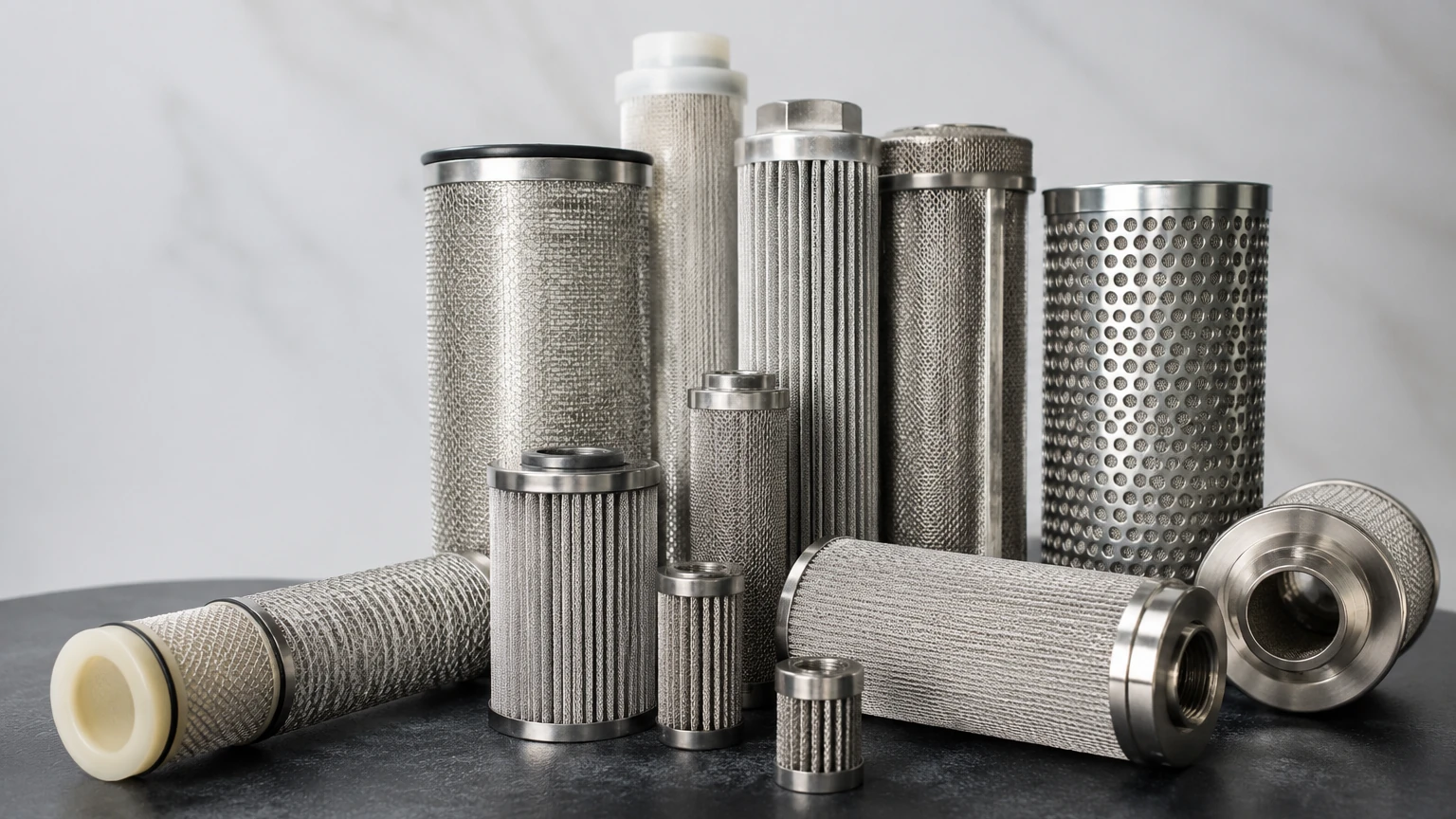
To maintain a sanitary and pressurized environment, PES filter cartridges are usually housed in stainless steel vessels. The interface between the filter and the housing—typically a 222 or 226 O-ring configuration—must be perfectly sealed to prevent bypass. At Kaifil, we emphasize the importance of precision-engineered components to ensure that the mechanical support for the membrane is as reliable as the membrane itself. For more information on comprehensive filtration systems and custom metal components, visit our Main Page.
Comparing PES with Other Membrane Materials
To make an informed decision, it is helpful to compare PES with other common membrane materials used in industrial filtration.
| Feature | PES (Polyethersulfone) | PTFE (Polytetrafluoroethylene) | PVDF (Polyvinylidene Fluoride) |
| :— | :— | :— | :— |
| Hydrophilicity | Inherently Hydrophilic | Inherently Hydrophobic | Usually Hydrophobic (can be treated) |
| Flow Rate | Very High | Moderate | Moderate |
| Protein Binding | Very Low | Low | Low to Moderate |
| Chemical Resistance | Good (Aqueous/Alcohols) | Excellent (Broad Spectrum) | Very Good (Oxidizing agents) |
| Best Use Case | Sterile filtration, Water, Beverages | Aggressive solvents, Venting | Fine chemicals, Protein recovery |
While PTFE is superior for aggressive solvents and air venting, PES is almost always the preferred choice for high-volume aqueous filtration due to its superior flux and ease of use (no pre-wetting required).
Maintenance, Integrity Testing, and Replacement
For critical processes, the integrity of the pes filters must be verified before and after use. This ensures that the membrane has not been damaged during installation or sterilization and that it will perform to its rated efficiency.
Common Integrity Tests
1. Bubble Point Test: Measures the minimum pressure required to force air through a liquid-saturated membrane. A lower-than-expected bubble point indicates a hole or a larger-than-specified pore.
2. Diffusion Test (Forward Flow): Measures the rate of gas diffusion through the liquid-filled pores of the membrane at a pressure below the bubble point. This is more sensitive for large-area multi-cartridge systems.
3. Water Intrusion Test (WIT): Used primarily for hydrophobic filters but adapted in some systems to check for seal integrity.
Replacement Cycles
Filters should be replaced based on either a predetermined differential pressure limit (terminal ΔP) or a set period of time, whichever comes first. In many pharmaceutical applications, filters are single-use to prevent cross-contamination. In beverage or industrial water applications, they may be cleaned and reused, but their performance must be monitored closely to detect signs of fouling or membrane degradation.
Conclusion
Pes filters represent a peak of membrane engineering, offering the high flow rates and low binding characteristics necessary for modern industrial efficiency. By understanding the asymmetric structure, chemical compatibility, and integrity testing requirements of these filters, engineers can design systems that ensure product quality while controlling operational costs.
Whether you are designing a new sterile fill line or optimizing a water treatment plant, the synergy between high-performance membranes and robust hardware is the key to success. For technical support and to explore a wide range of industrial filtration solutions, including stainless steel cartridges and custom components, visit our Main Page.
