


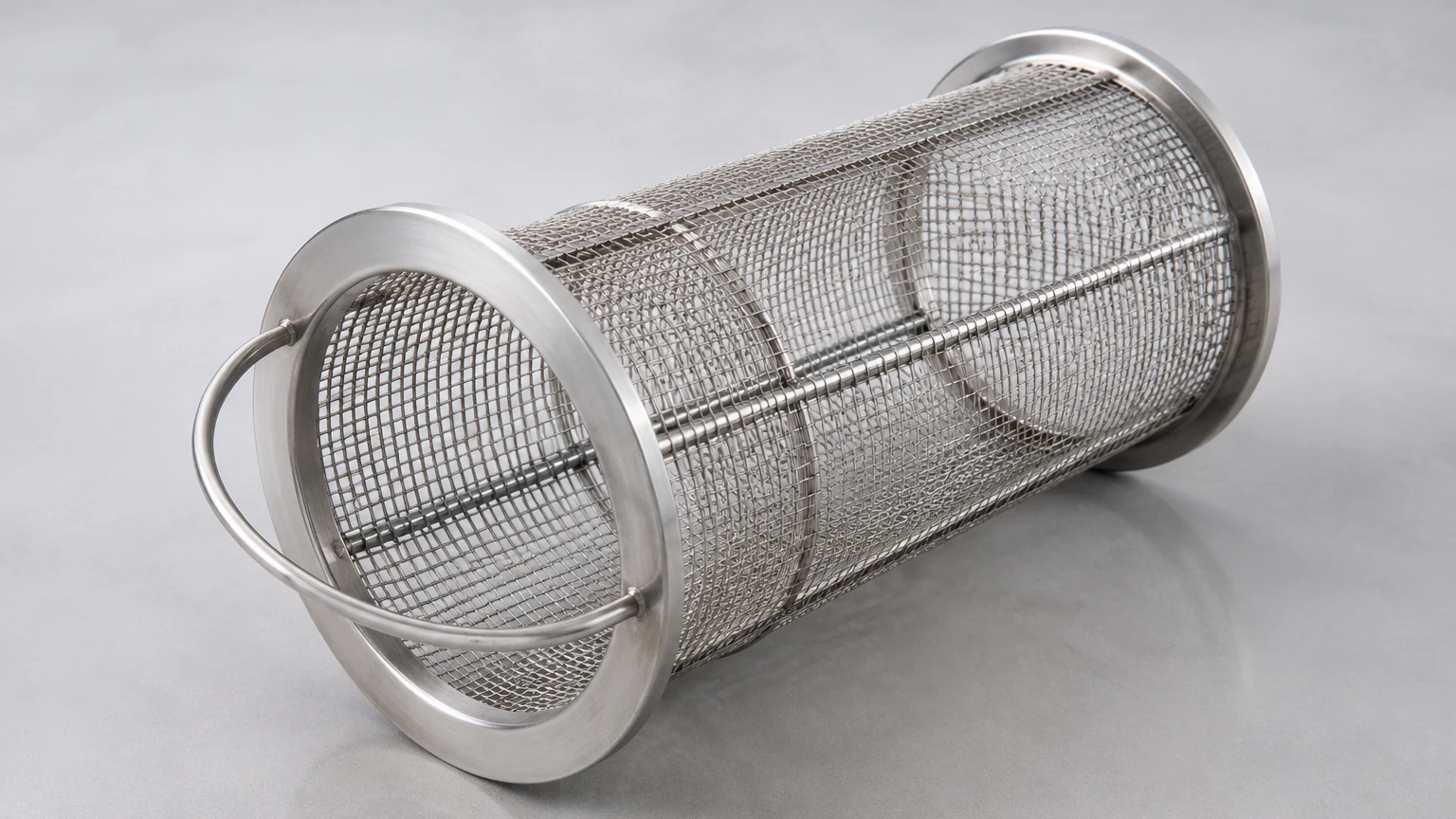
Pipe Line Basket
In industrial fluid handling systems, the protection of sensitive downstream equipment is a primary engineering concern. Whether managing high-pressure hydraulic lines, chemical processing streams, or food-grade liquid transport, the presence of particulate matter can lead to catastrophic pump failure, valve erosion, and compromised product quality. The pipe line basket, often referred to as a basket strainer or basket filter, serves as the frontline defense in these systems.
As a specialized manufacturer, Kaifil provides precision-engineered stainless steel filtration solutions designed to meet the rigorous demands of modern industry. Understanding the technical nuances of pipe line basket design, material selection, and performance metrics is essential for engineers and procurement teams tasked with maintaining system integrity and optimizing operational costs.
The Role of the Pipe Line Basket in Industrial Systems
A pipe line basket is a closed vessel with a cleanable screen element designed to remove foreign particles from a process fluid. Unlike Y-strainers, which are typically used for smaller amounts of debris in steam or gas lines, basket-style filters are preferred for liquid applications where high flow rates and significant solids loading are expected.
The primary function of the basket is to house the filter media—usually perforated metal or stainless steel wire mesh—in a configuration that maximizes surface area. This design allows for a lower pressure drop across the filter and provides a larger holding capacity for contaminants, which directly translates to longer intervals between cleaning cycles. In many industrial settings, these components are critical for protecting flow meters, heat exchangers, and spray nozzles from clogging or abrasive wear.
Engineering Considerations for Basket Design
When specifying a pipe line basket, engineers must look beyond simple pipe size. Several critical design parameters dictate the efficiency and longevity of the filtration component.
Open Area Ratio
One of the most important metrics in strainer design is the ratio of the open area of the basket to the cross-sectional area of the inlet pipe. A standard industry benchmark is a 6:1 ratio. A higher ratio ensures that even as the basket begins to fill with debris, the velocity of the fluid passing through the remaining open area does not increase significantly, thereby preventing a sharp rise in differential pressure. Kaifil’s custom manufacturing capabilities allow for the adjustment of this ratio based on the specific viscosity and solids-loading characteristics of the process fluid.
Pressure Drop (Delta P)
Every filtration element introduces a degree of resistance to flow. The clean pressure drop must be calculated to ensure the system pump can maintain the required flow rate. Factors influencing Delta P include the mesh size, the percentage of open area in the perforated support, and the fluid's viscosity. Engineers must also account for the "dirty" pressure drop—the point at which the basket is considered full and requires cleaning. Typically, a basket should be serviced when the pressure drop reaches 5 to 10 psi over the clean baseline.
Structural Integrity and Burst Strength
In high-pressure applications, such as hydraulic systems or high-head pumping stations, the basket must withstand the mechanical stress of the fluid flow. If a basket becomes completely clogged, it may be subjected to the full system pressure. A well-engineered pipe line basket utilizes a heavy-duty perforated metal backing to support finer wire mesh layers, preventing the media from collapsing or "bursting" under extreme differential pressure.
Material Selection: The Stainless Steel Advantage
Material compatibility is a non-negotiable factor in industrial filtration. While cast iron or carbon steel might suffice for basic water applications, most industrial processes require the corrosion resistance and durability of stainless steel.
Grade 304 vs. Grade 316L
* Type 304 Stainless Steel: This is the standard choice for general-purpose filtration. It offers excellent strength and good corrosion resistance for water treatment and mildly corrosive chemical applications.
* Type 316L Stainless Steel: For environments involving chlorides, high temperatures, or aggressive chemicals (such as in the pharmaceutical and chemical processing sectors), 316L is the preferred material. The addition of molybdenum provides superior resistance to pitting and crevice corrosion. Furthermore, the "L" (low carbon) variant is essential if the basket requires extensive welding during customization, as it prevents carbide precipitation.
Kaifil specializes in these high-grade alloys to ensure that every pipe line basket can withstand the chemical and thermal stresses of its intended environment. Beyond the housing, the filter media itself—whether it be a single layer of wire mesh or a multi-layered sintered structure—must be selected based on the required filtration accuracy, which can range from coarse 1/4" perforations down to 5-micron precision mesh.
Customization and OEM Capabilities
Off-the-shelf filtration solutions often fail to meet the specific spatial or performance requirements of complex industrial plants. Customization is where engineering expertise becomes a tangible asset.
Tailored Micron Ratings
Different stages of a process require different levels of filtration. A primary pipe line basket might use a 40-mesh (400 micron) screen to catch large scale and debris, while a secondary stage might require a 200-mesh (74 micron) or finer element to protect precision instrumentation. Kaifil works with clients to determine the optimal micron rating that balances fluid clarity with maintenance frequency.
Specialized Configurations
For industries like food and beverage or pharmaceuticals, sanitary design is paramount. This includes smooth surface finishes (high Ra values), the absence of crevices where bacteria can grow, and the use of FDA-approved gaskets. In contrast, heavy industrial applications might require reinforced baskets with lifting handles, magnetic inserts to capture metallic fines, or specialized coatings for extreme abrasion resistance.
By leveraging OEM manufacturing processes, companies can integrate these filtration components directly into their proprietary equipment designs. This ensures a perfect fit and optimized flow dynamics that standard components cannot provide.
Maintenance Protocols and Total Cost of Ownership
The initial purchase price of a pipe line basket is only one component of its total cost of ownership (TCO). Operational efficiency is largely determined by how easily the unit can be maintained.
Cleaning and Reusability
One of the primary benefits of stainless steel wire mesh baskets is their cleanability. Unlike disposable cartridge filters, a high-quality metal basket can be cleaned and returned to service multiple times. Cleaning methods vary by application, ranging from simple back-flushing and manual scrubbing to ultrasonic cleaning for fine-mesh elements fouled by sticky or crystalline substances.
Monitoring Systems
To prevent equipment damage, many systems utilize differential pressure gauges or electronic sensors. These tools provide real-time data on the state of the basket. Implementing a proactive maintenance schedule based on these readings, rather than a fixed calendar date, reduces unnecessary downtime and prevents the risks associated with running a clogged filter.
Replacement Cycles
While stainless steel is exceptionally durable, baskets are eventually subject to mechanical fatigue or erosion. Regular inspection should look for signs of wire fraying, seam separation, or deformation of the support structure. Utilizing high-quality components from an experienced manufacturer like Kaifil ensures that the replacement cycle is as long as possible, reducing the long-term expenditure on spare parts.
Selecting the Right Filtration Partner
Choosing a pipe line basket involves a complex intersection of fluid dynamics, metallurgy, and mechanical engineering. For technical professionals, the goal is to find a partner who understands these variables and can provide a solution that integrates seamlessly into existing infrastructure.
When evaluating a supplier, engineers should confirm:
1. Manufacturing Standards: Are the components produced using advanced welding and assembly techniques that ensure consistency?
2. Material Traceability: Can the supplier provide certifications for the stainless steel grades used?
3. Engineering Support: Does the manufacturer offer guidance on sizing, pressure drop calculations, and custom design?
Kaifil addresses these needs by combining deep manufacturing expertise with a consultative approach to industrial filtration. Whether you are designing a new system or looking to optimize an existing process, our team provides the technical resources necessary to achieve reliable, high-performance results. For more detailed information on our full range of stainless steel filtration components and custom OEM services, you can visit our Main Page to review product options and application support.
Conclusion
The pipe line basket is a deceptively simple component that plays a vital role in the reliability of industrial operations. By focusing on high-quality materials like 304 and 316L stainless steel, adhering to rigorous design standards for pressure and flow, and utilizing custom engineering to meet specific application needs, facilities can significantly reduce downtime and protect their capital investments. As industries move toward more automated and high-precision processes, the demand for reliable, high-performance filtration solutions will only continue to grow. Working with a dedicated manufacturer ensures that your filtration system is not just a commodity, but a precision-engineered asset designed for long-term success.
