


Plate Fin
In the landscape of industrial thermal management and fluid processing, the plate fin structure represents one of the most efficient geometries for maximizing surface area within a compact volume. Whether utilized in high-performance heat exchangers or specialized filtration modules, plate fin technology is engineered to facilitate rapid heat transfer or precise fluid distribution. For engineers and procurement professionals, understanding the mechanical nuances, material requirements, and manufacturing constraints of these components is essential for ensuring system reliability and operational efficiency.
As industrial processes become more demanding—moving toward higher pressures, extreme temperatures, and more corrosive media—the reliance on robust materials like stainless steel has become standard. Manufacturers like Kaifil specialize in the precision fabrication of these metal components, ensuring that the integration of filtration and thermal management meets the rigorous standards of modern industry.
The Role of Plate Fin Structures in Industrial Fluid Management
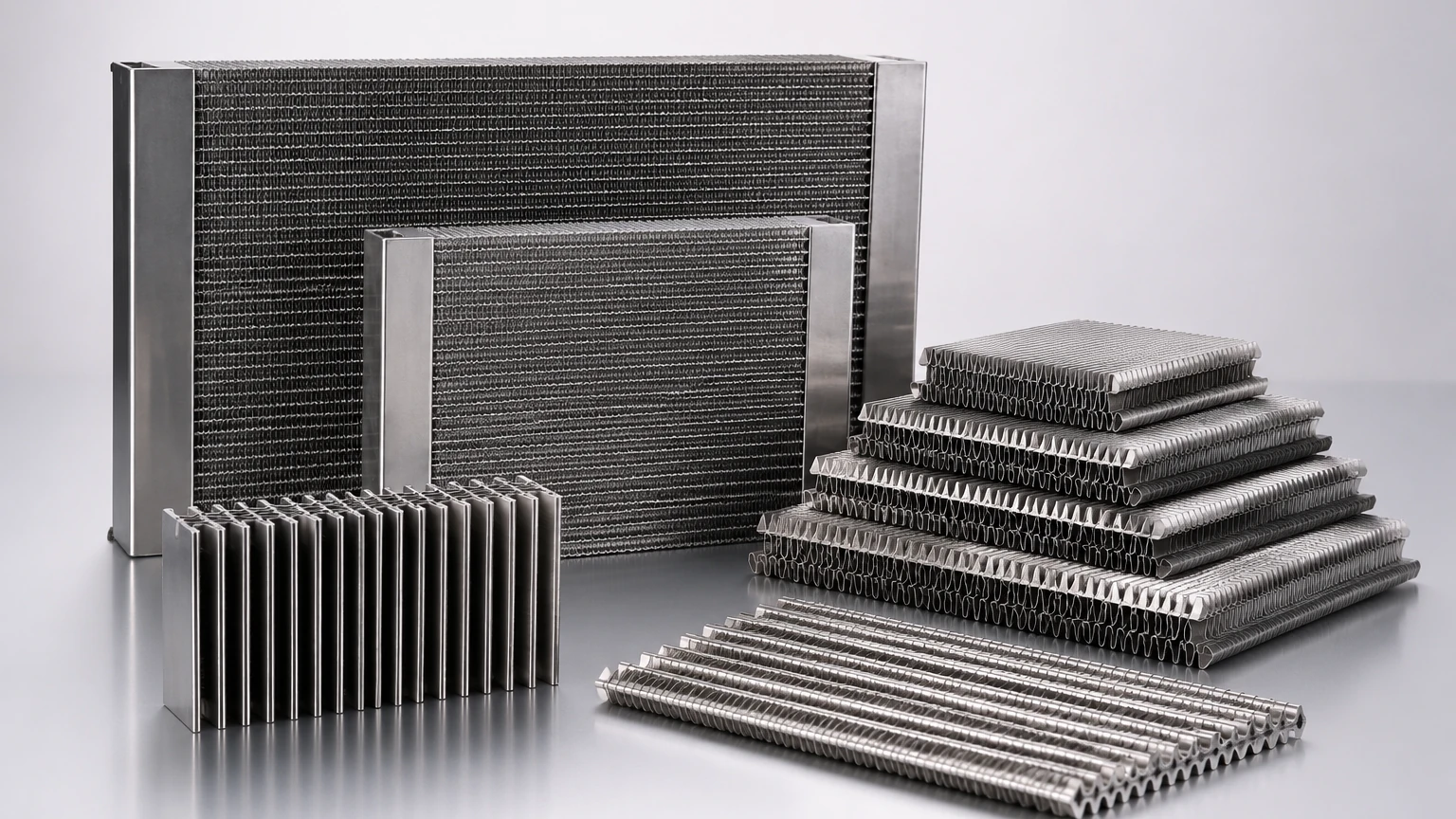
A plate fin assembly typically consists of flat plates (parting sheets) and corrugated fins, stacked and bonded together. This configuration creates a series of narrow passages through which fluids flow. The primary advantage of this design is its exceptionally high surface-area-to-volume ratio, which can be up to five to ten times higher than that of traditional shell-and-tube designs.
In the context of industrial filtration and fluid systems, plate fin structures serve several critical functions:
1. Thermal Regulation: In hydraulic and chemical systems, maintaining a specific temperature range is vital for fluid viscosity and component longevity. Plate fin designs allow for compact cooling or heating units integrated directly into the fluid path.
2. Flow Distribution: The corrugated nature of the fins acts as a series of channels that can break up laminar flow, inducing turbulence which enhances both heat transfer and the uniformity of fluid passing through downstream filter media.
3. Structural Support: In high-pressure applications, the fin structure provides internal reinforcement to the plates, allowing the assembly to withstand significant differential pressures without deformation.
For technical teams evaluating these components, the focus is often on balancing the need for high surface area with the physical constraints of the installation site. By utilizing custom stainless steel configurations, facilities can achieve high-density performance without the bulk of traditional equipment.
Engineering Specifications and Geometry
The performance of a plate fin component is dictated by the geometry of the fins themselves. Engineers must select fin types based on the specific Reynolds number of the fluid, the allowable pressure drop, and the potential for fouling. Common fin geometries include:
* Plain Fins: These are straight, continuous channels. They offer the lowest pressure drop and are the easiest to clean, making them suitable for fluids with low fouling tendencies.
* Serrated (Offset) Fins: These fins are cut and offset at regular intervals. This design constantly restarts the boundary layer of the fluid, significantly increasing the heat transfer coefficient, though at the cost of a higher pressure drop.
* Wavy (Herringbone) Fins: These provide a middle ground, creating a tortuous path that promotes mixing without the sharp edges of serrated fins, which can sometimes trap particulates.
* Perforated Fins: These feature small holes that allow for cross-flow between channels. In filtration-heavy applications, perforated fins can help equalize pressure across the element.
When designing these systems, engineers must also consider the "fin pitch" (the number of fins per inch) and the "fin height." A higher fin density increases surface area but also increases the risk of clogging if the fluid contains suspended solids. This is where the integration of high-quality wire mesh filters becomes critical; pre-filtration ensures that the narrow passages of the plate fin assembly remain clear of debris.
Material Selection: The Case for Stainless Steel
Material integrity is the most significant factor in the lifespan of a plate fin assembly. While aluminum is often used in cryogenic or aerospace applications due to its weight, industrial sectors such as chemical processing, pharmaceuticals, and food production almost exclusively require stainless steel.
Corrosion Resistance
Stainless steel grades like 304 and 316L are preferred for their resistance to oxidation and chemical attack. In environments where the fluid is acidic or where frequent caustic cleaning (CIP – Clean-In-Place) is required, 316L’s molybdenum content provides essential protection against pitting and crevice corrosion.
Thermal Stability
Industrial processes often involve thermal cycling. Stainless steel maintains its mechanical strength at much higher temperatures than aluminum or copper alloys. Furthermore, its coefficient of thermal expansion is well-understood, allowing for precise engineering of joints and seals that must remain leak-proof over thousands of operational hours.
Durability and Cleanliness
In the pharmaceutical and food and beverage industries, material leaching is a primary concern. Stainless steel is inert and does not shed particles into the process stream. Its hard surface also resists the erosive effects of high-velocity fluid flow, ensuring that the fin geometry remains intact over the long term.
Performance Metrics: Pressure Drop and Thermal Efficiency
For any engineer, the two most critical metrics for a plate fin component are the heat transfer coefficient (U) and the pressure drop ($ΔP$). These two factors are inherently linked; increasing the complexity of the fin to improve heat transfer almost always results in a higher resistance to flow.
Calculating the Trade-off
When selecting a component, the goal is to achieve the required thermal or distribution performance while staying within the pump's head capacity. A plate fin assembly that is too restrictive will lead to increased energy consumption and potential cavitation in hydraulic pumps. Conversely, an assembly with too little resistance may not provide the necessary contact time for efficient heat exchange.
Fouling Factors
Fouling is the accumulation of unwanted material on the fin surfaces. In industrial filtration, this is a constant challenge. Because plate fin passages are narrow, even minor fouling can lead to a geometric increase in pressure drop. Engineers must account for a "fouling allowance" during the design phase and ensure that the system includes adequate filtration. High-precision stainless steel filter cartridges are often used in tandem with plate fin heat exchangers to protect these sensitive internal geometries.
Customization and OEM Manufacturing Considerations
Because industrial applications vary wildly in terms of flow rate, chemistry, and space constraints, off-the-shelf plate fin solutions are rarely sufficient. Customization is the standard in high-stakes engineering environments. Working with a specialized manufacturer like Kaifil allows for the tailoring of every aspect of the component.
Manufacturing Techniques
The assembly of plate fin components requires advanced joining techniques. Vacuum Brazing is the gold standard for stainless steel assemblies. This process involves heating the entire assembly in a vacuum furnace, allowing a filler metal to flow into the joints via capillary action. The result is a monolithic structure with incredibly strong, leak-proof bonds that can withstand high pressures and thermal shocks.
OEM Integration
For original equipment manufacturers (OEMs), the ability to source components that fit specific footprints is vital. Customization options include:
* Specific inlet and outlet manifold configurations.
* Variable fin densities within a single stack to accommodate different fluid viscosities.
* Integration of mounting brackets and sensor ports directly into the assembly.
For engineers seeking specialized filtration components to complement these systems, reviewing product options and application support on the Main Page provides a comprehensive overview of available stainless steel solutions and manufacturing capabilities.
Maintenance and Longevity in Demanding Environments
The total cost of ownership (TCO) of a plate fin system is heavily influenced by its maintenance requirements. While these components are designed for durability, they are not "set and forget" assets. A proactive maintenance strategy is required to ensure they reach their intended service life, which can exceed 10 to 15 years in well-managed systems.
Cleaning Protocols
In industries like food and beverage, the ability to clean the internal passages is paramount. If the plate fin unit is used for cooling or heating organic media, biofilm or protein buildup can occur. Chemical cleaning agents must be compatible with the stainless steel grade used. Mechanical cleaning is often impossible due to the compact nature of the fins, making chemical circulation the primary method of restoration.
Monitoring and Diagnostics
Installing pressure transducers upstream and downstream of the plate fin unit is the most effective way to monitor its health. A gradual increase in $ΔP$ indicates fouling, while a sudden drop could indicate internal bypassing or structural failure of a fin row. Regular fluid analysis is also recommended to check for the presence of metallic particles, which could signal erosion or corrosion within the system.
Replacement Cycles
Unlike simple wire mesh filters, which may be cleaned and reused many times, a plate fin assembly that has suffered significant internal fouling or corrosion usually requires replacement. However, by using high-quality stainless steel and ensuring proper pre-filtration, the frequency of these replacements can be minimized, significantly reducing long-term operational costs.
Conclusion: Optimizing Industrial Performance
Plate fin technology remains a cornerstone of efficient industrial design, offering unparalleled surface area in a compact, durable package. For engineers in the chemical, pharmaceutical, and hydraulic sectors, the choice of a plate fin component is a decision that impacts the entire system's efficiency and reliability.
By focusing on high-grade materials like stainless steel and leveraging the expertise of custom manufacturers, organizations can overcome the challenges of corrosion, pressure, and thermal stress. The integration of precision-engineered filtration—such as the wire mesh and cartridge solutions provided by Kaifil—further ensures that these complex assemblies operate at peak performance throughout their lifecycle. When technical expertise in material science meets advanced manufacturing capabilities, the result is a fluid management system that is both cost-effective and resilient in the face of modern industrial demands.
