


Pleated Filter Cartridge Dust Collector
In modern industrial environments, the management of airborne particulates is a critical requirement for regulatory compliance, worker safety, and equipment longevity. The pleated filter cartridge dust collector has emerged as the standard for high-efficiency air filtration, offering significant advantages over traditional baghouse systems. For engineers and facility managers, understanding the technical nuances of pleated media, material compatibility, and structural design is essential for optimizing filtration performance in demanding sectors such as chemical processing, pharmaceuticals, and metalworking.
Unlike conventional fabric bags, pleated cartridges utilize a folded media design that dramatically increases the available surface area within a compact footprint. This architectural shift allows for lower filtration velocities and higher collection efficiencies, particularly for fine dust and sub-micron particles. As industrial processes become more complex, the selection of a pleated filter cartridge dust collector must be guided by rigorous engineering standards and a clear understanding of the specific application environment.
The Evolution of Industrial Dust Collection Technology
Historically, industrial dust collection relied heavily on large baghouse structures. While effective for high grain loading, these systems required massive floor space and frequent maintenance. The transition to pleated cartridge technology was driven by the need for higher efficiency in a smaller envelope.
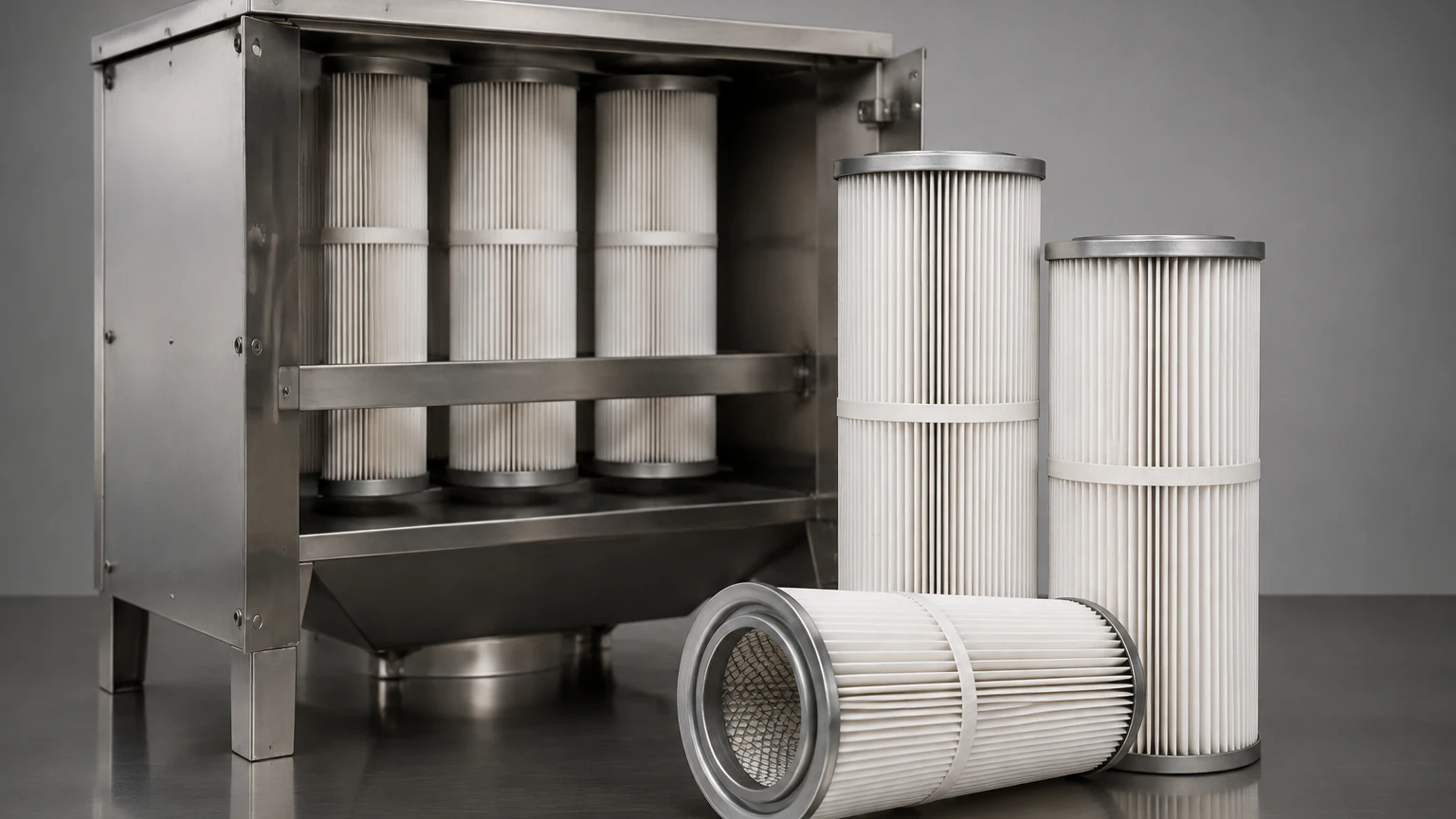
A pleated filter cartridge dust collector operates on the principle of surface filtration. By pleating the media, manufacturers can fit significantly more square footage of filter material into a single cartridge than a standard filter bag of the same diameter and length. This increased surface area results in a lower air-to-cloth (A/C) ratio. For engineers, a lower A/C ratio is a key performance indicator, as it reduces the velocity at which air passes through the media, thereby minimizing pressure drop and preventing particles from becoming deeply embedded in the substrate.
Furthermore, the rigid structure of a pleated cartridge eliminates the need for internal support cages required by bags. This simplifies the installation and replacement process, reducing downtime during maintenance cycles. For industries where process continuity is paramount, the move toward pleated solutions represents a significant improvement in operational reliability.
Engineering Advantages of Pleated Media Geometry
The primary technical benefit of the pleated design is the optimization of the filtration area. However, the geometry of these pleats must be carefully engineered to prevent "bridging"—a phenomenon where dust accumulates between the pleats and cannot be dislodged during the cleaning cycle.
Effective pleated filter cartridge dust collector designs incorporate specific pleat counts and depths tailored to the dust type. For example, sticky or hygroscopic dust requires wider pleat spacing to ensure that pulse-jet cleaning air can effectively reach the bottom of the pleats. Conversely, for fine, free-flowing dust, a higher pleat density can be used to maximize efficiency.
Another critical factor is the "can velocity," or the upward air velocity within the collector housing. Because pleated cartridges are often shorter than traditional bags, they allow for a larger dropout zone at the bottom of the collector. This encourages heavier particles to fall out of the airstream before they even reach the filter media, further extending the life of the cartridge and reducing the load on the pulse-jet system.
Material Science: Selecting Stainless Steel for Harsh Environments
While many pleated cartridges use synthetic media like polyester or cellulose, demanding industrial applications often require the durability and resistance of metal. As a professional manufacturer, Kaifil specializes in custom stainless steel filtration solutions that address the limitations of synthetic materials. In environments involving high temperatures, corrosive gases, or stringent hygiene requirements, stainless steel wire mesh or sintered metal media are often the only viable options.
Temperature and Chemical Resistance
Synthetic fibers typically have a maximum operating temperature of 120°C to 150°C. In contrast, stainless steel pleated cartridges can withstand temperatures exceeding 500°C, making them indispensable for kiln exhausts, smelting operations, and high-temperature chemical reactors. Additionally, in the chemical processing industry, exposure to acidic or alkaline vapors can degrade synthetic polymers. Utilizing 304 or 316L stainless steel ensures that the pleated filter cartridge dust collector maintains its structural integrity and filtration accuracy throughout its service life.
Hygiene and Cleanability
In the food and beverage and pharmaceutical sectors, the ability to clean and sterilize filtration components is mandatory. Stainless steel pleated filters are resistant to the harsh chemicals used in Clean-in-Place (CIP) procedures. Unlike porous synthetic fibers that can harbor bacterial growth, precision-engineered metal mesh provides a smooth surface that is easier to decontaminate, ensuring that the dust collection process does not become a source of cross-contamination.
Critical Performance Parameters for Engineers
When evaluating a pleated filter cartridge dust collector for a specific project, engineers must look beyond simple dimensions. Several technical parameters dictate the long-term success of the installation:
1. Micron Rating and Efficiency: It is vital to distinguish between nominal and absolute micron ratings. For critical applications, an absolute rating ensures that 99.9% of particles above a certain size are captured. Pleated cartridges are particularly adept at capturing PM2.5 and smaller particulates, which are often the focus of environmental regulations.
2. Initial and Operating Pressure Drop (Delta P): A high initial pressure drop indicates that the fan must work harder from day one, increasing energy costs. Engineers should select cartridges that provide the lowest possible Delta P for the required efficiency level.
3. Pulse-Jet Compatibility: The cartridge must be robust enough to withstand repeated high-pressure air blasts from the cleaning system. Structural failure during pulsing can lead to immediate dust bypass, contaminating the clean-air plenum and downstream equipment.
4. Gasket and Seal Integrity: The interface between the cartridge and the tube sheet is a common point of failure. High-quality gaskets made of EPDM, Silicone, or Viton are necessary to ensure a leak-proof seal, especially in hazardous dust applications.
For those seeking detailed specifications on high-performance filtration components, you can Review product options and application support on our Main Page to see how custom engineering supports these technical requirements.
Customization and OEM Integration Strategies
Standard off-the-shelf filter cartridges rarely meet the specific needs of specialized industrial machinery. Customization is often required to optimize the fit, flow, and filtration characteristics of a pleated filter cartridge dust collector. OEM integration involves a collaborative design process where the filter manufacturer works closely with the equipment designer to develop a bespoke solution.
Customization options include:
* End Cap Configurations: Whether the system requires a twist-lock, bolt-on, or flange-mounted design, the end caps must be precision-machined to fit the existing housing perfectly.
* Support Cores: For high-pressure applications, internal perforated stainless steel cores prevent the pleats from collapsing under the force of the airflow.
* Outer Jackets: In some environments, an outer expanded metal guard is added to protect the pleated media from large, abrasive debris that could cause mechanical damage.
By focusing on these custom details, Kaifil provides reliable OEM filtration solutions that ensure the dust collector operates at peak efficiency without the need for costly field modifications.
Maintenance, Lifecycle Management, and Total Cost of Ownership
While the initial purchase price of a pleated filter cartridge dust collector is a factor, the Total Cost of Ownership (TCO) is a more accurate metric for purchasing teams. TCO includes the cost of energy (fan power), compressed air consumption (for cleaning), downtime for replacements, and disposal costs.
Monitoring Pressure Drop
The most effective way to manage the lifecycle of a filter cartridge is through continuous monitoring of the differential pressure. A sudden drop in Delta P may indicate a tear or seal failure, while a steady increase that does not return to baseline after pulsing suggests that the media is "blinded" and requires replacement.
Replacement Cycles
In typical industrial applications, high-quality pleated cartridges can last between 12 and 24 months. However, in heavy-loading or high-temperature environments, this cycle may be shorter. Using stainless steel media can extend this lifecycle significantly, as the cartridges can often be ultrasonically cleaned and reused multiple times, unlike disposable synthetic alternatives.
Disposal Considerations
For industries handling hazardous dust, the volume of spent filter media is a logistical and financial burden. Because pleated cartridges are more compact than bags, they result in a lower volume of hazardous waste. Furthermore, stainless steel components are recyclable, aligning with corporate sustainability goals and reducing the environmental impact of the filtration process.
Conclusion
The selection of a pleated filter cartridge dust collector is a technical decision that impacts the safety, efficiency, and cost-effectiveness of industrial operations. By prioritizing high-quality materials like stainless steel and focusing on engineered pleat geometry, facilities can achieve superior air quality while minimizing maintenance requirements. Whether for a new installation or an OEM upgrade, understanding the relationship between media surface area, pressure drop, and material durability is the key to successful industrial filtration. For technical professionals looking to optimize their systems, consulting with a manufacturer that offers customized engineering and material expertise is the most reliable path forward.
