


Polymer Filtration
In the production of high-quality plastics, fibers, and resins, polymer filtration stands as a critical process step that directly influences the mechanical properties and aesthetic quality of the final product. As polymers are processed in a molten state, they often contain gels, degraded material, or inorganic contaminants that can lead to defects such as "fish eyes" in films, breaks in fine fibers, or structural weaknesses in molded parts. Achieving the necessary purity requires specialized filtration systems capable of withstanding extreme temperatures, high pressures, and the high viscosity characteristic of polymer melts.
For engineers and procurement teams, selecting the right filtration solution involves a complex balancing act between filtration fineness, pressure drop, and the total cost of ownership. This guide explores the technical foundations of polymer filtration, the engineering considerations for filter selection, and why stainless steel components are the preferred choice for demanding industrial applications.
Understanding the Fundamentals of Polymer Filtration
Polymer filtration is the process of removing solid or semi-solid impurities from a polymer stream. In most industrial settings, this occurs while the polymer is in a molten state, typically within an extruder or a dedicated filtration unit. The primary goal is to ensure that the material reaching the die or the spinning head is free of particles that could compromise the manufacturing process or the end-use performance of the material.
Contaminants in polymer processing generally fall into two categories: hard particles and soft contaminants. Hard particles include metal fragments from machinery wear, un-melted additives, or environmental dust. Soft contaminants, often referred to as gels, are cross-linked or high-molecular-weight polymer chains that have degraded due to heat or shear. Unlike hard particles, gels are deformable; they can be squeezed through filter pores if the pressure differential is too high, making depth filtration and precise pore size control essential.
Effective filtration ensures consistency in the production of products ranging from BOPP (Biaxially Oriented Polypropylene) films and PET (Polyethylene Terephthalate) bottles to high-performance engineering plastics used in the automotive and aerospace sectors.
Critical Engineering Requirements for Polymer Melt Filtration
Designing or selecting a system for polymer filtration requires a deep understanding of the rheological properties of the polymer. Unlike water or air filtration, polymer melt behaves as a non-Newtonian fluid, meaning its viscosity changes under different shear rates and temperatures.
High Pressure and Temperature Resistance
Industrial polymer processing often occurs at temperatures between 200°C and 350°C, with some specialty polymers requiring even higher thermal thresholds. Furthermore, because of the high viscosity of the melt, the pressure required to force the material through a fine filter can exceed several hundred bar. Filtration components must be engineered from materials that maintain their structural integrity and creep resistance under these extreme conditions. Stainless steel alloys, such as 304, 316L, and occasionally Hastelloy, are standard due to their thermal stability.
Pressure Drop and Flow Stability
The "clean" pressure drop (the initial resistance of the filter) and the rate at which the pressure increases as the filter loads are vital metrics. A rapid increase in pressure drop indicates that the filter is clogging, which can lead to reduced throughput or even mechanical failure of the filter element. Engineers must calculate the effective filtration area to ensure that the flux (flow rate per unit area) remains within a range that prevents gel shear-through while maintaining production speeds.
Micron Rating: Absolute vs. Nominal
In polymer filtration, the distinction between absolute and nominal micron ratings is critical. A nominal rating refers to a filter that can stop a certain percentage of particles of a given size. However, for high-precision applications like fiber spinning, an absolute rating is required. This ensures that no particle larger than the specified size can pass through the medium, providing a guaranteed level of protection for downstream equipment.
Selecting Filter Media for High-Viscosity Applications
The choice of filter media is perhaps the most significant factor in the success of a polymer filtration system. There are several types of metal media commonly employed, each offering different performance characteristics.
Sintered Metal Fiber Felt
Sintered metal fiber felt is a non-woven web of stainless steel fibers that are sintered together to create a rigid, porous structure. This medium is highly favored in polymer filtration because it offers a high porosity (up to 80%), which translates to a lower initial pressure drop and a higher dirt-holding capacity. Its depth-loading characteristics make it particularly effective at capturing gels, as the labyrinthine path through the fibers provides multiple opportunities for the gel to adhere to the metal surface.
Stainless Steel Wire Mesh
Woven wire mesh is a surface filtration medium. It provides a very precise and uniform pore size, making it excellent for removing hard particles of a specific dimension. In many polymer applications, multiple layers of wire mesh are sintered together to create a multi-layered laminate. This structure provides the necessary mechanical strength to resist the high differential pressures of the melt stream while maintaining the precise filtration characteristics of the finer mesh layers.
Sintered Powder Metal
For applications requiring extremely fine filtration or specific pore geometries, sintered powder metal components are used. These are created by compressing and sintering metal powders into a solid but porous form. While they offer high strength, they generally have lower porosity than fiber felts, leading to higher pressure drops.
The Advantages of Stainless Steel in Polymer Processing
While disposable filters exist for some lower-temperature liquid applications, the polymer industry relies almost exclusively on stainless steel and high-alloy metal filtration components. This preference is driven by several factors:
1. Durability: Stainless steel can withstand the mechanical stresses of high-pressure extrusion without deforming or shedding fibers into the melt stream.
2. Chemical Compatibility: Polymers and the additives used in their production (such as flame retardants or UV stabilizers) can be chemically aggressive. Stainless steel provides the necessary corrosion resistance to prevent contamination of the polymer.
3. Cleanability: One of the most significant advantages of metal filters is that they are often cleanable. Through processes such as ultrasonic cleaning, chemical baths, or controlled thermal oxidation (burn-off), the accumulated polymer and contaminants can be removed, allowing the filter element to be reused multiple times. This significantly reduces the total cost of ownership compared to disposable alternatives.
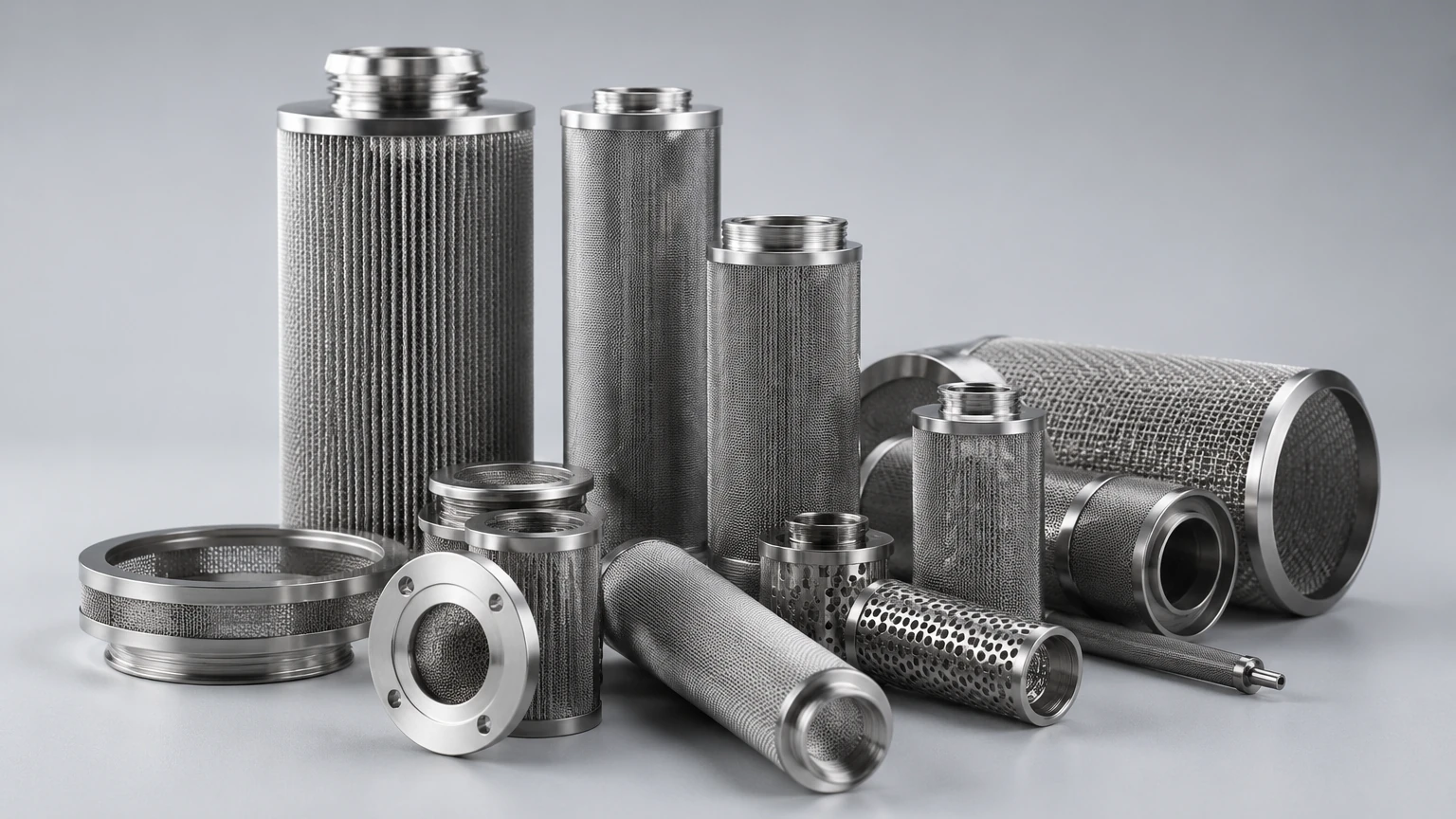
4. Customization: Metal filtration components can be fabricated into a wide variety of shapes, including pleated cartridges, flat discs, and cylindrical candles, to fit specific machine geometries. For more information on tailored filtration components, you can visit the Main Page to explore various configurations.
Operational Considerations: Maintenance and Replacement Cycles
In a B2B manufacturing environment, downtime is the enemy of profitability. Therefore, managing the lifecycle of polymer filters is a primary concern for plant engineers. The replacement cycle is typically dictated by the pressure drop across the filter. Once the pressure reaches a predetermined limit (the "terminal pressure"), the filter must be changed.
To minimize the impact on production, many plants utilize "continuous" screen changers or duplex filtration systems. A duplex system allows the flow to be diverted from one filter housing to another without stopping the extruder, enabling the operator to replace the clogged filter while the process continues.
When evaluating a supplier, it is important to confirm the expected number of cleaning cycles a filter can undergo before its structural integrity or filtration efficiency is compromised. Factors such as the method of cleaning and the nature of the contaminants will influence this lifespan. A high-quality stainless steel filter from a reputable manufacturer like Kaifil is designed to withstand the rigors of both operation and repeated cleaning.
Customization and OEM Solutions for Industrial Filtration
Every polymer production line has unique requirements based on the material being processed and the desired end-product quality. Standard off-the-shelf filters may not always provide the optimal balance of flow and retention. This is where custom engineering becomes essential.
When sourcing filters, engineers should look for manufacturers capable of providing OEM and customized filtration solutions. This includes:
* Material Selection: Choosing the specific grade of stainless steel or alloy to match the chemical profile of the polymer.
* Structural Design: Engineering the support layers of a filter to ensure it does not collapse under high differential pressure.
* Filtration Accuracy: Tailoring the pore size and distribution to target specific contaminant types, such as micro-gels or catalyst residues.
By working closely with a manufacturer that understands the nuances of polymer melt behavior, purchasing teams can secure components that not only meet technical specifications but also contribute to a more stable and cost-effective production process.
Conclusion
Polymer filtration is a sophisticated discipline that sits at the intersection of materials science and mechanical engineering. The choice of filtration media—whether it be sintered fiber felt for gel retention or multi-layered wire mesh for precise particle removal—has a profound impact on the quality of the final polymer product and the efficiency of the manufacturing line.
Investing in high-quality stainless steel filtration components ensures that the system can handle the demanding pressures and temperatures of the melt stream while offering the long-term value of cleanability and reuse. For those seeking reliable, precision-engineered filtration solutions tailored to specific industrial needs, reviewing the available technical options and manufacturing capabilities is the first step toward optimizing performance. To learn more about customized stainless steel filters and industrial applications, visit the Main Page for comprehensive product details and engineering support.
