


Polypropylene Filters
In the landscape of industrial liquid processing, selecting the appropriate filtration medium is a critical engineering decision that impacts product purity, equipment longevity, and operational overhead. Polypropylene filters have become a ubiquitous choice across diverse sectors—including chemical processing, food and beverage production, and pharmaceutical manufacturing—due to their broad chemical compatibility and cost-effective performance. However, for engineers and procurement specialists, understanding the technical nuances of polypropylene (PP) as a material, as well as its limitations compared to metallic alternatives, is essential for optimizing filtration systems.
This guide examines the technical specifications, application scenarios, and selection criteria for polypropylene filters, providing a professional framework for evaluating these components within an industrial context.
Understanding Polypropylene as a Filtration Medium
Polypropylene is a thermoplastic polymer characterized by its high resistance to a wide range of chemicals, including many organic solvents, acids, and alkalis. In the context of filtration, it is utilized in various forms, such as non-woven fibers, membranes, and extruded meshes. The material's inherent hydrophobicity makes it particularly effective for liquid-solid separation where aqueous solutions are processed.
From a molecular perspective, the non-polar nature of polypropylene ensures that it does not react with most process fluids. This stability prevents the leaching of contaminants into the filtrate, which is a primary requirement in high-purity applications like semiconductor manufacturing or pharmaceutical processing. Furthermore, polypropylene is naturally free of surfactants, binders, and adhesives when manufactured through thermal bonding processes, such as melt-blowing or pleating, which further minimizes the risk of extractables.
Thermal and Mechanical Constraints
One of the most important engineering considerations when specifying polypropylene filters is the temperature limit. Unlike stainless steel filtration components, which can withstand extreme heat, polypropylene typically has a maximum operating temperature between 60°C and 80°C (140°F to 176°F). Beyond these temperatures, the structural integrity of the polymer begins to degrade, leading to fiber migration or the collapse of the filter structure. For applications involving high-temperature steam sterilization or aggressive thermal processing, engineers often transition to metallic solutions found on the Main Page of specialized manufacturers.
Common Configurations of Polypropylene Filters
Industrial polypropylene filters are available in several distinct configurations, each offering unique advantages based on the nature of the contaminants and the required flow dynamics.
1. Melt-Blown Depth Filters
Melt-blown filters are produced by extruding molten polypropylene through high-velocity air streams to create fine fibers that are collected on a rotating mandrel. This process results in a complex, three-dimensional structure with a gradient density. The outer layers typically have larger pores to capture larger particles, while the inner layers are more densely packed to trap finer contaminants. This "depth" filtration mechanism allows for a high dirt-holding capacity, making them ideal for pre-filtration stages where a high volume of suspended solids must be removed.
2. Pleated Filter Cartridges
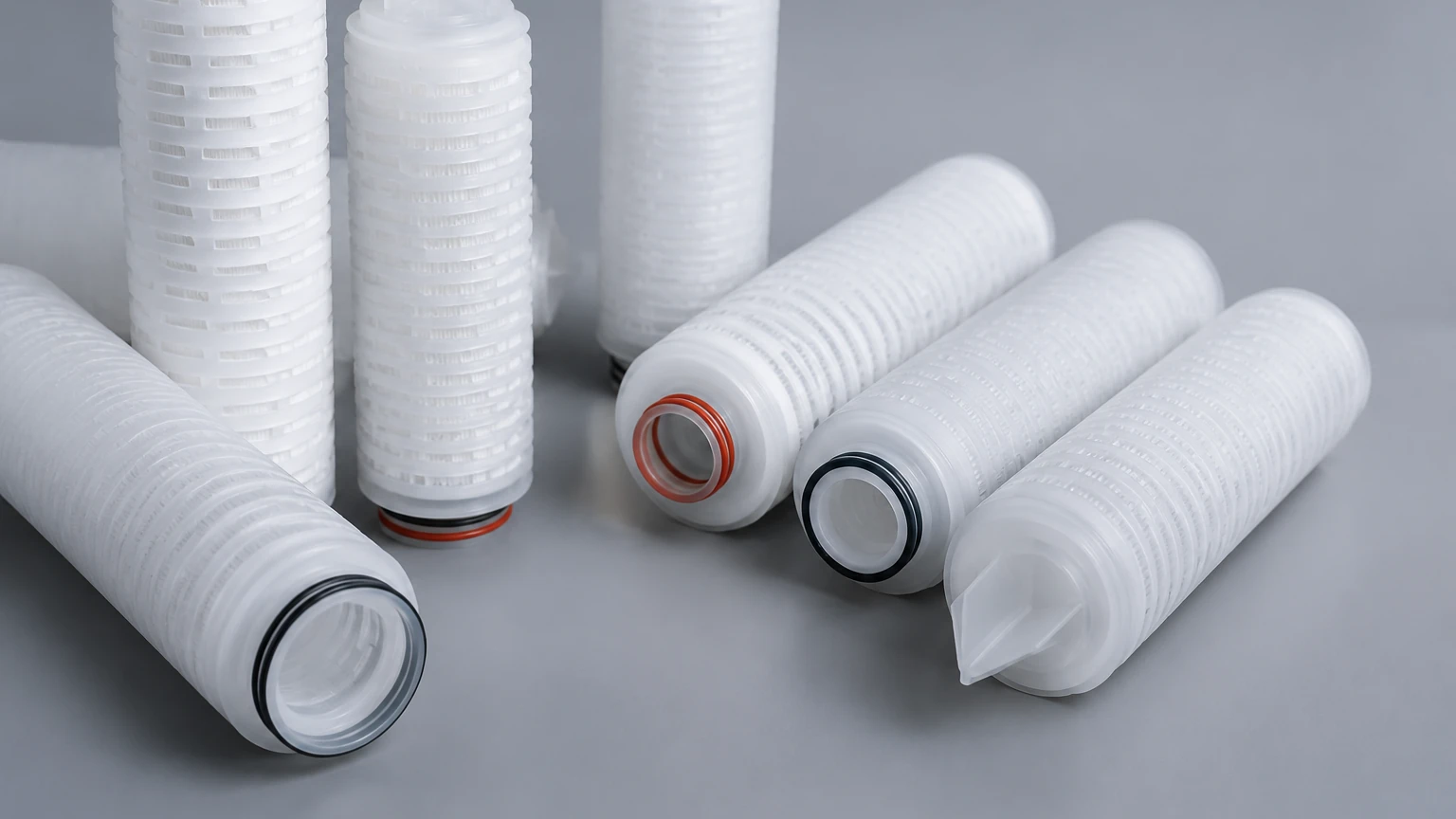
Pleated polypropylene filters are designed to maximize surface area within a standard cartridge footprint. By folding a thin membrane or non-woven sheet into a series of pleats, manufacturers can increase the filtration area by several factors compared to a standard depth filter. This configuration is preferred for high-flow applications and precision filtration. Pleated filters often feature "absolute" ratings, meaning they are verified to remove a specific percentage (usually 99.9%) of particles at a given micron size. This level of predictability is vital for final-stage filtration in critical processes.
3. String-Wound Filters
String-wound filters are a traditional form of depth filtration where polypropylene yarn is wound around a central core. The winding pattern creates diamond-shaped openings that become progressively smaller toward the center. While generally less precise than melt-blown or pleated options, string-wound filters are highly durable and cost-effective for heavy-duty industrial water treatment and coarse chemical filtration.
Technical Performance Metrics
When evaluating polypropylene filters, engineers must look beyond simple micron ratings. Several key performance indicators (KPIs) dictate how a filter will behave under real-world operating conditions.
* Beta Ratio and Efficiency: The Beta ratio (β) describes the filtration efficiency by comparing the number of particles upstream of the filter to the number downstream. For example, a Beta ratio of 1000 at 5 microns indicates 99.9% efficiency. For critical applications, absolute-rated polypropylene filters are necessary to ensure consistent output.
* Differential Pressure (ΔP): This is the difference in pressure between the inlet and outlet of the filter housing. A high initial differential pressure may indicate that the filter is undersized for the flow rate, while a rapid increase in ΔP during operation suggests high solids loading or premature blinding of the filter media.
* Dirt-Holding Capacity: This metric quantifies the total mass of contaminants a filter can retain before the differential pressure reaches the recommended change-out point. High dirt-holding capacity reduces the frequency of system downtime for filter replacements.
Chemical Compatibility and Application Scope
Polypropylene filters are prized for their versatility in chemically aggressive environments. They are generally resistant to:
* Acids: Including hydrochloric, sulfuric (at moderate concentrations), and phosphoric acids.
* Bases: Such as sodium hydroxide and potassium hydroxide.
* Salts: Most aqueous salt solutions do not affect the polymer.
* Alcohols: Ethanol, isopropanol, and other common industrial alcohols.
However, polypropylene has limited resistance to strong oxidizing agents, aromatic hydrocarbons (like benzene), and chlorinated solvents (like chloroform). In these instances, the polymer may swell or soften, leading to a loss of filtration efficiency. For processes involving these aggressive chemicals, or where high pressure is a factor, stainless steel filter cartridges are often the safer and more durable alternative.
Industry-Specific Use Cases
* Food and Beverage: Used for the clarification of bottled water, juices, and beer. Compliance with FDA (21 CFR) standards for food contact is a standard requirement for polypropylene filters in this sector.
* Pharmaceuticals: Employed in the pre-filtration of buffers, reagents, and active pharmaceutical ingredients (APIs). The low protein-binding nature of PP is an advantage here.
* Chemical Processing: Used in the filtration of plating baths, industrial acids, and specialty chemicals where corrosion resistance is paramount.
Polypropylene vs. Stainless Steel: Engineering Trade-offs
While polypropylene filters offer excellent value for many applications, they are fundamentally "consumable" components. In contrast, stainless steel filters, such as those produced by Kaifil, represent a long-term capital investment. Understanding the trade-offs between these two materials is essential for total cost of ownership (TCO) analysis.
| Feature | Polypropylene Filters | Stainless Steel Filters |
| :— | :— | :— |
| Initial Cost | Low | High |
| Reusability | Disposable (Single-use) | Cleanable and Reusable |
| Temperature Limit | Up to 80°C | Up to 500°C+ |
| Pressure Resistance | Moderate | Very High |
| Chemical Resistance | Broad (except oxidizers/aromatics) | Excellent (especially 316L) |
| Waste Generation | High (frequent disposal) | Low (long service life) |
In many high-volume industrial lines, polypropylene filters serve as effective pre-filters to protect more expensive downstream equipment or high-precision stainless steel membranes. For example, a 10-micron melt-blown polypropylene filter might be used to remove the bulk of suspended solids before the fluid reaches a 1-micron stainless steel mesh filter. This staged approach balances the low cost of PP consumables with the precision and durability of metallic media.
Selection and Sizing Considerations
To ensure the success of a filtration system utilizing polypropylene filters, engineers should confirm several technical details before procurement:
1. Flow Rate vs. Viscosity: The flow rate of the process fluid significantly impacts the pressure drop. Higher viscosity fluids require larger filtration surface areas or lower flux rates to prevent excessive ΔP.
2. Micron Rating Accuracy: Determine if the application requires a nominal rating (approximate) or an absolute rating (guaranteed). Inaccurate sizing can lead to either bypass of contaminants or frequent clogging.
3. Housing Compatibility: Ensure the filter cartridge end-cap configuration (e.g., Code 7, DOE, or 222/Flat) matches the existing filter housing to prevent bypass leaks.
4. Seal Material: While the filter media is polypropylene, the O-rings or gaskets (Viton, EPDM, Silicone) must also be compatible with the process fluid.
Maintenance and Replacement Cycles
Because polypropylene filters are typically non-cleanable, establishing a rigorous replacement schedule is vital. Most manufacturers recommend a change-out when the differential pressure reaches approximately 2.0 to 2.5 bar (30-35 psi). Operating beyond this point risks "unloading," where the pressure forces trapped contaminants through the media and into the clean side of the system. It can also cause structural deformation of the cartridge.
In systems where frequent filter changes become a bottleneck or a safety concern due to chemical exposure, upgrading to a cleanable stainless steel system may be the more efficient route. You can explore various high-performance metal filtration options on the Main Page to compare how permanent filtration solutions might integrate into your existing infrastructure.
Conclusion
Polypropylene filters remain a cornerstone of industrial liquid processing due to their versatility and economic profile. By understanding the differences between melt-blown, pleated, and wound configurations, and by respecting the thermal and chemical boundaries of the polymer, engineers can design reliable and efficient filtration stages. Whether used as a standalone solution for light-duty tasks or as a sacrificial pre-filter for advanced stainless steel systems, polypropylene media provides the flexibility required to meet modern manufacturing standards. When the demands of the application exceed the capabilities of polymers—specifically regarding temperature, pressure, or reusability—transitioning to precision-engineered metal components ensures continued operational excellence.
