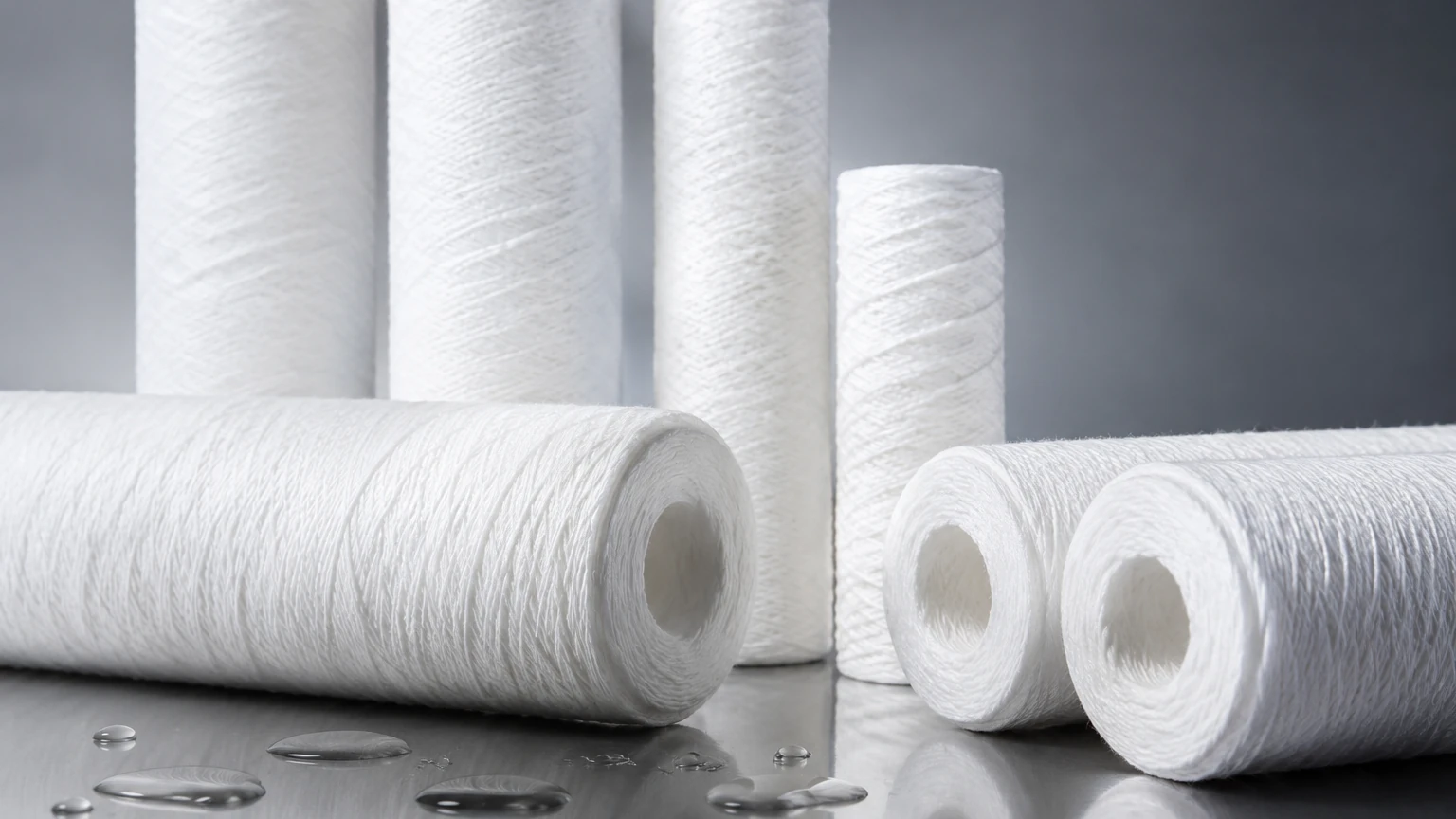
Polypropylene Sediment Filter
In industrial fluid processing, the polypropylene sediment filter serves as a critical primary stage for removing suspended solids, particulates, and debris from liquid streams. These filters are essential for protecting downstream equipment—such as high-pressure pumps, reverse osmosis membranes, and precision spray nozzles—from abrasion and clogging. Understanding the technical nuances of polypropylene (PP) media, its structural variations, and its performance limits is vital for engineers and procurement teams tasked with optimizing filtration efficiency and minimizing operational downtime.
Understanding the Fundamentals of Polypropylene Sediment Filtration
Polypropylene is a thermoplastic polymer widely utilized in filtration due to its excellent chemical resistance, hydrophobic nature, and cost-effectiveness. A polypropylene sediment filter typically operates on the principle of mechanical straining or depth filtration. Unlike surface filters, which capture particles on a single plane, depth filters utilize the entire thickness of the filter media to trap contaminants.
In a B2B industrial context, these filters are generally classified as "disposable" or "consumable" components. The media is engineered to create a complex, three-dimensional matrix. As fluid passes through this matrix, particles are trapped within the varying pore sizes of the material. This mechanism allows for a high dirt-holding capacity, which is a primary metric for evaluating the service life of a filter cartridge.
From an engineering perspective, the choice of polypropylene is often dictated by its inert properties. It does not leach surfactants, binders, or adhesives into the process fluid, making it compliant with various regulatory standards, including those required for food and beverage or pharmaceutical pre-filtration. However, while PP is versatile, its performance is strictly bounded by temperature and pressure constraints that must be accounted for during the system design phase.
Types of Polypropylene Filter Media and Their Engineering Characteristics
Industrial polypropylene sediment filters are manufactured using several distinct processes, each resulting in different performance profiles. Selecting the correct type depends on the specific particle size distribution of the influent and the required flow rates.
Melt-Blown Filter Cartridges
Melt-blown filters are produced by extruding molten polypropylene through high-velocity air, which attenuates the filaments into fine fibers. These fibers are then thermally bonded together on a rotating mandrel. The result is a coreless, self-supporting structure with a graded density. The outer layers typically have larger pores to capture coarse debris, while the inner layers are more densely packed to trap finer particles. This "true gradient density" maximizes the filter’s life by preventing the outer surface from blinding prematurely.
String-Wound Filter Cartridges
String-wound filters are one of the oldest and most reliable forms of depth filtration. They are manufactured by winding a continuous yarn around a central support core (often made of PP or stainless steel). The winding pattern creates diamond-shaped openings that become progressively smaller toward the center. Engineers often specify string-wound filters for applications with high sediment loads because the winding pattern can be adjusted to handle specific types of fibrous or gelatinous contaminants.
Pleated Polypropylene Filters
While melt-blown and string-wound filters focus on depth, pleated polypropylene filters focus on surface area. By pleating thin sheets of PP media, manufacturers can fit a significantly larger filtration area into a standard cartridge footprint. These are typically used for high-flow applications or where absolute-rated filtration is required. Because of the increased surface area, pleated filters exhibit a lower initial pressure drop and can handle higher flow velocities compared to depth filters of the same micron rating.
Key Performance Indicators: Micron Ratings and Flow Dynamics
When evaluating a polypropylene sediment filter, technical professionals must distinguish between nominal and absolute micron ratings. This distinction is often the source of performance failures in industrial systems.
* Nominal Micron Rating: This represents an arbitrary value indicating the filter's ability to capture a percentage of particles of a given size (usually between 60% and 80%). It is a useful guide for general sediment removal but lacks the precision required for critical processes.
* Absolute Micron Rating: This indicates that the filter will remove at least 99.9% (Beta 1000) of particles at the specified micron size. Absolute-rated PP filters are typically pleated and used in final-stage filtration where consistency is paramount.
Flow dynamics also play a crucial role. The "clean pressure drop" ($ΔP$) refers to the resistance to flow when the filter is new. As the filter captures sediment, the $ΔP$ increases. Engineers must size the filtration housing and select the pump capacity based on the "terminal pressure drop"—the point at which the filter is considered exhausted and must be replaced. Over-sizing the filtration system can lead to longer service intervals and lower energy consumption due to reduced resistance.
Chemical Compatibility and Thermal Constraints
Polypropylene is prized for its resistance to a wide array of chemicals, including most organic acids, alkalis, and many organic solvents. This makes the polypropylene sediment filter a staple in chemical processing and metal finishing industries. However, its performance degrades rapidly when exposed to strong oxidizing agents or certain hydrocarbons at elevated temperatures.
Thermal stability is a significant limitation of PP. Most polypropylene filters are rated for a maximum operating temperature of approximately 60°C to 80°C (140°F to 176°F). Beyond these temperatures, the structural integrity of the fibers may soften, leading to "unloading"—a phenomenon where previously trapped particles are pushed through the media and back into the process stream. For high-temperature applications or steam sterilization requirements, engineers often transition to metallic filtration solutions, such as those provided on the Main Page.
Operational Maintenance: Monitoring Pressure Drop and Replacement Cycles
In a B2B environment, the total cost of ownership (TCO) for filtration is heavily influenced by maintenance labor and replacement frequency. A polypropylene sediment filter is not cleanable; once it reaches its terminal pressure drop (typically 20-35 psi depending on the housing design), it must be disposed of.
To optimize replacement cycles, facilities should implement differential pressure monitoring. Relying on a fixed calendar schedule for filter changes often leads to either premature replacement (wasting filter life) or late replacement (risking bypass or equipment damage). Automated systems can trigger an alarm or switch to a duplex filter housing when the $ΔP$ reaches a pre-set limit, ensuring continuous operation.
Another factor to consider is the "bypass" risk. In low-quality PP filters, high differential pressure can cause the media to compress or channel, allowing unfiltered liquid to pass through. Selecting filters with a rigid internal core or reinforced end caps can mitigate this risk in high-demand industrial environments.
Comparative Analysis: Polypropylene vs. Stainless Steel Filtration Solutions
While the polypropylene sediment filter is an excellent choice for many general-purpose applications, it is not a universal solution. Procurement teams must weigh the benefits of disposable PP filters against the long-term advantages of permanent stainless steel filters.
| Feature | Polypropylene (PP) Filter | Stainless Steel (SS) Filter |
| :— | :— | :— |
| Initial Cost | Low | High |
| Reusability | Disposable | Cleanable/Backwashable |
| Temperature Limit | Low (<80°C) | Very High (>400°C) |
| Chemical Resistance | Good (Acids/Bases) | Excellent (Solvents/Oxidizers) |
| Structural Strength | Moderate | High (Handles high $ΔP$) |
| Waste Generation | High (Used cartridges) | Low (Permanent media) |
For processes involving high temperatures, aggressive solvents, or high-viscosity fluids, the mechanical strength of stainless steel is superior. Stainless steel wire mesh or sintered metal filters can be cleaned and reused, which, despite a higher initial investment, often results in a lower TCO over several years. Companies like Kaifil specialize in these high-performance metal components for environments where a standard polypropylene sediment filter would fail or become economically unviable due to high replacement frequency.
Procurement Considerations for Industrial Filtration Systems
When sourcing polypropylene sediment filters for industrial use, purchasing departments should confirm several technical specifications with their suppliers to ensure application compatibility:
1. Media Integrity: Ensure the PP used is virgin grade and free of binders or lubricants that could contaminate the process fluid.
2. Seal Configuration: Determine if the application requires DOE (Double Open End) or SOE (Single Open End) cartridges. SOE cartridges with O-rings (e.g., Code 7 or Code 3) provide a more secure seal, preventing bypass in critical applications.
3. Efficiency Ratings: Verify if the micron rating is nominal or absolute, and request a Beta ratio chart if the filtration is for a sensitive process.
4. System Compatibility: Confirm that the cartridge length (e.g., 10", 20", 30", or 40") and diameter match existing filter housings.
5. Regulatory Compliance: For food, beverage, or pharmaceutical use, ensure the materials meet FDA or USP Class VI standards.
By focusing on these factual engineering parameters, technical teams can ensure that their choice of a polypropylene sediment filter provides the necessary protection for their equipment while maintaining cost-effective operations. For more specialized filtration needs or to explore the transition from disposable to permanent metal filtration, you can Review product options and application support to find a solution tailored to your specific industrial requirements.