


Polyurethane Foam Filter Material
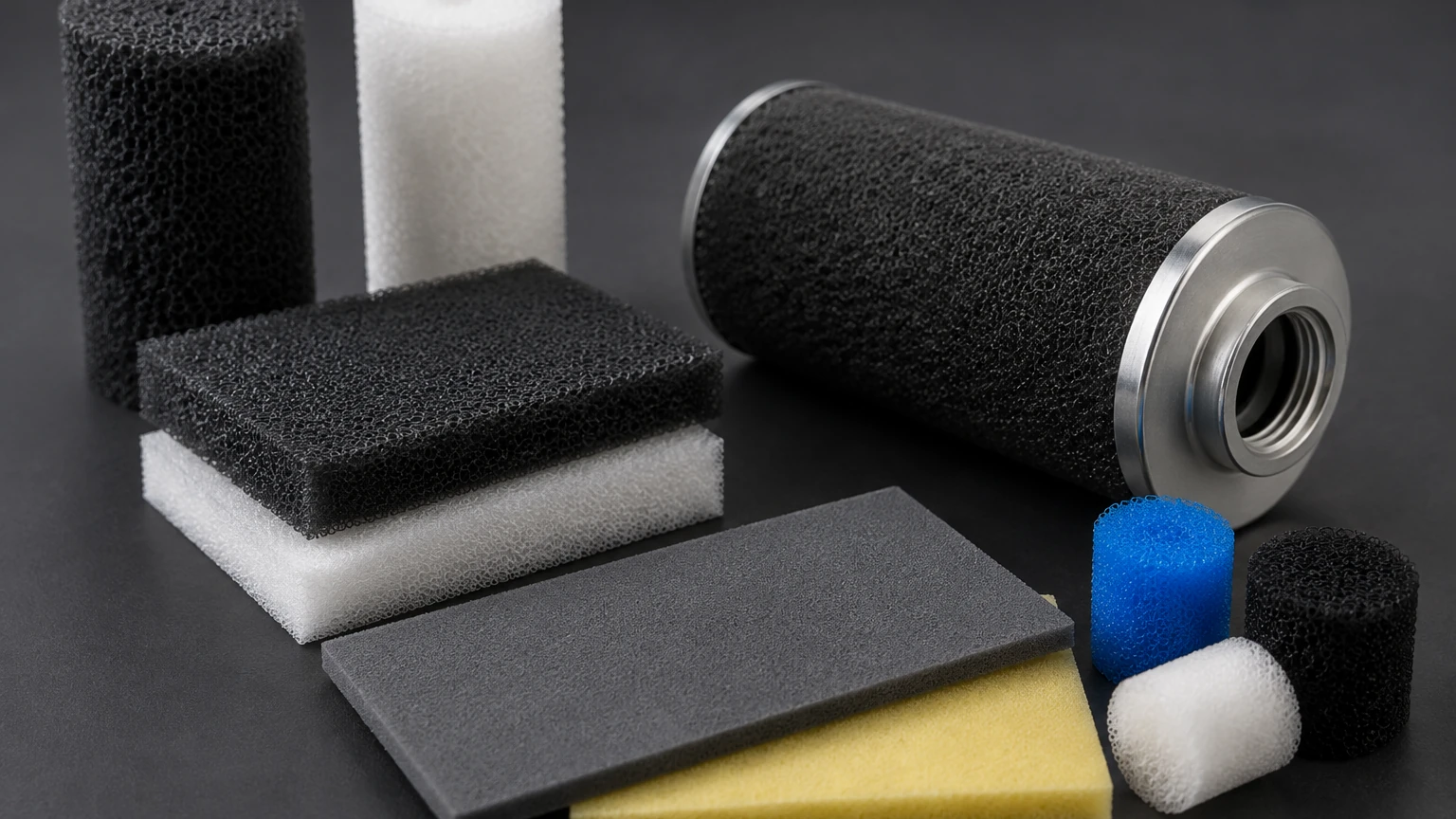
In the landscape of industrial filtration, selecting the appropriate media requires a deep understanding of fluid dynamics, chemical compatibility, and mechanical durability. Polyurethane foam filter material, specifically reticulated open-cell foam, represents a versatile solution for air and liquid filtration applications. Unlike standard upholstery or packaging foams, reticulated polyurethane foam undergoes a specialized manufacturing process that removes the thin cell membranes (windows), leaving behind a three-dimensional skeletal structure. This architecture provides a high surface area and low resistance to flow, making it an essential component in many industrial systems.
For engineers and procurement specialists, the challenge lies in matching the specific grade of polyurethane foam to the operational demands of the environment. Whether used as a primary filter or a pre-filter for more delicate components like stainless steel wire mesh, understanding the technical nuances of this material is critical for optimizing system performance and longevity.
Technical Fundamentals of Reticulated Polyurethane Foam
The performance of polyurethane foam filter material is primarily defined by its cellular structure. The process of reticulation—typically achieved through a thermal or chemical method—converts a closed-cell or partially open-cell foam into a fully open-cell network. In thermal reticulation, the foam is placed in a vacuum chamber filled with a combustible gas mixture; upon ignition, the resulting flash fire melts away the thin cell windows without damaging the thicker skeletal strands.
Pore Size and PPI Ratings
The most common metric for specifying polyurethane foam is Pores Per Inch (PPI). This rating indicates the number of pores across a linear inch of the material. PPI ratings typically range from 10 PPI (very coarse) to 100 PPI (very fine).
* 10 to 30 PPI: These coarse grades are used for high-flow applications where large particulates must be captured. They offer extremely low pressure drop and are frequently used in heavy-duty air intakes and pre-filtration for HVAC systems.
* 45 to 60 PPI: These intermediate grades balance filtration efficiency with airflow. They are common in small engine air filters and electronic equipment cooling.
* 80 to 100 PPI: Fine grades are used for high-efficiency filtration of smaller particles. While they provide superior capture rates, they also exhibit higher resistance to flow (pressure drop) and require more frequent cleaning or replacement.
Polyester vs. Polyether Polyurethane
From a chemical engineering perspective, polyurethane foam filter material is categorized into two main types: polyester-based and polyether-based. The choice between them is dictated by the chemical environment of the application.
1. Polyester Polyurethane: This variant offers superior resistance to hydrocarbons, oils, and many common solvents. It possesses higher tensile strength and tear resistance compared to polyether. However, polyester foam is susceptible to hydrolytic degradation; it will break down when exposed to high humidity and heat over extended periods.
2. Polyether Polyurethane: This material is highly resistant to water and microbial growth. It is the preferred choice for applications involving water treatment, high-humidity air filtration, or any environment where moisture is prevalent. While it lacks the solvent resistance of polyester, its hydrolytic stability makes it indispensable for many industrial liquid filtration tasks.
Engineering Considerations for Industrial Integration
When designing a filtration system that incorporates polyurethane foam filter material, several engineering factors must be evaluated to ensure the assembly meets the required specifications. Engineers often look to the Main Page of specialist manufacturers like Kaifil to understand how these flexible materials can be integrated with rigid stainless steel components for robust industrial use.
Pressure Drop and Flow Rates
The "delta P" or pressure drop across a filter is a critical design parameter. Because reticulated foam is approximately 97% void space, it allows for high flow rates with minimal energy loss. However, as the foam loads with contaminants, the pressure drop increases. Engineers must calculate the maximum allowable pressure drop before the filter requires servicing. The permeability of the foam is directly proportional to the PPI; a 10 PPI foam will have significantly lower resistance than a 100 PPI foam at the same face velocity.
Depth Filtration vs. Surface Filtration
Polyurethane foam acts as a depth filtration medium. Unlike a thin wire mesh that captures particles primarily on its surface, foam captures particles throughout its entire thickness. This three-dimensional capture mechanism allows for a higher dust-holding capacity. In many industrial designs, a layer of polyurethane foam is placed upstream of a precision stainless steel filter cartridge. The foam captures the bulk of the coarse debris, preventing the finer, more expensive metal filter from clogging prematurely.
Thermal and Environmental Limits
Standard polyurethane foams generally operate effectively within a temperature range of -40°C to 120°C (-40°F to 250°F). Beyond these temperatures, the polymer structure may soften or become brittle. Additionally, if the application involves exposure to UV light, stabilizers must be added during the foam manufacturing process, as untreated polyurethane is prone to yellowing and degradation under ultraviolet radiation.
Applications in Diverse Industrial Sectors
The versatility of polyurethane foam filter material allows it to serve across various sectors, often in conjunction with metal filtration components to provide multi-stage protection.
Air and Gas Filtration
In the industrial machinery sector, foam filters are used to protect internal components from airborne dust and debris. This includes air compressors, blowers, and electrical cabinets. In these environments, the foam is often housed in a metal frame or supported by a coarse stainless steel mesh to maintain its shape under high-velocity airflow.
Liquid Filtration and Water Treatment
Polyether-based foams are widely used in water treatment and aquatic systems. Their open-cell structure provides a massive surface area for biological filtration, supporting the growth of beneficial bacteria that break down organic waste. In industrial liquid processing, foam can serve as a coarse strainer for cooling water or as a coalescing medium to separate oil from water.
Acoustic and Vibration Dampening
While primarily used for filtration, the reticulated structure of polyurethane foam also makes it an excellent acoustic absorber. In industrial settings where high-pressure gas flow creates significant noise, reticulated foam can be used in silencers and mufflers. It attenuates sound waves while allowing the gas to pass through with minimal backpressure.
Evaluating Risks and Performance Expectations
While polyurethane foam filter material is highly effective, it is not without limitations. Procurement teams must be aware of the common risks associated with improper selection or maintenance.
Chemical Incompatibility
Using a polyester foam in a high-humidity, high-temperature environment will lead to "crumbling" as the polymer chains break down through hydrolysis. Conversely, using a polyether foam in a system processing aggressive aromatic solvents may cause the foam to swell and lose its structural integrity. Always verify the chemical composition of the fluid or gas being filtered against the foam's compatibility chart.
Compression Set and Fatigue
If the foam is subjected to constant mechanical compression within a housing, it may experience "compression set," where it fails to return to its original thickness. This reduces the effective filtration area and increases the pressure drop. Ensuring the filter housing is designed to support the foam without excessive compression is vital for maintaining performance.
Replacement Cycles and Total Cost of Ownership
One of the advantages of polyurethane foam is that many grades are washable and reusable. They can be cleaned with water or compressed air and returned to service. However, repeated cleaning cycles eventually wear down the skeletal strands. For critical industrial applications, a scheduled replacement cycle is often more cost-effective than attempting to clean a heavily fouled filter, as the labor costs and risk of bypass (due to foam tearing) can outweigh the cost of a new filter element.
Customization and OEM Solutions
For most industrial applications, off-the-shelf foam sheets are insufficient. Customization is necessary to ensure a precise fit within the filtration housing. Manufacturers like Kaifil provide expertise in combining these flexible materials with rigid metal structures.
Die-Cutting and Shaping
Polyurethane foam can be die-cut into complex geometries to fit specific filter housings. It can also be laminated to other materials, such as felt or wire mesh, to create composite filters that offer multiple stages of filtration in a single component.
Integration with Stainless Steel Components
In high-pressure or high-temperature environments where foam alone might collapse, it is often integrated with stainless steel supports. This might include:
* Internal Support Cores: A perforated stainless steel tube that prevents the foam from collapsing inward.
* Outer Protective Cages: A wire mesh or expanded metal cage that protects the foam from mechanical damage during handling or installation.
* Hybrid Cartridges: A design where a polyurethane foam outer layer serves as a pre-filter for a pleated stainless steel inner element.
By leveraging the strengths of both materials—the depth filtration and cost-effectiveness of foam and the precision and durability of stainless steel—engineers can create highly optimized filtration solutions. For those seeking detailed specifications on how these materials are manufactured and integrated, exploring the technical resources on the Main Page of an experienced manufacturer is a recommended next step.
Conclusion: Making Informed Purchasing Decisions
Selecting the right polyurethane foam filter material requires a balance of technical specifications and practical operational knowledge. By focusing on the PPI rating, the chemical base (polyester vs. polyether), and the physical demands of the application, engineers can ensure they are choosing a material that provides the necessary filtration efficiency without compromising system reliability.
When evaluating suppliers, it is essential to confirm their ability to provide consistent pore sizes, clean-room compatibility if required, and the capability to integrate the foam into larger assemblies. Whether the goal is to protect a sensitive hydraulic system or to provide clean air for an industrial process, the correct application of reticulated polyurethane foam is a cornerstone of efficient filtration design. Understanding these factual boundaries allows purchasing teams to move beyond generic marketing claims and focus on the engineering realities that drive industrial success.
