


Porous Aluminum
In the landscape of industrial materials, porous aluminum represents a specialized class of cellular metals characterized by a high volume fraction of pores. Unlike solid aluminum alloys, these materials offer a unique combination of low density, high gas permeability, and significant thermal and acoustic energy absorption. For engineers and procurement specialists, understanding the technical nuances of porous aluminum is essential when selecting materials for filtration, heat exchange, or structural damping applications.
As a manufacturer specializing in precision filtration, Kaifil recognizes that while stainless steel remains the industry standard for high-temperature and corrosive environments, porous aluminum serves critical niche roles where weight reduction and thermal management are the primary design drivers. This guide explores the engineering properties, manufacturing methods, and selection criteria for porous aluminum in industrial contexts.
The Structure and Classification of Porous Aluminum
Porous aluminum is generally categorized into two distinct types based on the connectivity of its internal voids: closed-cell and open-cell.
Open-Cell Porous Aluminum
For filtration and fluid dynamics, open-cell structures are the most relevant. In these materials, the pores are interconnected, creating a continuous path for gases or liquids to flow through the metal matrix. This structure is often referred to as aluminum foam or sintered aluminum, depending on the manufacturing process. The interconnected nature allows the material to function as a depth filter, capturing particulates within the tortuous paths of the metal skeleton.
Closed-Cell Porous Aluminum
In closed-cell structures, each pore is sealed off from its neighbors by a thin wall of aluminum. While these materials are excellent for structural lightweighting and impact absorption, they are impermeable to fluids and therefore unsuitable for filtration. Engineers must specify open-cell morphology when the application involves flow-through requirements.
Manufacturing Processes for Industrial Porous Aluminum
The method of production dictates the resulting pore size, distribution, and mechanical integrity of the material. There are three primary industrial methods used to create porous aluminum structures.
1. Investment Casting (Replication Process)
This is a common method for producing high-quality open-cell aluminum foams. A polymer foam template is coated with a ceramic slurry. Once the ceramic hardens, the polymer is burned out, leaving a negative mold. Molten aluminum is then injected into the mold. After the metal solidifies, the ceramic is removed, leaving an aluminum structure that perfectly replicates the original open-cell polymer foam. This process allows for precise control over the Pores Per Inch (PPI) rating.
2. Gas Injection and Foaming Agents
In this process, gas is injected directly into molten aluminum that has been thickened with ceramic particles (such as silicon carbide). Alternatively, a foaming agent like titanium hydride is added to the melt, which releases gas upon heating. While cost-effective for large-scale production, this method often results in a mix of open and closed cells and is less precise for fine filtration requirements compared to sintered or replicated structures.
3. Powder Metallurgy (Sintering)
Sintering involves compacting aluminum powder—often mixed with a space-holder material—and heating it below the melting point. The space-holder is later removed, leaving behind a porous network. This method is highly effective for creating "sintered porous aluminum," which offers superior mechanical strength and more uniform pore distribution for precision gas diffusion and filtration tasks.
Key Engineering Properties for Filtration
When evaluating porous aluminum for a project, several technical metrics must be analyzed to ensure the material meets the performance requirements of the system.
Porosity and Pore Size
Porosity is the ratio of the volume of voids to the total volume of the material, typically ranging from 50% to 90% in industrial applications. Pore size is usually measured in microns or PPI. For filtration, the "micron rating" is the most critical factor, as it determines the smallest particle size the filter can reliably intercept.
Permeability and Pressure Drop
Permeability defines how easily a fluid can pass through the porous medium. In industrial filtration, a high permeability is desired to minimize the pressure drop across the filter. A high pressure drop increases energy consumption and can lead to structural failure of the filter element if not properly accounted for in the design phase.
Thermal Conductivity
One of the standout features of aluminum is its high thermal conductivity. Even in its porous form, aluminum excels at transferring heat. This makes porous aluminum an ideal choice for heat sinks, flame arrestors, and applications where the fluid being filtered must be simultaneously cooled or heated.
Applications in Industrial Environments
While Kaifil focuses on high-performance stainless steel solutions, porous aluminum is frequently utilized in specific sectors where its unique properties provide a competitive advantage.
Gas Diffusion and Aeration
Porous aluminum is widely used in the semiconductor and chemical processing industries for gas diffusion. Its uniform pore structure allows for the even distribution of gases into liquids or across surfaces, which is critical for processes like carbonation, aeration in water treatment, and chemical vapor deposition.
Acoustic Damping and Silencing
The tortuous path of open-cell aluminum is highly effective at dissipating sound energy. It is used in pneumatic silencers and industrial exhaust systems to reduce noise levels without significantly obstructing airflow.
Flame Arrestors
Due to its high thermal mass and conductivity, porous aluminum can quench flames by rapidly absorbing heat as a gas mixture passes through the pores. This makes it a vital safety component in fuel systems and gas transport lines.
Lightweight Structural Filtration
In aerospace and automotive applications, weight is a primary concern. Porous aluminum provides a lightweight alternative to heavier metal filters, offering sufficient mechanical strength for low-to-medium pressure systems while significantly reducing the overall mass of the assembly.
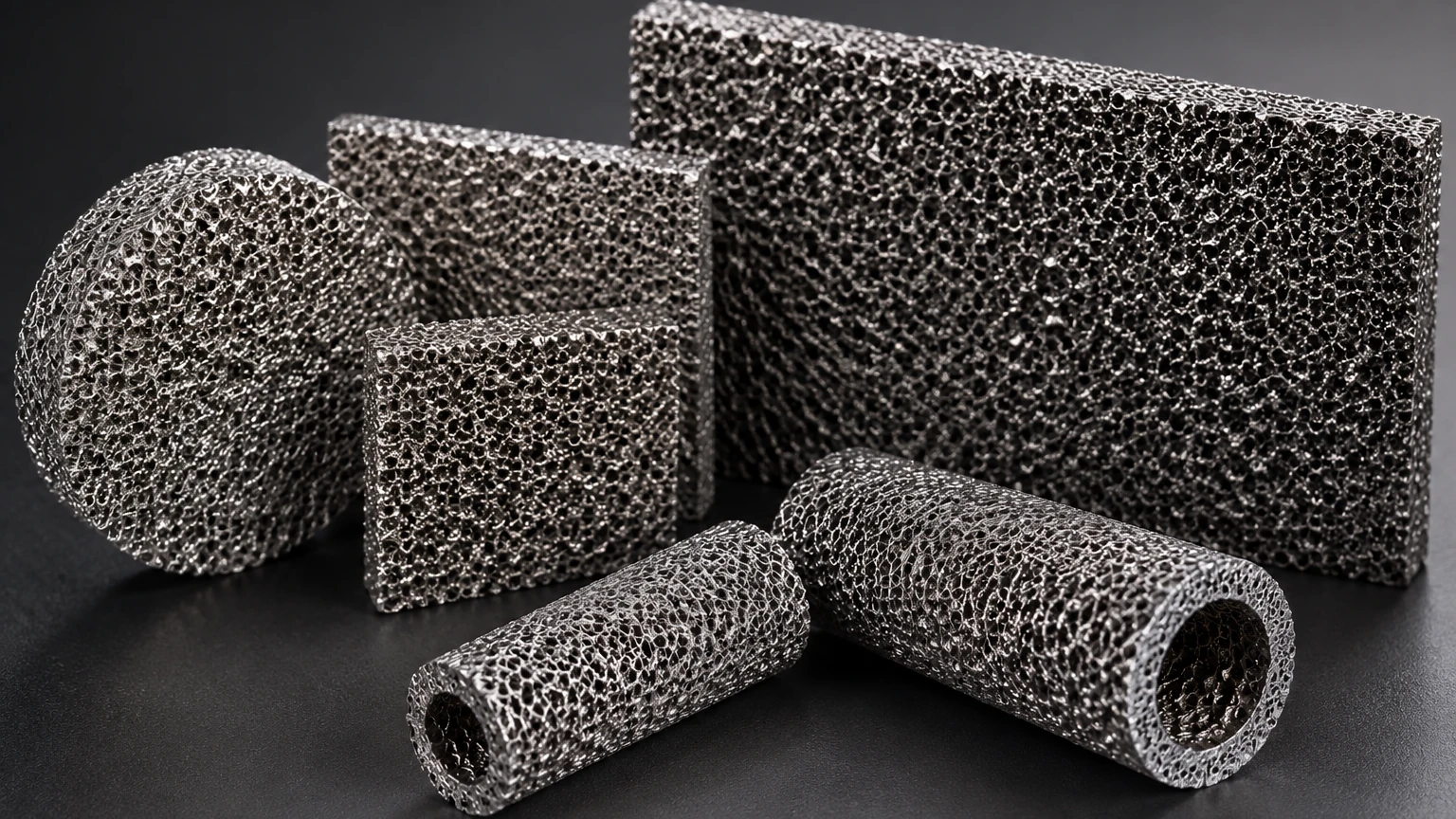
Comparing Aluminum and Stainless Steel Filtration
For engineers deciding between porous aluminum and the stainless steel solutions offered on our Main Page, several trade-offs must be considered.
| Feature | Porous Aluminum | Sintered Stainless Steel |
| :— | :— | :— |
| Weight | Very Low | Moderate to High |
| Thermal Conductivity | Excellent | Moderate |
| Corrosion Resistance | Moderate (Good for air/oil) | Excellent (Acids/Alkalis) |
| Max Operating Temp | ~200°C – 300°C | Up to 800°C+ |
| Mechanical Strength | Moderate | High |
| Cost | Generally lower | Higher due to material/processing |
Stainless steel is the preferred choice for high-pressure hydraulic systems, steam filtration, and environments involving aggressive chemicals. However, for ambient temperature air filtration or heat exchange applications, aluminum may offer a more cost-effective and lighter solution.
Selection Criteria: What Engineers Should Confirm
Before finalizing a specification for porous aluminum components, technical teams should verify the following data points with their manufacturer:
1. Alloy Composition: Most industrial porous aluminum is made from 6061 or 1000-series alloys. The choice of alloy affects corrosion resistance and weldability.
2. Operational Temperature: Aluminum begins to lose structural integrity at much lower temperatures than stainless steel. Ensure the maximum system temperature does not exceed the material's limit.
3. Chemical Compatibility: Aluminum is susceptible to corrosion in highly acidic or alkaline environments. It is best suited for neutral pH fluids, oils, and dry gases.
4. Cleaning and Maintenance: Unlike stainless steel wire mesh, which can often be backwashed or ultrasonically cleaned multiple times, some porous aluminum structures are more delicate. Confirm the recommended cleaning protocols to determine the total cost of ownership.
5. Mounting and Integration: Consider how the porous element will be integrated into the housing. Aluminum can be difficult to weld to dissimilar metals; mechanical sealing or specialized brazing may be required.
Customization and OEM Procurement
Most industrial applications require customized dimensions and filtration ratings. When sourcing porous aluminum, it is important to work with a manufacturer capable of providing OEM services. This includes tailoring the thickness, diameter, and pore density to match the specific flow rates and particulate capture requirements of the equipment.
At Kaifil, we specialize in engineering the most durable filtration solutions for demanding environments. While we focus on the superior longevity and chemical resistance of stainless steel, we understand the broader material science that informs industrial selection. By analyzing the pressure, temperature, and chemical makeup of your process, our team can help you determine if a standard stainless steel cartridge or a specialized metal structure like porous aluminum is the right fit for your application.
For more information on material selection and to view our full range of industrial filtration components, visit our Main Page. We provide technical support to ensure your filtration systems achieve maximum efficiency and service life.
