


Porous Disc
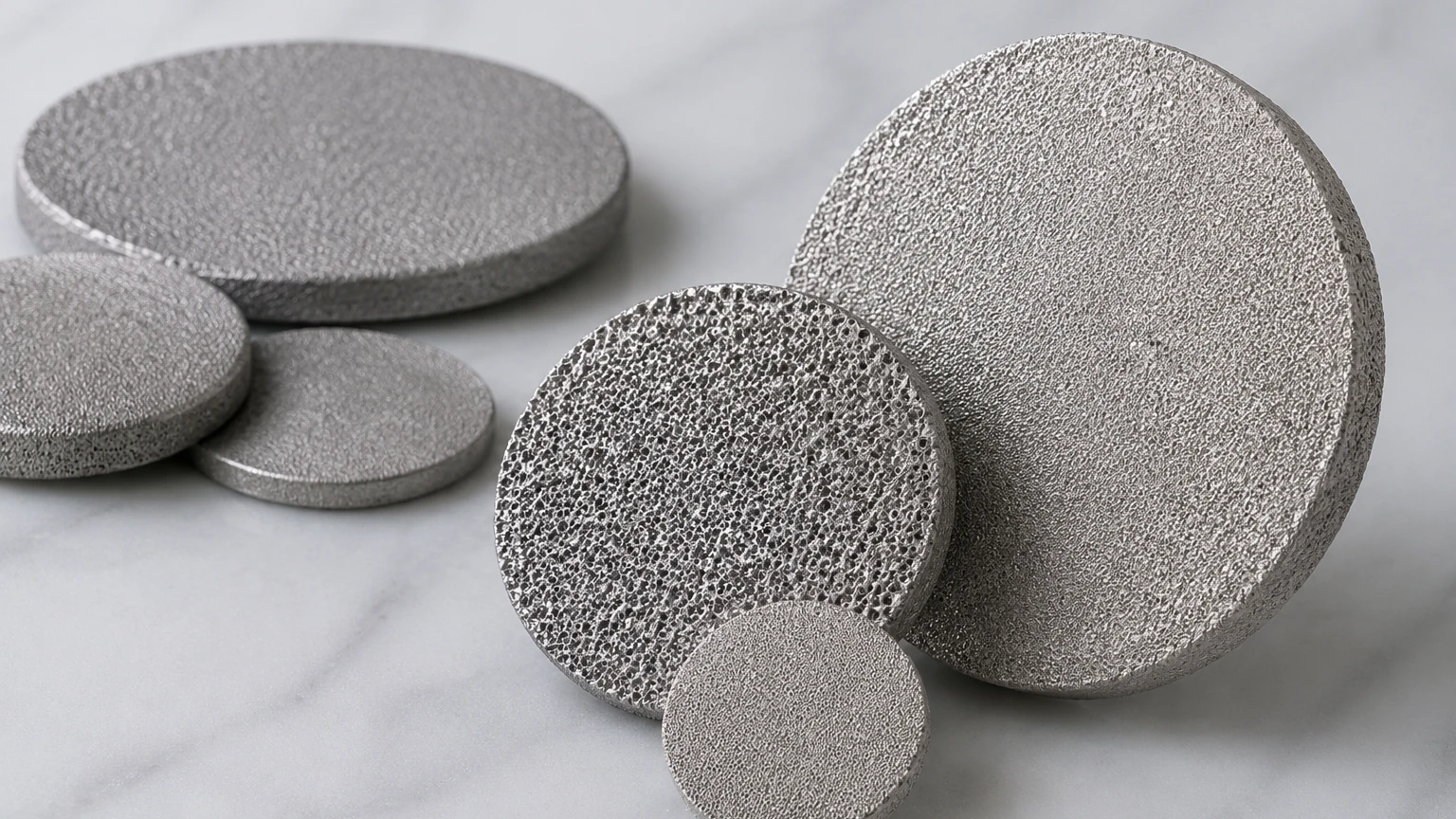
In the landscape of industrial filtration and fluid control, the porous disc stands as a critical component for achieving precise gas-liquid separation, flow regulation, and particulate removal. These components are engineered through advanced powder metallurgy or multi-layer wire mesh sintering processes, resulting in a rigid, self-supporting structure with a controlled distribution of interstitial spaces. For engineers and procurement specialists, selecting the correct porous disc involves a deep understanding of material properties, pore geometry, and the specific environmental stressors of the application.
Industrial porous discs are predominantly manufactured from stainless steel alloys, such as 316L, due to their inherent resistance to corrosion and high-temperature stability. However, the utility of a porous disc extends beyond simple filtration; they are foundational in applications ranging from gas sparging and flame arresting to pressure equalization and fluidization. This article examines the technical specifications, manufacturing nuances, and selection criteria essential for integrating these components into high-performance industrial systems.
Understanding the Material Science of Porous Discs
The performance of a porous disc is fundamentally tied to its material composition and the manufacturing process used to create its internal architecture. Most high-performance discs are produced using sintered metal powder or sintered wire mesh.
Sintered Metal Powder Discs
Sintered powder discs are created by compacting metal powders into a die and then heating them in a controlled-atmosphere furnace. The temperature is kept below the melting point of the metal, allowing the particles to bond at their contact points through molecular diffusion. This process creates a "tortuous path" for fluids, which is highly effective for depth filtration. Engineers favor powder-based discs when high filtration accuracy (down to 0.1 microns) and uniform pore distribution are the primary requirements.
Sintered Wire Mesh Discs
Alternatively, porous discs can be fabricated from multiple layers of stainless steel wire mesh. These layers are laminated and sintered together to form a robust, porous plate. While powder discs offer superior depth filtration, mesh-based discs provide higher mechanical strength and are easier to clean. They are often used in applications where the disc must withstand significant backpressure or where surface filtration is preferred to facilitate cake discharge.
Material Selection
While 316L stainless steel is the industry standard for its balance of cost and performance, specialized environments may require alternative alloys:
* Hastelloy®: Used in highly acidic or aggressive chemical environments where 316L might suffer from pitting or stress corrosion cracking.
* Inconel®: Selected for extreme high-temperature applications, such as exhaust gas filtration or high-heat chemical reactors.
* Monel®: Often utilized in oxygen-rich environments or marine applications due to its resistance to hydrofluoric acid and sea water.
Key Engineering Specifications and Performance Metrics
When evaluating a porous disc for a specific project, technical teams must look beyond basic dimensions. The following metrics define the operational limits and efficiency of the component.
Pore Size and Micron Rating
The micron rating of a porous disc indicates the size of the particles it is designed to intercept. It is important to distinguish between "absolute" and "nominal" ratings. An absolute rating implies that 99.9% of particles above the specified size will be captured, whereas a nominal rating refers to a lower efficiency (often 60-90%). In precision applications like pharmaceutical processing or semiconductor manufacturing, absolute ratings are mandatory.
Permeability and Pressure Drop
Permeability refers to the ability of the disc to allow fluid or gas to pass through its structure. This is governed by Darcy’s Law, which relates the flow rate to the fluid viscosity, the thickness of the disc, and the pressure differential (ΔP). A well-designed porous disc must balance filtration efficiency with a low pressure drop to minimize energy consumption and pump wear. Engineers must calculate the expected ΔP at the start of the cycle and account for the increase as the disc becomes loaded with contaminants.
Porosity
Porosity is the ratio of the void volume to the total volume of the disc, typically expressed as a percentage. High porosity (often 30% to 50%) allows for higher flow rates but may compromise the mechanical strength of the disc. Finding the optimal porosity is a matter of balancing structural integrity against the required throughput.
Primary Industrial Applications for Sintered Porous Discs
The versatility of the porous disc allows it to serve multiple functions across various sectors. Its ability to provide a uniform distribution of pores makes it ideal for more than just simple straining.
Gas Sparging and Carbonation
In the food and beverage and chemical industries, porous discs are used to inject gases into liquids. Because the disc contains thousands of tiny pores, it creates a massive surface area of micro-bubbles. This increases the gas-liquid contact area, leading to faster and more efficient mass transfer. This is essential for carbonating beverages, oxygenating bioreactors, or stripping unwanted gases from a chemical solution.
Flame and Spark Arrestors
Due to their high thermal mass and controlled pore structure, sintered metal discs act as effective flame arrestors. They allow gas to flow through while cooling any flame front below its ignition temperature, preventing the propagation of fire or explosions in volatile environments. This is a standard safety feature in gas pipelines and storage tanks.
Flow Restrictors and Calibrated Leaks
A porous disc can function as a high-precision flow restrictor. Unlike a simple orifice plate, which is prone to clogging and turbulence, a porous disc provides a laminar flow transition. This makes them ideal for vacuum systems, gas chromatography, and medical devices where a steady, predictable flow rate is required.
Fluidization
In bulk material handling, porous discs are used to introduce air into powders or granular materials. This "fluidizes" the material, reducing friction and allowing it to flow like a liquid. This is commonly seen in silos, hoppers, and pneumatic conveying systems to prevent bridging and rat-holing.
Selection Criteria: A Technical Guide for Engineers
To ensure the longevity and efficiency of a filtration system, the selection process for a porous disc must be rigorous. For a wide range of standard and custom options, engineers can Review product options and application support to align their requirements with manufacturing capabilities.
1. Chemical Compatibility
The first step is ensuring the metal alloy is compatible with the process fluid. Factors such as pH levels, the presence of chlorides, and the concentration of oxidizing agents must be analyzed. Even a minor mismatch can lead to premature failure through localized corrosion.
2. Operating Temperature and Thermal Shock
Sintered metal discs are excellent for high-temperature use, but the rate of temperature change (thermal shock) must be considered. While 316L can operate at temperatures up to 450°C (842°F) in oxidizing atmospheres, rapid cycling can lead to mechanical fatigue. In such cases, the disc's thickness and mounting method become critical engineering factors.
3. Mechanical Loading
Will the disc be subjected to high differential pressures? In hydraulic systems or high-pressure gas lines, the disc must have sufficient thickness or be reinforced with a support grid to prevent deformation or "dishing." The yield strength of the sintered material is significantly lower than that of the solid parent metal, a factor that must be accounted for in the safety margin calculations.
4. Particulate Nature
The type of contaminant being filtered—whether it is hard, abrasive, deformable, or slimy—dictates whether a surface-loading (mesh) or depth-loading (powder) disc is appropriate. Hard, spherical particles are easily handled by surface filtration, while deformable organic matter often requires the depth provided by a sintered powder structure.
Customization and Integration in OEM Systems
Most industrial applications require more than an off-the-shelf component. Customization is often necessary to meet specific spatial constraints or performance targets. As a professional manufacturer, Kaifil specializes in providing tailored solutions that go beyond standard diameters and thicknesses.
Geometric Customization
Porous discs can be manufactured in various shapes, including nested discs, flanged designs, or components integrated into threaded housings. Precision machining after the sintering process ensures that the disc fits perfectly into the existing assembly without bypass leaks.
Multi-Stage Filtration
For complex fluids, a custom porous disc can be engineered with graduated density. This involves sintering layers with different pore sizes together, creating a pre-filter and a fine filter in a single monolithic component. This design extends the service life of the disc by preventing the fine pores from clogging prematurely with large debris.
Surface Treatments
In some pharmaceutical or food-grade applications, the surface finish of the disc is paramount. Electropolishing can be applied to the non-porous sections of the assembly to improve cleanability and reduce the risk of bacterial growth. Additionally, specialized coatings can be applied to alter the hydrophobicity or hydrophilicity of the disc, which is crucial in oil-water separation processes.
Maintenance, Cleaning, and Operational Longevity
One of the primary advantages of a stainless steel porous disc over disposable polymer filters is its cleanability. A properly maintained disc can last for years, significantly reducing the total cost of ownership.
Cleaning Protocols
* Ultrasonic Cleaning: This is the most effective method for removing fine particles trapped deep within the pore structure. High-frequency sound waves create cavitation bubbles that dislodge contaminants.
* Backwashing/Backpulsing: In automated systems, a reverse flow of clean fluid or gas can be used to push contaminants off the surface of the disc. This is particularly effective for mesh-based discs.
* Chemical Cleaning: Soaking the disc in solvents, caustic solutions, or acids (compatible with the disc material) can dissolve organic or mineral deposits.
* Burn-off/Pyrolysis: For discs used in polymer or heavy oil applications, heating the disc in a vacuum furnace can vaporize or carbonize organic contaminants, which are then blown out with compressed air.
Monitoring Performance
To maximize the lifespan of a porous disc, it is essential to monitor the differential pressure across the component. A sudden drop in pressure may indicate a structural failure or a bypass leak, while a rapid increase suggests that the cleaning cycle needs to be adjusted or that the process conditions have changed. Regular inspections for signs of erosion or corrosion are also recommended, especially in high-velocity gas streams.
Conclusion
The porous disc is a sophisticated engineering tool that provides essential functionality in modern industrial processes. By selecting the appropriate material, pore structure, and mechanical design, engineers can achieve highly efficient filtration and fluid control even in the most demanding environments. Whether the goal is to protect sensitive equipment from particulates, ensure the safety of a gas line, or achieve perfect carbonation in a beverage, the technical integrity of the porous disc is the foundation of success. Working with an experienced manufacturer like Kaifil ensures that these components are built to the highest standards of precision and durability, providing reliable performance for the long term.
