


Porous Plastic Sheet
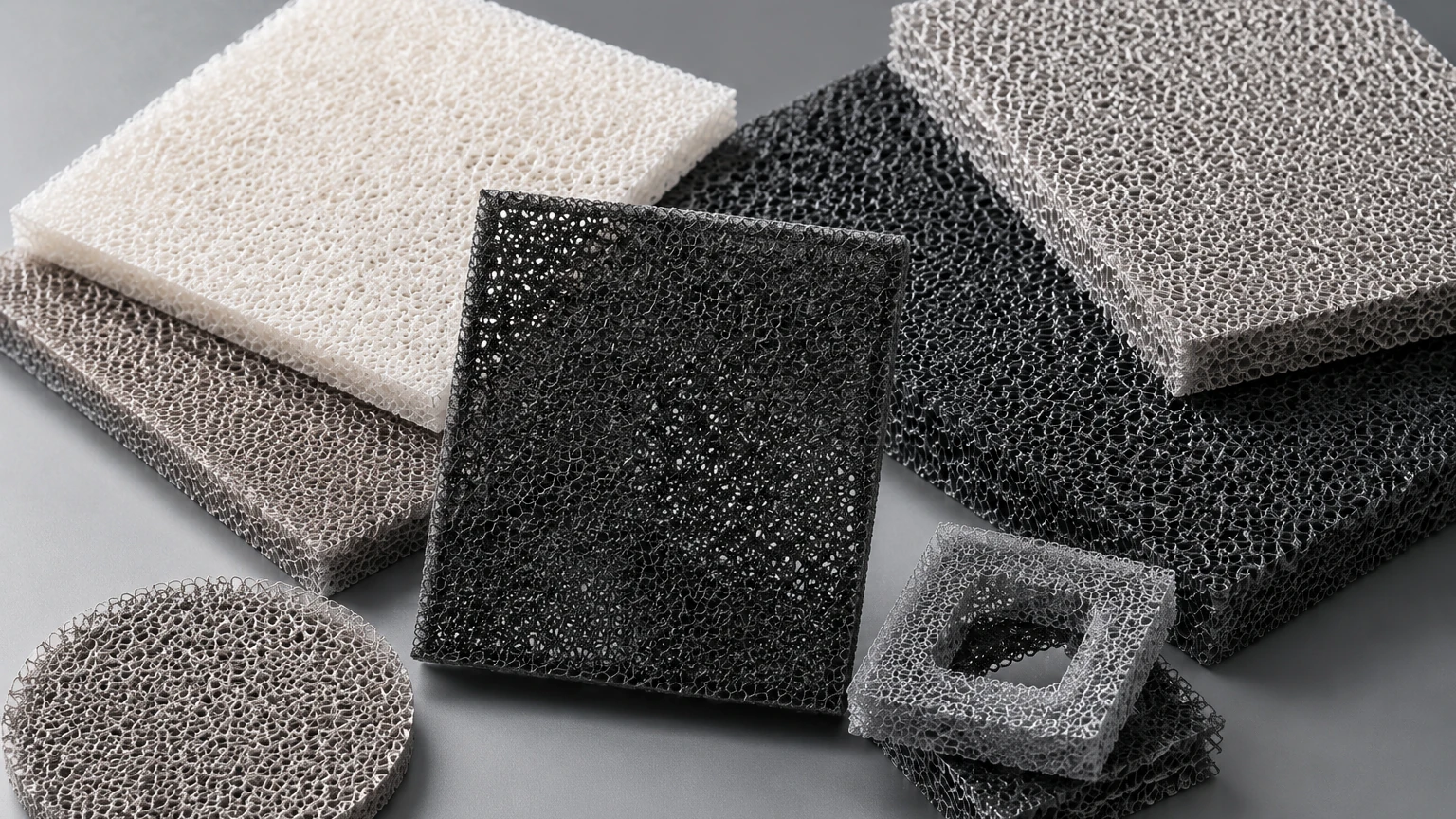
In industrial filtration and fluid handling, the selection of media is dictated by the specific mechanical, thermal, and chemical requirements of the application. A porous plastic sheet is a versatile engineering material produced through a controlled sintering process, resulting in a robust, multi-directional pore structure. Unlike traditional fibrous filters or membranes, these sheets offer structural integrity that allows them to function both as a filtration medium and a functional component in complex assemblies.
For engineers and procurement teams, understanding the technical nuances of porous plastics—ranging from polymer selection to pore morphology—is essential for optimizing system performance. While stainless steel filtration solutions remain the standard for high-temperature and high-pressure environments, porous plastic sheets provide a lightweight, chemically inert, and cost-effective alternative for a wide array of industrial tasks, including venting, fluidization, and diffusion.
The Engineering Principles of Sintered Porous Plastics
The performance of a porous plastic sheet is primarily determined by its manufacturing process: sintering. In this process, spherical or irregular polymer granules are placed into a mold or onto a moving belt and heated to a temperature just below their melting point. Under controlled pressure, the surfaces of these granules fuse at their contact points, creating a solid structure with a continuous network of interconnected voids.
This "omni-directional" pore structure is a critical engineering feature. Unlike woven wire mesh, which has a two-dimensional pore structure, a sintered porous plastic sheet acts as a depth filter. Particles are trapped not just on the surface, but throughout the thickness of the material. This tortuous path increases the probability of particle capture and provides a higher dirt-holding capacity compared to simple surface-loading media.
The porosity of these sheets—typically ranging from 30% to 50% void volume—can be precisely tuned by varying the size of the initial polymer granules and the sintering parameters. This allows manufacturers to produce sheets with micron ratings as fine as 1 micron or as coarse as 200 microns, depending on the intended industrial application.
Material Variants: PE, PP, and PTFE
The chemical and thermal properties of a porous plastic sheet are inherent to the base polymer used. Selecting the correct material is the first step in ensuring long-term reliability in industrial environments.
Polyethylene (HDPE and UHMWPE)
High-Density Polyethylene (HDPE) and Ultra-High Molecular Weight Polyethylene (UHMWPE) are the most common materials for porous sheets. HDPE offers excellent chemical resistance to most acids and alkalis and is suitable for continuous use at temperatures up to approximately 80°C (176°F). UHMWPE provides superior abrasion resistance and higher impact strength, making it ideal for fluidizing beds where abrasive powders are processed.
Polypropylene (PP)
Polypropylene is often selected when slightly higher thermal resistance is required, as it can withstand temperatures up to 100°C–110°C. It also exhibits excellent fatigue resistance, which is beneficial in applications involving cyclic pressure changes. PP is widely used in water treatment and chemical processing due to its low moisture absorption and high resistance to organic solvents.
Polytetrafluoroethylene (PTFE)
For the most demanding environments, porous PTFE sheets are utilized. PTFE is chemically inert to almost all known chemicals and can operate at temperatures up to 260°C (500°F). Additionally, PTFE is naturally hydrophobic, making it the material of choice for moisture barriers and specialized gas venting applications where liquid water must be excluded.
Defining Filtration Efficiency and Flow Dynamics
When specifying a porous plastic sheet, engineers must evaluate three primary metrics: micron rating, flow rate, and pressure drop (Delta P). These factors are inextricably linked through the physics of fluid dynamics.
1. Micron Rating: This indicates the size of particles the sheet is designed to retain. In porous plastics, this is often expressed as an "average pore size." Because the pores are irregular and interconnected, the rating is typically nominal rather than absolute. Engineers should request pore size distribution data to understand the range of particles that may pass through the media.
2. Flow Rate and Permeability: The permeability of the sheet determines how much fluid (liquid or gas) can pass through a given area at a specific pressure. This is influenced by the total porosity and the thickness of the sheet. Thicker sheets provide better filtration efficiency but increase resistance to flow.
3. Pressure Drop: As a filter cake builds up on the surface of the sheet, the pressure drop increases. In system design, it is critical to calculate the initial clean pressure drop to ensure the pump or blower capacity is sufficient. Porous plastic sheets generally exhibit a linear relationship between flow velocity and pressure drop at low Reynolds numbers, following Darcy’s Law.
Industrial Applications of Porous Plastic Sheets
The unique combination of structural rigidity and controlled porosity allows these sheets to serve multiple functions beyond simple particulate filtration.
Industrial Venting
Porous plastic sheets are frequently used as vents in containers, gearboxes, and electronic enclosures. They allow for pressure equalization by permitting air to flow in and out while blocking dust, water droplets, and other contaminants. Hydrophobic or oleophobic treatments can be applied to the sheets to enhance their ability to repel water and oils.
Fluidization and Aeration
In the bulk solids industry, porous plastic sheets are used as aeration pads or fluidizing membranes. By forcing compressed air through the porous structure, a uniform cushion of air is created that "fluidizes" powders, allowing them to flow like liquids. This is essential for the efficient discharge of silos, hoppers, and rail cars. The uniform pore distribution of sintered plastic ensures there are no "dead spots" or channeling in the powder bed.
Vacuum Holding and Suction Tables
In manufacturing and printing, porous plastic sheets serve as the top surface for vacuum tables. The high porosity allows for uniform suction across the entire surface, securely holding thin films, paper, or textiles in place without the risk of localized deformation that can occur with drilled metal plates.
Sound Attenuation
Porous plastics act as effective pneumatic mufflers or silencers. As high-velocity air exits an exhaust port, passing it through a porous sheet breaks up the air stream and reduces turbulence, significantly lowering the decibel levels in industrial workspaces.
Porous Plastic vs. Stainless Steel: A Technical Comparison
While porous plastic sheets are highly effective, they are often compared against stainless steel filtration media, such as those found on the Main Page of specialized manufacturers like Kaifil. Choosing between plastic and metal involves a trade-off between cost, durability, and environmental constraints.
* Temperature Resistance: Stainless steel filters can operate in excess of 500°C, whereas most porous plastics (excluding PTFE) are limited to below 110°C. In high-heat chemical reactors or steam filtration, metal is the only viable option.
* Mechanical Strength: Stainless steel wire mesh and sintered metal fibers can withstand significantly higher differential pressures without deforming. Porous plastic sheets may require structural support or thicker cross-sections to prevent collapse under high-pressure loads.
* Chemical Compatibility: While plastics like PTFE are exceptionally inert, stainless steel (316L) is preferred for high-purity pharmaceutical applications and environments where steam-in-place (SIP) or clean-in-place (CIP) sterilization is required.
* Cost and Weight: Porous plastic is significantly lighter and generally more cost-effective for large-scale applications where the extreme properties of metal are not required. It is also easier to cut and form into custom shapes using standard machining or heat-welding techniques.
Implementation and Maintenance Considerations
Integrating a porous plastic sheet into an industrial system requires careful attention to sealing and housing. Because these sheets are semi-rigid, they can often be pressed-fit into housings or secured using ultrasonic welding, thermal bonding, or mechanical gaskets. Unlike metal filters, which can be TIG welded, plastic components require specific polymer-bonding techniques to ensure a leak-proof seal.
Maintenance cycles for porous plastics differ from metallic media. While stainless steel filters can often be backwashed or ultrasonically cleaned multiple times, porous plastic sheets are frequently treated as semi-disposable or limited-life components. Over time, fine particulates can become deeply embedded in the tortuous path of the plastic pores, leading to a permanent increase in pressure drop that cannot be reversed by standard cleaning. Engineers should establish replacement intervals based on the monitored pressure drop across the media to prevent system inefficiency.
Before finalizing a purchase, technical professionals should confirm the following with their supplier:
* Chemical Exposure: Will the sheet be exposed to oxidizing agents or solvents that could degrade the polymer matrix?
* Load Requirements: What is the maximum expected differential pressure across the sheet?
* Compliance: Does the application require FDA-compliant materials for food contact or USP Class VI certification for medical use?
* Customization: Can the sheet be supplied in specific geometries or with integrated mounting features to simplify assembly?
By addressing these factors, engineering teams can ensure that the selected porous plastic sheet provides the necessary filtration precision and operational longevity for their specific industrial process. For applications where plastic may reach its physical limits, exploring high-performance stainless steel alternatives remains a critical step in robust system design.
