


Porous Plastics
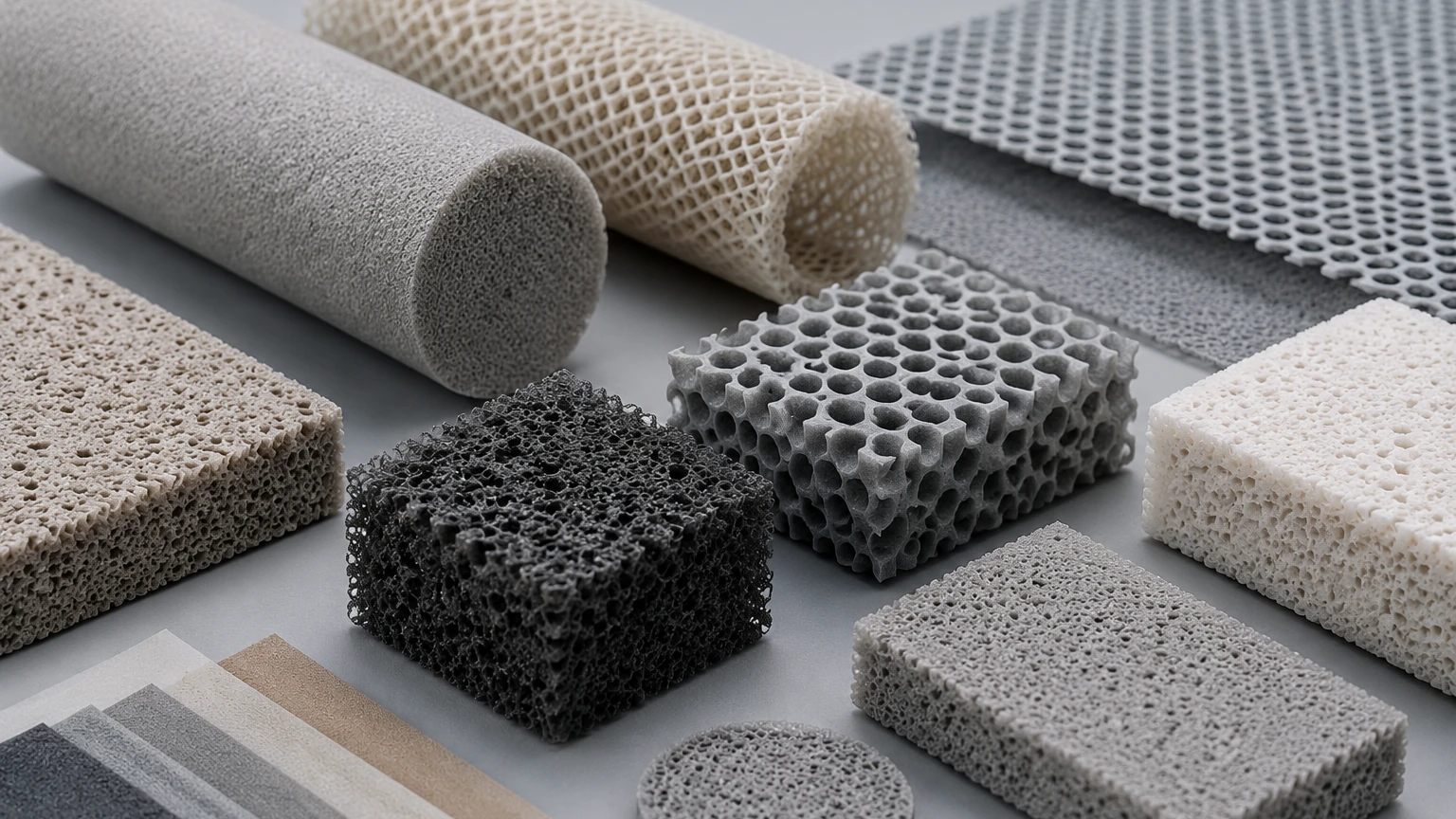
In the landscape of industrial filtration and fluid handling, porous plastics represent a versatile category of materials engineered to provide controlled permeability. Unlike standard solid polymers, these materials contain an interconnected network of pores that allow gases and liquids to pass through while capturing particulate matter or managing flow characteristics. For engineers and procurement specialists, understanding the technical nuances of porous plastics—including their material composition, manufacturing processes, and performance limitations—is essential for selecting the right media for specific industrial applications.
While porous plastics offer unique advantages in lightweighting and chemical resistance for specific environments, they are often evaluated alongside high-performance alternatives such as stainless steel mesh and sintered metal components. Navigating these choices requires a deep dive into the mechanical and thermal properties that define long-term reliability in the field.
Understanding Porous Plastics in Industrial Applications
Porous plastics are typically produced through a sintering process where polymer resin particles are fused together using heat and pressure without reaching the material's melting point. This results in a rigid, self-supporting structure with a tortuous path of pores. The internal geometry is omnidirectional, meaning the fluid path is complex, which enhances depth filtration capabilities compared to simple surface-loading screens.
These materials are widely utilized across several sectors:
* Medical and Healthcare: Used in pipette tip filters, surgical suction filters, and venting for ostomy bags, where hydrophobicity and sterility are paramount.
* Water Treatment: Serving as aerators or pre-filters in carbon blocks and reverse osmosis systems.
* Automotive and Industrial Venting: Protecting sensitive electronics from pressure fluctuations and moisture ingress while allowing the enclosure to "breathe."
* Pneumatics: Acting as silencers and mufflers to reduce noise from exhausting compressed air.
For organizations requiring robust filtration in more demanding environments, such as high-pressure hydraulic systems or high-temperature chemical processing, reviewing professional manufacturing capabilities at the Main Page can provide insights into how metal-based alternatives may better serve those specific technical requirements.
Manufacturing Methods and Material Selection
The performance of porous plastics is fundamentally tied to the base polymer selected. Each material offers a different profile of chemical compatibility, thermal stability, and mechanical strength.
Polyethylene (PE / UHMWPE)
Ultra-High Molecular Weight Polyethylene is one of the most common materials for porous structures. It offers excellent abrasion resistance and is naturally hydrophobic. It is frequently used in water filtration and medical applications due to its high purity and FDA compliance options.
Polypropylene (PP)
Polypropylene provides higher temperature resistance than polyethylene and is often chosen for its excellent chemical resistance to acids and bases. It is a staple in industrial chemical processing where cost-effectiveness and durability are balanced.
Polytetrafluoroethylene (PTFE)
PTFE is the premium choice for extreme environments. It is chemically inert to almost all reagents and can withstand higher operating temperatures than PE or PP. Its naturally low surface energy makes it an ideal candidate for oleophobic and hydrophobic venting applications.
Polyvinylidene Fluoride (PVDF)
PVDF is selected when high mechanical strength and resistance to oxidizing agents are required. It is often found in high-purity chemical handling and semiconductor manufacturing.
Key Performance Metrics: Pore Size, Porosity, and Permeability
When specifying porous plastics, engineers must define three critical parameters that dictate how the material will behave under operational loads.
1. Pore Size (Micron Rating)
Pore size in porous plastics is typically expressed as a range or an average micron rating. Unlike the precise aperture of a woven wire mesh, the pores in sintered plastics are irregular. Therefore, it is important to distinguish between "nominal" ratings (where a percentage of particles are retained) and "absolute" ratings. Most porous plastics function as depth filters, meaning they trap particles throughout the thickness of the material rather than just on the surface.
2. Porosity (Void Volume)
Porosity refers to the percentage of the total volume that is occupied by the open pores. Higher porosity generally leads to higher flow rates and lower pressure drops but can compromise the structural integrity of the component. Most industrial porous plastics maintain a porosity range between 30% and 50%.
3. Permeability
Permeability measures the ease with which a fluid (liquid or gas) can flow through the porous structure. This is influenced by the pore size, porosity, and the thickness of the material. Engineers use Darcy’s Law to calculate the expected pressure drop across the media, ensuring that the filter does not create an unacceptable bottleneck in the system.
Comparing Porous Plastics with Stainless Steel Filtration Media
In many B2B procurement scenarios, the choice between porous plastics and stainless steel filtration components is a critical decision point. While plastics offer lower initial costs and lighter weight, stainless steel filters—such as those produced by Kaifil—provide distinct advantages in heavy-duty industrial contexts.
| Feature | Porous Plastics | Stainless Steel (Sintered/Mesh) |
| :— | :— | :— |
| Temperature Limit | Generally < 150°C (PTFE up to 260°C) | Up to 800°C+ depending on alloy |
| Mechanical Strength | Moderate; prone to creep under heat | High; resistant to high differential pressure |
| Cleanability | Often disposable; limited backwash | Excellent; compatible with ultrasonic cleaning |
| Chemical Resistance | Excellent for acids; poor for some solvents | Excellent for solvents/organics; alloy dependent |
| Precision | Nominal depth filtration | Absolute surface or depth filtration |
For applications involving high-pressure hydraulics, steam filtration, or aggressive solvent recovery, stainless steel is often the preferred engineering choice due to its longevity and ability to be cleaned and reused, which lowers the total cost of ownership over time.
Common Risks and Failure Modes in Harsh Environments
Despite their versatility, porous plastics are susceptible to several failure modes that can compromise a system's integrity if not properly accounted for during the design phase.
* Thermal Degradation: Exceeding the continuous service temperature of a polymer can lead to softening, which causes the pore structure to collapse (blinding). This results in a sudden, permanent increase in pressure drop.
* Chemical Swelling: Certain polymers may absorb fluids, causing the plastic matrix to swell. This reduces the effective pore size and can eventually seal the filter entirely.
* Structural Creep: Under constant differential pressure, plastics can deform over time. If the material is not adequately supported by a cage or core, it may rupture or bypass.
* Pore Blinding: Because porous plastics are depth media, they can be difficult to clean once fine particulates become lodged deep within the tortuous path. In high-solids-loading applications, this leads to frequent replacement cycles.
Selection Criteria for Engineers and Purchasing Teams
To ensure the successful integration of porous plastics into a product or process, technical teams should confirm the following data points before finalizing a specification:
1. Operating Environment: What is the maximum temperature and pressure? Are there surge pressures (water hammer) that could damage a plastic structure?
2. Fluid Compatibility: Beyond the primary fluid, are there cleaning agents, trace chemicals, or additives that could react with the polymer?
3. Filtration Efficiency: Is the goal to protect a downstream component from a specific particle size, or is it to manage flow/diffusion?
4. Assembly Method: How will the porous component be fixed in place? Porous plastics can often be press-fitted, ultrasonically welded, or over-molded, which provides flexibility in housing design.
5. Regulatory Compliance: Does the application require FDA, USP Class VI, or REACH/RoHS certification? Most reputable manufacturers provide these certifications for specific resin grades.
Conclusion
Porous plastics serve as an essential tool in the engineer's toolkit, offering lightweight and cost-effective solutions for venting, diffusion, and light-duty filtration. However, their physical limitations regarding temperature and mechanical stress necessitate a careful evaluation of the application's demands. In scenarios where reliability under extreme conditions is non-negotiable, transitioning to precision-engineered metal filtration solutions is often the most sustainable path forward.
For technical professionals seeking durable, high-performance filtration components tailored to demanding industrial environments, exploring the customized options available at https://www.kaifil.com/ ensures that your system benefits from the highest standards of filtration accuracy and structural integrity. Whether the requirement is for complex chemical processing or precision hydraulic protection, selecting the right media is the first step toward optimized operational efficiency.
