


Porous Stainless Steel Discs
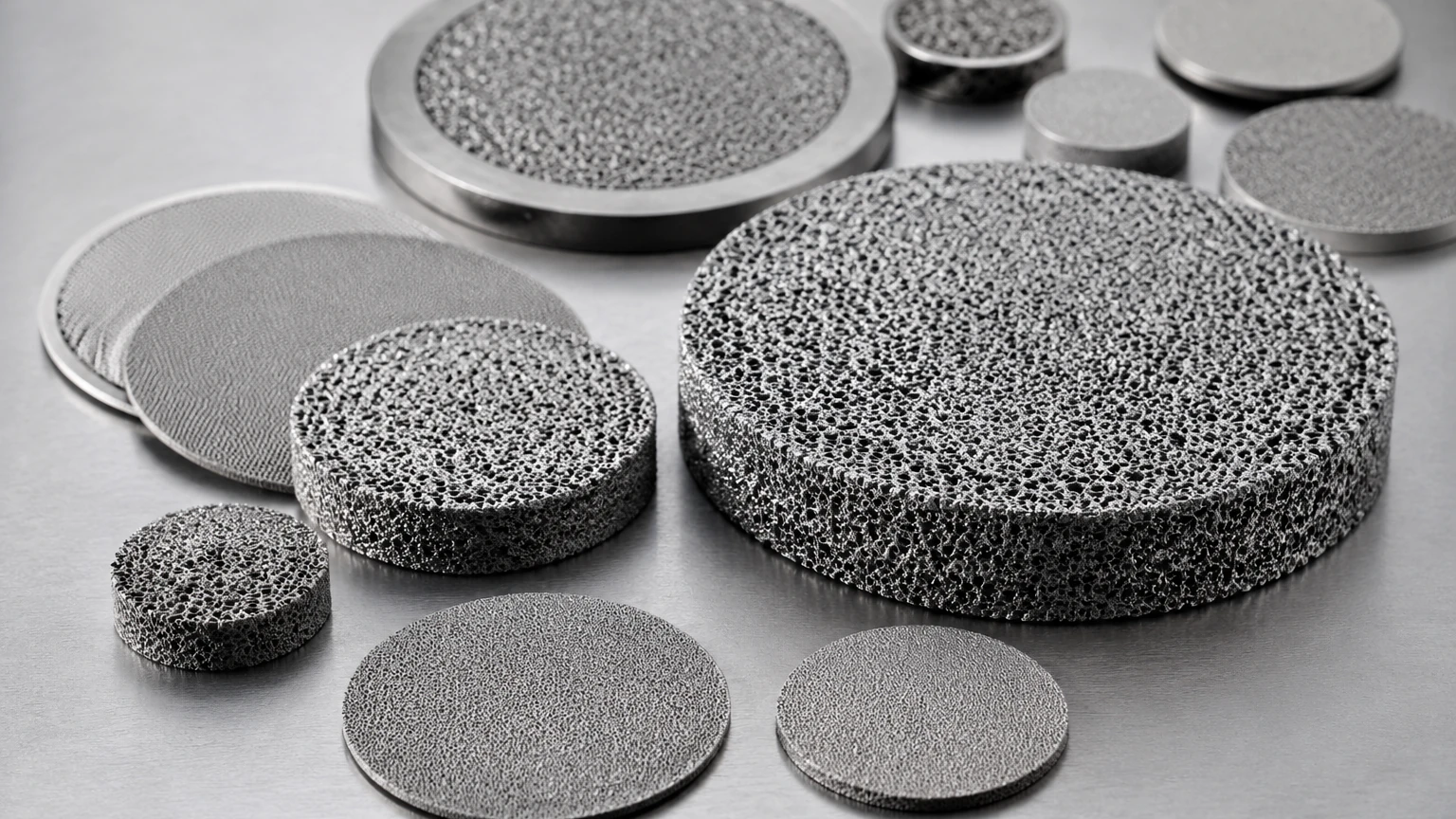
In industrial filtration and fluid control, porous stainless steel discs represent a critical component for achieving precise separation, gas diffusion, and pressure regulation. These components are engineered through a process of sintering metal powders or multiple layers of wire mesh to create a rigid, permeable structure. Unlike traditional fabric or polymer filters, porous metal discs offer exceptional mechanical strength, thermal stability, and chemical resistance, making them indispensable in demanding environments such as chemical processing, pharmaceutical manufacturing, and high-pressure hydraulic systems.
Selecting the appropriate porous stainless steel discs requires a deep understanding of material properties, filtration physics, and the specific requirements of the application environment. For engineers and procurement professionals, the goal is to balance filtration efficiency with flow capacity and long-term durability. This guide provides a technical overview of these components to support informed decision-making in industrial procurement.
Understanding the Manufacturing Process and Structure
The performance of porous stainless steel discs is fundamentally determined by their manufacturing method. Most industrial-grade discs are produced using powder metallurgy. In this process, stainless steel powder—typically Type 316L for its superior corrosion resistance—is graded by particle size, compacted into a disc shape, and then sintered in a high-temperature furnace under a controlled atmosphere.
During sintering, the metal particles bond at their contact points without melting completely. This creates a complex, interconnected network of pores. The resulting structure is characterized by its "tortuosity," which refers to the winding path a fluid must take through the disc. This tortuous path is highly effective at trapping contaminants throughout the depth of the media, rather than just on the surface.
Alternatively, some discs are constructed from sintered wire mesh. This involves layering multiple sheets of stainless steel woven wire cloth and bonding them together. While powder-sintered discs generally offer finer filtration ratings and higher depth-loading capacity, mesh-sintered discs provide higher permeability and are often easier to clean in backwash applications. Understanding these structural differences is the first step in identifying the right solution on the Main Page of a technical manufacturer’s catalog.
Material Engineering: Why Stainless Steel Alloys Matter
The choice of alloy is a primary factor in the longevity of porous stainless steel discs. While various metals can be sintered, stainless steel remains the industry standard due to its versatility.
316L Stainless Steel
316L is the most common material for porous discs. The "L" stands for low carbon, which minimizes carbide precipitation during the sintering process or subsequent welding, preserving the material's corrosion resistance. The addition of molybdenum provides resistance to pitting and crevice corrosion in chloride-rich environments, making these discs suitable for marine and chemical applications.
304L Stainless Steel
304L is used in less aggressive environments where high-level corrosion resistance is not the primary concern. It offers excellent mechanical properties and is a cost-effective choice for general industrial filtration, food and beverage processing, and air filtration where moisture levels are controlled.
Specialized Alloys
In extreme cases involving highly acidic or alkaline fluids, or temperatures exceeding the limits of standard stainless steel (typically above 450°C to 500°C in oxidizing atmospheres), manufacturers may utilize nickel-based alloys like Hastelloy or Monel. However, for the vast majority of B2B industrial needs, 316L porous stainless steel discs provide the optimal balance of performance and cost.
Key Performance Metrics for Engineers
When evaluating porous stainless steel discs, engineers must look beyond simple dimensions. Several technical metrics define how the disc will perform under operational stress.
Pore Size and Filtration Rating
Pore size is usually expressed in microns (µm). It is important to distinguish between "nominal" and "absolute" ratings. A nominal rating indicates the ability of the disc to retain a majority of particles of a certain size, whereas an absolute rating refers to the size of the largest particle that can pass through the media under specific test conditions. For precision applications, such as protecting sensitive sensors or fuel injectors, an absolute rating is required.
Permeability and Pressure Drop
Permeability measures the ease with which a fluid (liquid or gas) passes through the porous structure. This is inversely related to filtration efficiency; finer pores provide better filtration but result in a higher pressure drop (differential pressure). Engineers must calculate the required flow rate and ensure the disc has sufficient surface area to maintain an acceptable pressure drop, preventing system strain or pump cavitation.
Porosity Percentage
Porosity refers to the volume of open space within the disc relative to its total volume. Higher porosity typically leads to higher flow rates and lower pressure drops but can compromise the mechanical strength of the disc. Most industrial porous discs maintain a porosity range of 30% to 50% to ensure structural integrity under high-pressure loads.
Critical Design and Customization Parameters
One of the primary advantages of working with a professional manufacturer like Kaifil is the ability to customize porous stainless steel discs to fit specific hardware. Standard off-the-shelf components rarely meet the exact needs of complex industrial machinery.
Geometry and Tolerances
Discs can be produced in diameters ranging from a few millimeters to several hundred millimeters. Thickness is another critical variable; thicker discs provide more depth for filtration and greater mechanical strength but increase the resistance to flow. Precision machining after sintering ensures that the discs meet tight tolerances for integration into housings or manifolds.
Edge Treatment and Sealing
To prevent bypass—where fluid flows around the filter rather than through it—the edges of the disc must be properly handled. Options include solid metal rims, welded rings, or specialized gaskets. In some OEM applications, the porous disc is integrated directly into a threaded fitting or a custom-shaped housing to simplify installation and maintenance.
Surface Finish
For applications in the food, beverage, or pharmaceutical industries, the surface finish of the disc and its housing must meet strict sanitary standards. This may involve electropolishing to ensure the surface is smooth and free of microscopic pits where bacteria could proliferate.
Industrial Applications and Use Cases
The versatility of porous stainless steel discs allows them to serve multiple functions across various sectors. They are not merely filters; they are functional components in fluid dynamics.
Gas Sparging and Carbonation
In the beverage and chemical industries, porous discs are used to introduce gases into liquids. Because the disc has thousands of tiny pores, it creates a massive amount of very small bubbles. This increases the surface area contact between the gas and the liquid, allowing for efficient carbonation, oxygenation, or pH adjustment via CO2 injection.
Flame and Spark Arrestors
Due to their high thermal mass and controlled porosity, these discs act as effective flame arrestors. They allow gas to flow through while cooling any passing flame front below its ignition temperature, preventing explosions in volatile environments. This is common in gas detection equipment and fuel storage venting.
Flow Restrictors and Damping
In pneumatic and hydraulic systems, porous stainless steel discs are used to regulate flow and dampen pressure surges. By providing a consistent and predictable resistance, they protect downstream components from sudden "water hammer" effects or air turbulence.
Pharmaceutical and Biotech Filtration
In these sectors, discs are used for the sterile venting of tanks and the filtration of active pharmaceutical ingredients (APIs). The ability of stainless steel to withstand repeated steam-in-place (SIP) and clean-in-place (CIP) cycles without degrading is a significant advantage over polymer-based alternatives.
Maintenance, Cleaning, and Operational Longevity
A major factor in the total cost of ownership for porous stainless steel discs is their cleanability. Unlike disposable cartridges, these discs are designed for long-term use, provided they are maintained correctly.
Cleaning Methodologies
1. Backwashing: Reversing the flow of fluid through the disc to dislodge particles trapped on the surface or within the pores.
2. Ultrasonic Cleaning: Placing the discs in an ultrasonic bath where high-frequency sound waves create cavitation bubbles that scrub the internal pore structure.
3. Chemical Cleaning: Using solvents, acids, or alkalis to dissolve specific types of contaminants, such as organic polymers or mineral scales, followed by thorough rinsing.
4. Thermal Burn-off: In cases where the disc is clogged with organic matter, controlled heating in a furnace can oxidize the contaminants without damaging the stainless steel structure.
Replacement Cycles
While durable, porous discs are not infinite. Over time, "blindness" can occur—a state where deep-seated contaminants cannot be removed by standard cleaning, leading to a permanent increase in pressure drop. Monitoring the differential pressure across the disc is the most reliable way to determine when a disc needs professional cleaning or replacement.
Procurement Checklist: What to Confirm Before Ordering
When contacting a manufacturer for custom porous stainless steel discs, having technical specifications ready will expedite the process and ensure the final product meets the application's demands. Technical teams should confirm the following:
* Operating Fluid: Is it a liquid or gas? What is its viscosity and chemical composition?
* Filtration Target: What is the specific micron rating required? Is it absolute or nominal?
* Flow Conditions: What is the maximum flow rate, and what is the maximum allowable pressure drop?
* Temperature and Pressure: What are the normal operating and peak surge conditions?
* Dimensions: What are the exact diameter, thickness, and tolerance requirements?
* Housing Integration: How will the disc be mounted? Does it require a welded ring or a specific edge seal?
By addressing these factors, engineers can ensure that the porous stainless steel discs they integrate into their systems will provide reliable, high-performance filtration for the duration of the equipment's service life. For detailed technical support and to explore customization options, visiting the Main Page of a specialized manufacturer is the recommended next step for procurement professionals seeking robust filtration solutions.
