


Porous Stainless Steel Sheet
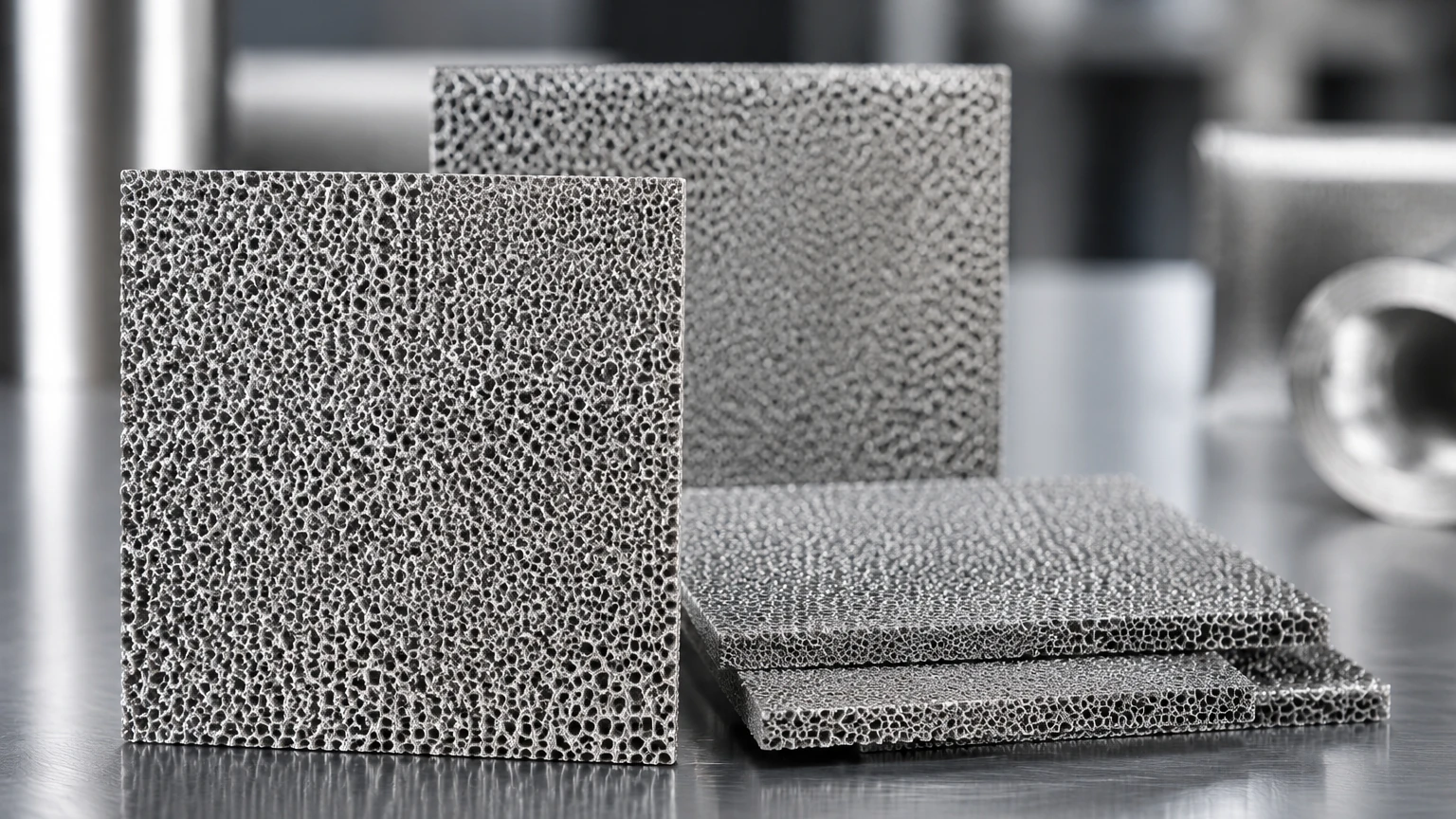
In industrial filtration and fluid control, the porous stainless steel sheet represents a critical engineering component designed for high-performance separation, gas diffusion, and structural support in harsh environments. Unlike traditional woven wire mesh or non-woven fiber felts, a porous stainless steel sheet is typically produced through powder metallurgy and sintering processes. This results in a rigid, self-supporting structure with a precisely controlled pore network that offers superior mechanical strength and thermal stability.
For engineers and procurement professionals, selecting the correct porous metal medium requires a deep understanding of material properties, filtration physics, and the specific demands of the application environment. This guide examines the technical characteristics, manufacturing considerations, and selection criteria for porous stainless steel sheets to support informed decision-making in industrial contexts.
Manufacturing Principles and Material Science
The production of a porous stainless steel sheet begins with the selection of high-purity metal powders. While various alloys can be used, 316L stainless steel is the industry standard due to its excellent corrosion resistance and mechanical properties at elevated temperatures. Other alloys, such as 304L, Inconel, or Monel, may be utilized for specialized chemical environments.
The Sintering Process
The manufacturing process involves several key steps:
1. Powder Grading: Metal powders are screened to ensure specific particle size distributions. The size and shape of these particles directly influence the final pore size and permeability of the sheet.
2. Compaction: The powder is distributed into a mold and subjected to high pressure, often through cold isostatic pressing or gravity settling, to form a "green" sheet. This stage determines the initial thickness and density.
3. Sintering: The green sheet is placed in a high-temperature vacuum or reducing atmosphere furnace. Temperatures are maintained just below the melting point of the alloy. Through solid-state diffusion, the metal particles bond at their contact points (necking), creating a continuous metallic skeleton with an interconnected network of pores.
This process results in a material that maintains the chemical and thermal properties of the parent alloy while providing a defined void volume (porosity), typically ranging from 30% to 50%.
Key Engineering Performance Metrics
When evaluating a porous stainless steel sheet for a specific application, engineers must focus on several quantitative metrics that define its performance limits.
Micron Rating and Filtration Efficiency
The micron rating of a porous sheet indicates its ability to remove particles of a certain size. It is categorized into two types:
* Nominal Micron Rating: Refers to the ability of the medium to retain a majority percentage (typically 60% to 90%) of particles at the specified size.
* Absolute Micron Rating: Refers to the pore size at which 99.9% of particles are retained. In sintered metal sheets, this is often verified via the Bubble Point Test (ASTM E128), which measures the pressure required to force air through a liquid-saturated porous structure.
Permeability and Pressure Drop
Permeability is a measure of how easily a fluid (liquid or gas) can pass through the porous medium. It is governed by Darcy’s Law, which relates flow rate to the pressure drop across the sheet, the viscosity of the fluid, and the thickness of the material. A well-engineered porous stainless steel sheet must balance filtration efficiency with a low initial pressure drop to minimize energy consumption and pump wear.
Mechanical Strength and Tortuosity
Because the sintering process creates metallic bonds between particles, the resulting sheet possesses high tensile and compressive strength. The "tortuosity" of the pore paths—the winding route a fluid must take through the thickness—enhances depth filtration. Unlike surface filters (like thin membranes), porous sheets can trap particles within their internal structure, increasing their dirt-holding capacity.
Industrial Applications of Porous Stainless Steel Sheets
The versatility of sintered metal makes it suitable for diverse industrial sectors. Its ability to withstand high differential pressures and temperatures up to 600°C (in oxidizing atmospheres) or higher (in reducing atmospheres) makes it indispensable in the following areas:
Chemical and Petrochemical Processing
In chemical manufacturing, porous sheets are used for catalyst recovery, solvent filtration, and gas-liquid contact. Their resistance to aggressive chemicals ensures long service life even when exposed to corrosive acids or high-pressure steam.
Gas Sparging and Carbonation
In the food and beverage industry, porous stainless steel sheets are used as spargers to introduce gases into liquids. By forcing gas through the microscopic pores, thousands of tiny bubbles are created, significantly increasing the surface area for mass transfer. This is essential for carbonating beverages, oxygenating fermentation tanks, or stripping unwanted gases from a process stream.
Pharmaceutical and Biotechnology
For pharmaceutical applications, the cleanability and material traceability of 316L stainless steel are paramount. Sintered sheets are used in sterile venting, steam filtration, and as support plates for chromatography columns. The smooth surface finish and lack of media migration (no fibers shedding into the product) ensure compliance with stringent purity standards.
Flame Arrestors and Explosion Protection
The high thermal mass and controlled porosity of these sheets allow them to act as effective flame arrestors. They can quench a flame front by absorbing heat and preventing the passage of an ignition source through a gas line or vent, protecting sensitive equipment and personnel.
Selection Criteria for Engineers and Purchasing Teams
Selecting the right porous stainless steel sheet requires a systematic approach to ensure the component meets both performance and budgetary requirements. Before contacting a manufacturer like Kaifil, technical teams should confirm the following parameters:
1. Fluid Characteristics
Identify the chemical composition of the fluid, its viscosity at operating temperature, and whether it is a liquid or a gas. This determines the required alloy (e.g., 316L vs. 304) and the necessary permeability to maintain the desired flow rate.
2. Operating Conditions
Define the maximum operating temperature and the maximum allowable differential pressure ($ΔP$). Sintered metal is robust, but excessive pressure can lead to structural deformation if the sheet thickness is not correctly specified.
3. Particle Loading and Cleaning Requirements
Consider the concentration and nature of the contaminants. Is the goal to protect downstream equipment or to recover a valuable solid? Understanding the cleaning cycle—whether through backpulsing, ultrasonic cleaning, or chemical immersion—is vital for determining the total cost of ownership.
4. Dimensional and Geometric Constraints
Porous stainless steel sheets can be manufactured in various thicknesses, typically ranging from 0.5mm to 5mm or more. They can also be cut, welded, and formed into custom shapes. If the application requires a specific footprint or integration into an existing housing, these dimensions must be specified early in the design phase.
Maintenance, Cleaning, and Service Life
One of the primary advantages of a porous stainless steel sheet over disposable filter media is its regenerability. Because the material is metallic and structurally sound, it can be cleaned and reused multiple times, significantly reducing waste and long-term procurement costs.
Common Cleaning Methods
* Backwashing/Backpulsing: Reversing the flow of fluid to dislodge particles from the surface and the pore structure. This is often done in-situ.
* Ultrasonic Cleaning: Placing the sheet in an ultrasonic bath where high-frequency sound waves create cavitation bubbles that remove deeply embedded contaminants.
* Chemical Cleaning: Using detergents, caustic solutions, or acids to dissolve organic or inorganic deposits. The 316L alloy is compatible with a wide range of industrial cleaning agents.
* Thermal Cleaning (Burn-off): In cases where organic polymers or waxes clog the pores, the sheet can be heated in a controlled furnace to oxidize the contaminants without damaging the metal structure.
Proper maintenance protocols extend the service life of the filter, often allowing it to remain in operation for years in applications where plastic or paper filters would fail in days.
Customization and OEM Capabilities
For many industrial applications, a standard off-the-shelf sheet may not suffice. Customization is often required to optimize filtration performance or to fit specific machinery. As a professional manufacturer, Kaifil provides comprehensive support for customized filtration solutions, including specific micron ratings, non-standard dimensions, and integrated assemblies.
When working with an OEM partner, engineers can request specific pore size distributions or multi-layer laminates (where a fine filtration layer is sintered to a coarser support layer) to achieve the best balance of strength and precision. This collaborative engineering approach ensures that the final product is tailored to the specific hydraulic or pneumatic demands of the system.
To explore specific product options or to discuss a custom engineering requirement for your industrial application, you can Review product options and application support on the Main Page. Accessing technical expertise early in the design cycle helps avoid common pitfalls such as undersizing the filter area or selecting an incompatible alloy, leading to more reliable and cost-effective filtration performance.
