


Powder Metal Filters
In industrial filtration, the requirement for components that can withstand extreme temperatures, high pressure, and corrosive chemical environments often necessitates the use of sintered porous media. Powder metal filters, a primary category within this field, offer a unique combination of mechanical strength and precise filtration efficiency. Unlike traditional fabric or polymer-based filters, these components are engineered through a metallurgical process that transforms metal powders into rigid, porous structures. For engineers and technical procurement teams, understanding the specific properties, manufacturing nuances, and application boundaries of powder metal filters is essential for optimizing system performance and ensuring long-term operational reliability.
The Engineering and Manufacturing of Sintered Powder Metal Filters
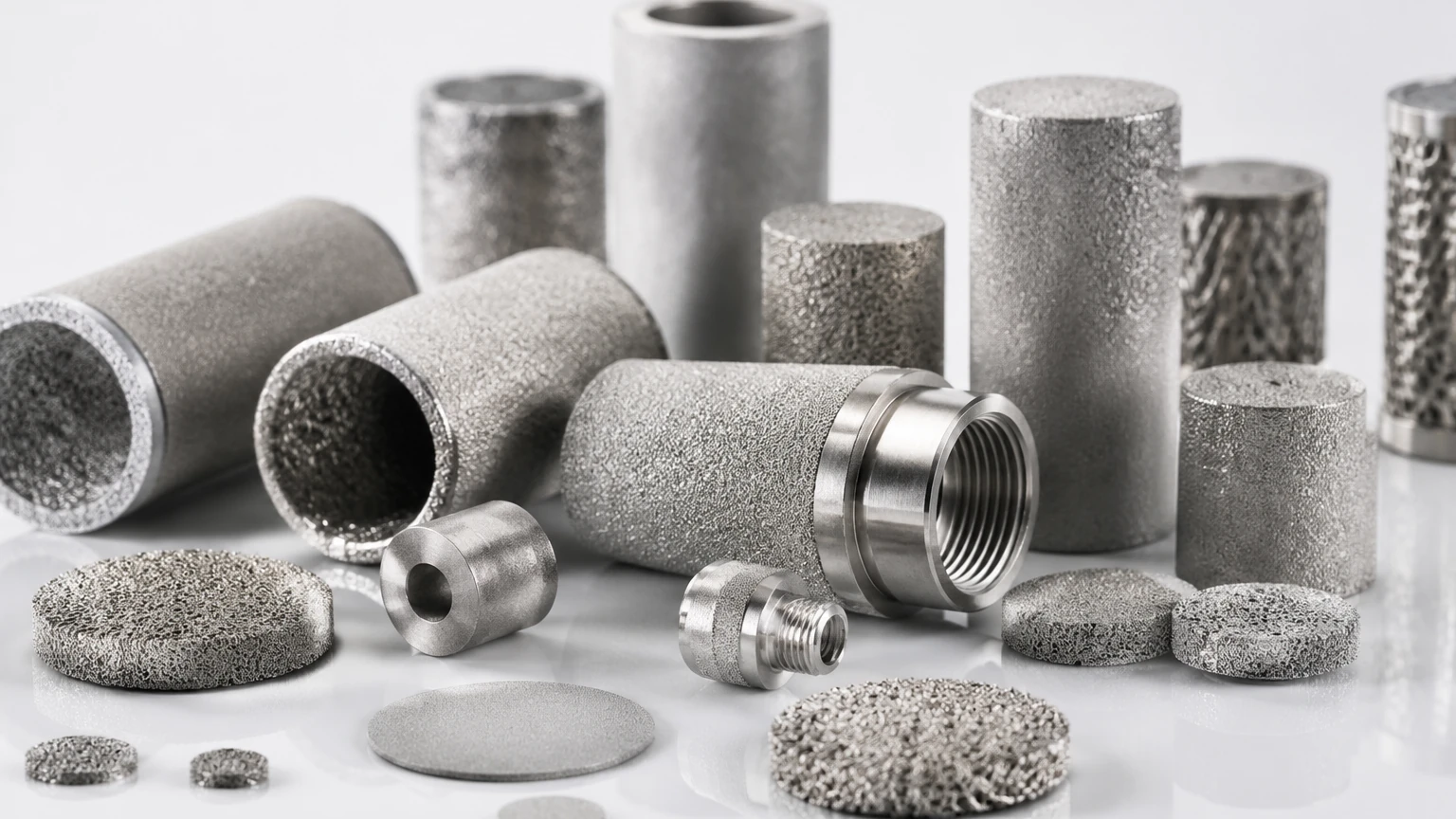
The production of powder metal filters is a specialized process known as sintering. This involves taking high-purity metal powders—typically stainless steel, bronze, or nickel-based alloys—and subjecting them to heat and pressure. The key characteristic of this process is that the temperature remains below the melting point of the base metal. Through solid-state diffusion, the metal particles bond at their contact points (necks), creating a mechanically robust, interconnected porous network.
There are several methods used to shape these filters before the sintering stage. Cold isostatic pressing (CIP) is frequently employed for cylindrical shapes, ensuring uniform density across the entire component. Gravity sintering is another common method, often used for flat plates or discs, where the powder is placed in a mold and sintered without external pressure to maintain high porosity. The resulting structure is a "labyrinth" of pores that provides depth filtration capabilities, trapping particles throughout the thickness of the media rather than just on the surface.
From a technical standpoint, the manufacturing process allows for precise control over the pore size distribution. By selecting specific powder grain sizes and adjusting sintering parameters, manufacturers can produce filters with ratings ranging from 0.1 microns to over 100 microns. This level of control is vital for applications requiring absolute filtration ratings where bypass or inconsistent pore geometry cannot be tolerated.
Material Selection for Demanding Industrial Environments
The performance of powder metal filters is heavily dependent on the alloy selected. Material choice must account for the chemical composition of the fluid, the operating temperature, and the potential for mechanical stress.
1. 316L Stainless Steel: This is the most common material for industrial filtration. The "L" denotes low carbon content, which improves weldability and prevents carbide precipitation during the sintering process. It offers excellent resistance to corrosion in many organic and inorganic environments and can operate in temperatures up to 450°C (842°F) in oxidizing atmospheres.
2. Hastelloy and Inconel: For extreme chemical processing or high-temperature applications exceeding the limits of stainless steel, nickel-based superalloys like Hastelloy C-276 or Inconel 600 are utilized. These materials provide superior resistance to pitting, crevice corrosion, and stress-corrosion cracking in highly acidic or saline environments.
3. Titanium: In applications where weight is a factor or where specific corrosion resistance is needed (such as in seawater or highly oxidizing acids), titanium powder metal filters are employed. They also offer excellent biocompatibility for pharmaceutical and medical applications.
4. Bronze: Often used for pneumatic silencers and hydraulic filters, bronze powder filters are cost-effective and provide good thermal conductivity, though they lack the chemical resistance and high-temperature tolerance of stainless steel.
Performance Characteristics: Porosity, Permeability, and Strength
When evaluating powder metal filters, engineers must balance three critical factors: filtration efficiency (micron rating), permeability (flow rate vs. pressure drop), and mechanical integrity.
Porosity and Filtration Efficiency
Porosity refers to the percentage of void space within the filter body. High porosity generally leads to better flow rates and lower initial pressure drops. However, it must be balanced against the required micron rating. Powder metal filters are known for their high dirt-holding capacity due to their depth-loading nature. Unlike surface filters (like certain wire meshes), the tortuous path through the sintered powder ensures that even irregularly shaped particles are captured effectively.
Permeability and Pressure Drop
Permeability is a measure of how easily a fluid can pass through the porous medium. In many industrial systems, minimizing the pressure drop ($ΔP$) is critical to reducing energy consumption and preventing pump cavitation. Because sintered powder filters are rigid, they do not deform under high differential pressures, maintaining consistent permeability throughout their service life. This structural stability is a significant advantage over pleated paper or polymer elements that may collapse or "unload" captured contaminants when pressure spikes occur.
Mechanical Strength and Thermal Stability
One of the most significant advantages of powder metal filters is their ability to function as structural components. They can be machined, welded, and integrated into complex assemblies without losing their filtration properties. Their thermal stability allows for use in cryogenic applications as well as high-heat gas filtration, where thermal expansion must be calculated to ensure a tight seal within the filter housing.
Key Applications in Industrial Filtration
Powder metal filters are utilized across a broad spectrum of industries where reliability and durability are non-negotiable. Their unique properties make them suitable for both liquid and gas filtration in high-stakes environments.
Chemical and Petrochemical Processing
In chemical plants, these filters are used for catalyst recovery, where fine particles of precious metals must be reclaimed from process streams. The ability of sintered metal to withstand aggressive solvents and high temperatures makes it the preferred choice for these applications. They are also used in the filtration of polymers and resins, where high viscosity requires a filter media that can handle significant mechanical stress.
Gas and Steam Filtration
Powder metal filters are exceptionally effective at removing particulates from gases. In semiconductor manufacturing, they are used for ultra-high purity (UHP) gas filtration. In power generation and food processing, they serve as culinary-grade steam filters, removing rust, pipe scale, and other contaminants to ensure the steam used in sterilization or direct heating is clean.
Sparging and Gas-Liquid Contacting
Beyond filtration, the porous nature of sintered powder metal is used for sparging—the process of injecting gas into a liquid. By creating millions of tiny, uniform bubbles, powder metal spargers maximize the surface area for gas-liquid interaction. This is critical in carbonation, fermentation, and oxygenation processes in the food, beverage, and pharmaceutical industries.
Maintenance, Cleaning, and Total Cost of Ownership
One of the primary reasons engineers specify powder metal filters is their regenerability. Unlike disposable cartridges that must be replaced and discarded, sintered metal elements can be cleaned and returned to service multiple times. This significantly reduces the total cost of ownership (TCO) and minimizes waste.
Cleaning Methodologies
* Backwashing/Back-pulsing: This is the most common in-situ cleaning method. By reversing the flow of the fluid, captured particles are dislodged from the surface and the internal pore structure. This is particularly effective in gas filtration systems.
* Ultrasonic Cleaning: For deep-seated contaminants, removing the filter and placing it in an ultrasonic bath with an appropriate cleaning agent can restore the element to near-original pressure drop levels. The ultrasonic waves create cavitation bubbles that penetrate the labyrinthine pores.
* Chemical Cleaning: Soaking filters in acids, caustic solutions, or solvents can dissolve specific types of fouling, such as organic buildup or mineral scales, without damaging the metal structure.
* Thermal Cleaning (Burn-off): In applications involving polymers or heavy oils, filters can be heated in a controlled atmosphere to carbonize and remove organic contaminants.
While the initial capital expenditure for powder metal filters is higher than for disposable alternatives, the extended service life—often lasting several years—and the reduction in downtime for filter changes make them a more economical choice for continuous industrial processes.
Strategic Sourcing and Customization with Kaifil
Selecting the right filtration solution requires a deep understanding of both the process requirements and the material science behind the filter media. Standard off-the-shelf components often fail to meet the specific demands of specialized industrial equipment, leading to premature failure or inefficient filtration.
Kaifil specializes in the manufacturing of custom stainless steel filtration solutions, providing the engineering expertise necessary to develop high-performance components for demanding environments. Whether the application requires a specific micron rating for pharmaceutical processing or a high-strength sintered cartridge for hydraulic systems, Kaifil works closely with global customers to deliver dependable results. For technical professionals and purchasing teams looking to explore specific product options and application support, visiting the Main Page provides a comprehensive overview of available technologies and customization capabilities.
When sourcing powder metal filters, it is essential to confirm the following specifications with the manufacturer:
* Absolute vs. Nominal Rating: Ensure the micron rating aligns with the particle size distribution of the contaminant.
* Differential Pressure Limits: Confirm the maximum $ΔP$ the element can withstand before structural deformation.
* Hardware Compatibility: Verify that the end caps, gaskets, and connection types (such as NPT, DOE, or specialized flanges) are compatible with existing filter housings.
* Cleaning Protocols: Establish a clear understanding of which cleaning methods are suitable for the specific alloy and contaminant type to maximize the filter's lifespan.
By focusing on technical precision and material integrity, powder metal filters continue to be a cornerstone of modern industrial filtration, providing the durability needed to maintain process efficiency in the world's most challenging operating conditions.
