Compressed Air Storage Tanks
In industrial pneumatic systems, compressed air storage tanks—often referred to as air receivers—serve as a critical buffer between the compressor and the point of use. While frequently viewed as simple pressure vessels, these components are engineered to perform several complex functions that stabilize system pressure, remove moisture, and protect downstream equipment. For engineers and facility managers, selecting the right storage tank involves more than just choosing a volume; it requires a deep understanding of demand patterns, material compatibility, and the integration of filtration technologies to ensure long-term operational efficiency.
The Fundamental Roles of Compressed Air Storage Tanks
A compressed air storage tank is not merely a holding vessel. In a well-designed system, it performs three primary technical functions:
1. Pressure Stabilization: Air compressors, particularly reciprocating models, produce air in pulses. Even rotary screw compressors experience fluctuations in pressure as demand varies across the factory floor. The storage tank acts as a dampener, absorbing these pulsations and providing a steady, consistent pressure to pneumatic tools and machinery.
2. Energy Efficiency and Load Management: By storing a reserve of pressurized air, the tank prevents the compressor from "short-cycling." Without adequate storage, a compressor would need to start and stop (or load and unload) every time a small amount of air is consumed. Reducing the frequency of these cycles significantly lowers energy consumption and extends the mechanical life of the compressor motor and drive components.
3. Primary Moisture Separation: As hot, compressed air enters the cooler environment of the storage tank, its temperature drops. This cooling effect causes water vapor to condense into liquid droplets. Gravity then pulls this moisture, along with heavy particulates and oil aerosols, to the bottom of the tank where they can be drained. This makes the storage tank the first line of defense in the air purification process.
Engineering Considerations for Sizing and Capacity
Determining the appropriate size for compressed air storage tanks is a balance between initial capital cost and system performance. A tank that is too small will lead to excessive compressor cycling and pressure drops during peak demand. Conversely, an oversized tank may lead to unnecessary floor space usage and higher costs without providing additional benefit.
The Sizing Formula
Engineers typically use a standard formula to estimate the required receiver volume:
V = (Q × C × Pa) / (P1 – P2)
Where:
* V = Volume of the tank (cubic feet)
* Q = Compressor output (cfm)
* C = Cycle time (minutes)
* Pa = Atmospheric pressure (psia)
* P1 = Maximum tank pressure (psig)
* P2 = Minimum required system pressure (psig)
In practical applications, a general rule of thumb is to provide 3 to 5 gallons of storage capacity for every cubic foot per minute (cfm) of compressor output. However, for systems with high-intensity intermittent demands—such as sandblasting or large pneumatic actuators—additional storage may be required to prevent the system pressure from dropping below the operational threshold of other sensitive equipment.
Material Selection: Stainless Steel vs. Carbon Steel
The choice of material for compressed air storage tanks is heavily influenced by the operating environment and the required air purity.
* Carbon Steel: This is the most common material for standard industrial applications. While cost-effective, carbon steel is highly susceptible to internal corrosion due to the acidic nature of the condensate formed during compression. Over time, rust can scale off the interior walls, clogging filters and damaging downstream pneumatic components.
* Stainless Steel: For industries such as food and beverage, pharmaceuticals, and chemical processing, stainless steel (typically Grade 304 or 316) is the preferred choice. Stainless steel tanks offer superior corrosion resistance and do not introduce rust particles into the air stream.
At Kaifil, we recognize that the integrity of the storage vessel is only half of the equation. To maintain the air quality standards required in these sensitive industries, the filtration components used in conjunction with these tanks must meet the same rigorous material standards. For more information on high-performance filtration components, you can visit our Main Page.
The Critical Link Between Storage and Filtration
While compressed air storage tanks facilitate the initial separation of moisture and large debris, they cannot achieve the micron-level precision required for modern industrial processes. The air leaving a storage tank still contains fine oil mists, water vapor, and microscopic particulates.
The Role of Stainless Steel Wire Mesh Filters
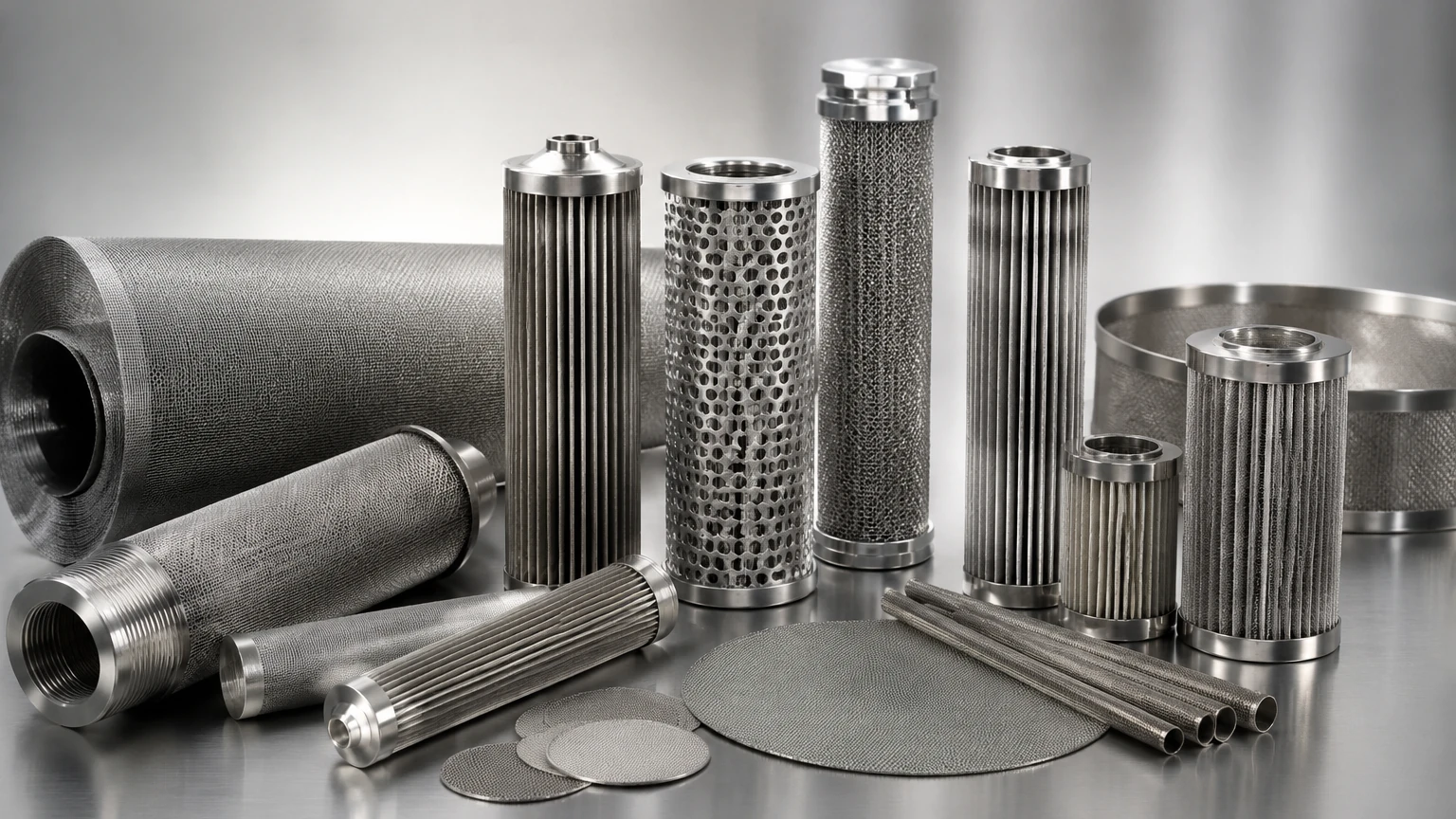
In demanding environments, standard polymer or fiber-based filters may degrade due to chemical exposure or high temperatures. This is where stainless steel wire mesh filters become essential. These filters are often installed immediately downstream of the storage tank to capture any residual scale or liquid carryover.
Engineering considerations for these filtration components include:
* Filtration Accuracy: Selecting the correct micron rating to protect sensitive solenoid valves or precision nozzles.
* Pressure Drop: Ensuring the filter media provides high flow rates with minimal resistance to maintain system efficiency.
* Cleanability: Stainless steel filters offer the advantage of being washable and reusable, which lowers the total cost of ownership compared to disposable cartridges.
Safety Standards and Regulatory Compliance
Because compressed air storage tanks are pressure vessels, they are subject to strict regulatory oversight. In the United States, the ASME (American Society of Mechanical Engineers) Boiler and Pressure Vessel Code (BPVC) Section VIII is the standard for design and fabrication.
Key safety features that must be confirmed before installation include:
* Pressure Relief Valves (PRV): Every tank must be equipped with a calibrated PRV set to open if the internal pressure exceeds the tank's Maximum Allowable Working Pressure (MAWP).
* Pressure Gauges: High-visibility gauges allow operators to monitor the tank's status in real-time.
* Drain Valves: Manual or automatic electronic drains are necessary to remove the accumulated condensate. Failure to drain the tank regularly reduces the available storage volume and accelerates internal corrosion.
* Inspection Ports: Larger tanks should include manways or handholes to allow for internal ultrasonic thickness testing and visual inspections.
Total Cost of Ownership (TCO) and Maintenance
When evaluating compressed air storage tanks, the initial purchase price is only a fraction of the total cost. Engineers must also consider:
1. Condensate Management: The cost of treating and disposing of the oily water collected in the tank. Automatic zero-loss drains are often recommended to prevent the waste of compressed air during the drainage cycle.
2. Internal Coatings: For carbon steel tanks, internal epoxy coatings can extend the lifespan by providing a barrier against moisture, though these coatings must be inspected for peeling or cracking.
3. Replacement Cycles: A tank that is properly maintained and operated within its pressure limits can last 20 years or more. However, in corrosive environments, the cost of frequent inspections and potential downtime may justify the higher upfront investment in a stainless steel vessel.
Customization and OEM Solutions
Many industrial applications require specialized tank configurations. This may include vertical vs. horizontal orientations to save floor space, or the integration of custom mounting brackets for auxiliary equipment like dryers or specialized filtration manifolds.
As a professional manufacturer, Kaifil specializes in custom stainless steel filtration solutions that complement these storage systems. Whether you are designing a high-purity nitrogen storage system or a heavy-duty hydraulic circuit, the synergy between the storage vessel and the precision filter components is what determines the reliability of the entire system. We provide OEM and customized filtration components, including wire mesh filters and stainless steel filter cartridges, designed to withstand the demanding environments found within and downstream of industrial storage tanks.
Conclusion for Engineering and Purchasing Teams
Selecting compressed air storage tanks requires a technical evaluation of the system’s peak demand, the required air quality, and the environmental conditions of the facility. By treating the storage tank as an active component of the filtration and stabilization process—rather than just a passive container—engineers can significantly improve the performance and longevity of their pneumatic infrastructure.
Before finalizing a purchase, technical teams should confirm:
* The ASME certification and MAWP of the vessel.
* The compatibility of the tank material with the intended application (e.g., 316L stainless steel for pharmaceutical use).
* The integration of high-quality filtration components to manage the moisture and particulates that the tank will inevitably collect.
For technical guidance on selecting the right filtration components to pair with your industrial storage systems, Review product options and application support to ensure your system meets the highest standards of durability and precision.