


Pressure Vessels and Tanks
In industrial process engineering, pressure vessels and tanks serve as the critical containment structures for fluids undergoing filtration, separation, or chemical reaction. For engineers and procurement specialists, understanding the synergy between the vessel and its internal filtration components is essential for ensuring system integrity, safety, and operational efficiency. Whether utilized in chemical processing, pharmaceutical manufacturing, or high-pressure hydraulic systems, these components must be engineered to withstand rigorous environmental demands while maintaining precise filtration performance.
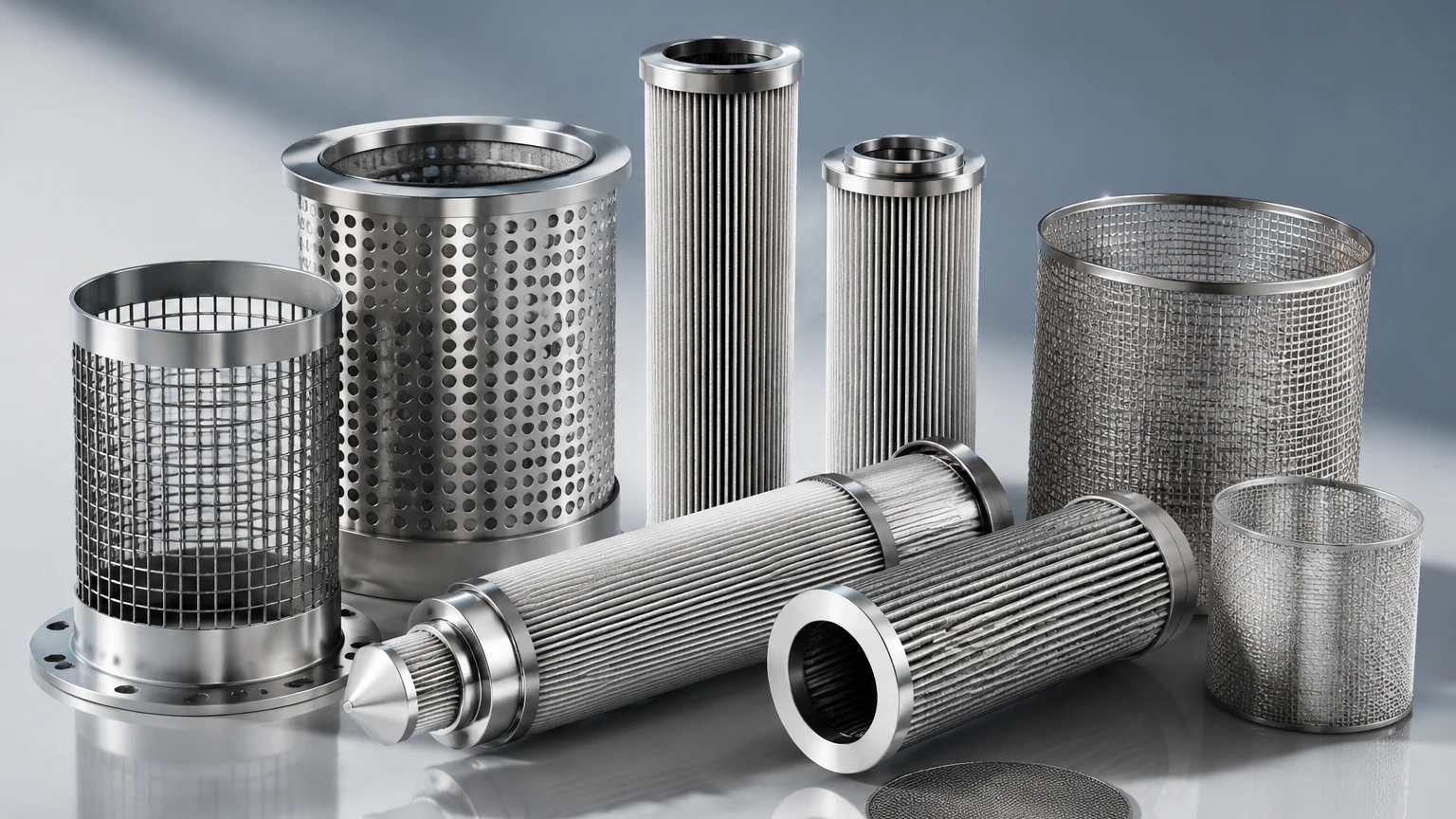
As a specialized manufacturer of stainless steel filtration solutions, Kaifil provides the internal components—such as wire mesh filters and stainless steel filter cartridges—that define the performance of these vessels. Selecting the right combination of vessel design and filtration media is a complex process that involves evaluating mechanical stresses, chemical compatibility, and fluid dynamics.
The Role of Pressure Vessels and Tanks in Industrial Filtration
Pressure vessels and tanks are closed containers designed to hold gases or liquids at a pressure substantially different from the ambient pressure. In the context of industrial filtration, these vessels act as the housing for filter elements. The vessel provides the structural framework necessary to direct fluid flow through the filter media, ensuring that the process fluid is cleaned or separated according to specific technical requirements.
In a typical filtration assembly, the vessel is equipped with an inlet, an outlet, and internal support structures for the filter cartridges or mesh screens. The design must account for the "Delta P" or pressure drop that occurs as fluid passes through the media. If a vessel is poorly matched to its filter element, it can lead to bypass leakage, structural deformation, or catastrophic failure under high-pressure surges.
For high-purity industries like food and beverage or pharmaceuticals, these tanks must also meet stringent sanitary standards. This involves not only the choice of material but also the internal surface finish, often requiring electropolishing to prevent bacterial growth and ensure ease of cleaning during CIP (Clean-in-Place) cycles.
Engineering Standards and Material Selection
When specifying pressure vessels and tanks, engineering teams must adhere to international codes, most notably the ASME (American Society of Mechanical Engineers) Boiler and Pressure Vessel Code (BPVC) Section VIII. These standards dictate the design, fabrication, and inspection of pressurized equipment to ensure safety.
Stainless Steel Grades
Material selection is the foundation of vessel durability. Stainless steel is the industry standard due to its corrosion resistance and mechanical strength.
* Grade 304: Suitable for general industrial applications where moderate corrosion resistance is required. It is commonly used in water treatment and standard hydraulic systems.
* Grade 316/316L: Contains molybdenum, which provides superior resistance to chlorides and acidic environments. This is the preferred choice for chemical processing and marine applications. The "L" variant (low carbon) is essential for vessels requiring extensive welding, as it minimizes carbide precipitation and maintains corrosion resistance at the weld seams.
* Duplex Stainless Steels: In extreme environments involving high pressure and highly corrosive media, duplex steels offer higher yield strength and better resistance to stress corrosion cracking than standard austenitic grades.
Structural Integrity and Welding
The integrity of pressure vessels and tanks depends heavily on welding quality. Techniques such as TIG (Tungsten Inert Gas) welding are typically employed to ensure clean, high-strength joints. Every weld must be inspected—often via radiographic or ultrasonic testing—to confirm the absence of porosity or inclusions that could fail under pressure.
Integrating Filtration Components within the Vessel
A pressure vessel is only as effective as the filtration media it houses. Kaifil specializes in custom stainless steel filter cartridges and wire mesh components that are engineered to fit precisely within industrial tanks. The interface between the filter and the vessel is a critical point of potential failure.
Connection Types and Sealing
To prevent fluid from bypassing the filter media, the connection between the filter element and the vessel must be hermetic. Common connection types include:
* Threaded Connections (NPT/BSP): Used for smaller vessels where a secure, leak-proof screw-in fit is required.
* Flanged Connections: Standard for large-scale industrial tanks, providing a robust interface that can be easily disassembled for maintenance.
* O-Ring Seals: Utilizing materials like Viton, EPDM, or PTFE, these seals ensure that 100% of the fluid is forced through the filter media.
Internal Support Structures
Inside the tank, the filter elements are often subjected to high flow velocities. Without proper support, wire mesh or thin-walled cartridges can collapse. Engineering a vessel involves designing internal perforated cores or outer cages that provide the necessary mechanical reinforcement without significantly restricting flow.
Key Evaluation Criteria for Engineers
Before selecting or designing pressure vessels and tanks, engineers must define several operational parameters. Failure to account for these can lead to shortened equipment lifespans or process inefficiencies.
1. Maximum Operating Pressure (MOP)
The vessel must be rated for a pressure higher than the maximum expected during the process, including potential surges. This rating determines the wall thickness of the tank and the type of closure mechanism (e.g., bolted covers vs. quick-opening swing bolts).
2. Temperature Limits
High temperatures can reduce the allowable stress of stainless steel. If the filtration process occurs at elevated temperatures, the vessel and the internal filter elements must be de-rated accordingly. Conversely, cryogenic applications require materials that maintain ductility at extremely low temperatures.
3. Chemical Compatibility
It is vital to evaluate the compatibility of the vessel material, the filter media, and the seals with the process fluid. For instance, while 316L stainless steel is highly resistant, certain concentrated acids may require specialized linings or high-nickel alloys.
4. Flow Rate and Viscosity
The size of the vessel and the surface area of the internal filter must be balanced against the fluid's viscosity and the required flow rate. A vessel that is too small will result in an excessive pressure drop, increasing energy costs for pumps and potentially damaging the filter media.
Operational Risks and Mitigation Strategies
Operating pressure vessels and tanks involves inherent risks that must be managed through design and maintenance protocols.
* Pressure Surges (Water Hammer): Sudden changes in fluid velocity can create pressure spikes that exceed the vessel's rating. Installing surge tanks or pressure relief valves is a standard mitigation strategy.
* Corrosion and Erosion: Over time, the internal surfaces of the tank and the filter media may thin due to chemical attack or the abrasive nature of the particles being filtered. Regular ultrasonic thickness testing is recommended to monitor vessel health.
* Fatigue: Cyclic loading—repeatedly pressurizing and depressurizing the tank—can lead to metal fatigue. Designers use fatigue analysis to estimate the safe number of cycles for the equipment's operational life.
To explore specific technical specifications and custom filtration components designed for these systems, engineers can Review product options and application support on the Kaifil website.
Customization and OEM Solutions
Standard off-the-shelf tanks often fail to meet the unique requirements of specialized industrial processes. Customization allows for the optimization of the vessel's geometry to match the specific footprint of a facility or the unique flow characteristics of a proprietary fluid.
Tailored Filtration Geometry
Customized pressure vessels can be designed to house non-standard filter shapes, such as pleated wire mesh elements that provide significantly higher surface areas within a compact tank volume. This is particularly beneficial in applications where space is limited but high filtration efficiency is mandatory.
Multi-Stage Filtration Tanks
In complex processes, a single vessel may be designed to hold multiple stages of filtration—for example, a coarse wire mesh pre-filter followed by a fine stainless steel sintered cartridge. This "all-in-one" approach reduces the number of external connections and potential leak points in the system.
Maintenance and Total Cost of Ownership
While the initial capital expenditure for high-quality stainless steel pressure vessels and tanks is significant, the total cost of ownership (TCO) is often lower than cheaper alternatives due to durability and reduced downtime.
Cleaning and Replacement Cycles
Stainless steel filter elements within these tanks are often cleanable and reusable. Unlike disposable plastic or paper filters, stainless steel mesh can be backwashed or ultrasonically cleaned, extending the interval between replacements. The vessel design should facilitate easy access to these internals to minimize labor costs during maintenance shutdowns.
Inspection Intervals
Regular inspections are not just a best practice; they are often a legal requirement. Maintaining a detailed log of pressure tests, weld inspections, and material certifications (MTRs) ensures compliance with safety regulations and helps predict when a vessel or its internal components may reach the end of their service life.
Conclusion
Pressure vessels and tanks are the workhorses of industrial filtration, providing the necessary environment for high-performance separation tasks. By focusing on rigorous engineering standards, appropriate material selection, and the seamless integration of precision filtration components, manufacturers can ensure their systems operate safely and efficiently. For technical professionals, the key to success lies in a deep understanding of how the vessel and the filter media interact under the specific pressures and temperatures of their unique process.
As industrial requirements become more demanding, the move toward customized, high-durability stainless steel solutions continues to grow, providing the reliability needed for modern chemical, pharmaceutical, and industrial applications. For more information on how to optimize your filtration system, visit the Kaifil Main Page to consult with engineering experts.
