


Produced Water Treatment
In the oil and gas industry, as well as in various industrial mining and processing sectors, produced water represents the largest volume byproduct stream. As reservoirs age, the ratio of water to hydrocarbons increases, making the management and produced water treatment a critical operational priority. Effective treatment is not merely a matter of environmental compliance; it is an engineering necessity for reservoir pressure maintenance through reinjection, for reuse in hydraulic fracturing, or for safe discharge into the environment.
For engineers and procurement specialists, selecting the appropriate filtration technology is the cornerstone of a successful water management strategy. Stainless steel filtration solutions, such as those detailed on our Main Page, provide the mechanical integrity and chemical resistance required to handle the complex and aggressive nature of produced water.
The Complexity of Produced Water Composition
Produced water is a complex mixture of organic and inorganic compounds. Its composition varies significantly depending on the geographic location, the geological age of the reservoir, and the type of hydrocarbons being produced. Understanding these constituents is the first step in designing an effective produced water treatment system.
Suspended Solids and Particulates
Suspended solids in produced water typically include formation sand, silt, clays, and scales (such as calcium carbonate or barium sulfate). Additionally, corrosion products from piping and wellbore components, such as iron sulfides, are frequently present. These particulates can cause significant damage to downstream equipment, plug injection wells, and interfere with oil-water separation processes.
Dissolved Organics and Hydrocarbons
While primary separation removes the bulk of the oil, produced water still contains dispersed oil droplets and dissolved hydrocarbons (BTEX, phenols, and organic acids). These components require high-efficiency filtration or coalescing stages to meet stringent discharge limits, which often stipulate oil-in-water (OIW) levels below 29 mg/L in offshore environments.
Salinity and Chemical Additives
Produced water often has high salinity, sometimes several times that of seawater. It also contains production chemicals such as biocides, scale inhibitors, emulsion breakers, and oxygen scavengers. The combination of high chloride content and varied chemical additives necessitates the use of high-grade alloys in filtration hardware to prevent pitting and stress corrosion cracking.
The Role of Stainless Steel Filtration in Produced Water Treatment
Mechanical filtration serves as a primary defense in the produced water treatment train. Unlike disposable polymer filters, stainless steel filter elements offer several technical advantages in demanding industrial environments.
Pressure and Temperature Resilience
Produced water is often handled at high temperatures and elevated pressures directly from the separator. Stainless steel wire mesh and sintered metal cartridges maintain their structural integrity under these conditions, where synthetic materials might soften, deform, or fail. This resilience ensures consistent micron ratings and prevents bypass, which is critical for protecting high-pressure injection pumps.
Chemical Compatibility
With the presence of hydrogen sulfide (H2S), carbon dioxide (CO2), and high chlorides, the filtration media must be chemically inert. Utilizing 316L stainless steel or Duplex alloys ensures that the filter does not become a source of contamination through corrosion and can withstand aggressive chemical cleaning cycles (CIP) used to remove organic fouling.
Precision and Reusability
Custom-engineered wire mesh filters allow for precise control over pore size distribution. This precision is vital when the goal is to remove specific particle size ranges to prevent formation plugging during reinjection. Furthermore, the ability to backwash or ultrasonically clean metal filters reduces the total cost of ownership compared to frequently replacing consumable cartridges.
Engineering Criteria for Filter Selection
When evaluating filtration components for produced water treatment, engineers must look beyond the initial price and focus on performance specifications that impact long-term reliability.
Micron Rating and Efficiency
It is essential to distinguish between nominal and absolute micron ratings. In produced water applications where downstream protection of membranes or injection zones is required, absolute-rated stainless steel mesh is preferred. This ensures that 99.9% of particles above a specific size are captured, providing a predictable effluent quality.
Flux Rates and Differential Pressure
The flux rate (flow per unit area) determines the size of the filtration vessel. In produced water systems, designing for a low initial differential pressure (ΔP) is critical. As solids accumulate, the ΔP increases; a filter with a high dirt-holding capacity will allow for longer run times between cleaning cycles, optimizing the uptime of the treatment facility.
Structural Strength (Collapse Pressure)
Given the potential for sudden pressure surges or heavy loading of solids, the filter element must have a high collapse pressure rating. This is achieved through the use of perforated inner cores and robust outer supports, ensuring the filter does not fail mechanically even when fully fouled.
Material Compatibility and Corrosion Resistance
Material selection is perhaps the most critical engineering decision in produced water treatment. The high chloride environment of oilfield water is notoriously aggressive toward standard metals.
1. 304 Stainless Steel: Generally unsuitable for produced water due to low resistance to chloride-induced pitting.
2. 316L Stainless Steel: The industry standard for many applications. The addition of molybdenum provides better resistance to chlorides, making it suitable for many onshore produced water streams with moderate salinity.
3. Duplex and Super Duplex: For offshore applications or high-salinity brine, Duplex stainless steels offer superior yield strength and exceptional resistance to stress corrosion cracking and pitting. These are often used for the filter housing and the internal support structures.
Engineers should conduct a thorough water chemistry analysis, focusing on pH, chloride concentration, and the presence of H2S, before finalizing the material specification for their filtration components.
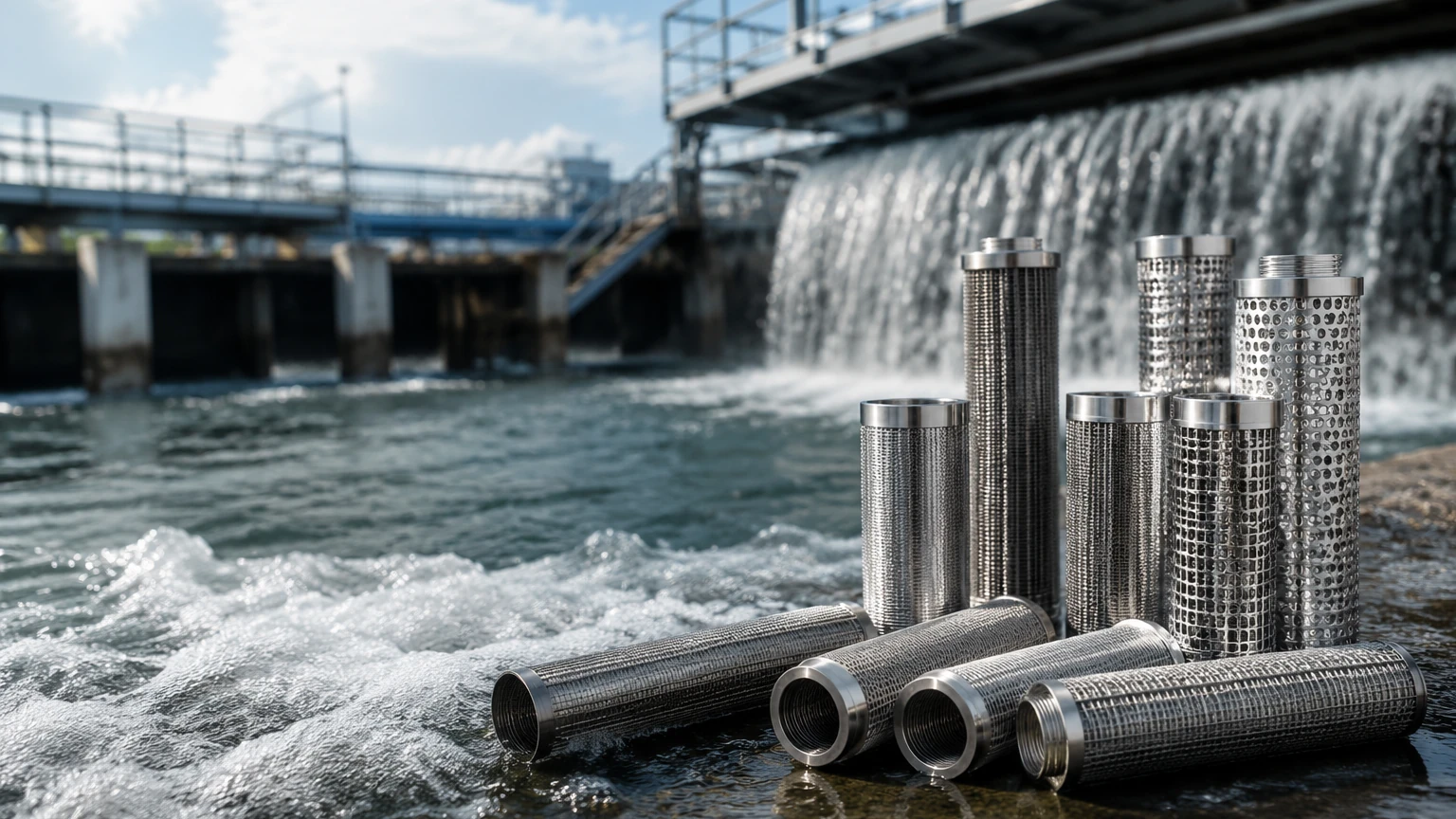
Operational Challenges: Fouling, Scaling, and Cleaning
No filtration system is "set and forget," especially in the context of produced water treatment. Operational success depends on managing the inevitable fouling of the media.
Organic Fouling and Biofilms
Residual oils and bacteria can form a resilient biofilm on the filter surface. Unlike inorganic solids, these films are often compressible and can rapidly increase differential pressure. Stainless steel filters allow for the use of hot water washes, steam, or specialized surfactants that would degrade polymer filters, restoring the media to near-original permeability.
Inorganic Scaling
Changes in pressure or temperature during the filtration process can trigger the precipitation of scales. If scales form within the filter mesh, chemical acid cleaning is often required. The robust nature of stainless steel allows for the use of inhibited acids to dissolve scale without compromising the filter’s pore structure.
Backwashing Optimization
Automated backwashing systems are common in produced water applications. The efficiency of the backwash depends on the filter media's structure. Plain square weave or Dutch weave meshes are often selected for their surface filtration characteristics, which allow for easier release of the filter cake compared to depth-type media.
Economic Considerations and Total Cost of Ownership
While the initial capital expenditure (CAPEX) for stainless steel filtration systems is higher than for disposable plastic housing and cartridge setups, the total cost of ownership (TCO) is often significantly lower in industrial produced water treatment.
* Reduced Waste: Eliminating the disposal of thousands of oil-contaminated plastic cartridges per year reduces environmental liability and waste management costs.
* Lower Labor Costs: Automated, cleanable systems require less operator intervention than manual filter change-outs.
* Protection of Downstream Assets: High-quality filtration extends the life of expensive equipment, such as reverse osmosis (RO) membranes used for desalination or high-pressure pumps used for water flooding.
By investing in durable, precision-engineered metal filters, facilities can achieve a more stable and cost-effective treatment process.
Conclusion
Effective produced water treatment is a multifaceted challenge that requires a deep understanding of fluid chemistry, particle dynamics, and material science. For engineers tasked with designing or maintaining these systems, the choice of filtration media is a pivot point that determines the reliability and efficiency of the entire operation. Stainless steel filtration solutions provide the necessary durability, precision, and chemical resistance to handle the rigors of industrial water processing.
When specifying components, it is vital to confirm the exact water chemistry, required particle cut-off, and expected flow variations. For detailed technical specifications on custom filter cartridges, wire mesh components, and industrial filtration solutions, please refer to the resources available on our Main Page. By focusing on high-performance materials and engineering-led design, operators can ensure their produced water management strategies meet both current regulatory standards and future operational demands.
