


Pulse Jet Cartridge Dust Collector
In modern industrial environments, maintaining air quality and managing particulate matter is a critical requirement for both operational efficiency and regulatory compliance. The pulse jet cartridge dust collector has emerged as a primary solution for high-efficiency dust collection in sectors ranging from chemical processing to metalworking. Unlike traditional baghouse systems, these collectors utilize pleated filter cartridges to provide a significantly higher surface area within a compact footprint, paired with an automated cleaning mechanism that allows for continuous operation.
For engineers and facility managers, selecting the right pulse jet cartridge dust collector involves more than comparing CFM (cubic feet per minute) ratings. It requires a deep understanding of the pulse cleaning mechanics, the physical properties of the dust being handled, and the material science behind the filter media. This guide examines the technical nuances of these systems, focusing on the engineering considerations necessary to optimize performance and longevity.
The Role of Pulse Jet Technology in Industrial Air Filtration
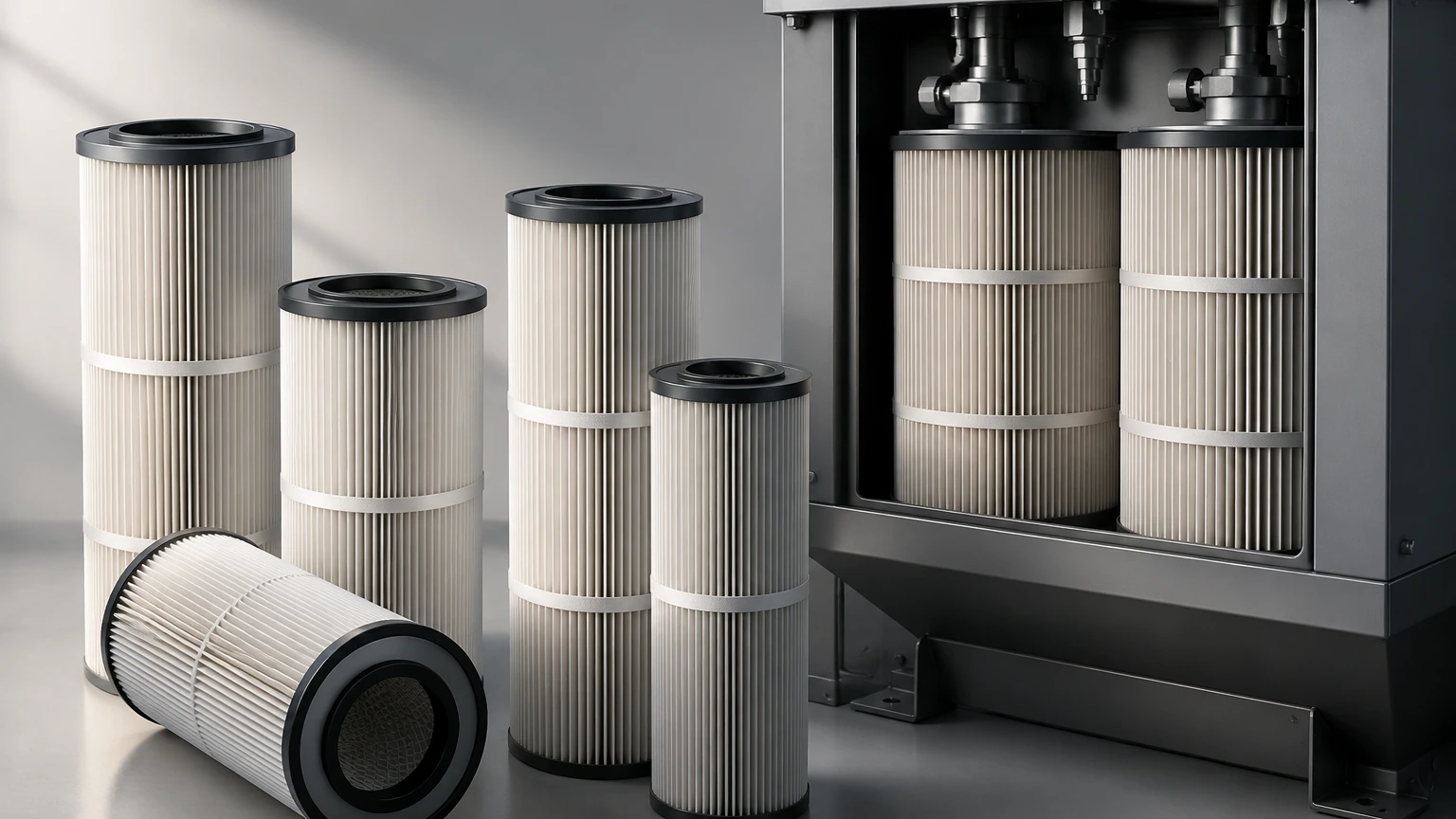
A pulse jet cartridge dust collector is a suction-based system designed to remove dry particulates from the air. The core advantage of this technology is its ability to clean the filter media without interrupting the airflow. This is achieved through "pulse jet" cleaning, where a high-pressure blast of compressed air is directed down through the center of the filter cartridge, momentarily reversing the airflow and dislodging the accumulated dust cake from the exterior surface.
This continuous cleaning cycle is essential for high-load environments. Without it, the pressure drop across the filters would rise rapidly, reducing suction at the source and increasing energy consumption. By maintaining a stable differential pressure, the pulse jet system ensures that the industrial process—whether it is grinding, mixing, or conveying—operates at peak efficiency. For specialized applications involving corrosive gases or high temperatures, the choice of internal components, particularly the filter cartridges, becomes the most critical factor in system reliability.
Mechanical Principles of Pulse Jet Cleaning
The efficiency of a pulse jet cartridge dust collector relies on the precision of its cleaning components. The system typically consists of a compressed air header (manifold), diaphragm valves, solenoid pilots, and blowpipes.
The Pulse Cycle
When the system’s controller detects that the differential pressure has reached a pre-set limit, or based on a timed interval, it triggers the solenoid valve. This opens the diaphragm valve, allowing a burst of compressed air to travel through the blowpipe. The air is released through nozzles positioned directly above each cartridge.
Venturi Effect and Induced Air
In many high-performance designs, a Venturi nozzle is used at the top of the cartridge. As the high-velocity compressed air passes through the Venturi, it creates a vacuum that pulls in additional surrounding air. This combined volume of air creates the pressure wave necessary to flex the filter media and shed the dust cake. For engineers, the quality of this pulse is paramount; if the pulse is too weak, the dust remains embedded; if it is too aggressive, it can damage the media or lead to "re-entrainment," where the dust is simply pulled back onto an adjacent filter.
Evaluating Filter Media: When to Specify Stainless Steel Cartridges
While standard polyester or cellulose media are common in general-purpose dust collection, many industrial processes demand more robust materials. This is where specialized manufacturing expertise, such as that found on the Main Page of technical filtration providers, becomes invaluable.
In industries like chemical processing, pharmaceutical manufacturing, and food production, the dust collector may encounter high temperatures, moisture, or chemically aggressive particulates. In these scenarios, standard pleated media may fail prematurely due to chemical degradation or structural collapse.
Advantages of Stainless Steel and Custom Metal Media
For demanding environments, stainless steel wire mesh or sintered metal filter cartridges offer several advantages:
* Thermal Stability: Stainless steel can withstand temperatures far exceeding the limits of synthetic polymers.
* Chemical Resistance: It is resistant to a wide range of solvents, acids, and bases, preventing media breakdown in volatile environments.
* Durability: Metal media can withstand high-pressure pulses repeatedly without the risk of tearing or pleat collapse.
* Cleanability: Stainless steel filters can often be ultrasonically cleaned or chemically washed, extending their service life significantly compared to disposable cartridges.
When designing a pulse jet cartridge dust collector for a specialized process, engineers must confirm that the media’s micron rating and permeability align with the particle size distribution of the dust. Customization in pleat geometry and support structures can further optimize the air-to-cloth ratio.
Critical Performance Metrics for System Design
To ensure a pulse jet cartridge dust collector performs as expected, several engineering metrics must be calculated and monitored.
Air-to-Cloth (A/C) Ratio
The A/C ratio, also known as the filtration velocity, is the ratio of the air volume (CFM) to the total square footage of filter media. A common mistake in procurement is selecting a system with an excessively high A/C ratio to save on initial costs. However, a high A/C ratio forces dust deeper into the media, making the pulse jet cleaning less effective and leading to frequent filter replacements. For fine or abrasive dust, a lower A/C ratio is mandatory to preserve the integrity of the cartridges.
Pressure Drop ($ΔP$)
Pressure drop is the difference in static pressure between the dirty side and the clean side of the filter. It is an indicator of how hard the system’s fan must work. A stable $ΔP$ suggests that the pulse jet cleaning cycle is effectively balancing the dust loading. If the $ΔP$ continues to rise despite pulsing, it may indicate "blinding" of the filters, where particulates have become permanently lodged in the media pores.
Interstitial Velocity
This refers to the speed of the air as it moves between the filter cartridges. If the cartridges are packed too closely together, the interstitial velocity becomes too high, preventing the dislodged dust from falling into the hopper. Instead, the dust is immediately pulled back onto the filters, rendering the pulse jet cycle useless.
Common Operational Risks and Failure Modes
Even a well-designed pulse jet cartridge dust collector can face operational challenges if not maintained correctly. Engineers should be aware of the following risks:
1. Moisture in Compressed Air: The pulse jet system requires clean, dry compressed air. If moisture enters the manifold, it can lead to the formation of "mud" on the filter surface when it mixes with the dust. This leads to irreversible blinding. Installing a dedicated air dryer and auto-drain for the dust collector's air tank is a standard best practice.
2. Diaphragm Valve Failure: These valves are high-cycle components. If a diaphragm tears, the valve may stay open, wasting compressed air and dropping the system pressure, or fail to open entirely, leaving a section of filters uncleaned.
3. Incorrect Pulse Timing: If the pulse duration is too long, it wastes compressed air without adding cleaning benefit. If the interval between pulses is too short, the compressed air tank may not have enough time to recover its pressure, leading to weak pulses.
4. Static Discharge: In environments with combustible dust, the accumulation of static electricity on the filters can lead to explosions. In these cases, antistatic or grounded filter cartridges (often incorporating stainless steel fibers or conductive coatings) are required.
Procurement Checklist: Engineering Requirements for Custom Solutions
Before finalizing the specifications for a pulse jet cartridge dust collector or replacement cartridges, technical teams should confirm the following data points with their manufacturer:
* Particle Characteristics: Is the dust hygroscopic (moisture-absorbing), abrasive, explosive, or chemically reactive?
* Operating Temperature: What are the continuous and peak operating temperatures? This dictates whether synthetic or stainless steel media is required.
* Compressed Air Supply: Does the facility have the capacity to provide the required PSI and CFM for the pulse cycle? What is the dew point of the supplied air?
* Housing Material: Does the collector housing need to be stainless steel for food-grade or corrosive applications, or is powder-coated carbon steel sufficient?
* Customization Options: Can the filter cartridges be customized in terms of end-cap configuration, gasket material (e.g., EPDM, Viton, or Silicone), and pleat density to match existing equipment?
By addressing these factors during the design phase, companies can avoid the total cost of ownership pitfalls associated with undersized or poorly specified systems. For those seeking high-performance components or custom metal filtration solutions, reviewing the capabilities on the Main Page of a specialized manufacturer can provide the necessary technical foundation for a successful installation.
Conclusion
The pulse jet cartridge dust collector remains a cornerstone of industrial air management due to its efficiency and compact design. However, its success is entirely dependent on the synergy between the pulse mechanism and the filter media. By prioritizing technical specs such as the A/C ratio, material compatibility, and compressed air quality, engineers can ensure their filtration systems provide reliable, long-term service in even the most demanding industrial environments.
