


Pvc Bag Filter Housing
In industrial liquid processing, the selection of a filtration vessel is a critical engineering decision that impacts system longevity, chemical compatibility, and operational safety. While stainless steel remains the industry standard for high-pressure and high-temperature environments, the pvc bag filter housing has established itself as a specialized solution for applications involving highly corrosive fluids or where budget constraints necessitate a cost-effective, non-metallic alternative. Understanding the technical nuances of these housings—ranging from material properties to mechanical limitations—is essential for engineers and procurement teams tasked with optimizing filtration performance.
Technical Construction of PVC Bag Filter Housing Systems
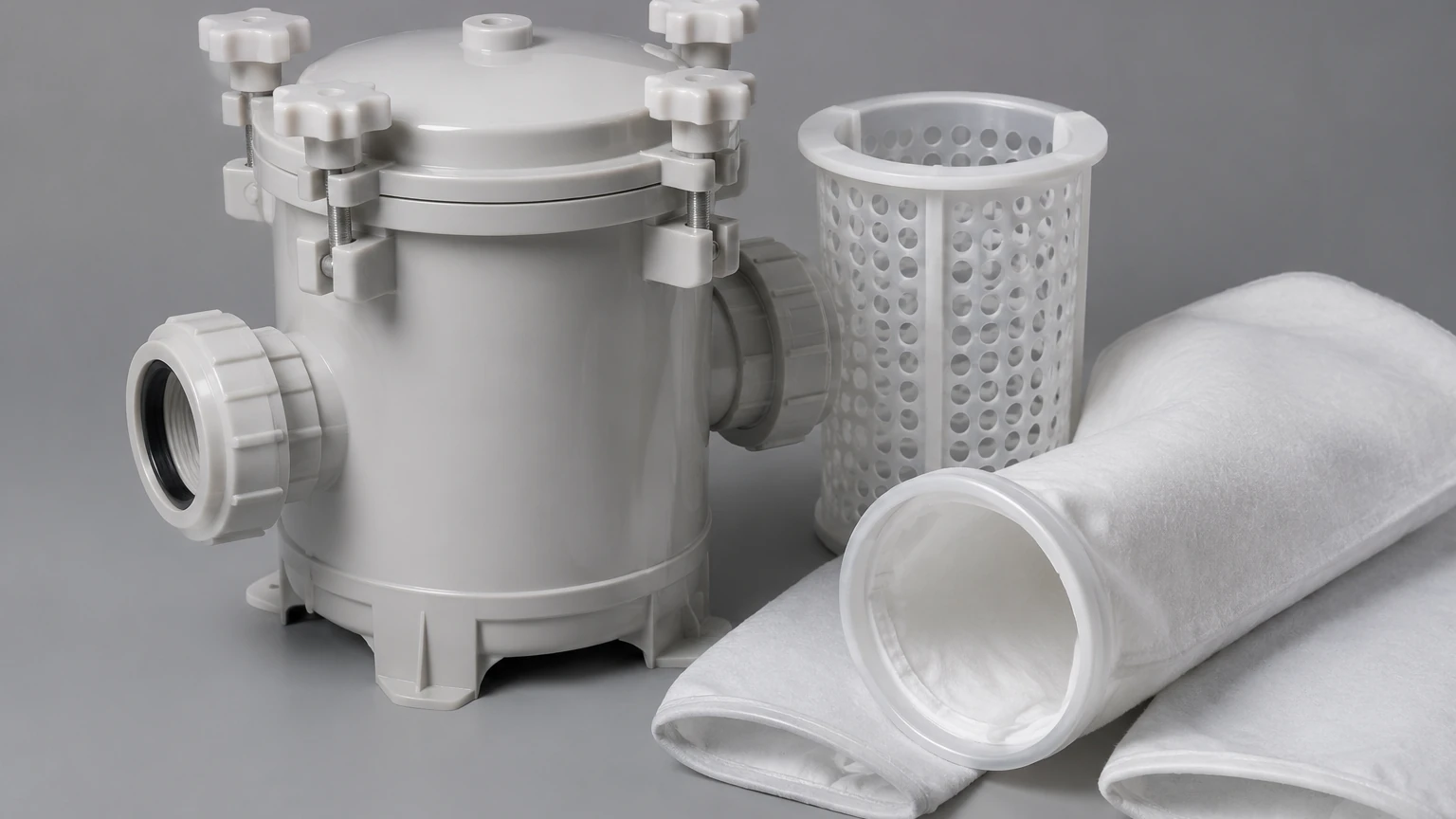
A pvc bag filter housing is typically constructed from Unplasticized Polyvinyl Chloride (UPVC) or, for higher temperature requirements, Chlorinated Polyvinyl Chloride (CPVC). Unlike metal housings that are welded, plastic housings are often manufactured through high-precision injection molding or specialized fabrication techniques. This results in a seamless or solvent-welded body that is naturally resistant to a wide array of chemicals that would otherwise cause pitting or stress corrosion cracking in standard metallic alloys.
The internal architecture of these units generally includes a pressure vessel, a lid with a secure closure mechanism (such as a threaded cap or a swing-bolt flange), and an internal support basket. The support basket, often made of polypropylene or stainless steel mesh, is vital because it prevents the filter bag from bursting under the force of the fluid flow. In a typical industrial setup, the fluid enters through the top or side inlet, passes through the filter bag from the inside out, and exits through the bottom or side outlet, leaving contaminants trapped within the bag.
Chemical Compatibility and Material Advantages
The primary driver for selecting a pvc bag filter housing is its inherent resistance to corrosion. In industries such as seawater desalination, chemical processing, and metal finishing, the presence of chlorides, acids, and bases can rapidly degrade standard 304 or 316 stainless steel.
1. Corrosion Resistance: PVC is virtually immune to electrolytic corrosion and chemical oxidation from common industrial acids (like hydrochloric or sulfuric acid at lower concentrations) and caustic solutions.
2. Weight Considerations: PVC housings are significantly lighter than their metallic counterparts. This reduces the structural requirements for mounting racks and simplifies the installation process for maintenance crews.
3. Cost-Efficiency: For low-to-medium pressure applications, PVC offers a lower initial capital expenditure (CAPEX) compared to high-grade alloys like Hastelloy or Titanium, which might otherwise be required for similar chemical resistance.
However, engineers must verify the specific grade of PVC against the fluid's chemical composition and concentration. For instance, while PVC handles many acids well, it can be susceptible to degradation when exposed to certain solvents, esters, or aromatic hydrocarbons.
Mechanical Limits: Pressure and Temperature Boundaries
One of the most critical aspects of specifying a pvc bag filter housing is acknowledging its mechanical boundaries. Unlike the robust stainless steel filtration solutions found on the Main Page, plastic housings have lower thresholds for physical stress.
* Pressure Ratings: Most PVC housings are rated for a maximum operating pressure of 6 to 10 bar (approximately 90 to 150 PSI) at ambient temperatures. It is vital to note that as the operating temperature increases, the pressure-bearing capacity of the plastic decreases significantly. This is known as the "derating factor."
* Temperature Constraints: Standard UPVC is generally limited to operating temperatures below 45°C (113°F). If the process fluid exceeds this, the material softens, leading to potential deformation or catastrophic failure. CPVC can extend this range up to approximately 90°C (194°F), but it still falls short of the capabilities of metal filter cartridges.
* Thermal Expansion: PVC has a much higher coefficient of thermal expansion than steel. In systems with fluctuating temperatures, this can lead to stress at connection points, requiring the use of flexible couplings or expansion loops in the piping design.
Engineering Considerations for Installation and Safety
When integrating a pvc bag filter housing into an industrial flow loop, several engineering safeguards must be implemented to prevent premature failure.
Avoiding Water Hammer
Plastic materials are brittle compared to metals. Sudden pressure spikes, commonly known as water hammer, can occur when valves are closed too quickly or pumps are started abruptly. These spikes can easily exceed the burst pressure of a PVC housing. Engineers should always specify slow-closing valves and consider the installation of pressure relief valves or surge suppressors upstream of the filtration unit.
UV Exposure and Outdoor Placement
If the filtration system is located outdoors, UV radiation can cause the PVC to become brittle over time, a process often referred to as "chalking." For outdoor installations, the housing should be painted with a UV-resistant coating or shielded from direct sunlight to maintain its structural integrity over a multi-year service life.
Connection Types and Thread Integrity
PVC housings often use NPT or BSP threaded connections or flanged ends. When using threaded connections, it is imperative to use compatible thread sealants (like PTFE tape) and avoid over-tightening. Over-tightening a metal fitting into a plastic housing can easily strip the threads or crack the inlet/outlet ports.
Evaluating Filtration Efficiency and Bag Selection
The performance of a pvc bag filter housing is ultimately determined by the filter bag housed within it. These bags are available in various materials, including polypropylene, polyester, and nylon monofilament.
* Micron Ratings: Bags typically range from 1 micron to over 1000 microns. For fine filtration, needle felt bags are common, while mesh bags are used for coarse straining.
* Seal Integrity: The bypass of unfiltered liquid is a common failure point. High-quality PVC housings utilize a compression seal where the lid forces the bag's collar (either a plastic flange or a metal ring) against a machined seat. Ensuring a tight seal is paramount for achieving the desired effluent quality.
* Differential Pressure Monitoring: To optimize the replacement cycle, pressure gauges should be installed at the inlet and outlet. A typical bag change-out is recommended when the differential pressure (ΔP) reaches 1.0 to 1.5 bar. Operating beyond this point risks bag rupture and the release of captured contaminants into the downstream process.
Comparing PVC with Stainless Steel Filtration Solutions
While the pvc bag filter housing is suitable for specific niche applications, many industrial environments demand the durability and precision of metal systems. As a professional manufacturer, Kaifil provides advanced stainless steel filtration components that address the limitations of plastic housings.
For example, in high-pressure hydraulic systems or high-temperature steam filtration, PVC is fundamentally unsuitable. In these scenarios, stainless steel wire mesh filters and precision-engineered filter cartridges offer superior mechanical strength and can be cleaned and reused, whereas filter bags are typically consumable items. Furthermore, for food, beverage, and pharmaceutical applications, stainless steel provides a sanitary surface that can withstand Clean-In-Place (CIP) procedures and high-temperature sterilization, which would melt or degrade PVC.
Engineers should choose PVC when chemical corrosion of metal is the primary threat and pressures are low. However, for most heavy-duty industrial applications requiring long-term reliability and high filtration accuracy, stainless steel remains the preferred material for housing and media.
Total Cost of Ownership (TCO) and Maintenance
When calculating the total cost of ownership for a pvc bag filter housing, one must look beyond the initial purchase price.
1. Consumable Costs: Because bag filters are generally disposable, the ongoing cost of purchasing and disposing of bags must be factored into the operational budget.
2. Labor and Downtime: Replacing a filter bag requires shutting down the flow (unless a duplex system is used). The ease of access to the housing lid and the speed of the closure mechanism directly impact maintenance labor costs.
3. Longevity: A well-maintained PVC housing can last for years in the right environment, but it is more susceptible to accidental impact damage or environmental degradation than a metal housing.
To ensure the best return on investment, technical teams should confirm the fluid's maximum temperature, peak pressure, and chemical concentration before finalizing a purchase. If the application involves high-viscosity fluids or requires precise filtration below 5 microns, it may be more efficient to transition to a cartridge-based system or a customized stainless steel solution from a specialized manufacturer like Kaifil.
Conclusion
The pvc bag filter housing is a vital tool in the industrial filtration toolkit, particularly valued for its resistance to aggressive chemicals and its lightweight design. However, its application is strictly governed by temperature and pressure limits that require careful engineering oversight. By understanding these boundaries and implementing proper safety protocols—such as water hammer prevention and UV protection—operators can achieve reliable filtration in corrosive environments. For applications that exceed the capabilities of plastic, exploring professional stainless steel filtration options is the next logical step in ensuring process integrity and operational efficiency.
