


Pvc Well Screen
In the field of groundwater extraction, environmental monitoring, and industrial water management, the selection of the correct well screen is a critical engineering decision that dictates the efficiency, longevity, and purity of the water source. A pvc well screen serves as the intake mechanism for a well, designed to allow water to enter while preventing the surrounding formation materials—such as sand, silt, and gravel—from infiltrating the system. While various materials are available for well construction, Polyvinyl Chloride (PVC) has become a standard choice for shallow to medium-depth applications due to its chemical resistance and cost-effectiveness.
Understanding the technical nuances of PVC well screens is essential for engineers and procurement professionals who must balance initial capital expenditure with long-term operational stability. This guide explores the design, mechanical properties, and application criteria for PVC screens, while also providing a comparative perspective against high-performance alternatives like stainless steel filtration components.
Understanding the Design and Function of PVC Well Screens
The primary function of a well screen is to provide a stabilized opening through which groundwater can flow into the wellbore. Unlike solid casing, the screen is perforated or slotted to create an interface between the aquifer and the pump system.
Machine-Slotted Precision
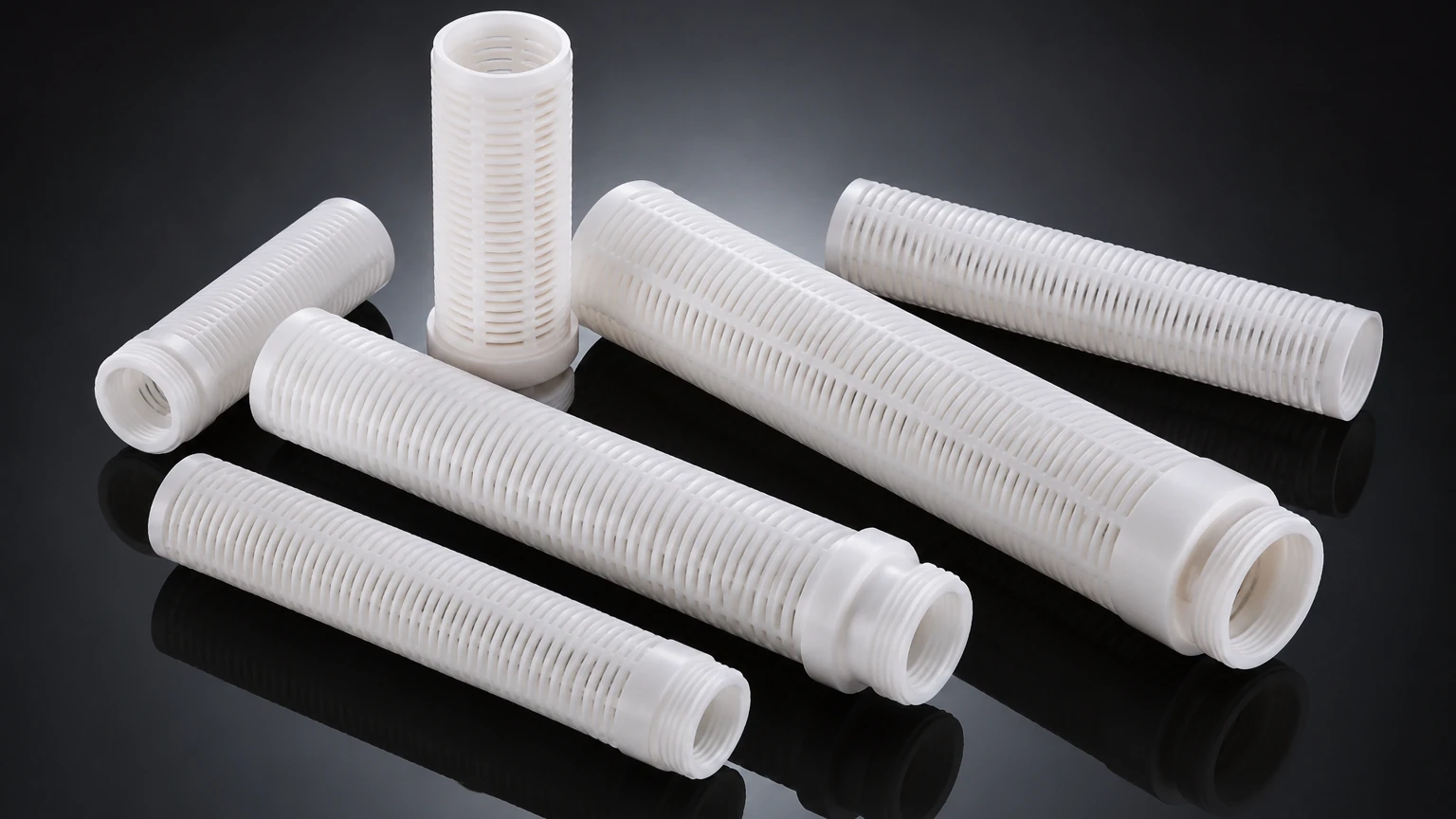
Modern PVC well screens are typically machine-slotted to ensure uniformity. Precision is vital because inconsistent slot widths can lead to "sand pumping," where fine particles bypass the screen and cause premature wear on pumps and valves. Machine-slotted screens offer a consistent "open area," which is the total percentage of the screen's surface that allows water passage. A higher open area generally results in lower entrance velocity, which reduces the risk of encrustation and mechanical friction.
Slot Configurations
Slots are usually cut horizontally or vertically into the pipe wall. Horizontal slots are often preferred for their structural integrity, as they maintain the hoop strength of the pipe more effectively than long vertical cuts. The width of these slots, often referred to as the "gauge," is measured in thousandths of an inch (e.g., a 10-gauge slot is 0.010 inches wide). The choice of gauge is determined by a sieve analysis of the aquifer’s soil or the specifications of the artificial filter pack used during installation.
Technical Specifications and Material Grades
When specifying a pvc well screen, engineers must look beyond the basic dimensions and consider the material's grade and schedule. PVC is not a monolithic material; its performance varies significantly based on its formulation and wall thickness.
PVC-U (Unplasticized)
Most industrial and environmental well screens are made from PVC-U (unplasticized), which contains no plasticizers that could leach into the water. This is particularly important for monitoring wells where the chemical integrity of the sample is paramount. PVC-U is naturally resistant to the corrosive effects of low-pH groundwater and high-salinity environments, where traditional carbon steel would fail rapidly.
Schedule 40 vs. Schedule 80
The "Schedule" of the pipe refers to its wall thickness.
- Schedule 40: Generally used for shallower wells where the hydrostatic pressure and formation collapse pressure are relatively low. It offers a larger internal diameter for a given nominal size, which can be beneficial for pump clearance.
- Schedule 80: Features a thicker wall and is the preferred choice for deeper applications or environments where the ground is prone to shifting. The increased wall thickness provides higher collapse strength, though it slightly reduces the internal diameter and increases the total weight of the string.
Standards and Compliance
High-quality PVC screens should adhere to standards such as ASTM D1785 (standard specification for PVC pipe) and ASTM F480 (standard specification for thermoplastic well casing pipe and couplings). Compliance ensures that the material can withstand the tensile loads during installation and the external pressures during the well's lifespan.
Engineering Considerations for Screen Selection
Selecting a well screen is a calculation-heavy process that involves more than just matching pipe sizes. Several hydraulic and mechanical factors must be analyzed to ensure the well performs as intended.
Entrance Velocity
One of the most important metrics in well design is the entrance velocity—the speed at which water moves through the screen slots. To minimize friction loss and prevent the transport of fine sediments, the industry standard is to keep entrance velocity below 0.1 feet per second (0.03 meters per second). If the velocity is too high, it can lead to turbulent flow, which accelerates the precipitation of minerals (encrustation) and can physically erode the slot edges.
Collapse Strength and Depth Limitations
PVC is a thermoplastic, meaning its mechanical strength is temperature-dependent. As the depth of a well increases, so does the ambient temperature and the external pressure from the water column and the formation. Engineers must calculate the "critical collapse pressure" of the PVC screen. For deep-well applications or high-temperature geothermal wells, PVC may reach its physical limits, necessitating a transition to stainless steel components. For more information on high-durability filtration options, you can visit our Main Page.
Open Area and Well Efficiency
The total open area of a screen affects the drawdown—the difference between the static water level and the pumping water level. A screen with a low open area creates more resistance to flow, increasing energy costs for the pump and potentially shortening the well's life. PVC screens typically offer an open area ranging from 2% to 10%, depending on slot density and pipe diameter.
PVC vs. Stainless Steel Well Screens: A Comparative Analysis
While PVC is the dominant choice for many residential and agricultural wells, industrial and high-demand applications often require a comparison between PVC and stainless steel. As a manufacturer specializing in precision filtration, Kaifil provides insights into when an upgrade from PVC is necessary.
| Feature | PVC Well Screen | Stainless Steel (304/316) |
| :— | :— | :— |
| Corrosion Resistance | Excellent (Non-conductive) | Excellent (Chemical dependent) |
| Tensile Strength | Low to Moderate | High |
| Collapse Resistance | Moderate (Depth limited) | Very High |
| Open Area | Lower (2% – 10%) | Higher (up to 30%+) |
| Temperature Limit | Low (< 60°C) | High (> 250°C) |
| Cost | Low | Higher |
When to Choose PVC
PVC is ideal for shallow monitoring wells, irrigation wells in non-aggressive soils, and projects with tight budget constraints where the depth does not exceed 300-500 feet. It is also the preferred material when the groundwater contains high levels of dissolved oxygen or hydrogen sulfide, which can be aggressive toward certain metals.
When to Upgrade to Stainless Steel
In deep-well industrial applications, or where high-volume extraction is required, stainless steel wire-wrapped screens are often superior. They offer significantly higher open areas, which maximizes hydraulic efficiency and minimizes energy costs. Furthermore, in environments where the well must be periodically cleaned with aggressive acids or high-pressure jetting, stainless steel provides the mechanical resilience that PVC lacks.
Installation Best Practices and Longevity
The performance of a pvc well screen is heavily influenced by how it is installed. Improper handling or installation can lead to screen failure, even if the material specifications are correct.
Joining Methods
PVC screens are joined using several methods:
- Threaded Couplings: Most common for professional wells. Flush-thread joints are preferred because they maintain a consistent outer diameter, making it easier to install the screen within the borehole.
- Solvent Welding: Occasionally used in shallow applications, but generally discouraged for monitoring wells because the solvents can contaminate water samples.
- Spline-Lock Joints: A mechanical joining system that provides a secure, leak-proof connection without the need for threads or glue.
The Role of the Filter Pack
A well screen rarely works alone. It is usually surrounded by a "filter pack" (or gravel pack)—a layer of graded silica sand. The filter pack acts as a primary filter, while the screen acts as the retainer for the pack. The relationship between the slot size of the PVC screen and the grain size of the filter pack is critical. A common rule of thumb is that the slot size should be small enough to retain 90% of the filter pack material.
Well Development
After installation, the well must be "developed." This involves surging water through the screen to remove fine particles from the formation and the filter pack. Because PVC is less rigid than metal, development techniques must be carefully managed to avoid over-pressurizing or collapsing the screen. High-velocity jetting, for instance, must be performed with caution on PVC screens compared to stainless steel counterparts.
Applications in Industrial and Environmental Monitoring
Beyond standard water supply, PVC well screens play a vital role in specialized industrial and environmental sectors.
1. Environmental Remediation: In sites contaminated with hydrocarbons or heavy metals, PVC monitoring wells are used to track the movement of plumes. The inert nature of PVC ensures that the material does not react with the contaminants, providing accurate data for environmental engineers.
2. Leachate Collection: In landfill management, PVC screens are used in leachate collection systems. The chemical complexity of landfill leachate requires a material that can withstand a wide variety of organic and inorganic acids.
3. Dewatering Operations: For construction projects requiring a dry work environment, temporary dewatering wells utilize PVC screens to lower the water table. The low cost of PVC makes it ideal for these short-term applications.
4. Mining and Heap Leaching: PVC is used in the recovery of minerals where acidic solutions are injected into the ground. Its resistance to sulfuric acid and other leaching agents makes it a practical choice for these harsh chemical environments.
Procurement: What to Confirm Before Ordering
For purchasing teams and engineers, specifying a pvc well screen requires a detailed checklist to ensure the product meets site requirements. Before finalizing a purchase, confirm the following:
- Slot Precision: Is the manufacturer using CNC or high-precision multi-blade saws to ensure slot uniformity?
- End Fittings: Are the threads compatible with the casing string? (e.g., NPT vs. specialized well-thread).
- Physical Integrity: Does the pipe meet the required ASTM schedule for the target depth?
- Cleanliness: For environmental applications, is the screen delivered pre-cleaned and wrapped to prevent cross-contamination?
While PVC is a robust solution for many applications, complex industrial filtration often requires a more customized approach. At Kaifil, we specialize in high-performance stainless steel and metal filtration components designed for the most demanding environments. Whether you are dealing with high temperatures, extreme pressures, or the need for ultra-precise filtration accuracy, our engineering team can assist in developing the right solution.
To explore our full range of industrial filtration capabilities and custom OEM services, please visit our Main Page. By understanding the strengths and limitations of materials like PVC, engineers can make informed decisions that ensure the long-term success of their water and fluid management projects.
