


Reticulated Foam Market
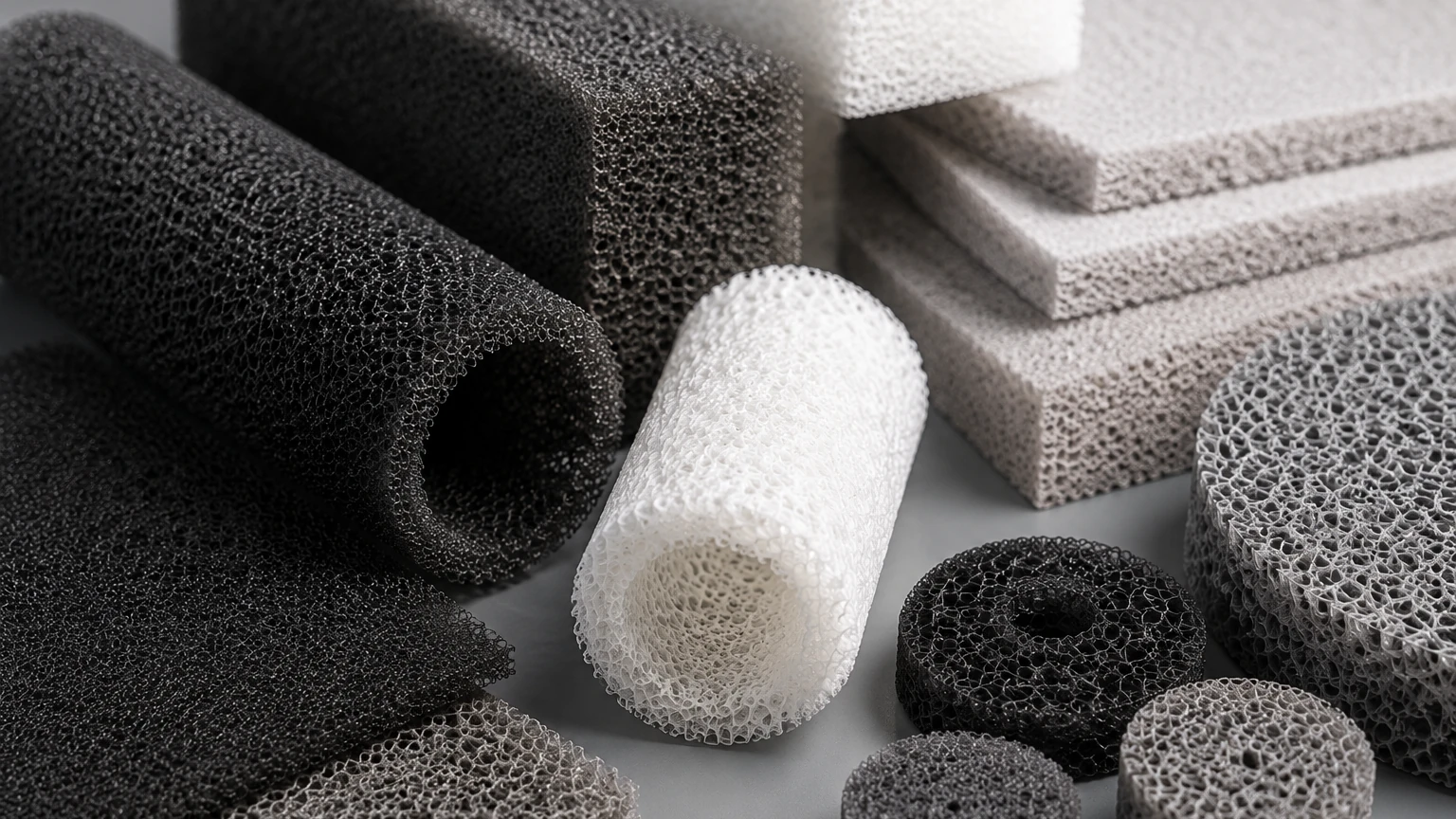
In the landscape of industrial filtration and material science, the reticulated foam market represents a critical segment for engineers seeking high-porosity, low-density media. Reticulated foam is a highly porous, open-cell structure characterized by a "net-like" framework. Unlike standard expanded foams that contain closed or partially closed cells, reticulated foams undergo a process—often thermal or chemical—that removes the cell membranes, leaving only the structural struts. This results in a material that is typically 90% to 98% void space, making it an exceptional candidate for fluid filtration, acoustic dampening, and controlled fluid distribution.
For technical professionals and procurement teams, understanding the nuances of this market is essential when comparing polymer-based foams with more robust alternatives like stainless steel wire mesh or precision metal filter components. While reticulated foam offers unique advantages in weight and initial cost, industrial applications often require the durability and chemical resistance provided by specialized manufacturers like Kaifil. For a deeper look into high-performance metal filtration alternatives, engineers often refer to the Kaifil Main Page to evaluate material compatibility and structural integrity for demanding environments.
Technical Characteristics and Material Variations
The reticulated foam market is segmented primarily by the base material used in the reticulation process. Each material offers distinct mechanical properties and chemical resistances that dictate its suitability for specific industrial roles.
Polyurethane Reticulated Foam
Polyurethane (PU) is the most common material in the market. It is generally divided into two types: polyester and polyether.
- Polyester-based foams offer superior mechanical strength and resistance to hydrocarbons and chemicals, making them ideal for petroleum-based filtration.
- Polyether-based foams provide excellent hydrolytic stability, meaning they resist breakdown in water and humid environments, which is critical for healthcare and outdoor applications.
Ceramic and Metal Reticulated Foams
In high-temperature or highly corrosive environments where polymers fail, ceramic and metal reticulated foams take precedence. Ceramic foams are frequently used in molten metal filtration within foundries. Metal reticulated foams, often made from nickel, copper, or stainless steel, provide the structural benefits of foam with the thermal conductivity and strength of metal. However, for many precision industrial processes, engineers find that sintered metal or woven wire mesh filters offer more predictable pore sizes and easier cleaning cycles than reticulated metal foams.
Performance Metrics in Industrial Filtration
When evaluating the reticulated foam market for filtration applications, engineers focus on several key performance indicators (KPIs) that determine the efficiency of the system.
Pores Per Inch (PPI)
Unlike wire mesh, which is measured in microns or mesh count, reticulated foam is categorized by PPI. Common ratings range from 10 PPI (very coarse) to 100 PPI (very fine). A higher PPI indicates a denser network of struts, providing more surface area for impingement but also increasing the pressure drop across the media. In contrast, stainless steel filters can be manufactured to much tighter tolerances, offering absolute filtration ratings that foam typically cannot achieve.
Pressure Drop and Flow Rates
One of the primary reasons engineers select reticulated foam is its exceptionally low pressure drop. Because the material is mostly void space, air and liquids can pass through with minimal resistance. This is vital in HVAC systems or small engine air intakes where power loss due to flow restriction must be minimized. However, as the foam captures particulates, its depth-loading nature means the pressure drop can increase significantly over time, eventually requiring complete replacement rather than cleaning.
Tortuous Path and Depth Filtration
Reticulated foam functions as a depth filter. As fluid moves through the web-like structure, particles are forced to change direction multiple times, eventually becoming trapped against the struts. This "tortuous path" is effective for high-dirt-loading applications but lacks the precision of surface filtration provided by wire mesh, where particles are stopped at the first layer of the media.
Engineering Considerations: Foam vs. Stainless Steel
For many B2B applications in the chemical processing, pharmaceutical, and food and beverage sectors, the choice between reticulated foam and stainless steel filtration components is a matter of operational longevity and hygiene.
Temperature and Chemical Limits
Polymer reticulated foams generally have a maximum operating temperature between 100°C and 120°C. Beyond this, the material loses structural integrity or begins to off-gas. In chemical processing, even "resistant" polyester foams can degrade when exposed to strong acids or solvents over long periods. In these scenarios, stainless steel filter cartridges are the industry standard. They can withstand temperatures exceeding 500°C and are inert to a vast array of aggressive chemicals, ensuring no contaminants leach into the process stream.
Hygiene and Sterilization
In the pharmaceutical and food industries, the ability to sterilize equipment is non-negotiable. Reticulated foam is difficult to clean thoroughly because its deep, interconnected pores can harbor microbial growth. Stainless steel wire mesh filters, such as those detailed on the Kaifil Main Page, are designed for Clean-in-Place (CIP) or ultrasonic cleaning, allowing for repeated use in sterile environments without the risk of cross-contamination.
Market Trends and Customization Requirements
The reticulated foam market is currently driven by a demand for specialized coatings and composite structures. Manufacturers are increasingly offering foams treated with anti-microbial agents, flame retardants, or conductive coatings for EMI shielding.
OEM and Custom Solutions
For original equipment manufacturers (OEMs), the ability to source custom-cut shapes and specific PPI ratings is a major market driver. However, as industrial equipment becomes more compact and efficient, the limitations of foam—specifically its lack of structural rigidity—often lead designers to seek custom metal filter components. Metal filters can be pleated to increase surface area within a small footprint, a feat that is difficult to achieve with reticulated foam without compromising the flow path.
Sustainability and the Circular Economy
Sustainability is becoming a pivotal factor in the reticulated foam market. While many polymer foams are difficult to recycle, there is a push toward bio-based polyols. Conversely, stainless steel filters represent a more sustainable long-term investment due to their infinite recyclability and multi-year service life. Engineers are increasingly calculating the Total Cost of Ownership (TCO), where the higher initial cost of a permanent metal filter is offset by the elimination of the recurring waste and procurement costs associated with disposable foam media.
Risk Assessment and Selection Criteria for Engineers
Before finalizing a procurement strategy within the reticulated foam market, technical teams should confirm several critical factors to avoid system failure or unexpected maintenance costs.
1. Media Migration: In high-velocity gas streams, polymer foam struts can break off and enter the downstream flow. This is a significant risk in sensitive equipment like compressors or medical devices. If zero downstream contamination is required, a metal mesh filter is mandatory.
2. Outgassing: In vacuum applications or aerospace environments, the volatile organic compounds (VOCs) released by foams can interfere with sensitive sensors. Metal media are vacuum-compatible and do not outgas.
3. Compression Set: If the foam is used as a seal or gasket as well as a filter, it may lose its ability to "spring back" over time (known as compression set), leading to bypass leaks.
4. Regulatory Compliance: Ensure the foam meets specific industry standards, such as UL94 for flame retardancy or FDA/USP Class VI for medical and food contact. If these certifications are difficult to obtain for a specific foam grade, switching to a certified 316L stainless steel filter is often the more efficient path to compliance.
Total Cost Considerations in Filtration Procurement
While the reticulated foam market offers low-cost entry points for filtration, the long-tail costs can be deceptive. A B2B procurement strategy must account for:
- Replacement Frequency: Foam filters are typically disposable. The cost of labor for frequent replacements and the logistics of maintaining high inventory levels can be substantial.
- Disposal Costs: Industrial foams contaminated with oils or chemicals may be classified as hazardous waste, increasing disposal fees.
- Energy Efficiency: A filter that clogs quickly increases the load on pumps and fans. The consistent performance of a cleanable stainless steel filter often results in lower energy consumption over the lifecycle of the equipment.
For organizations looking to optimize their filtration processes, transitioning from standard foam to high-precision metal components can provide significant operational advantages. By reviewing the technical resources available on the Main Page of specialized manufacturers like Kaifil, engineers can access the data needed to design systems that are not only efficient but also durable enough for the most demanding industrial applications.
In conclusion, while the reticulated foam market provides essential solutions for light-duty and high-voidage applications, the broader industrial filtration sector continues to rely on the precision and resilience of metal-based media. Balancing the benefits of PPI-rated foams against the absolute micron ratings of stainless steel is the hallmark of a well-engineered filtration system.
