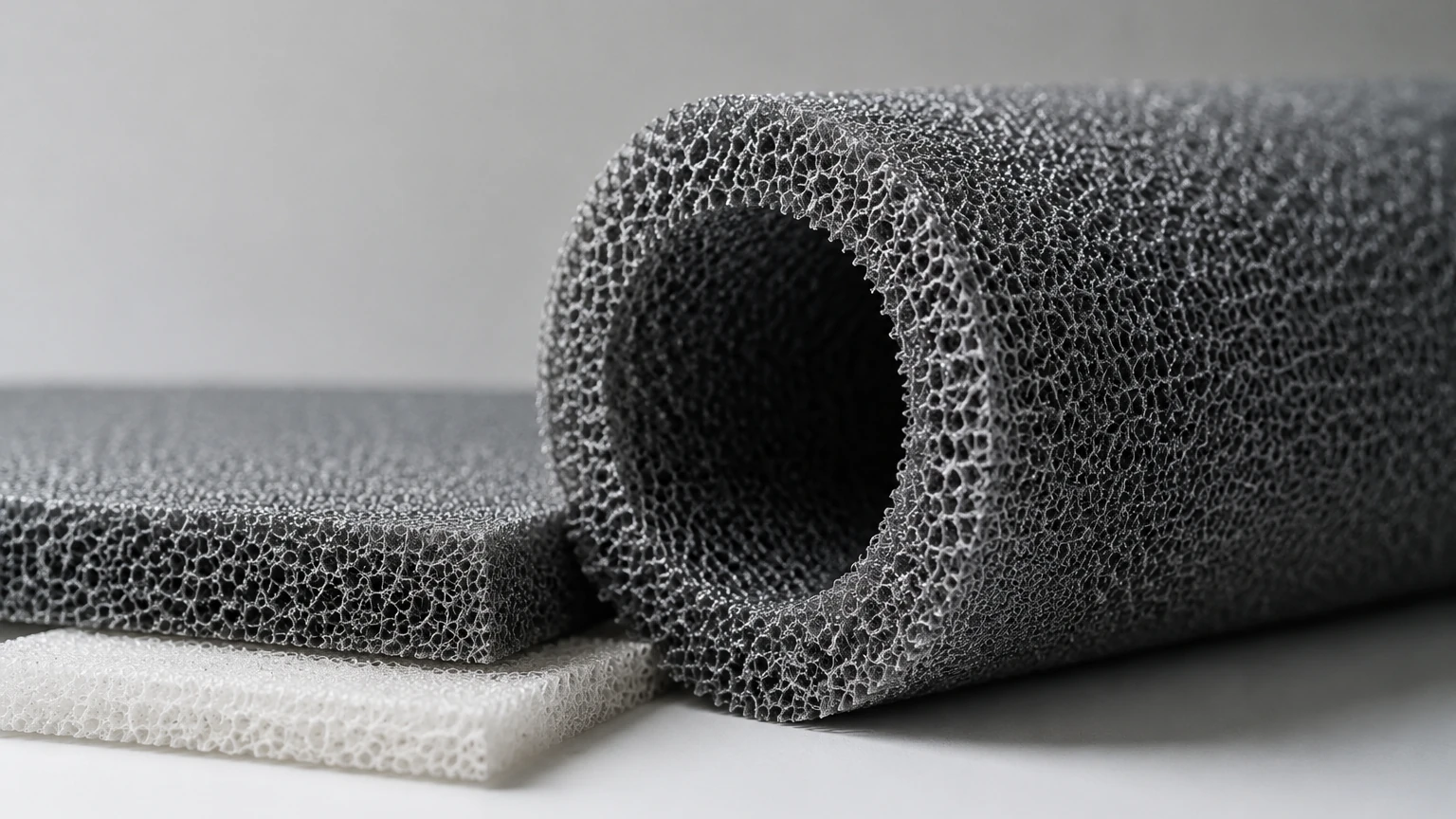
Reticulated Polyurethane
In the landscape of industrial filtration and material science, reticulated polyurethane stands as a versatile, highly engineered cellular solid. Unlike standard flexible foams used in consumer goods, reticulated polyurethane is defined by its unique "open-pore" structure, achieved through a specific manufacturing process that removes the cell membranes (windows), leaving only the skeletal struts. For engineers and procurement specialists, understanding the technical nuances of this material—and how it compares to more durable alternatives like stainless steel mesh—is essential for optimizing filtration efficiency and system longevity.
Understanding the Structure of Reticulated Polyurethane
Reticulated polyurethane is a type of porous, low-density foam. The term "reticulated" refers to the net-like structure of the material. In its raw state, polyurethane foam consists of a complex network of dodecahedron-shaped cells. During standard foam production, these cells are enclosed by thin membranes. Reticulation is the post-processing step that eliminates these membranes.
The resulting material typically possesses a void volume ranging from 95% to 98%. This high porosity allows for exceptional fluid and airflow with minimal resistance. In industrial filtration, the primary metric for defining this structure is Pores Per Inch (PPI). Reticulated polyurethane is commonly available in a range from 10 PPI (very coarse, large pores) to 100 PPI (very fine, dense pores). Selecting the correct PPI is a balance between filtration efficiency (capturing smaller particles) and maintaining a low pressure drop across the media.
Manufacturing Processes: Thermal vs. Chemical Reticulation
The method used to remove cell membranes significantly impacts the physical properties and consistency of the final product. There are two primary industrial methods for creating reticulated polyurethane:
Thermal Reticulation (Zapping)
Thermal reticulation is the most common method for high-quality industrial applications. The foam blocks are placed in a large, vacuum-sealed chamber filled with a precise mixture of explosive gases (typically hydrogen and oxygen). Upon ignition, a controlled flash flame sweeps through the foam. Because the cell membranes have a high surface-area-to-volume ratio compared to the thicker skeletal struts, the membranes melt and wrap around the struts almost instantaneously. This results in a very clean, open structure with smooth, fire-polished struts that offer minimal resistance to flow.
Chemical Reticulation
Chemical reticulation involves submerging the foam in a caustic solution (such as a heated sodium hydroxide bath). The chemical reaction etches away the cell membranes. While effective, this process can be more difficult to control consistently and may slightly weaken the overall tensile strength of the skeletal structure. However, it is sometimes preferred for specific specialty foams where thermal zapping might alter the chemical composition of the base polymer.
Performance Characteristics and Engineering Selection
When specifying reticulated polyurethane for industrial systems, engineers must evaluate several key performance indicators (KPIs) beyond just the PPI.
1. Pressure Drop (ΔP): Because of its high void volume, reticulated polyurethane exhibits a very low initial pressure drop. This is critical in HVAC systems, small engine air intake filters, and electronic cooling applications where fan power is limited.
2. Dust Holding Capacity: The three-dimensional depth of the foam allows it to trap particles throughout its entire thickness, rather than just on the surface. This "depth filtration" capability provides a higher dust-holding capacity compared to simple two-dimensional screens.
3. Tensile Strength and Elongation: These metrics determine how well the foam can withstand the mechanical stresses of high-velocity airflow or liquid pulsation without tearing or shedding particles.
4. Compression Set: This refers to the material's ability to return to its original thickness after being compressed. This is vital for foam gaskets or filters that must be squeezed into a housing to ensure a tight seal.
Chemical Stability: Polyester vs. Polyether Bases
One of the most critical decisions in selecting reticulated polyurethane is the base polymer chemistry. Polyurethane is generally divided into two categories: polyester-based and polyether-based.
* Polyester-Based Polyurethane: This variant offers superior resistance to hydrocarbons, oils, and many common solvents. It typically possesses higher tensile strength and tear resistance. However, polyester foams are highly susceptible to hydrolysis—the breakdown of the polymer in the presence of moisture and heat. They are generally avoided in high-humidity environments or water filtration applications.
* Polyether-Based Polyurethane: Polyether foams are formulated for hydrolytic stability. They perform significantly better in water-based applications and high-humidity environments. While they may have slightly lower physical strength and less resistance to certain oils compared to polyester, their durability in moist conditions makes them the standard for outdoor air filtration and aquatic life support systems.
Comparing Reticulated Polyurethane with Stainless Steel Mesh
In many industrial contexts, reticulated polyurethane is evaluated alongside stainless steel filtration media. While polyurethane offers a low-cost, lightweight solution for pre-filtration, it has distinct limitations when compared to the precision metal components manufactured by companies like Kaifil.
Temperature Resistance
Polyurethane is a thermoplastic material with a relatively low melting point. Most reticulated foams begin to soften or degrade at temperatures exceeding 90°C to 120°C (194°F to 248°F). In contrast, stainless steel filter cartridges can operate in environments exceeding 400°C, making them the only viable choice for high-temperature steam filtration or hot gas exhaust systems.
Chemical Compatibility and Longevity
While polyether foams resist water, they are still organic polymers that will eventually degrade due to UV exposure, oxidation, or microbial attack. Stainless steel (304, 316L) is inert to a much wider range of aggressive chemicals, acids, and bases. For long-term installations where filter replacement is difficult or costly, the durability of metal mesh often justifies the higher initial investment.
Cleaning and Reusability
Reticulated polyurethane can often be cleaned by washing or vacuuming, but its soft structure makes it prone to damage during aggressive cleaning cycles. Stainless steel filters are designed for repeated backwashing, ultrasonic cleaning, or chemical sterilization, allowing them to be used for years in demanding industrial processes. For those seeking high-performance, permanent filtration components, visiting the Main Page of a specialized manufacturer provides insight into how metal alternatives solve the durability issues inherent in foam.
Common Risks and Engineering Pitfalls
Engineers must be aware of specific risks when integrating reticulated polyurethane into a system. One primary concern is "media migration." Over time, as the foam ages or is subjected to high-velocity flow, small pieces of the skeletal struts may break off and enter the downstream flow. In pharmaceutical or food and beverage processing, this risk is often unacceptable, leading engineers to prefer sintered metal or woven wire mesh filters.
Another risk is the "wicking" effect. Because of the high surface area of the internal struts, reticulated foam can hold significant amounts of liquid. If a filter is used for oil mist removal and is not properly drained, the accumulated liquid can increase the pressure drop significantly, potentially leading to a collapse of the filter element or damage to the downstream equipment.
Industrial Applications and Integration
Despite its limitations in extreme environments, reticulated polyurethane remains a staple in several key sectors:
* Acoustic Damping: The open-cell structure is excellent at dissipating sound energy. It is used in microphone windscreens and as lining for blower housings to reduce noise.
* Fluid Management: In fuel tanks (particularly in racing or aerospace), reticulated foam is used as a "baffle" to prevent fuel sloshing and to suppress explosions in the event of a tank puncture.
* Pre-Filtration: In complex filtration trains, a coarse reticulated polyurethane foam (10-30 PPI) is often used as a primary stage to capture large debris, protecting more expensive secondary filters like HEPA media or precision stainless steel cartridges.
* Applicators and Reservoirs: The material's ability to hold and evenly distribute liquids makes it ideal for industrial ink rollers, medical swabs, and lubricating wicks in machinery.
Procurement and Specification Checklist
Before finalizing a purchase order for reticulated polyurethane or an integrated filtration system, technical teams should confirm the following data points:
1. PPI Requirement: Has the required pore size been validated against the target particle size and allowable pressure drop?
2. Environmental Conditions: Will the material be exposed to water, steam, or high humidity (requiring polyether) or oils and fuels (requiring polyester)?
3. Operating Temperature: Is the maximum system temperature within the safe operating range for polyurethane (typically <90°C)?
4. Dimensional Tolerances: Foam is flexible and difficult to machine to tight tolerances; have the housing dimensions accounted for the material's compression?
5. Regulatory Compliance: Does the application require UL 94 flame retardancy ratings or FDA-compliant materials for food contact?
For applications where the risks of polymer degradation, temperature failure, or media migration are too high, transitioning to a custom metal filtration solution is the standard engineering path. Manufacturers like Kaifil provide the technical expertise necessary to design stainless steel components that offer the same high porosity and low pressure drop as reticulated foam but with the industrial-grade durability required for critical processes. To explore these high-durability options, you can consult the Main Page for detailed product specifications and application support.