


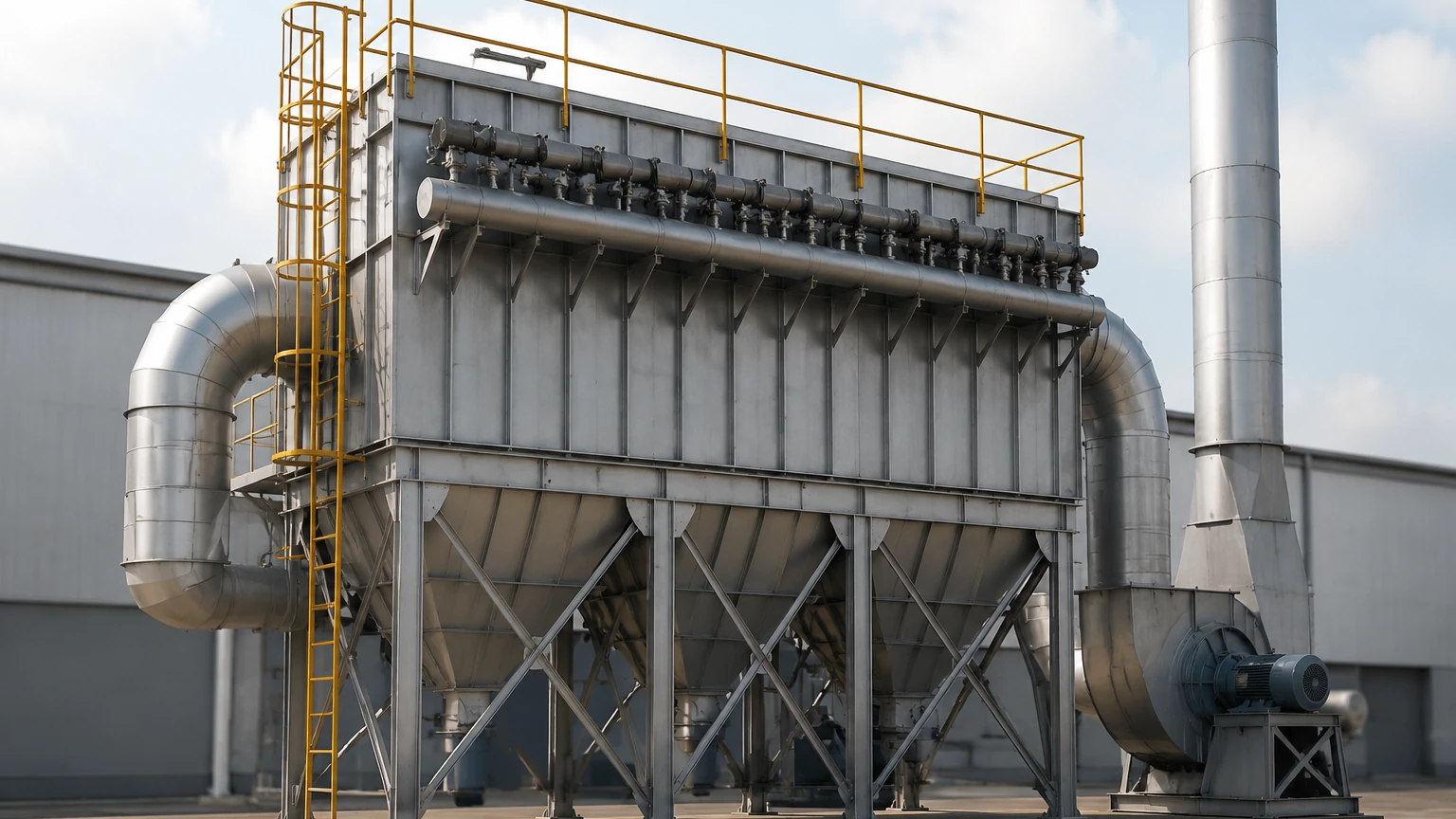
Reverse Air Baghouse Dust Collector
In industrial air pollution control, the reverse air baghouse dust collector remains a foundational technology for managing large-scale particulate emissions. Unlike high-pressure pulse jet systems, reverse air baghouses utilize a gentler, low-pressure cleaning mechanism that is particularly suited for high-volume gas streams and applications where filter bag longevity is a primary operational concern. For engineers and facility managers, understanding the mechanical nuances, material requirements, and engineering trade-offs of these systems is essential for maintaining environmental compliance and operational efficiency.
As a manufacturer specializing in precision filtration components, Kaifil provides the technical infrastructure—such as stainless steel support structures and specialized wire mesh media—that ensures these large-scale systems operate at peak performance. This guide examines the technical specifications, selection criteria, and maintenance requirements of reverse air baghouse systems.
Principles of Operation in Reverse Air Systems
A reverse air baghouse operates on the principle of compartmentalization. The system is divided into several independent sections or "cells," allowing for continuous operation even during the cleaning cycle. During the filtration phase, dust-laden gas enters the baghouse, typically from the bottom. The gas passes through the filter bags from the inside out (though some designs vary), depositing the particulate matter on the interior surface of the fabric.
The Cleaning Cycle
The defining characteristic of the reverse air baghouse dust collector is its cleaning method. When a specific compartment requires cleaning—usually determined by a differential pressure setpoint—it is isolated from the main raw gas flow via dampers. A secondary fan, known as the reverse air fan, blows clean air in the opposite direction of the normal filtration flow. This gentle back-pressure causes the filter bags to partially collapse or flex, which breaks the dust cake loose from the fabric. The dust then falls into a hopper for collection and disposal.
Because this process uses low-pressure air rather than the high-pressure compressed air shocks found in pulse jet systems, the mechanical stress on the filter media is significantly reduced. This is a critical factor in applications using fragile media, such as fiberglass, which might otherwise fail prematurely under more aggressive cleaning cycles.
Key Engineering Components and Material Selection
The efficiency of a reverse air baghouse is heavily dependent on the integrity of its internal components. In demanding industrial environments—such as chemical processing or metal smelting—the choice of materials for the internal supports and filtration media is paramount.
Stainless Steel Support Structures
In many reverse air designs, internal rings or cages are used to prevent the bags from fully collapsing during the cleaning cycle, which could lead to fabric fatigue or restricted airflow. Kaifil specializes in manufacturing high-durability stainless steel components that resist corrosion and thermal degradation. In environments where flue gases contain sulfuric acid or other corrosive agents, standard carbon steel components will rapidly deteriorate. Utilizing 304 or 316L stainless steel ensures that the internal geometry of the baghouse remains stable over decades of service.
Filter Media and Mesh Integration
While the primary filter bags are often made of woven fabrics, certain high-temperature or high-precision applications benefit from the integration of metal wire mesh. For those seeking advanced filtration solutions, visiting the Main Page provides insights into how custom-engineered metal filtration components can be integrated into broader industrial air treatment systems to handle abrasive or chemically aggressive particulates.
Comparing Reverse Air and Pulse Jet Filtration
When selecting a dust collection system, engineers must weigh the benefits of reverse air against the more common pulse jet technology. The decision often hinges on the scale of the operation and the nature of the dust being collected.
1. Cleaning Intensity: Pulse jet systems use high-pressure (60–100 PSI) air pulses, which allow for higher air-to-cloth ratios but increase wear on the bags. Reverse air systems use low-pressure air, extending bag life but requiring a larger footprint to achieve the same filtration capacity.
2. Energy Consumption: While pulse jet systems require expensive compressed air, reverse air systems utilize fans. In large-scale operations, the energy cost of running a reverse air fan is often lower than the cost of generating high-pressure compressed air for thousands of pulses per day.
3. Maintenance Access: Reverse air baghouses are typically "inside-bag-loading" and require personnel to enter the clean air plenum or the bag area for replacement. Pulse jet systems are often "top-loading," allowing for easier bag changes from outside the dirty air stream.
4. Application Scale: Reverse air systems are almost exclusively used in very large installations (e.g., power plants, cement kilns, and steel mills) where the gas volume exceeds several hundred thousand cubic feet per minute (CFM).
Critical Performance Metrics: Air-to-Cloth Ratio and Pressure Drop
The success of a reverse air baghouse dust collector is measured by its ability to maintain a stable pressure drop while meeting emission limits. Two metrics are central to this evaluation:
Air-to-Cloth (A/C) Ratio
The A/C ratio, or filtration velocity, represents the volume of gas passing through a square foot of filter media per minute (CFM/ft²). For reverse air systems, this ratio is typically low, ranging from 1.5:1 to 2.5:1. Maintaining a low A/C ratio is vital because the cleaning mechanism is less aggressive; if the velocity is too high, the dust cake becomes too deeply embedded in the fabric for the reverse air flow to dislodge effectively.
Differential Pressure (ΔP)
Differential pressure is the difference in pressure between the raw gas inlet and the clean gas outlet. A rising ΔP indicates that the filter bags are becoming blinded or that the cleaning cycle is insufficient. In a well-engineered system, the ΔP should stabilize after the initial "seasoning" of the bags. Engineers must ensure that the dampers and reverse air fans are sized correctly to overcome the system’s operating pressure during the cleaning phase.
Industrial Applications and Environmental Compliance
Reverse air baghouses are the preferred choice for industries where continuous operation is non-negotiable and the gas streams are high-temperature or chemically complex.
* Cement Production: The high volume of abrasive dust generated during clinker cooling and grinding requires the durability of large-scale reverse air systems.
* Steel and Metallurgical Processing: Electric arc furnaces (EAF) produce fine, hot metallic fumes. The gentle cleaning of reverse air systems prevents the fine particles from being driven into the weave of the fabric.
* Power Generation: Coal-fired boilers produce fly ash that must be captured with extremely high efficiency to meet EPA or international standards. The compartmentalized nature of the reverse air baghouse allows for maintenance without shutting down the entire boiler.
In these sectors, the reliability of the filtration componentry is a safety and compliance issue. Utilizing high-quality metal components from manufacturers like Kaifil ensures that the structural integrity of the filtration system is not the weak link in an environmental protection strategy.
Maintenance, Troubleshooting, and Component Replacement
To ensure the longevity of a reverse air baghouse dust collector, a rigorous maintenance schedule is required. Engineers should focus on three primary areas:
Damper Integrity
The dampers are the only moving parts that isolate the compartments. If a damper fails to seal completely, the reverse air cleaning cycle will be bypassed, leading to localized bag blinding and a spike in overall system pressure. Regular inspection of damper seals and actuators is mandatory.
Tensioning and Bag Alignment
Unlike pulse jet bags, which are supported by internal cages, reverse air bags are often suspended from the top and tensioned. If the tension is too loose, the bags will rub against each other during the cleaning cycle, leading to abrasion holes. If they are too tight, the fabric may tear at the attachment points. Proper tensioning is an engineering art that directly impacts the three-to-five-year lifespan expected of these bags.
Troubleshooting High Emissions
If a leak is detected (often via a triboelectric probe in the stack), the compartmentalized design allows operators to isolate one cell at a time to identify the source. Common causes include failed bag-to-cell-plate seals or mechanical wear on the bags. When replacing components, it is essential to source parts that match the original engineering specifications for thermal and chemical resistance.
Conclusion
The reverse air baghouse dust collector remains an indispensable tool for heavy industry, offering a balance of high-volume capacity and gentle media handling. By focusing on low air-to-cloth ratios and robust material selection—particularly the use of stainless steel for critical internal components—facilities can achieve long-term reliability and lower total cost of ownership. For technical professionals looking to optimize their filtration infrastructure or source custom-engineered metal filter components, reviewing the capabilities on the Main Page is a recommended next step in the procurement process. Proper engineering at the component level is the most effective way to prevent unplanned downtime and ensure continuous environmental compliance.
