


Rotary Disc Screens
In industrial liquid-solid separation, rotary disc screens represent a critical technology for handling high flow rates while maintaining precise filtration accuracy. These systems are widely utilized across municipal wastewater treatment, pulp and paper processing, and various industrial cooling water circuits. For engineers and procurement professionals, understanding the mechanical nuances, material requirements, and operational variables of rotary disc screens is essential for optimizing system performance and ensuring long-term reliability.
As a specialized manufacturer of stainless steel filtration solutions, Kaifil provides the high-precision components necessary for these demanding applications. By focusing on material durability and filtration efficiency, industrial operators can achieve a lower total cost of ownership through reduced maintenance and extended component lifespans.
Engineering Principles of Rotary Disc Screens
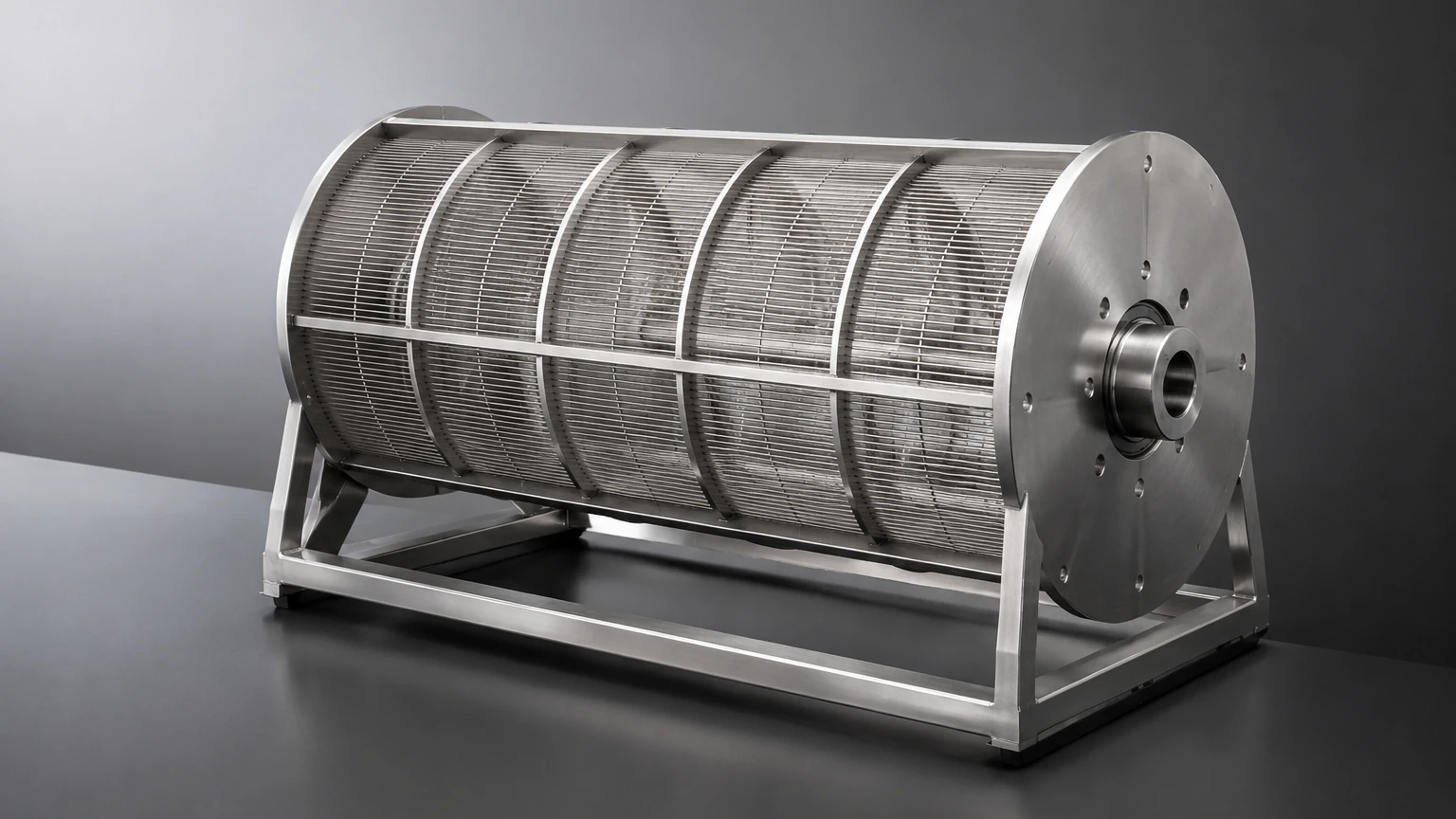
Rotary disc screens operate on a relatively straightforward mechanical principle but require precise engineering to function effectively in industrial environments. The system typically consists of a series of parallel discs mounted on a common horizontal shaft. These discs are covered with a fine filtration media—most commonly stainless steel wire mesh—that allows liquid to pass through while capturing suspended solids on the surface.
As the shaft rotates, the submerged portion of the discs filters the incoming influent. The captured solids are lifted out of the liquid stream by the rotation of the discs. Once the discs reach the top of the rotation cycle, a backwash system (usually high-pressure water jets) flushes the accumulated solids into a collection trough for removal. This continuous self-cleaning action allows rotary disc screens to operate without the frequent downtime associated with static or manual filtration systems.
From an engineering perspective, the efficiency of this process is governed by the hydraulic head loss across the mesh, the rotational speed of the shaft, and the effective submerged surface area. Balancing these factors is crucial for preventing overflow and ensuring that the filtration media does not become prematurely blinded by fine particulates.
Key Components and Material Selection
The performance of rotary disc screens is heavily dependent on the quality of the filter media. In industrial settings where chemical exposure, high temperatures, and abrasive particles are common, stainless steel is the preferred material for filter segments.
Stainless Steel Wire Mesh
Kaifil specializes in the production of high-grade stainless steel mesh that serves as the primary filtration barrier in rotary disc screens. The choice between Grade 304 and Grade 316L stainless steel is often determined by the corrosivity of the fluid. Grade 316L, containing molybdenum, offers superior resistance to chlorides and acids, making it the standard for chemical processing and marine-adjacent water treatment.
Structural Integrity and Support
The mesh must be tensioned correctly over the disc frames to prevent sagging or mechanical failure under hydraulic pressure. Precision-engineered support structures ensure that the mesh maintains its pore geometry even during high-pressure backwash cycles. For engineers, confirming the wire diameter and weave type (such as plain weave or twilled weave) is vital for balancing flow capacity with physical strength.
Performance Evaluation Criteria for Engineers
When specifying or evaluating rotary disc screens, several technical metrics must be scrutinized to ensure the equipment meets the application's demands.
1. Filtration Rating (Micron Size): Industrial rotary disc screens typically offer filtration ratings ranging from 10 microns to several hundred microns. The selection depends on the particle size distribution of the influent and the required effluent quality.
2. Hydraulic Loading Rate: This refers to the volume of water the screen can process per unit of surface area. Engineers must account for peak flow conditions rather than just average flows to prevent system bypass.
3. Backwash Water Consumption: An efficient system should minimize the amount of filtered water used for cleaning the discs. High-quality stainless steel mesh with smooth surface characteristics facilitates easier particle release, reducing backwash frequency and volume.
4. Head Loss Management: As solids accumulate on the mesh, the pressure drop (head loss) increases. Automated control systems often use head loss sensors to trigger or accelerate disc rotation and backwash cycles.
Industrial Applications and Compatibility
Rotary disc screens are versatile components found in numerous sectors. Their ability to provide fine filtration in a compact footprint makes them ideal for retrofitting into existing plants where space is limited.
* Wastewater Treatment: Used for tertiary treatment to remove residual suspended solids before discharge or reuse. The use of stainless steel components ensures longevity in the presence of biological and chemical agents.
* Food and Beverage: In processing plants, these screens help recover valuable solids or pre-treat process water to protect downstream membrane systems. Compliance with food-grade material standards is a primary consideration here.
* Pulp and Paper: The screens are used for fiber recovery and white water filtration, where the ability to handle high fiber loads without clogging is essential.
* Cooling Water Systems: Protecting heat exchangers from debris is a common application in power plants and large industrial facilities.
For those seeking specific technical data or customized component designs for these applications, visiting the Main Page provides access to a broader range of stainless steel filtration solutions and engineering support.
Maintenance and Operational Lifespan
The total cost of ownership for rotary disc screens is largely defined by the maintenance requirements of the filter media and the mechanical drive components. While the self-cleaning nature of the discs reduces daily intervention, periodic inspections are necessary to ensure optimal performance.
Filter Media Replacement
Over time, even the most durable stainless steel mesh may experience wear due to abrasive particles or mechanical fatigue from repeated backwash cycles. Engineers should look for modular disc designs that allow for the replacement of individual mesh segments rather than the entire disc assembly. This significantly reduces maintenance costs and downtime.
Monitoring Wear Patterns
Uneven wear on the mesh often indicates issues with the backwash nozzle alignment or inconsistent influent distribution. Regular monitoring of the effluent quality can serve as an early warning system for mesh breaches. In most industrial environments, high-quality stainless steel filter segments can last several years before requiring replacement, provided the system is operated within its design parameters.
Customization and OEM Solutions
No two industrial filtration challenges are identical. Factors such as fluid viscosity, particle morphology, and chemical composition vary significantly between a pharmaceutical plant and a municipal treatment facility. Consequently, customization is often a requirement rather than an option.
Kaifil works closely with OEM manufacturers and plant engineers to develop customized filtration components for rotary disc screens. This includes tailoring the mesh weave for specific particle shapes, reinforcing segments for high-pressure environments, and providing custom dimensions that fit proprietary disc frames. By integrating manufacturing expertise with engineering knowledge, we ensure that the filtration media is perfectly matched to the operational demands of the system.
When selecting a partner for filtration components, it is important to confirm their ability to provide material certifications (MTRs) and their adherence to precision manufacturing tolerances. These factors directly impact the seal integrity and filtration accuracy of the final assembly.
Conclusion: Selecting the Right Filtration Partner
Rotary disc screens are an efficient solution for high-volume, fine-particle filtration, but their success depends heavily on the quality of the internal filtration media. Engineers must prioritize material grade, mechanical strength, and ease of maintenance when specifying these systems.
By choosing high-performance stainless steel components, operators can ensure that their rotary disc screens provide consistent effluent quality and survive the rigors of industrial use. Whether you are designing a new system or looking to optimize an existing installation with more durable replacement parts, focusing on technical specifications and material integrity is the most reliable path to operational efficiency. For more information on custom filtration solutions and technical specifications, please refer to our Main Page to review our full range of industrial capabilities.
