


Rotary Screening
In industrial processing, the separation of solids from liquids or the classification of particles by size is a fundamental requirement for operational efficiency. Rotary screening, often implemented through the use of trommel screens or rotary drum filters, represents one of the most reliable methods for achieving high-volume, continuous separation. For engineers and procurement teams, understanding the mechanical nuances, material requirements, and design variables of rotary screening is essential for optimizing throughput and ensuring the longevity of filtration equipment.
As a specialized manufacturer of stainless steel filtration components, Kaifil provides the precision-engineered wire mesh and perforated metal structures required to maintain these systems. Detailed technical specifications for these components can be found on our Main Page.
Fundamentals of Rotary Screening Technology
Rotary screening operates on a relatively simple mechanical principle: a cylindrical drum, fitted with a specific screening medium, rotates around its longitudinal axis. Material is fed into the interior of the drum, and as it rotates, smaller particles or liquids pass through the screen openings while larger solids are retained and eventually discharged at the end of the cylinder.
There are two primary configurations for rotary screening systems: gravity-fed and centrifugal. In gravity-fed systems, the drum is usually installed at a slight downward angle. The rotation lifting the material and the incline moving it forward allow for a steady flow of material across the screen surface. Centrifugal rotary screens, conversely, use higher rotational speeds to force material against the screen wall, which is particularly effective for high-viscosity liquids or fine powders that might otherwise blind the mesh.
From an engineering perspective, the efficiency of rotary screening is determined by the "effective screening area." This is the total surface area of the drum minus the area occupied by the structural frame and the wire or metal of the screen itself. Maximizing this area while maintaining structural integrity is the primary challenge in screen design.
Key Components and Material Selection
The performance of a rotary screening system is heavily dependent on the quality of the screening media. Because these systems often operate in harsh environments—ranging from acidic chemical processing to high-temperature food production—material selection is critical.
Stainless Steel Wire Mesh
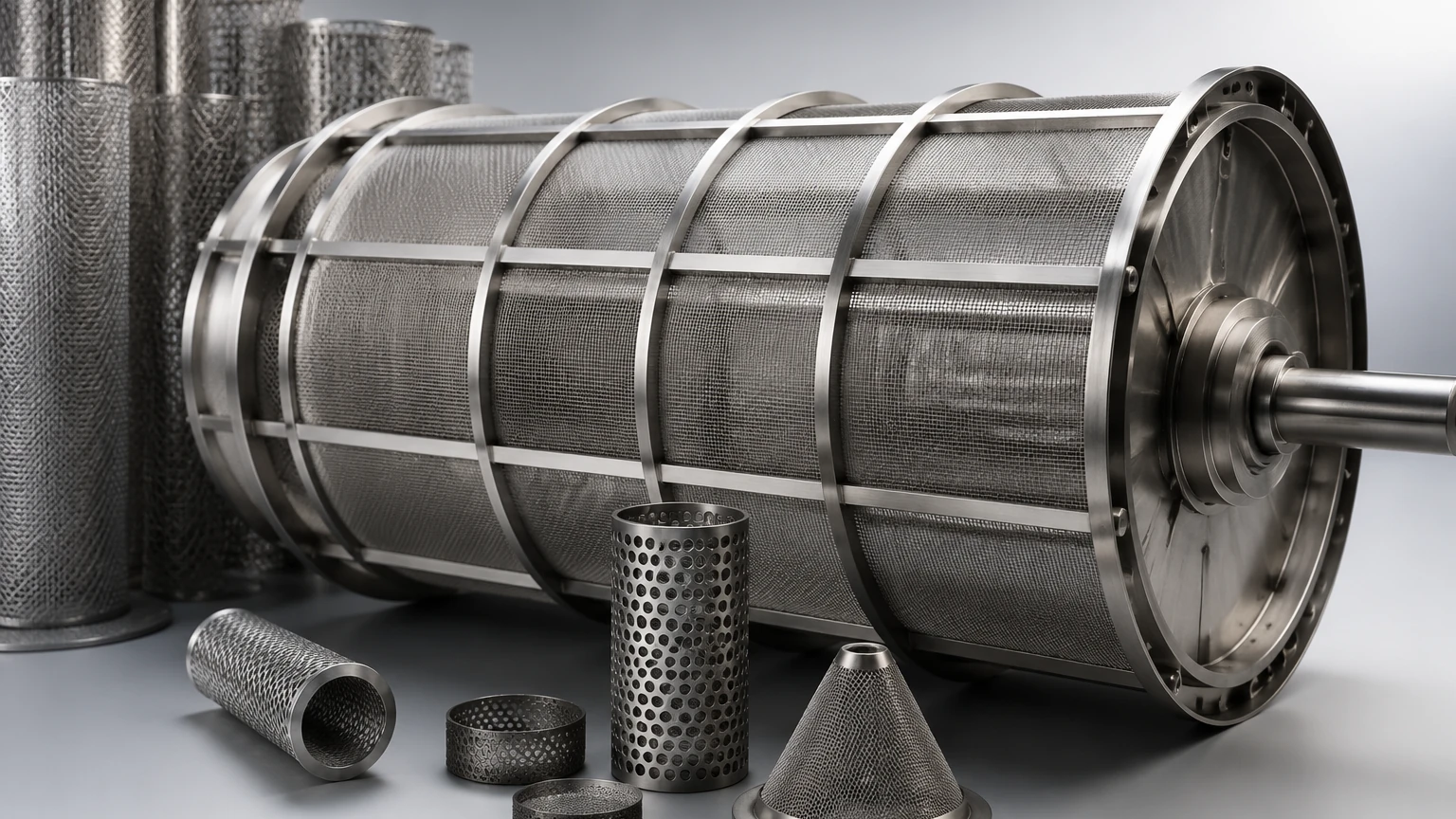
For fine filtration and precise particle separation, stainless steel wire mesh is the standard. It offers a high percentage of open area, which translates to higher flow rates. In rotary applications, the mesh must be woven with high tension and securely bonded to a support structure to withstand the constant mechanical stress of rotation and material impact.
Perforated Metal Plates
In heavy-duty applications where the screen must handle abrasive materials or large solids, perforated metal plates are preferred. These provide superior structural rigidity and can be manufactured with various hole patterns (round, square, or slotted) to suit specific separation requirements. Perforated plates are common in the initial stages of wastewater treatment or in mineral processing where durability is prioritized over fine filtration accuracy.
Material Grades (304 vs. 316L)
Most industrial rotary screens utilize Type 304 or Type 316L stainless steel. Type 304 provides excellent strength and general corrosion resistance. However, for applications involving chlorides, high salinity, or aggressive chemicals, Type 316L is necessary due to its molybdenum content, which prevents pitting and crevice corrosion. Selecting the correct grade ensures that the screening media does not fail prematurely due to chemical degradation.
Engineering Considerations for System Design
When specifying a rotary screening solution, engineers must account for several variables that influence the total cost of ownership and system performance. These factors go beyond the simple dimensions of the drum.
Particle Size Distribution (PSD)
Before selecting a mesh size, a thorough analysis of the feed material's particle size distribution is required. If the mesh size is too close to the average particle size, "near-size pegging" can occur, where particles become lodged in the openings, significantly reducing throughput. Design engineers often select an opening size slightly larger than the target particle to account for the dynamic nature of a rotating drum.
Drum Speed and Tilt Angle
The rotational speed of the drum affects the "dwell time" of the material on the screen. If the drum rotates too slowly, the material bed becomes too thick, preventing smaller particles from reaching the screen surface. If it rotates too quickly, centrifugal force may hold the material against the screen, preventing the tumbling action necessary for separation. Similarly, the tilt angle determines the speed at which material moves toward the discharge end. Finding the balance between these two factors is essential for maximizing separation efficiency.
Cleaning Mechanisms
One of the most common risks in rotary screening is blinding, where wet or sticky materials coat the screen surface. To combat this, systems are often equipped with internal or external cleaning mechanisms. These may include:
* Spray Bars: High-pressure water jets that continuously or periodically wash the screen.
* Brushes: Rotating brushes that physically dislodge particles from the mesh.
* Beaters: Internal paddles that help break up clumps of material.
Maintenance and Durability in Demanding Environments
In many B2B industrial sectors, such as pharmaceutical or food and beverage, downtime is exceptionally costly. Therefore, the durability of the rotary screening component is a primary concern for maintenance teams. Stainless steel components are favored not only for their corrosion resistance but also for their ease of sterilization and cleaning (CIP/SIP processes).
Regular inspection cycles should focus on the integrity of the screen seams and the tension of the wire mesh. In rotary drums, the points where the screen is welded or clamped to the frame are the most common sites of mechanical failure. If a screen is allowed to vibrate or flex excessively during rotation, work hardening can lead to fatigue cracking. Using precision-manufactured components from a reliable source like Kaifil ensures that these stress points are engineered to handle the cyclic loading inherent in rotary applications.
Furthermore, the total cost of ownership should include the replacement cycle of the screen. While a lower-quality mesh might have a lower initial purchase price, the labor costs and production losses associated with frequent replacements often make high-performance stainless steel the more economical choice in the long run.
Customization and OEM Solutions for Rotary Screens
No two industrial processes are identical, and off-the-shelf screening solutions often fall short of specific performance targets. Customization is where engineering expertise becomes most valuable. For instance, a chemical processing plant may require a rotary screen with a reinforced backing to handle high-pressure surges, while a food processor may require a specific surface finish (such as electropolishing) to prevent bacterial growth.
OEM capabilities allow for the integration of specialized features such as:
* Custom Flanges and Fittings: Ensuring the rotary drum integrates seamlessly with existing piping and housing.
* Variable Mesh Zones: Utilizing different mesh sizes along the length of a single drum to achieve multiple stages of separation in one pass.
* Reinforced Structural Ribs: Providing additional support for extra-long drums or high-density materials.
By working closely with a manufacturer that understands these technical requirements, purchasing teams can acquire components that are specifically tailored to their operational parameters. This collaboration reduces the risk of equipment mismatch and ensures that the final product meets the exact filtration accuracy and durability standards required by the application.
Conclusion: Selecting the Right Filtration Partner
Rotary screening is a critical process that demands high-quality, precision-engineered components to function effectively. From the selection of the correct stainless steel grade to the optimization of the mesh opening and structural design, every detail impacts the efficiency and reliability of the system. For engineers and technical professionals, the goal is to find a balance between performance, durability, and cost.
Kaifil specializes in providing these high-performance filtration solutions, offering the technical expertise and manufacturing precision needed for demanding industrial environments. Whether you are designing a new system or looking for high-quality replacement components for existing machinery, our team is equipped to support your requirements. To explore our full range of custom stainless steel filter cartridges, wire mesh filters, and precision metal components, please visit our Main Page. By focusing on quality and technical accuracy, we help our global partners achieve optimized filtration performance and reduced operational costs.
