


Rotary Vacuum Filter
In the landscape of industrial liquid-solid separation, the rotary vacuum filter (RVF) remains a cornerstone technology for continuous processing. Designed to handle high-volume slurries with significant solids content, these systems rely on a combination of mechanical rotation and pressure differentials to achieve efficient filtration. For engineers and procurement teams, understanding the technical nuances of the rotary vacuum filter—from the selection of stainless steel filter media to the mechanics of cake discharge—is essential for optimizing process throughput and ensuring long-term equipment reliability.
As a specialized manufacturer of precision filtration components, Kaifil provides the technical expertise and high-performance materials required to maintain these complex systems. Whether you are designing a new filtration circuit or seeking to improve the efficiency of an existing installation, a deep dive into the engineering principles of vacuum filtration is the first step toward operational excellence. For more information on our full range of industrial filtration capabilities, visit our Main Page.
Principles of Operation in Rotary Vacuum Filtration
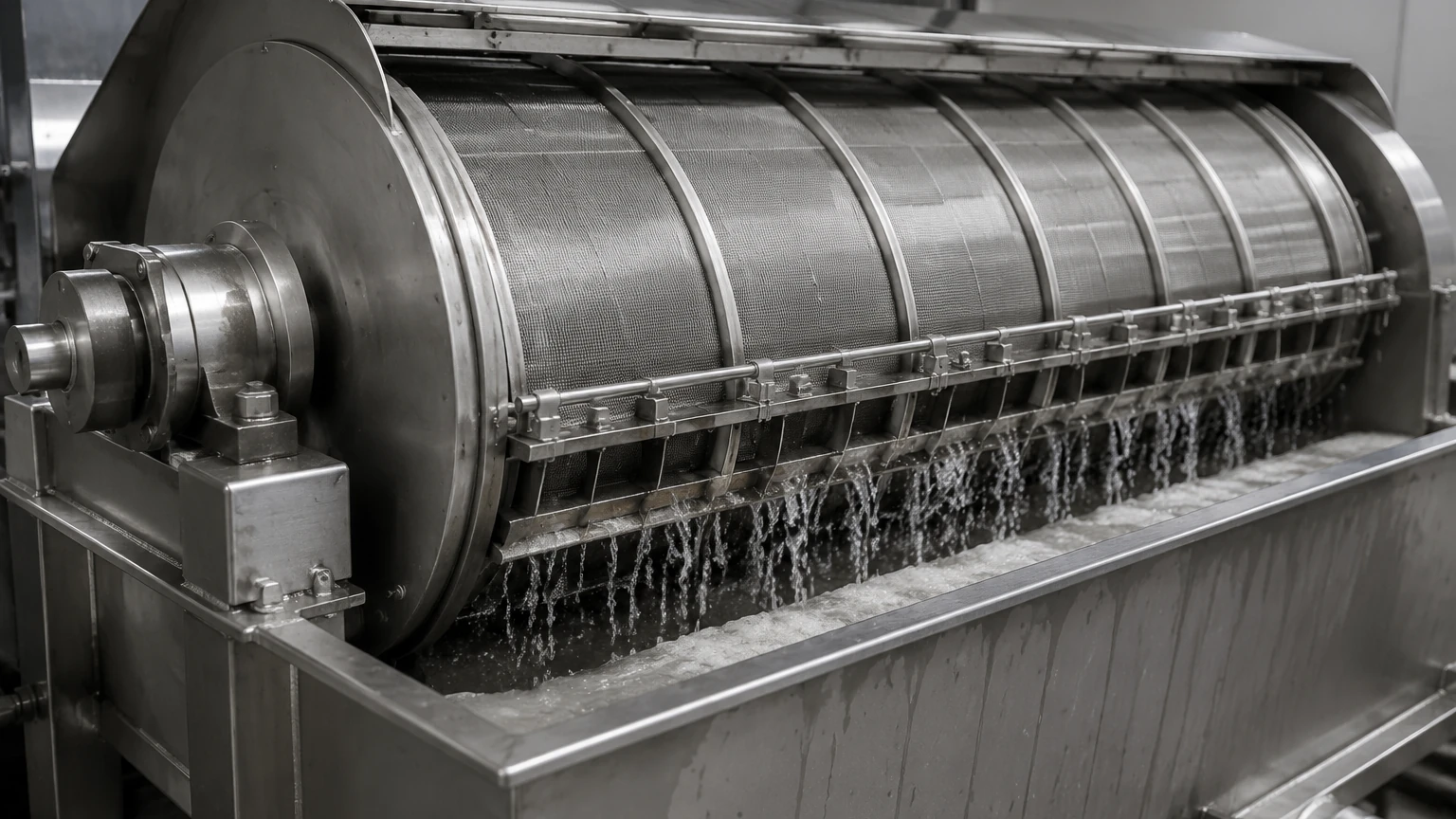
The rotary vacuum filter operates on a continuous cycle, divided into several distinct functional zones. The process begins with a horizontal drum, partially submerged in a vat containing the slurry. The drum is divided into internal cells, each connected to a central vacuum valve.
1. Cake Formation Zone: As the drum rotates into the slurry, a vacuum is applied to the submerged cells. This pressure differential forces the liquid (filtrate) through the filter media and into the internal piping, while solids accumulate on the exterior surface of the drum to form a "filter cake."
2. Washing and Drying Zone: Once the drum emerges from the vat, the cake remains held against the media by the vacuum. In many applications, wash headers spray a solvent or water over the cake to remove impurities. Following the wash, air is drawn through the cake to reduce moisture content before discharge.
3. Cake Discharge Zone: When the drum reaches the discharge point, the vacuum is typically released or replaced with a brief blast of compressed air (blowback) to loosen the cake. A discharge mechanism—such as a scraper, roller, or string—removes the solids, leaving the media clean for the next cycle.
Efficiency in this cycle is governed by the drum’s rotational speed, the vacuum level, and the characteristics of the slurry. Engineers must balance these variables to achieve the desired cake thickness and moisture levels.
Critical Engineering Considerations for Filter Media Selection
The performance of a rotary vacuum filter is largely dictated by the interface between the slurry and the equipment: the filter media. While synthetic cloths are common, many demanding industrial applications require the durability and precision of stainless steel wire mesh.
Micron Rating and Permeability
Selecting the correct micron rating is a trade-off between filtrate clarity and flow rate. A mesh that is too fine may lead to rapid "blinding" (clogging), while a mesh that is too coarse will allow excessive solids to pass into the filtrate. Engineers must evaluate the particle size distribution (PSD) of the slurry to select a mesh that promotes a stable initial cake layer, which then acts as the primary filter medium.
Mechanical Strength and Tension
In an RVF, the filter media is subjected to constant mechanical stress, including vacuum pressure, scraper friction, and rotational tension. Stainless steel mesh offers superior dimensional stability compared to synthetic fibers, preventing sagging or stretching that can lead to uneven cake formation and premature wear.
Heat and Chemical Resistance
Many chemical processing and pharmaceutical applications involve high temperatures or aggressive solvents. Stainless steel (specifically grades like 316L or 904L) provides the necessary corrosion resistance to withstand these environments without degrading, ensuring the integrity of the filtration process over thousands of cycles.
Common Discharge Methods and Their Impact on Performance
The method used to remove the filter cake from the drum significantly influences the choice of filter media and the overall maintenance schedule of the rotary vacuum filter.
* Scraper Discharge: A fixed blade is positioned close to the drum surface. This is ideal for robust cakes but requires a durable filter media (like reinforced wire mesh) to prevent damage if the scraper comes into contact with the drum.
* Pre-coat Discharge: For slurries with very fine or sticky solids that would blind a standard filter, a layer of diatomaceous earth or perlite (pre-coat) is applied to the drum first. A moving scraper shaves off a thin layer of the pre-coat along with the filtered solids. This requires precise control over the scraper advancement mechanism.
* Roll Discharge: Used for sticky, cohesive cakes. A small-diameter roller pulls the cake away from the drum. This method is gentle on the filter media and is often used in food processing.
* String Discharge: A series of closely spaced strings wrap around the drum and then over a discharge roll. As the strings leave the drum surface, they lift the cake off. This is effective for thin, fragile cakes.
Material Selection: Why Stainless Steel is Preferred
In the context of industrial filtration, material selection is not merely a matter of cost but of total system longevity. Kaifil specializes in the production of stainless steel filtration components because they offer several technical advantages for rotary vacuum filters:
1. Corrosion Resistance: In industries like wastewater treatment or chemical manufacturing, the filtrate can be highly acidic or alkaline. Using 316L stainless steel ensures that the filter support structures and mesh do not succumb to pitting or stress corrosion cracking.
2. Ease of Cleaning: Stainless steel surfaces are non-porous and can withstand aggressive Clean-in-Place (CIP) protocols, including high-pressure washing and chemical sterilization, which are critical in food and beverage applications.
3. Sustainability: Unlike synthetic filter cloths that must be disposed of frequently, stainless steel filter elements can often be refurbished or deep-cleaned, reducing the environmental footprint and long-term waste of the facility.
Troubleshooting and Optimizing Filtration Efficiency
When a rotary vacuum filter fails to meet performance targets, engineers should look at several key indicators to diagnose the issue:
* Excessive Cake Moisture: This is often caused by a drum speed that is too high (insufficient drying time) or a vacuum leak in the internal piping or the wear plate of the distribution valve.
* Low Throughput: If the filtrate flow drops, the media may be blinded. This requires an evaluation of the cleaning cycle or a change in the mesh weave pattern to one that facilitates better backwashing.
* Filtrate Turbidity: If solids are bypassing the filter, the media may have a physical tear, or the initial cake formation may be inconsistent due to low slurry levels in the vat.
Regular inspection of the drum internals and the condition of the filter media is necessary to prevent unplanned downtime. Monitoring the differential pressure across the drum can provide early warnings of media scaling or blinding.
Total Cost of Ownership and Maintenance
While the initial capital expenditure for a rotary vacuum filter and high-quality stainless steel media may be higher than alternative methods, the Total Cost of Ownership (TCO) is often lower due to the continuous nature of the process and the durability of the components.
Maintenance teams should focus on the following to minimize costs:
* Wear Plate Resurfacing: The central valve that distributes the vacuum is a wear item. Ensuring it is properly lubricated and resurfaced prevents vacuum loss.
* Media Integrity: Small holes in the filter mesh can lead to significant product loss and downstream contamination. Implementing a schedule for visual inspections and ultrasonic cleaning can extend the life of the media.
* Agitator Maintenance: The agitator in the slurry vat prevents solids from settling. If the agitator fails, the cake formation will be uneven, leading to mechanical imbalances in the drum.
Conclusion
The rotary vacuum filter is a sophisticated piece of engineering that requires a synergy between mechanical design and material science. By selecting the appropriate discharge method and investing in high-quality stainless steel filter media, industrial operators can achieve reliable, continuous separation even in the most demanding environments.
Kaifil remains committed to supporting engineers with custom-engineered filtration solutions that meet the specific rigors of their applications. From precise wire mesh specifications to durable filter cartridge designs, our focus is on enhancing the efficiency and longevity of your industrial processes. To discuss your specific filtration requirements or to learn more about our manufacturing capabilities, please visit our Main Page.
