


Sand Control Systems
In industrial fluid extraction and processing, the management of particulate matter is a critical engineering challenge. Sand control systems are specialized filtration and completion assemblies designed to prevent the migration of formation sand or proppant into the production stream. Whether in water well management, geothermal energy extraction, or complex chemical processing, the failure to implement effective sand control leads to catastrophic equipment erosion, plugging of downstream components, and significant loss of productivity.
For engineers and procurement specialists, selecting the right filtration media is the cornerstone of a robust sand control strategy. As a professional manufacturer of custom stainless steel filtration solutions, Kaifil provides the technical precision required to design components that withstand the high-pressure and corrosive environments typical of these applications. You can explore our full range of capabilities on our Main Page.
The Fundamental Role of Sand Control Systems
Sand control systems serve as the primary barrier between a fluid-bearing formation and the production equipment. The primary objective is to allow the maximum flow of fluids—such as water, hydrocarbons, or chemical solvents—while restraining the movement of solid particles that exceed a specific size threshold.
In many industrial contexts, sand production is not merely a maintenance nuisance; it is a structural risk. The removal of sand from a formation can create voids, leading to subsidence or the collapse of the wellbore or intake structure. Furthermore, sand is highly abrasive. At high velocities, even fine particles can erode stainless steel valves, centrifugal pumps, and heat exchanger tubes in a matter of days.
Effective sand control relies on two main principles: mechanical retention and formation bridging. Mechanical retention involves using a filter media, such as a stainless steel wire mesh or a wire-wrapped screen, with openings smaller than the formation sand grains. Formation bridging occurs when larger particles are caught by the filter, creating a secondary, natural filter cake that further refines the filtration process. Understanding the particle size distribution (PSD) of the target environment is the first step in engineering these systems.
Technical Evaluation of Filtration Media
The performance of sand control systems is largely dictated by the physical properties of the filtration media. In modern industrial applications, stainless steel is the preferred material due to its mechanical strength and resistance to chemical degradation. When evaluating components for sand control, engineers must consider several key technical parameters.
Micron Rating and Pore Geometry
The micron rating defines the size of particles the filter is intended to capture. In sand control, this is often categorized as either absolute or nominal. For critical applications where no bypass is permissible, absolute-rated sintered mesh or precision-woven wire cloth is utilized. The geometry of the pores—whether square, rectangular, or complex Dutch weaves—affects both the flow resistance and the tendency of the media to "blind" or plug. Dutch weave patterns, for instance, offer higher mechanical strength and a more tortuous path, which is often superior for fine sand retention.
Permeability and Flow Capacity
While the primary goal is to stop sand, the system must not excessively restrict fluid flow. High pressure drops across a filter can lead to cavitation in pumps or reduced output in extraction wells. Engineers calculate the permeability of the filter media to ensure that the total surface area provided by the sand control system is sufficient for the required flow rates. This often involves using pleated designs or multi-layered sintered structures to increase the effective filtration area within a confined diameter.
Mechanical Integrity and Collapse Strength
Sand control components are frequently subjected to high differential pressures, especially during startup or when the filter begins to load with solids. The collapse strength of the filter cartridge or screen must exceed the maximum expected pressure differential of the system. This is achieved through the use of heavy-duty perforated inner cores and outer shrouds that protect the delicate filtration mesh from mechanical damage during installation and operation.
Material Selection for Corrosive Environments
The longevity of sand control systems is heavily dependent on material science. Industrial fluids are rarely pure; they often contain dissolved salts, acids, or gases like H2S and CO2 that can cause rapid pitting or stress corrosion cracking in inferior metals.
Kaifil specializes in the manufacturing of filtration components using high-grade alloys. While 304 stainless steel is suitable for many general-purpose water applications, 316L stainless steel is the industry standard for chemical processing and marine environments due to its molybdenum content, which provides enhanced resistance to chloride-induced corrosion. For extreme environments involving high temperatures or highly acidic fluids, exotic alloys such as Duplex stainless steel or Monel may be required. Selecting the correct alloy ensures that the sand control system maintains its structural integrity over its intended service life, which can span several years or even decades.
Common Risks and Failure Modes in Sand Control
Designing an effective sand control system requires an understanding of how these systems fail. By identifying risks early, engineers can implement redundancies or select more robust materials.
1. Erosion-Hotspotting: If a small section of the filter media fails or is breached, fluid velocity increases at that specific point. This "hotspotting" causes rapid erosion of the surrounding material, quickly turning a minor leak into a total system failure.
2. Plugging and Scaling: Over time, fine silts, organic matter, or chemical precipitates (scale) can clog the pores of the filter. If the system is not designed for backwashing or if the pore size is too restrictive for the fluid chemistry, the resulting pressure buildup can collapse the filter.
3. Mechanical Damage during Installation: Sand control screens are often long, slender components that must be threaded into deep boreholes or complex piping networks. Any abrasion or impact during this process can compromise the mesh, leading to immediate sand production upon startup.
4. Biofouling: In water treatment and intake systems, the growth of biofilms can restrict flow. Choosing smooth, electropolished stainless steel surfaces can help mitigate the adhesion of biological matter.
Customization and OEM Solutions
Standard off-the-shelf filters rarely meet the precise needs of specialized sand control systems. Every formation and industrial process has a unique particle size distribution and chemical profile. This is where custom OEM manufacturing becomes essential.
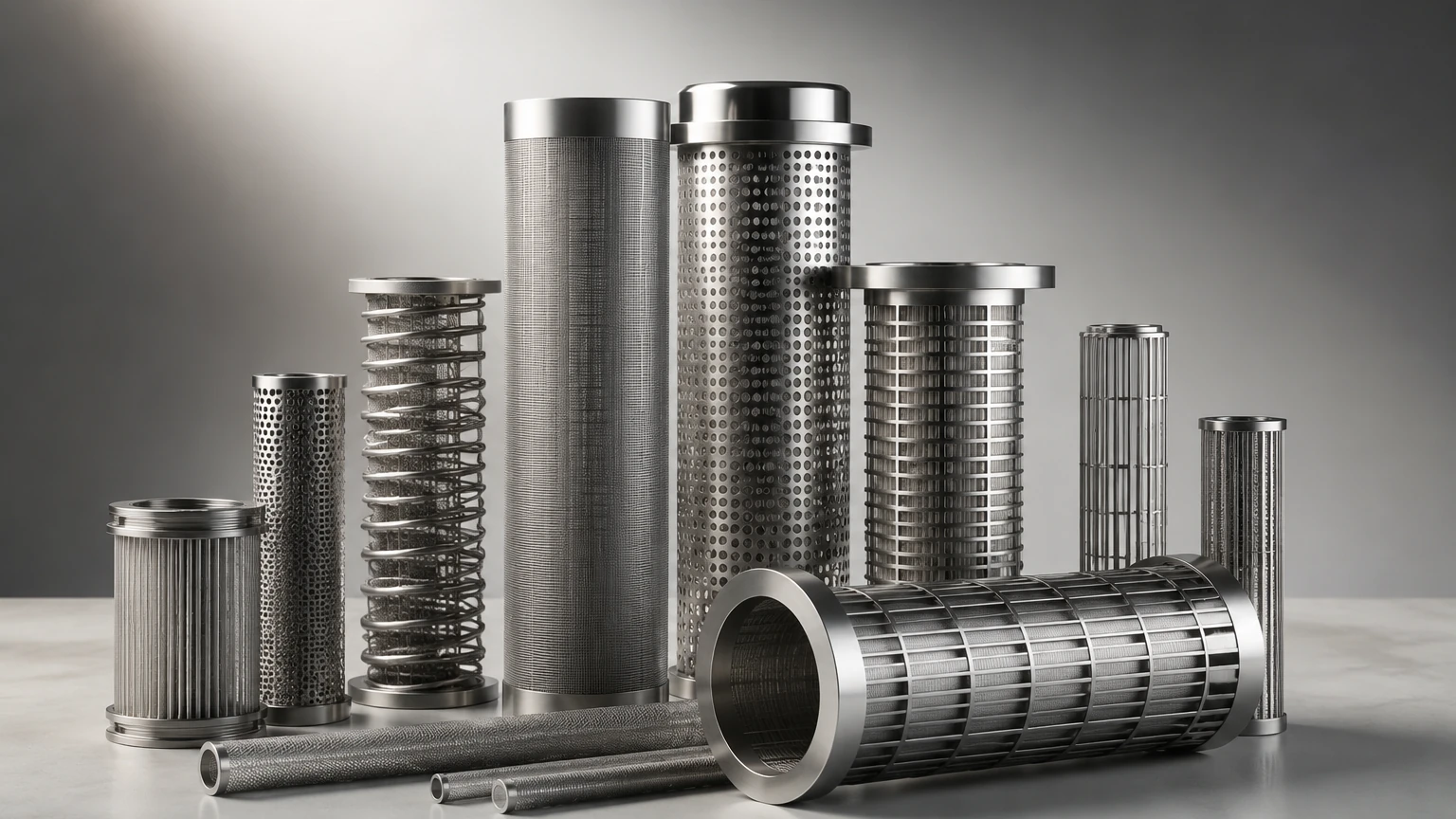
Customization allows for the optimization of the filtration stack. For example, a multi-layer sintered mesh can be engineered to include a drainage layer, a fine filtration layer, and a robust support layer, all bonded into a single monolithic structure. This provides the best balance of filtration accuracy and physical durability. Furthermore, custom end-fittings—such as NPT threads, flanges, or specialized quick-connects—ensure that the sand control components integrate seamlessly into existing infrastructure without the need for field modifications that could introduce leaks.
At Kaifil, we work closely with engineering teams to develop these tailored solutions. From initial material selection to the final testing of filtration accuracy, our manufacturing processes are designed to meet the rigorous standards of industrial filtration. Information regarding our engineering support and product varieties can be found on our Main Page.
Procurement Checklist for Engineers
Before finalizing a purchase order for sand control components, technical teams should confirm the following data points to ensure the longevity and efficiency of the system:
* Particle Size Analysis: Has a representative sample of the formation sand or process solids been analyzed? The d50 and d10 values are critical for selecting the correct mesh opening.
* Fluid Compatibility: What is the pH, temperature, and chloride concentration of the fluid? Does the selected stainless steel grade provide an adequate safety margin against corrosion?
* Operating Pressure and Delta-P: What is the maximum expected differential pressure before cleaning or replacement is required? Does the component's collapse rating exceed this value?
* Flow Velocity: Are the internal velocities low enough to prevent impingement erosion on the mesh surface?
* Maintenance Requirements: Is the system designed to be disposable, or is it a permanent installation that requires backpulsing or ultrasonic cleaning capabilities?
* Quality Certification: Does the manufacturer provide material mill certificates and pressure test reports to verify the integrity of the components?
Conclusion
Sand control systems are a vital investment in the operational stability of industrial fluid systems. By preventing the ingress of abrasive solids, these systems protect downstream assets, reduce maintenance downtime, and ensure the purity of the final product. The transition from a generic filtration approach to a technically engineered sand control strategy—utilizing high-quality stainless steel media and customized designs—is essential for any high-stakes industrial application.
By focusing on material durability, precise micron ratings, and robust mechanical construction, engineers can implement sand control solutions that offer reliable performance in the most demanding environments. For those seeking to optimize their filtration processes with custom-manufactured components, visiting our Main Page provides a starting point for technical consultation and product selection.
