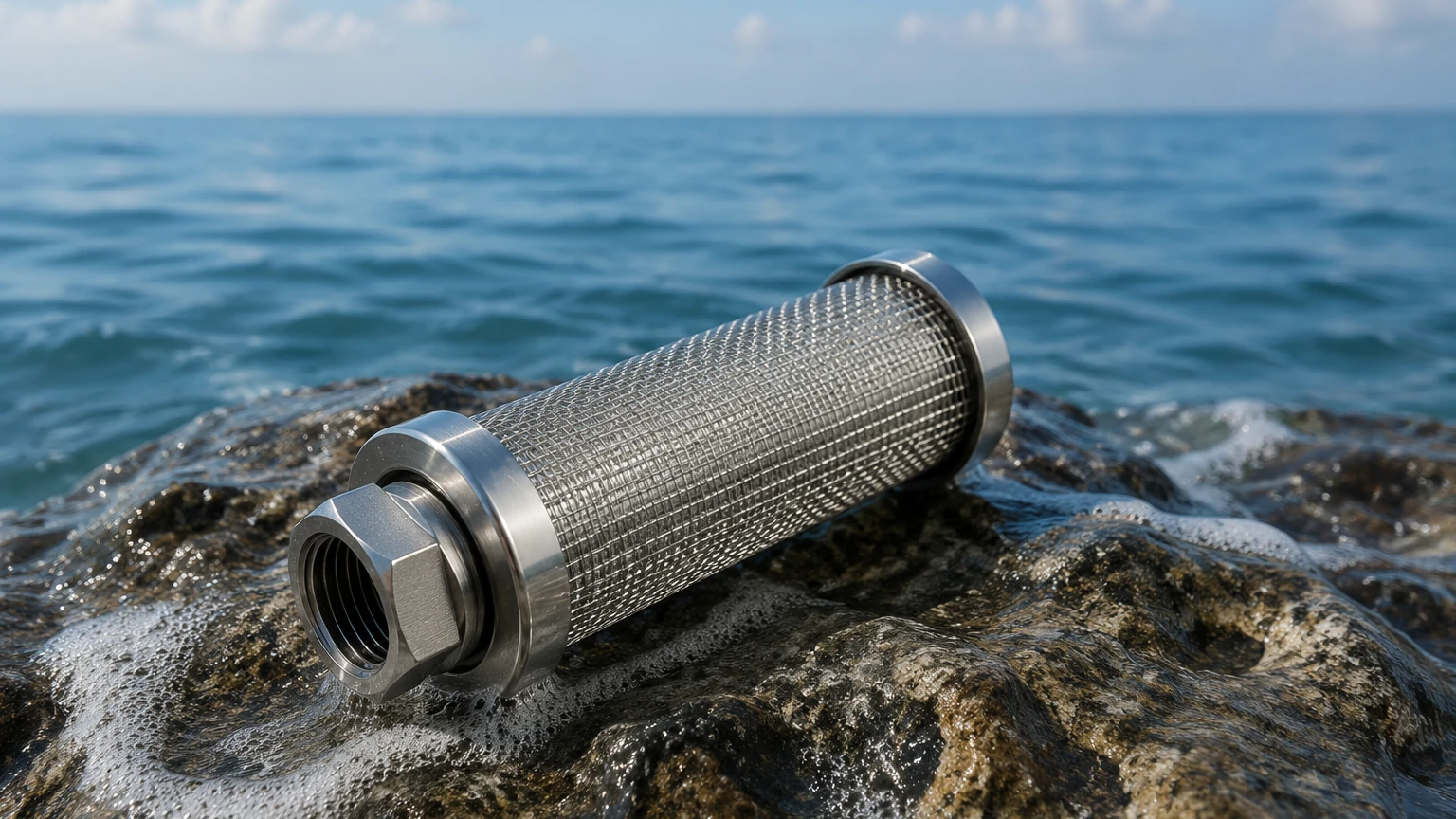
Seawater Filter
In industrial and marine engineering, the management of seawater presents a unique set of challenges that standard filtration systems are often ill-equipped to handle. A seawater filter is a critical component designed to remove suspended solids, biological matter, and debris from intake water before it reaches sensitive downstream equipment such as heat exchangers, desalination membranes, or cooling systems. Given the highly corrosive nature of salt water and the presence of organic contaminants, selecting the correct filtration technology is essential for maintaining operational efficiency and preventing costly equipment failure.
Understanding the Challenges of Seawater Filtration
Seawater is one of the most demanding fluids to process in an industrial environment. Its complexity stems from three primary factors: chemical corrosivity, physical particulate load, and biological activity.
1. Chemical Corrosivity: The high chloride content in seawater is notoriously aggressive toward common metals. Standard carbon steel or even basic grades of stainless steel can suffer from rapid pitting, crevice corrosion, and stress corrosion cracking.
2. Particulate Load: Seawater contains varying levels of Total Suspended Solids (TSS), including sand, silt, and shells. These particles can cause mechanical erosion of filter media and downstream components if not effectively captured.
3. Biofouling: Unlike freshwater, seawater is rich in microorganisms, algae, and larvae. If these organisms bypass the seawater filter, they can colonize internal piping and heat exchanger surfaces, leading to reduced thermal efficiency and localized corrosion under the biofilm.
To address these issues, engineers must prioritize material integrity and filtration precision when specifying a seawater filter for industrial use.
Material Selection for Corrosive Marine Environments
The longevity of a seawater filter is almost entirely dependent on its material composition. In the context of industrial filtration, stainless steel and high-performance alloys are the gold standard. However, not all stainless steels are suitable for continuous seawater immersion.
* 316L Stainless Steel: While widely used in many industrial applications, 316L is generally considered the minimum requirement for seawater. It offers better resistance to pitting than 304, but in warm or stagnant seawater, it may still be susceptible to localized corrosion.
* Duplex and Super Duplex Stainless Steels: These alloys provide a significantly higher Pitting Resistance Equivalent Number (PREN). They are engineered to withstand the harsh conditions of offshore oil and gas platforms and desalination plants, offering superior mechanical strength and corrosion resistance.
* 904L and Specialty Alloys: For applications involving high-temperature seawater or concentrated brine, 904L or nickel-based alloys may be necessary to ensure the structural integrity of the filter mesh and housing.
Kaifil specializes in the precision manufacturing of these components, ensuring that the metallurgy matches the specific salinity and temperature profiles of the application environment.
Core Components of an Effective Seawater Filter System
A robust seawater filter system typically comprises several layers of filtration or specific mechanical structures designed to handle high flow rates while maintaining fine micron ratings.
Wire Mesh Filters
Stainless steel wire mesh is a primary choice for seawater applications due to its durability and cleanability. These filters can be manufactured in various weave patterns, such as plain, twill, or dutch weave, depending on the required filtration accuracy. For seawater, multi-layered sintered mesh is often used to provide structural rigidity, ensuring the filter does not deform under the high pressure of intake pumps.
Wedge Wire Screens
Wedge wire is particularly effective for coarse filtration and intake screening. Its V-shaped profile minimizes the risk of clogging by ensuring that particles only make contact at two points on the screen. In seawater intake systems, wedge wire helps prevent the ingress of larger marine life and debris while maintaining a low pressure drop.
Sintered Metal Cartridges
For fine filtration requirements, such as pre-filtration for Reverse Osmosis (RO) systems, sintered metal filter cartridges provide high-efficiency particle removal. These components are designed to withstand high differential pressures and can be cleaned and reused, providing a significant advantage over disposable polymer-based filters in terms of total cost of ownership.
Engineering Specifications: Precision and Performance
When evaluating a seawater filter, engineers must look beyond the basic micron rating. Several technical parameters dictate how the filter will perform in a real-world industrial setting.
* Filtration Rating (Nominal vs. Absolute): A nominal rating indicates the filter's ability to retain the majority of particles of a certain size, whereas an absolute rating guarantees the retention of all particles above that size. For critical protection of downstream membranes, absolute-rated stainless steel cartridges are often preferred.
* Flow Velocity and Pressure Drop (Delta P): The design of the filter must account for the maximum flow rate required by the system. An undersized filter will result in a high initial pressure drop, increasing the energy consumption of the pumps and shortening the time between cleaning cycles.
* Effective Filtration Area: By maximizing the surface area through pleated designs or multi-cylinder configurations, engineers can extend the service life of the filter element. A larger surface area reduces the face velocity of the fluid, which minimizes the force with which particles are driven into the mesh, making cleaning more effective.
Industrial and Marine Applications for Seawater Filtration
The application of seawater filters spans multiple sectors, each with specific performance requirements.
1. Desalination Plants: In RO desalination, the seawater filter acts as a crucial barrier. Removing fine particulates and organic matter is essential to prevent the fouling of expensive membranes. High-quality stainless steel cartridges are used here to provide consistent performance under high-pressure conditions.
2. Marine Cooling Systems: Ships and offshore platforms use seawater to cool engines and auxiliary equipment. A seawater filter in these systems prevents shells and sand from entering the heat exchangers, which would otherwise lead to overheating and mechanical damage.
3. Offshore Oil and Gas: Seawater is often injected into oil reservoirs to maintain pressure (water flooding). This water must be filtered to a very high standard to prevent plugging the pores of the rock formation.
4. Aquaculture: Large-scale fish farming requires the continuous circulation of clean seawater. Filtration systems here must balance the need for high flow rates with the removal of pathogens and waste products without harming the marine environment.
Maintenance, Cleaning, and Operational Longevity
One of the primary advantages of utilizing stainless steel filtration media in a seawater filter is the ability to clean and reuse the elements. Unlike synthetic filters that must be disposed of once fouled, metal filters can be restored through several methods:
* Backwashing: Many industrial seawater filters are designed with automated backwashing systems. When the differential pressure reaches a set limit, a portion of the filtered water is diverted back through the filter in the opposite direction, dislodging accumulated debris.
* Ultrasonic Cleaning: For deep cleaning of sintered mesh or fine wire cloth, ultrasonic baths can remove microscopic particles trapped within the pore structure, extending the life of the filter element for years.
* Chemical Cleaning: In cases of severe biofouling, compatible chemical agents can be used to dissolve organic growth without damaging the stainless steel substrate, provided the correct alloy was selected during the design phase.
By focusing on cleanable metal solutions, facilities can significantly reduce their operational waste and the logistical burden of stocking replacement cartridges in remote or offshore locations.
Selecting a Custom Seawater Filtration Solution
Every industrial site has unique requirements based on the local seawater chemistry and the sensitivity of the downstream equipment. Off-the-shelf solutions often fail to account for specific flow dynamics or the exact nature of the local marine debris. This is where custom engineering becomes vital.
When consulting with a manufacturer like Kaifil, engineers should be prepared to confirm several key factors:
* The specific grade of stainless steel required based on water temperature and salinity.
* The maximum and minimum flow rates the system will experience.
* The target micron rating and the nature of the solids to be removed.
* Space constraints for the filter housing and the preferred cleaning mechanism.
By integrating advanced manufacturing capabilities with deep engineering knowledge, it is possible to develop a seawater filter that provides reliable, long-term protection in even the most demanding environments. For more information on specific product configurations and technical support for your filtration projects, you can visit the Main Page to explore the full range of custom stainless steel filtration solutions.
In conclusion, a seawater filter is not merely a consumable item but a critical piece of engineered equipment. By prioritizing high-grade materials like Duplex stainless steel, optimizing the filtration area, and selecting the appropriate mechanical structure—whether it be wire mesh or sintered cartridges—industrial operators can ensure their systems remain protected against the harsh realities of the marine environment. This strategic approach to filtration selection leads to lower maintenance costs, higher system uptime, and improved overall process efficiency.