


Sediment Cartridge Filter
In industrial processing, the removal of suspended solids is a fundamental requirement for protecting downstream equipment, ensuring product purity, and maintaining system efficiency. A sediment cartridge filter serves as the primary mechanical barrier against particulates such as sand, silt, scale, and rust. While often perceived as a simple component, the engineering behind these filters involves complex considerations of fluid dynamics, material science, and mechanical design. For engineers and procurement specialists, selecting the right filtration media—particularly when moving from disposable polymers to high-performance stainless steel—is critical for optimizing the total cost of ownership and process reliability.
Introduction to Industrial Sediment Filtration
Sediment filtration is categorized as a mechanical process where fluid passes through a porous medium that traps solid particles. In a B2B context, the "sediment" often refers to more than just dirt; it includes metal shavings in hydraulic systems, precipitates in chemical processing, and organic debris in water treatment. The primary goal of a sediment cartridge filter is to provide a specific level of clarity to the effluent, measured by the size of particles it can successfully retain.
Industrial systems rely on these filters to prevent the fouling of heat exchangers, the clogging of spray nozzles, and the abrasion of high-precision pump seals. Unlike membrane filtration, which can target dissolved solids or microscopic pathogens through cross-flow dynamics, sediment cartridges typically operate via dead-end filtration, where the entire fluid stream is forced through the media. This makes the choice of cartridge architecture and material the most significant factor in determining the filter's service life and efficiency.
Classification: Depth vs. Surface Filtration
To select an appropriate sediment cartridge filter, one must first distinguish between depth and surface filtration mechanisms. Each has distinct advantages depending on the particle size distribution and the concentration of solids in the process stream.
Depth Filtration
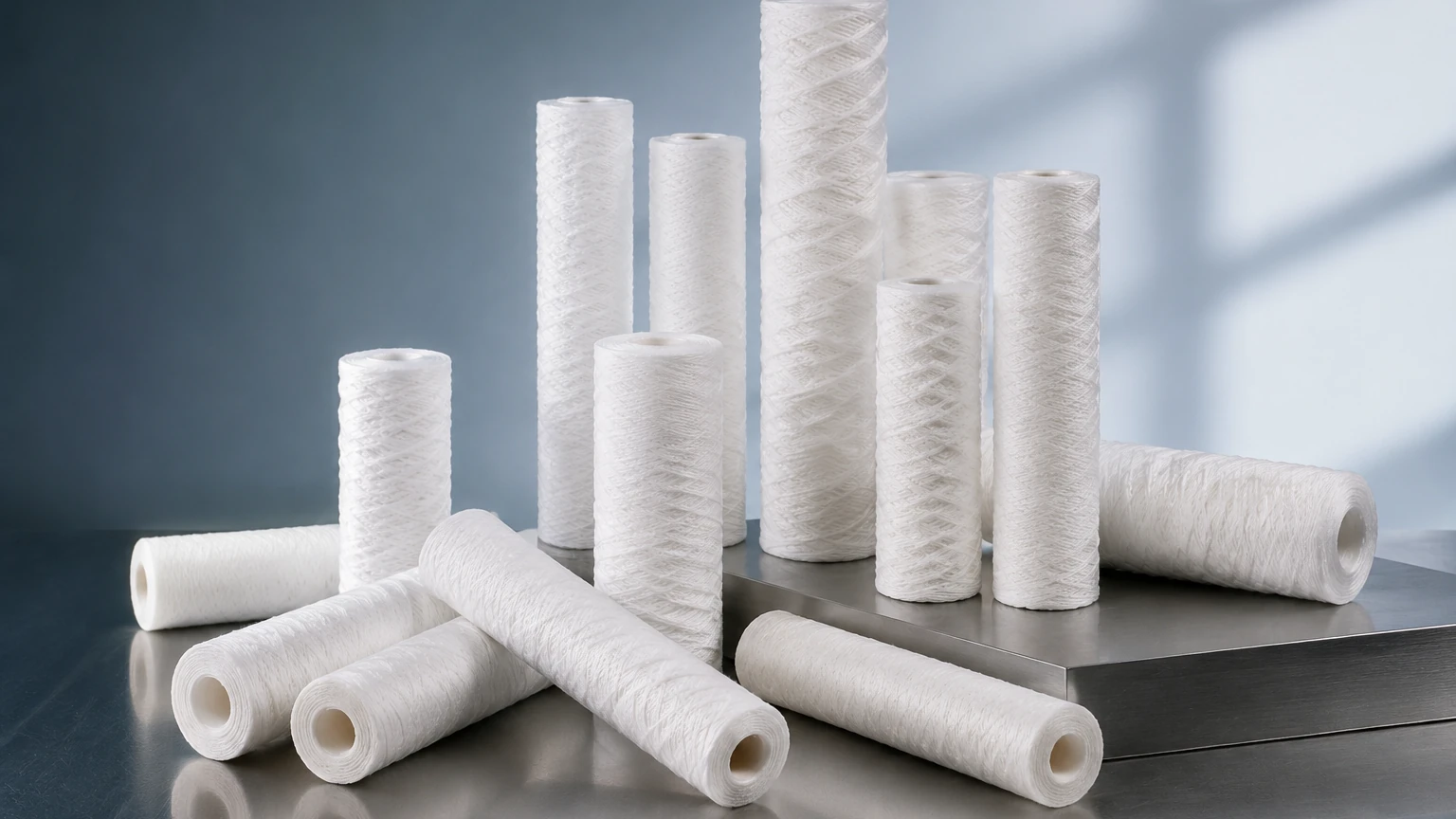
Depth filters, such as string-wound or melt-blown cartridges, utilize a thick layer of media to trap particles throughout the entire cross-section of the filter. These are often designed with a graded density—where the outer layers capture larger particles and the inner layers capture finer ones. This structure allows for a high dirt-holding capacity. However, in heavy industrial applications, depth filters are typically disposable. Once the internal pathways are saturated with contaminants, the pressure drop increases significantly, necessitating a full replacement.
Surface Filtration
Surface filters, which include pleated stainless steel wire mesh and wedge wire cartridges, capture particles on the upstream surface of the media. These filters are engineered for precision. Because the filtration happens on a single plane, the pore size can be controlled with extreme accuracy. The most significant advantage of surface filtration in an industrial setting is cleanability. Stainless steel surface filters can often be backwashed or ultrasonically cleaned, allowing them to be reused for years, which contrasts sharply with the frequent replacement cycles of polymer depth filters.
The Engineering Advantages of Stainless Steel Media
While polypropylene and cellulose are common in light-duty applications, demanding industrial environments often require the robustness of metal. A stainless steel sediment cartridge filter offers several technical advantages that justify its initial capital expenditure.
1. Thermal Stability: Polymer filters often lose structural integrity or experience pore migration at temperatures exceeding 60°C (140°F). Stainless steel cartridges, particularly those manufactured by Kaifil, can operate in environments ranging from cryogenic temperatures to over 300°C, depending on the seal materials used.
2. Chemical Compatibility: In chemical processing and pharmaceutical manufacturing, the filter media must withstand exposure to solvents, acids, and bases. 304 and 316L stainless steel provide superior resistance to corrosion and chemical degradation compared to synthetic fibers.
3. Mechanical Strength: High-pressure systems or applications with high-viscosity fluids exert significant mechanical stress on filter cartridges. Stainless steel wire mesh and sintered metal components offer high collapse pressure ratings, ensuring that the filter does not bypass or fail under sudden pressure spikes.
4. Sustainability and Waste Reduction: By opting for a cleanable metal filter, facilities significantly reduce their solid waste output. This is an increasingly important factor for ISO 14001 certified companies looking to minimize their environmental footprint.
Critical Selection Criteria for Engineers
When specifying a sediment cartridge filter for a new or existing system, engineers must evaluate several performance metrics beyond the basic micron rating.
Micron Rating: Nominal vs. Absolute
One of the most common points of confusion in filtration is the difference between nominal and absolute ratings. A nominal rating is an empirical value indicating the filter's ability to retain a majority of particles of a specific size (usually 60% to 90%). In contrast, an absolute rating signifies that the filter will retain 99.9% (or a specific Beta ratio) of particles at that size. For critical applications, such as protecting a reverse osmosis membrane, an absolute-rated stainless steel mesh is often required to ensure no damaging particles pass through.
Flow Rate and Differential Pressure
The flow rate of a filter is inextricably linked to the differential pressure ($ΔP$). As the filter captures sediment, the $ΔP$ increases. Engineers must calculate the "clean pressure drop" to ensure the system pump can handle the resistance of the filter even when it begins to load with contaminants. Choosing a cartridge with a larger surface area, such as a pleated design, can lower the initial $ΔP$ and extend the time between cleaning cycles.
Viscosity Considerations
The viscosity of the fluid significantly impacts the flow characteristics through the sediment cartridge filter. High-viscosity fluids, such as oils or resins, require larger pore sizes or increased surface area to maintain acceptable flow rates. In these cases, stainless steel wedge wire is often preferred due to its low-friction profile and high structural rigidity.
Optimizing Filtration Performance in Demanding Environments
In sectors like food and beverage or pharmaceuticals, the sediment cartridge filter must not only remove particulates but also adhere to strict hygienic standards. Stainless steel filters are ideal here because they are non-shedding. Unlike fiber-based filters, which can release small fragments of media into the process stream (media migration), metal mesh remains intact.
Furthermore, the ability to perform In-Place Cleaning (CIP) is a major operational benefit. Stainless steel cartridges can be sanitized with high-pressure steam or caustic chemicals without degrading the filtration matrix. This ensures that the filtration system does not become a breeding ground for microbial growth, which is a constant risk in depth-style sediment filters.
For those evaluating specific hardware configurations and material grades, you can find comprehensive technical data on our Main Page.
Maintenance, Cleaning, and the Total Cost of Ownership
The decision between a low-cost disposable sediment cartridge filter and a high-performance stainless steel filter often comes down to the Total Cost of Ownership (TCO). While the initial price of a stainless steel cartridge is higher, the long-term costs are frequently lower when considering:
* Replacement Costs: The recurring expense of purchasing, shipping, and storing disposable filters.
* Labor Costs: The man-hours required to shut down the system, vent the housing, and replace cartridges.
* Disposal Costs: Fees associated with the disposal of contaminated filter media, which may be classified as hazardous waste depending on the application.
* Production Downtime: The lost revenue associated with frequent filter changes.
A stainless steel sediment cartridge filter can be cleaned using several methods. Backwashing involves reversing the flow of the fluid to dislodge particles from the surface. For more stubborn contaminants, ultrasonic cleaning baths can remove microscopic debris from the depths of the wire mesh, restoring the filter to near-original differential pressure levels.
Customization and OEM Considerations
No two industrial processes are identical, and off-the-shelf filtration solutions often fall short of specific performance requirements. Customization is a core component of modern filtration engineering. This includes tailoring the end-cap configurations (such as DOE, 222, or 226 O-ring styles) to fit existing housings, or adjusting the length and diameter of the cartridge to optimize flow dynamics.
OEM (Original Equipment Manufacturer) solutions allow for the integration of sediment filters directly into specialized machinery. By working with a manufacturer that understands the nuances of wire mesh weaving and sintering, engineers can develop bespoke filtration components that meet exact micron requirements while fitting within tight spatial constraints. This level of customization ensures that the sediment cartridge filter is an asset to the system's design rather than a bottleneck.
Conclusion: Making an Informed Decision
Selecting the right sediment cartridge filter requires a balance of technical performance, material compatibility, and economic reality. For light-duty, non-critical applications, disposable depth filters may suffice. However, for industrial processes where reliability, temperature resistance, and cleanability are paramount, stainless steel filtration solutions offer unmatched performance.
By focusing on absolute micron ratings, understanding the implications of differential pressure, and considering the long-term savings of reusable media, engineers can ensure their systems remain protected and efficient. As a professional manufacturer, Kaifil provides the engineering expertise and manufacturing precision needed to solve complex filtration challenges across the globe. Whether you are dealing with high-temperature chemical streams or require food-grade precision, the right sediment filtration strategy starts with high-quality components designed for the rigors of the industry.
