


Semiconductor Chemical Filter
In the high-precision environment of semiconductor manufacturing, the purity of process chemicals is a primary determinant of wafer yield and device reliability. As nodes shrink toward the sub-7nm range, even the most minute particulate or metallic impurity can cause catastrophic defects in integrated circuits. A semiconductor chemical filter serves as the critical line of defense, ensuring that acids, bases, solvents, and specialized etching chemistries meet the stringent cleanliness standards required for modern fabrication.
For engineers and procurement professionals, selecting the appropriate filtration technology involves a complex evaluation of material compatibility, mechanical integrity, and filtration efficiency. This guide examines the technical requirements of chemical filtration within the semiconductor industry and provides a framework for selecting high-performance components that balance technical precision with operational longevity.
The Critical Role of Filtration in Semiconductor Fabrication
Semiconductor fabrication processes, such as photolithography, wet etching, and chemical mechanical planarization (CMP), rely on a continuous supply of high-purity chemicals. Any contamination—whether it originates from the raw chemicals, the delivery piping, or the storage tanks—must be removed before the fluid reaches the wafer surface.
A semiconductor chemical filter is designed to operate in these aggressive environments, removing particles that could otherwise lead to pattern distortion, electrical shorts, or gate oxide integrity issues. Unlike standard industrial filtration, semiconductor-grade filtration requires materials that do not leach ions or organic compounds into the process stream. The goal is "zero-defect" manufacturing, where the filter must not only remove contaminants but also remain completely inert to the chemical media it processes.
Engineering Considerations for Semiconductor Chemical Filters
When designing or selecting a semiconductor chemical filter, engineering teams must prioritize the chemical and thermal stability of the filter media and housing. The choice of material is dictated by the specific chemical being filtered and the operating temperature of the process.
Material Compatibility and Corrosion Resistance
Stainless steel, particularly 316L and high-nickel alloys like Hastelloy, is frequently used for filter housings and certain filter media due to its exceptional mechanical strength and resistance to organic solvents. For highly corrosive acids such as hydrofluoric acid (HF) or hydrochloric acid (HCl), specialized coatings or alternative materials may be necessary.
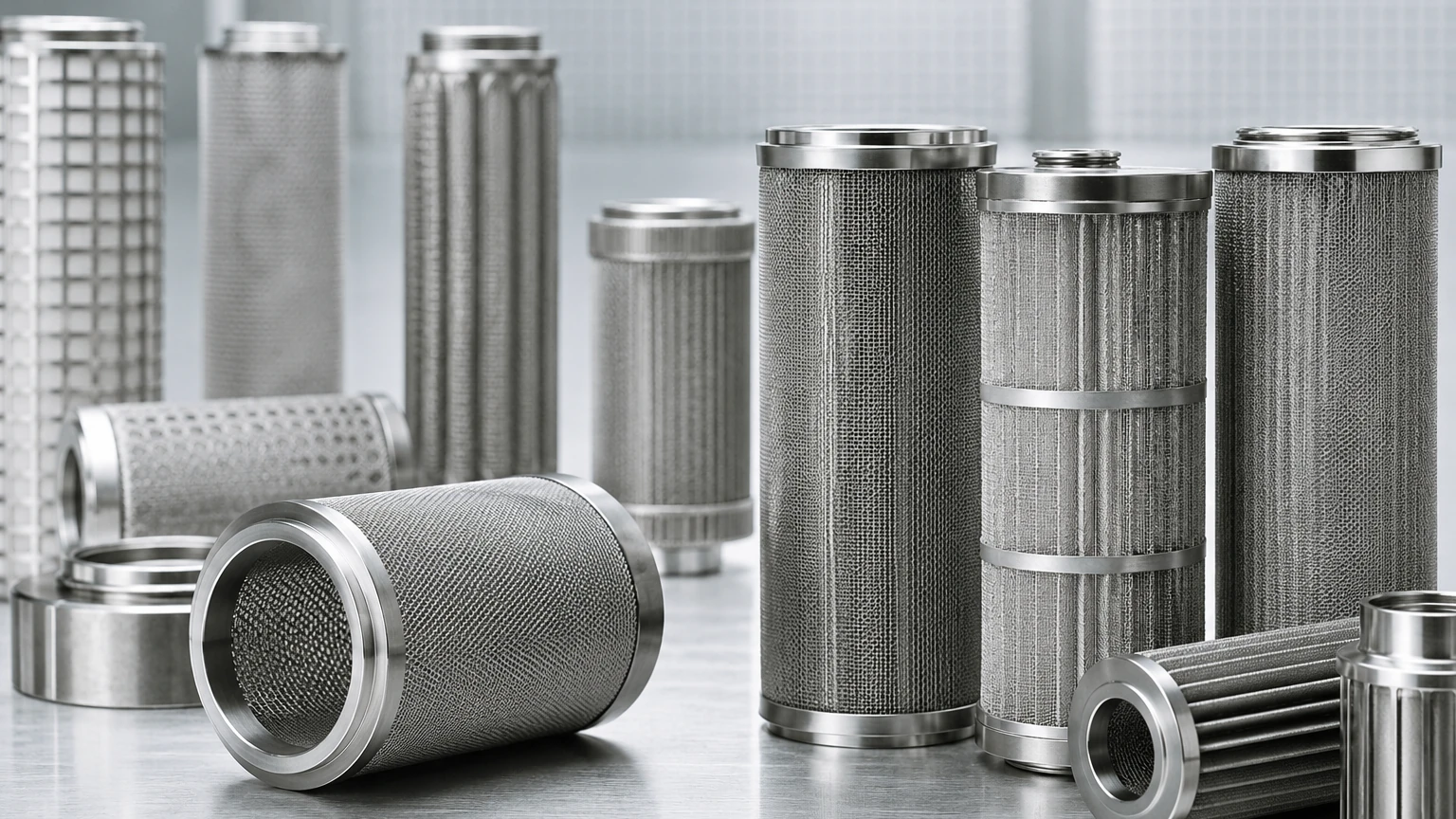
Kaifil specializes in custom stainless steel filtration solutions, providing the structural integrity required for high-pressure chemical delivery systems. By utilizing advanced manufacturing techniques, these metal filters can be engineered to withstand the rigors of aggressive chemical cleaning and high-temperature sterilization without shedding fibers or degrading. For more information on specialized filtration components, you can visit the Main Page.
Mechanical Integrity and Pressure Stability
Chemical delivery systems in semiconductor fabs often operate under fluctuating pressures. A filter must maintain its structural integrity under high differential pressure (ΔP) to prevent bypass or media migration. Sintered metal mesh and multi-layered wire mesh structures are often preferred in high-pressure or high-temperature applications because they offer a rigid pore structure that does not deform under stress. This ensures consistent filtration performance throughout the entire service life of the element.
Performance Metrics and Selection Criteria
Selecting the right semiconductor chemical filter requires a deep understanding of the specific application's parameters. Engineers must evaluate several key metrics to ensure the filter meets the process requirements without becoming a bottleneck in production.
Micron Rating and Retention Efficiency
The micron rating defines the size of particles the filter is capable of capturing. In semiconductor applications, absolute ratings are standard. An absolute-rated filter ensures that a specific percentage (usually 99.9% or higher) of particles at the rated size are retained. For critical wet bench processes, filters may need to provide retention at the sub-micron level, often down to 0.1 μm or smaller.
Flow Rate and Differential Pressure
High-flow rates are essential for maintaining throughput in high-volume manufacturing (HVM). However, as the pore size of a filter decreases, the resistance to flow increases. Engineers must balance the need for fine filtration with the allowable pressure drop across the filter. A high initial pressure drop can reduce the effective life of the filter and may necessitate larger pump systems, increasing the total cost of ownership.
Outgassing and Extractables
In the semiconductor industry, the term "extractables" refers to chemicals that can be leached from the filter material into the process fluid. For chemical filters, it is vital to minimize metallic ions (such as sodium, iron, and copper) and organic TOC (Total Organic Carbon). High-quality stainless steel filters undergo rigorous cleaning processes, such as ultrasonic cleaning and passivation, to ensure they meet the ultra-high purity (UHP) requirements of the fab.
Managing Contamination Risks and Yield Stability
The implementation of a semiconductor chemical filter is not just about particle removal; it is about risk management. Contamination can enter the system at various points, and the filter must be positioned to provide maximum protection.
Point-of-Use (POU) vs. Bulk Filtration
Bulk filtration occurs at the chemical distribution system (CDS), where large volumes of chemicals are filtered before being sent to various tools. While bulk filtration removes the majority of contaminants, point-of-use (POU) filtration is installed directly at the process tool. POU filters are the final safeguard, capturing any particles generated by moving parts, valves, or piping within the tool itself. In most modern fabs, a combination of both bulk and POU filtration is employed to ensure maximum yield stability.
Handling Aggressive Chemistries
Semiconductor processes involve a wide range of chemistries, from ultra-pure water (UPW) to aggressive photoresist strippers. Each chemical interacts differently with filter media. For example, solvents used in photolithography require filters that can handle high surface tension and potential swelling of polymer components. In these instances, stainless steel wire mesh filters provide a stable, non-reactive alternative that maintains precise pore geometry regardless of the solvent's chemical activity.
Customization and OEM Integration for Specialized Applications
Standard off-the-shelf filters often fail to meet the unique geometric or performance requirements of specialized semiconductor equipment. Customization is frequently necessary to optimize filtration performance within the constraints of the tool's footprint.
Tailored Filtration Geometry
OEMs often require filters with specific end-cap configurations, lengths, or diameters to fit into proprietary housings. Kaifil provides comprehensive OEM and customized filtration solutions, working closely with engineers to develop filter cartridges and precision metal components that align with specific equipment designs. This collaborative approach ensures that the filter integrates seamlessly into the chemical delivery path, minimizing dead zones where bacteria or particles could accumulate.
Precision Engineering for Specific Accuracy
Different stages of semiconductor manufacturing require different levels of filtration accuracy. By adjusting the density and layering of the wire mesh, manufacturers can tune the filter to provide the exact balance of particle retention and flow capacity required for a specific chemical stream. This precision engineering helps prevent over-specification, which can lead to unnecessary costs, or under-specification, which risks wafer contamination.
Maintenance, Replacement, and Total Cost of Ownership
While the initial purchase price of a semiconductor chemical filter is a factor, the total cost of ownership (TCO) is a more accurate measure of value. TCO includes the cost of the filter, the labor required for replacement, the cost of process downtime, and the potential loss of revenue due to yield hits.
Monitoring Filter Life
Filter life is typically monitored via differential pressure sensors. As the filter captures contaminants, the ΔP increases. In semiconductor fabs, filters are often replaced on a preventative maintenance (PM) schedule rather than waiting for failure. This proactive approach prevents pressure spikes that could dislodge particles or cause a sudden drop in flow that interrupts the process.
Cleaning and Reusability
In some industrial applications, stainless steel filters can be cleaned and reused. However, in the semiconductor industry, the risk of cross-contamination often makes single-use strategies more common for POU filters. For bulk filtration systems or less sensitive chemical streams, the durability of stainless steel allows for rigorous cleaning protocols that can extend the service life of the filter housing and elements, contributing to a lower TCO over the long term.
Ensuring Quality Control
When purchasing filters for semiconductor applications, it is essential to verify the manufacturer’s quality control processes. This includes material traceability, bubble point testing to verify pore size, and cleanliness certifications. Reliable manufacturers provide documentation that confirms the filter meets the specified performance standards, giving engineers confidence in the stability of their filtration process.
Conclusion
The semiconductor chemical filter is a cornerstone of modern microelectronics manufacturing. As the industry continues to push the boundaries of miniaturization, the demand for higher purity and more reliable filtration solutions will only increase. By understanding the engineering principles of material compatibility, mechanical stability, and filtration efficiency, technical professionals can select the optimal filtration components to protect their processes and maximize yield.
Whether dealing with bulk chemical distribution or point-of-use applications, the choice of a filtration partner is critical. Working with a manufacturer like Kaifil, which offers deep expertise in custom stainless steel filtration and OEM solutions, allows engineers to develop robust systems capable of meeting the most demanding semiconductor industry standards. For a detailed review of available product options and technical support for your specific application, visit the Main Page to explore professional filtration solutions designed for industrial excellence.
