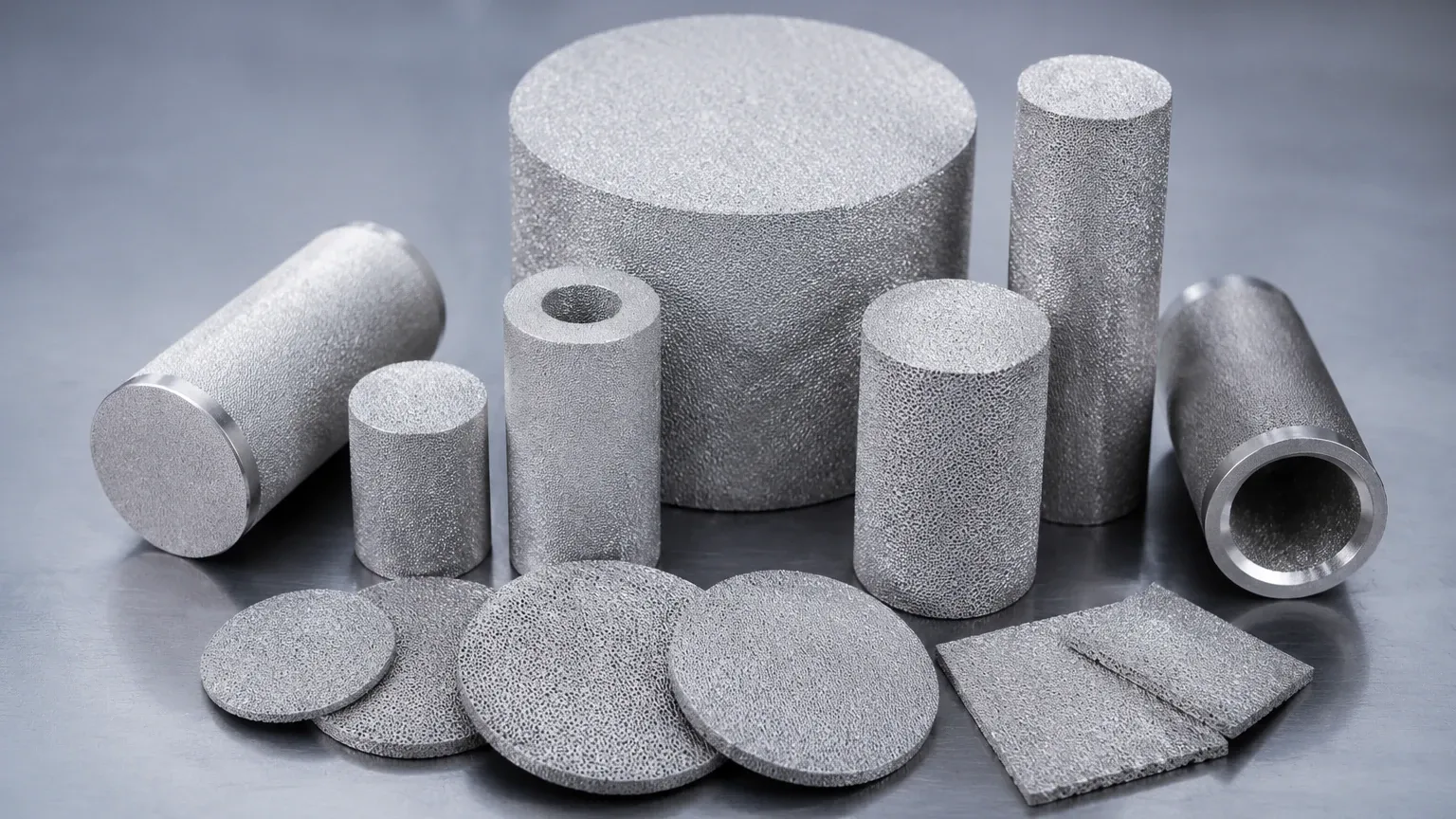
Sintered Glass Filter
In precision laboratory environments and specific industrial chemical processes, the sintered glass filter serves as a critical component for the separation of solids from liquids or gases. Characterized by its high chemical resistance and controlled porosity, this filtration medium is produced through a specialized sintering process that fuses glass particles into a solid yet permeable structure. For engineers and procurement specialists, understanding the technical nuances of sintered glass—and how it compares to more robust alternatives like stainless steel—is essential for optimizing process efficiency and ensuring equipment longevity.
Understanding Sintered Glass Filtration Technology
A sintered glass filter, often referred to as a fritted glass filter, is manufactured by heating crushed glass powder (typically borosilicate glass) to a temperature just below its melting point. This process, known as sintering, causes the glass particles to adhere at their contact points, creating a rigid, porous matrix. Unlike woven meshes or membranes, the resulting structure is a depth filtration medium where the "tortuous path" of the pores traps particles throughout the thickness of the filter disc.
The primary material used is Borosilicate Glass 3.3, chosen for its exceptional resistance to water, neutral and acid solutions, concentrated acids and their mixtures, as well as to chlorine, bromine, iodine, and organic matters. This material property makes sintered glass filters indispensable in analytical chemistry and pharmaceutical research where contamination from the filter medium itself must be strictly avoided.
Porosity Grades and Technical Specifications
The performance of a sintered glass filter is primarily defined by its porosity grade, which dictates the maximum pore size and the types of particles it can effectively retain. International standards, such as ISO 4793, categorize these filters into specific grades, usually ranging from P160 (coarsest) to P1.6 (finest).
* Grade 0 (160–250 µm): Used for gas distribution in liquids, coarse filtration, and supporting large-grain filter beds.
* Grade 1 (100–160 µm): Suitable for coarse filtration and gas washing bottles.
* Grade 2 (40–100 µm): Common for preparative fine filtration and crystalline precipitates.
* Grade 3 (16–40 µm): The standard grade for analytical filtration, mercury filtration, and fine gas distribution.
* Grade 4 (10–16 µm): Utilized for analytical work with very fine precipitates and check-filtration of fine chemicals.
* Grade 5 (1.1–1.6 µm): The finest grade, often used for bacteria-free filtration or the removal of extremely fine colloidal particles.
When selecting a grade, engineers must balance the required filtration accuracy with the flow rate. Finer pores provide higher retention but result in a higher pressure drop across the filter, necessitating vacuum or pressure assistance to maintain throughput.
Key Applications in Laboratory and Industrial Settings
Sintered glass filters are predominantly found in laboratory-scale operations, though they serve niche roles in specialized industrial sectors. Their applications are generally divided into three categories:
1. Solid-Liquid Separation: In gravimetric analysis and preparative chemistry, glass frits are used in Buchner funnels and crucibles to collect precipitates. Their inert nature ensures that the filtered substance is not contaminated by metallic ions or organic leachable materials.
2. Gas Diffusion and Scrubbing: By forcing gas through a sintered glass disc submerged in a liquid, the gas is broken into tiny bubbles. This increases the surface area for reaction or absorption, making it ideal for gas washing bottles or aeration in small-scale bioreactors.
3. Microbiological Filtration: The finest grades (Grade 5) are capable of retaining bacteria, providing a non-thermal method for sterilizing heat-sensitive liquids in research environments.
Advantages and Limitations of Glass Media
The primary advantage of sintered glass is its chemical inertness. It is virtually unaffected by most corrosive agents, with the notable exceptions of hydrofluoric acid, hot concentrated phosphoric acid, and strong alkaline solutions, which can etch the glass and enlarge the pores over time.
However, glass media possess significant limitations that often preclude their use in heavy industrial applications:
* Fragility: Glass is inherently brittle. Sintered glass filters are susceptible to mechanical shock and can easily crack under physical stress or improper handling.
* Thermal Sensitivity: While borosilicate glass has a low coefficient of thermal expansion, rapid temperature changes (thermal shock) can lead to structural failure. They generally cannot be used at temperatures exceeding 500°C, and even then, heating and cooling must be gradual.
* Pressure Constraints: Sintered glass discs have limited tensile strength. In high-pressure industrial systems, the risk of the disc shattering is high, which could lead to catastrophic downstream contamination.
Comparing Sintered Glass with Stainless Steel Filter Media
For industrial-scale filtration, engineers often evaluate sintered glass against sintered stainless steel. While glass excels in pure chemical inertness for small-scale lab work, stainless steel is the preferred choice for production environments. As a professional manufacturer, Kaifil provides advanced metal filtration solutions that address the shortcomings of glass media in demanding settings.
| Feature | Sintered Glass | Sintered Stainless Steel |
| :— | :— | :— |
| Mechanical Strength | Low (Brittle) | High (Ductile/Robust) |
| Pressure Resistance | Limited to vacuum or low PSI | High-pressure capability |
| Temperature Range | Up to 450°C-500°C | Up to 800°C+ (depending on alloy) |
| Cleanability | Chemical soaking / Ultrasonic | Backpulsing / High-pressure wash |
| Scalability | Difficult; limited disc sizes | High; can be welded into large cartridges |
| Longevity | Short (high breakage risk) | Long-term industrial service life |
In processes involving high-viscosity fluids or high-velocity gas streams, the structural integrity of the filter is paramount. Stainless steel wire mesh and sintered metal components offer the durability required to withstand frequent cleaning cycles and mechanical stresses. For organizations looking to transition from laboratory-scale glass filtration to industrial-scale production, reviewing the Main Page of a specialized manufacturer like Kaifil provides insight into how metal filtration can improve total cost of ownership.
Critical Selection Factors for Engineers
When specifying a sintered glass filter or considering an upgrade to metal media, several engineering factors must be confirmed:
1. Chemical Compatibility
While glass is resistant to most acids, it is critical to check the pH of the process fluid. If the process involves strong alkalis (pH > 10) or fluorine-containing compounds, glass will degrade rapidly. In such cases, specialized alloys like Hastelloy or 316L stainless steel may be required.
2. Operating Temperature and Thermal Gradient
If the filtration process involves fluctuating temperatures, the thermal shock resistance of the filter must be calculated. For glass, a heating rate of no more than 5°C per minute is often recommended. If faster cycles are needed, metal filters are significantly more resilient.
3. Differential Pressure (ΔP)
Engineers must determine the maximum allowable pressure drop across the filter. Sintered glass filters are usually rated for a differential pressure of 1 bar (approx. 15 psi). If the process requires higher pressure to force fluid through a fine pore structure, a reinforced metal filter is a safer and more reliable option.
4. Particle Loading and Cleaning Frequency
Sintered glass is a depth medium, meaning it can become blinded by fine particles or oils. If the filter requires frequent cleaning to restore flow rates, the method of cleaning (ultrasonic, chemical, or mechanical) must be compatible with the filter’s structural limits.
Maintenance and Cleaning Procedures
To maintain the performance of a sintered glass filter, regular cleaning is mandatory. Because the pores are internal, surface wiping is ineffective. Common laboratory cleaning methods include:
* Chemical Digestion: Soaking the filter in an acid cleaner (such as a mixture of sulfuric acid and potassium dichromate) to dissolve organic contaminants. Note that aggressive cleaners must be thoroughly rinsed to prevent chemical carryover.
* Ultrasonic Cleaning: Using high-frequency sound waves in a liquid bath to dislodge particles from the internal pore structure. Caution must be exercised as excessive ultrasonic power can cause micro-cracking in the glass matrix.
* Back-flushing: Passing clean solvent or water through the filter in the reverse direction of the process flow. This is most effective for removing non-adherent particulate matter.
It is important to note that every cleaning cycle, especially those involving chemicals or ultrasonics, slightly weakens the glass structure. Over time, the effective pore size may increase, or the disc may become brittle, eventually requiring replacement.
Conclusion
The sintered glass filter remains a staple in the laboratory due to its unparalleled purity and chemical resistance in small-scale applications. However, as processes scale from the benchtop to the factory floor, the limitations of glass—specifically its fragility and pressure constraints—become significant liabilities. For industrial applications requiring high durability, precise filtration accuracy, and long-term reliability, stainless steel filtration components offer a superior alternative. By understanding the specific requirements of the application, including chemical exposure, temperature, and pressure, technical teams can select the filtration media that best balances performance with operational safety.