


Spin on Hydraulic Filter
In the realm of industrial fluid power, maintaining the cleanliness of hydraulic oil is the most critical factor in ensuring component longevity and system reliability. Contamination is responsible for up to 80% of hydraulic system failures, leading to abrasive wear, valve sticking, and component fatigue. Among the various filtration configurations available to engineers, the spin on hydraulic filter has emerged as a standard solution for low-to-medium pressure applications due to its ease of maintenance, compact footprint, and cost-effectiveness.
For engineers and procurement specialists, selecting the correct filtration component requires a deep understanding of pressure dynamics, flow rates, and material compatibility. This guide examines the technical specifications, engineering considerations, and performance metrics of spin-on filtration systems within industrial environments.
The Anatomy and Engineering of Spin-on Filtration
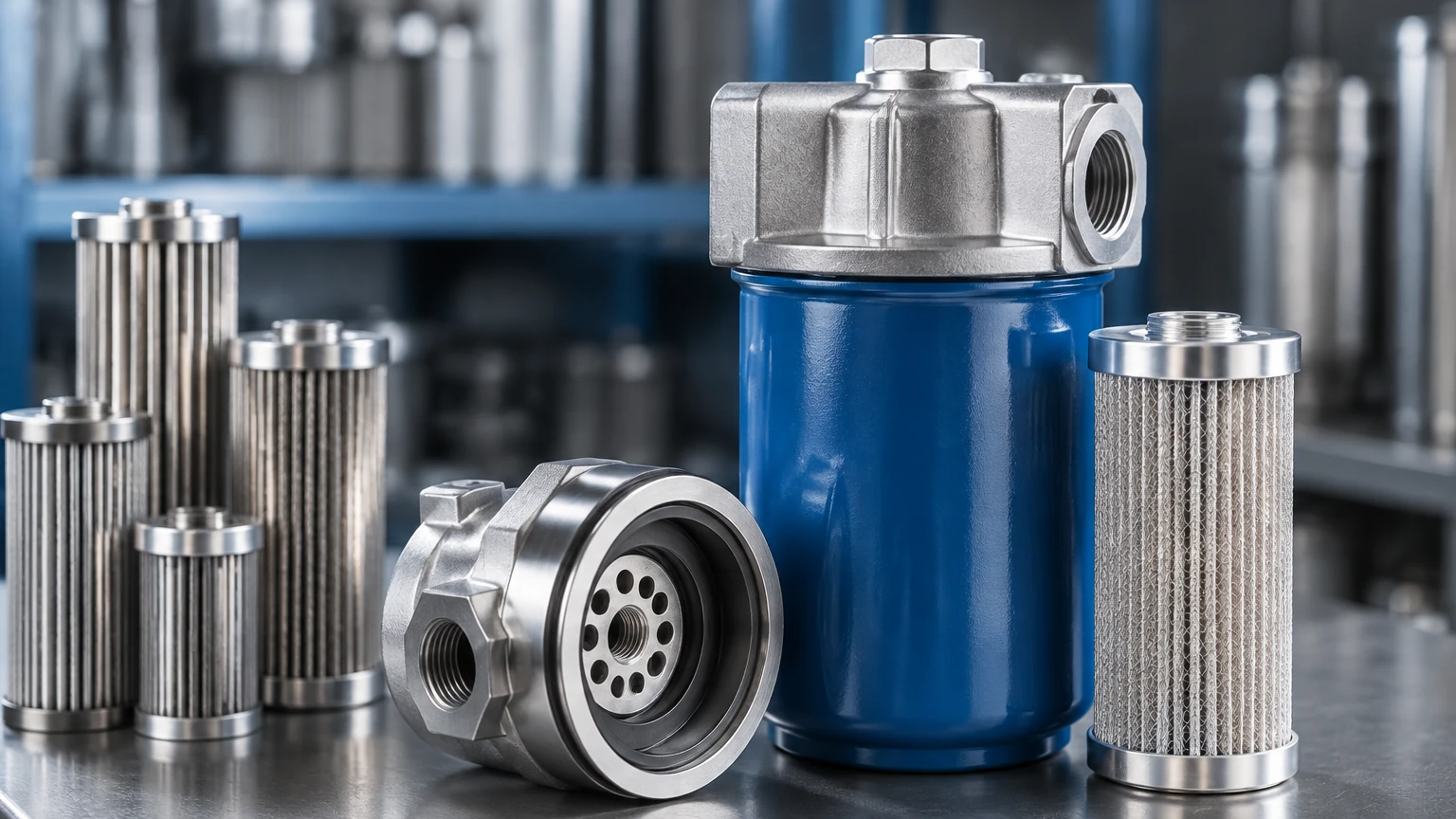
A spin on hydraulic filter consists of a self-contained canister that houses the filter media, a support tube, and often a bypass valve. This assembly is designed to be threaded onto a permanent filter head integrated into the hydraulic circuit. Unlike cartridge-style filters, which require the technician to open a housing and replace only the internal element, the entire spin-on canister is replaced as a single unit.
Key Structural Components
1. The Canister (Housing): Typically constructed from drawn steel or high-strength aluminum, the canister must withstand the operating pressure and cyclic pressure surges (spikes) inherent in hydraulic systems. For demanding environments, manufacturers like Kaifil provide specialized metal components that offer enhanced resistance to mechanical fatigue.
2. Filter Media: This is the core of the filter. While many standard filters use cellulose or synthetic micro-glass, high-performance industrial applications often require stainless steel wire mesh or sintered metal fibers for superior durability and chemical resistance.
3. The Sealing Gasket: Usually made of Nitrile (Buna-N) or Fluorocarbon (Viton), the gasket ensures a leak-proof connection between the canister and the filter head. Material selection here is vital for fluid compatibility, especially when using fire-resistant hydraulic fluids or operating at extreme temperatures.
4. Bypass Valve: Most spin-on filters include an internal bypass valve. If the filter element becomes blinded by contaminants or if the fluid is too viscous (common during cold starts), the valve opens at a pre-set cracking pressure to ensure the system downstream is not starved of oil, though this does allow unfiltered oil to circulate temporarily.
Media Selection: Balancing Efficiency and Durability
The choice of media within a spin on hydraulic filter determines its efficiency, dirt-holding capacity, and pressure drop characteristics. From an engineering perspective, the media must be selected based on the specific cleanliness requirements of the system's most sensitive component, such as a servo valve or a high-pressure piston pump.
Stainless Steel Wire Mesh vs. Traditional Media
Standard cellulose media is cost-effective but limited by its lack of uniformity and susceptibility to moisture. Synthetic micro-glass offers higher dirt-holding capacity and better Beta ratios but is fragile.
In contrast, stainless steel wire mesh media—a specialty of Kaifil—provides several distinct advantages for industrial hydraulic systems:
* High Temperature Stability: Stainless steel maintains structural integrity at temperatures that would degrade synthetic or organic fibers.
* Chemical Compatibility: It is virtually inert to the additives found in modern hydraulic fluids and aggressive chemical solvents.
* Cleanability: Unlike disposable media, certain heavy-duty metal mesh elements can be cleaned and reused, reducing the long-term environmental impact and total cost of ownership.
* Precision Filtration: Advanced weaving techniques allow for precise micron ratings, ensuring that the filter captures specific particle sizes consistently without the risk of media migration.
For technical specifications on custom mesh configurations, engineers can refer to the Main Page for detailed material data sheets.
Performance Metrics: Understanding Beta Ratios and Micron Ratings
When evaluating a spin on hydraulic filter, engineers must look beyond simple "micron ratings." A filter’s performance is more accurately defined by its Beta Ratio (β), determined through Multi-Pass Testing (ISO 16889).
The Beta Ratio Explained
The Beta Ratio is the ratio of particles of a given size upstream of the filter to the particles of the same size downstream. For example, a β10 = 200 rating means that for every 200 particles of 10 microns entering the filter, only one passes through. This equates to an efficiency of 99.5%.
* Nominal Rating: An arbitrary micrometer value indicated by the manufacturer, often representing only 50% to 90% efficiency. It is generally insufficient for critical hydraulic systems.
* Absolute Rating: The diameter of the largest hard spherical particle that will pass through the filter under specified test conditions. In high-stakes industrial applications, absolute ratings (typically βx ≥ 75 or 200) are the standard.
ISO Cleanliness Codes
Filter selection should always aim to achieve a specific ISO 4406 cleanliness code. For instance, a system with high-pressure vane pumps might require an ISO code of 18/16/13. The spin-on filter must be sized and specified with media capable of maintaining these levels throughout its service life.
Engineering Considerations for System Integration
Integrating a spin on hydraulic filter into a machine requires more than just matching thread sizes. Several variables must be calculated to prevent premature failure or system inefficiency.
Pressure Drop (ΔP)
Every filter creates a restriction to flow, resulting in a pressure drop. This ΔP is influenced by fluid viscosity, flow rate, and the permeability of the media. Engineers should size the filter so that the clean pressure drop does not exceed 1/3 of the bypass valve cracking pressure. If the ΔP is too high from the start, the filter will reach its terminal pressure drop too quickly, triggering the bypass valve and rendering the filtration ineffective.
Flow Fatigue
Hydraulic systems are dynamic, with flow rates often fluctuating as cylinders extend and retract. These fluctuations create cyclic stress on the filter media. A high-quality spin-on filter must be engineered for flow fatigue resistance to prevent the media from cracking or pleats from collapsing under pressure pulses.
Static vs. Dynamic Pressure
Spin-on filters are generally rated for specific working pressures. It is vital to distinguish between the static pressure (the steady-state operating pressure) and dynamic pressure (which includes transient spikes). Using a filter rated for 200 PSI in a system that experiences 500 PSI spikes will eventually lead to canister deformation or seal failure.
Customization and OEM Solutions
In many industrial sectors, off-the-shelf filtration products fail to meet the rigorous demands of specialized machinery. This is where custom manufacturing becomes essential. Kaifil specializes in developing tailored filtration components that address specific engineering challenges, such as non-standard dimensions, extreme pressure requirements, or unique fluid chemistries.
Customization options for spin-on components include:
* Reinforced Support Tubes: To prevent element collapse in high-viscosity or high-flow applications.
* Specialized End Caps: Utilizing stainless steel or high-grade polymers for corrosion resistance.
* Bespoke Threading: Ensuring compatibility with proprietary filter heads used in legacy equipment.
* Integrated Sensors: Providing ports for differential pressure indicators that signal when the filter requires replacement.
By working closely with an OEM manufacturer, purchasing teams can ensure that the spin on hydraulic filter they procure is optimized for the specific duty cycle of their equipment, rather than relying on a "one size fits all" approach.
Maintenance and Total Cost of Ownership (TCO)
While the initial purchase price of a filter is a factor, the Total Cost of Ownership (TCO) is a more accurate measure of value. TCO includes the cost of the filter, the labor for replacement, the cost of oil lost during changes, and, most importantly, the cost of wear on downstream components.
Monitoring and Replacement Cycles
Replacing a filter based on a fixed calendar schedule is often inefficient. If the environment is cleaner than expected, you waste money on premature changes; if it is dirtier, you risk running in bypass mode.
Best practices for industrial maintenance include:
1. Differential Pressure Indicators: Using visual or electrical indicators to monitor the pressure drop across the filter. These devices alert maintenance staff exactly when the media is loaded to its limit.
2. Oil Analysis: Regularly sampling hydraulic fluid to check for particle counts and chemical degradation. This confirms whether the filtration system is achieving the target ISO cleanliness codes.
3. Proper Installation: Ensuring the gasket is lubricated and the canister is tightened to the manufacturer's torque specifications to prevent seal extrusion or thread damage.
Conclusion
The spin on hydraulic filter remains a cornerstone of modern industrial maintenance. Its ability to provide high-efficiency filtration in a user-friendly format makes it indispensable for protecting hydraulic pumps, motors, and valves. However, the effectiveness of the filter is entirely dependent on the engineering rigor applied during the selection process.
By focusing on absolute micron ratings, Beta ratios, and material compatibility—particularly the use of stainless steel mesh for demanding environments—engineers can significantly extend the mean time between failures (MTBF) for their hydraulic systems. For those seeking specialized guidance or custom-engineered filtration components, reviewing the technical resources available on the Main Page is the recommended next step in optimizing fluid power performance.
