


Spin on Oil Filters
In industrial fluid management, spin on oil filters represent a critical component for maintaining system cleanliness and protecting high-value machinery. These self-contained filtration units are designed for ease of installation and replacement, offering a robust barrier against particulate contamination in hydraulic systems, lubrication circuits, and various chemical processing streams. For engineers and procurement professionals, understanding the technical nuances of these filters—from media composition to pressure ratings—is essential for optimizing equipment uptime and reducing total cost of ownership.
As a specialized manufacturer, Kaifil provides advanced filtration solutions that bridge the gap between standard off-the-shelf components and high-performance industrial requirements. By visiting our Main Page, technical teams can explore how custom engineering and material selection enhance the reliability of filtration systems in demanding environments.
Understanding the Engineering of Spin on Oil Filters
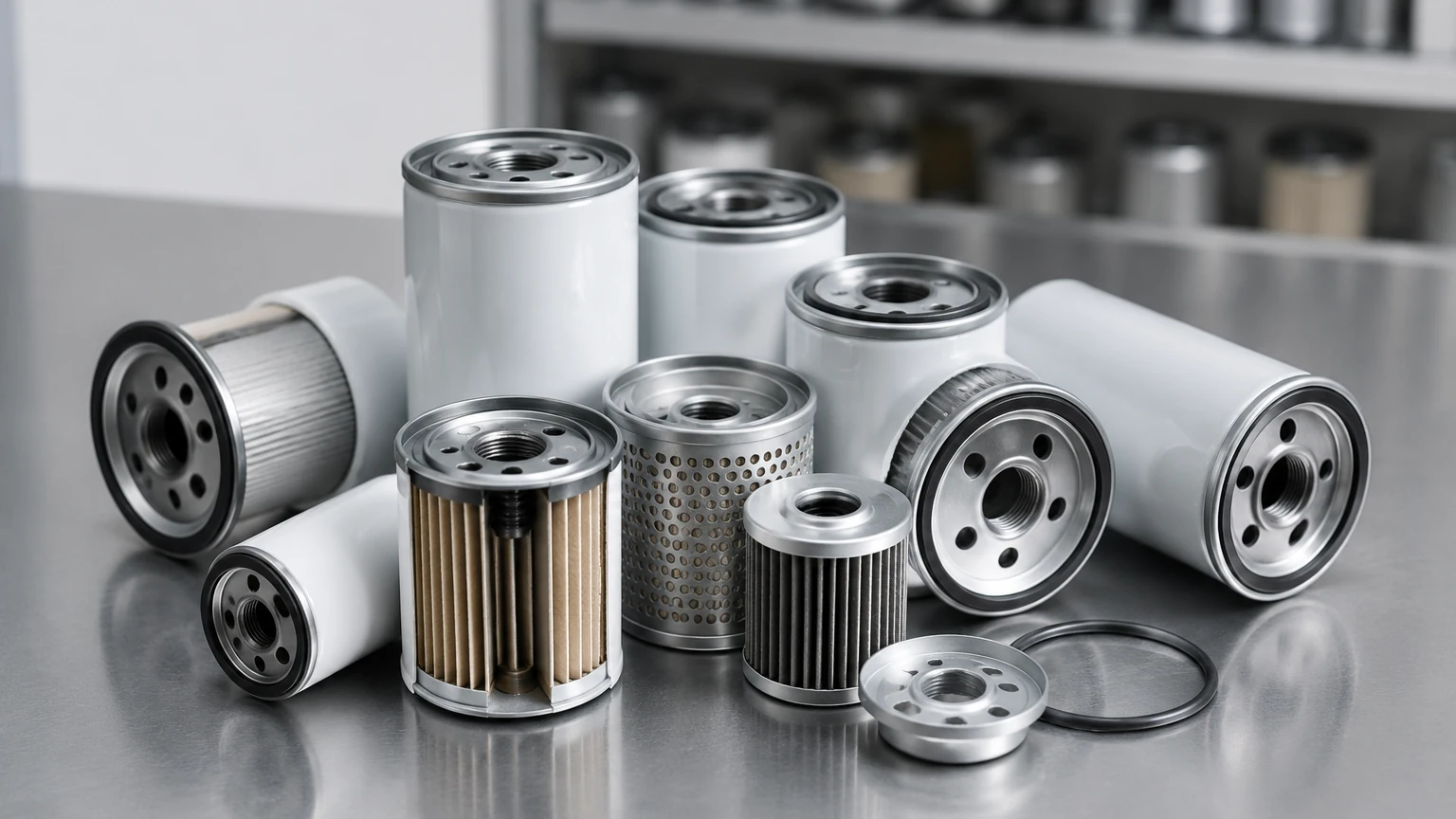
The fundamental design of spin on oil filters consists of a canister, a filter element, a center tube, and a base plate. Unlike cartridge-style filters that require a permanent housing to be opened and cleaned, the spin-on design integrates the housing and the element into a single disposable or recyclable unit. This design minimizes the risk of external contamination during filter changes and simplifies maintenance procedures.
The Canister and Base Plate
In industrial applications, the canister is typically constructed from heavy-gauge cold-rolled steel or, in corrosive environments, stainless steel. The base plate features a threaded center hole for attachment to the filter head and a series of inlet holes through which the unfiltered fluid enters. The integrity of the seal between the base plate and the filter head is maintained by a gasket, usually made of Nitrile (Buna-N) or Fluorocarbon (Viton), depending on the chemical compatibility and temperature requirements of the fluid.
The Center Tube and Structural Support
To prevent the filter media from collapsing under high differential pressure, a perforated center tube provides internal support. In high-pressure hydraulic systems, the strength of this tube is a primary engineering consideration. If the pressure drop across the media exceeds the structural limits of the tube, the filter can fail, leading to catastrophic downstream contamination.
Filtration Media and Performance Characteristics
The performance of spin on oil filters is largely dictated by the type of media used. While automotive applications often rely on simple cellulose (paper) media, industrial-grade filters require more sophisticated materials to handle higher viscosities, higher temperatures, and finer filtration requirements.
Cellulose vs. Synthetic vs. Metal Mesh
* Cellulose Media: Economic and effective for basic applications, but limited by inconsistent pore sizes and susceptibility to degradation in the presence of water or high temperatures.
* Synthetic (Microglass) Media: Offers superior dirt-holding capacity and more uniform pore structures. Synthetic fibers are thinner than cellulose, allowing for a higher density of pores and better flow rates at lower micron ratings.
* Stainless Steel Wire Mesh: For the most demanding industrial environments, stainless steel wire mesh is the preferred choice. It offers exceptional chemical resistance, can withstand extreme temperatures, and is cleanable and reusable. Kaifil specializes in integrating precision metal mesh into filtration designs to ensure long-term durability in aggressive chemical or high-pressure hydraulic applications.
Measuring Efficiency: The Beta Ratio
Engineers evaluate filter efficiency using the Beta Ratio ($ \beta $), as defined by ISO 16889. The Beta Ratio is the number of particles upstream of the filter divided by the number of particles downstream for a specific particle size. For example, a $ \beta_{10} = 200 $ means that for every 200 particles of 10 microns entering the filter, only one passes through. This equates to 99.5% efficiency. When selecting spin on oil filters, it is vital to confirm whether the micron rating is "nominal" (an arbitrary value) or "absolute" (based on a verified Beta Ratio).
The Role of Bypass Valves and Anti-Drainback Mechanisms
Industrial filtration systems must balance the need for clean fluid with the necessity of maintaining fluid flow. Spin on oil filters often incorporate internal valves to manage these conflicting requirements.
Bypass Valves
A bypass valve is a spring-loaded mechanism designed to open when the differential pressure ($ \Delta P $) across the filter media reaches a specific threshold. This typically occurs when the filter is clogged with contaminants or when the fluid is too viscous (e.g., during a cold start). While the bypass valve prevents the system from being starved of oil, it allows unfiltered fluid to circulate. Engineers must carefully select the bypass setting to ensure it aligns with the system’s sensitivity to contamination and the expected operating pressure.
Anti-Drainback Valves
In many orientations, oil can drain out of the filter and back into the reservoir when the system is shut down. This leads to a "dry start" where the machinery runs without lubrication for several seconds until the filter refills. An anti-drainback valve—usually a silicone or nitrile flap—seals the inlet holes when the pump stops, keeping the filter full and ensuring immediate lubrication upon restart.
Material Compatibility and Industrial Durability
In sectors such as chemical processing or pharmaceutical manufacturing, the fluid being filtered may be incompatible with standard filter components. This is where material science becomes a critical factor in filter selection.
Gasket and Seal Selection
Standard Nitrile seals are sufficient for petroleum-based oils, but synthetic fluids, phosphate esters, or high-temperature applications require Fluorocarbon (Viton) or Ethylene Propylene (EPDM) seals. Using the wrong seal material can lead to swelling, hardening, or total seal failure, resulting in leaks and environmental hazards.
Corrosion Resistance
For offshore applications or chemical plants, the external canister of spin on oil filters must resist atmospheric corrosion. Stainless steel housings or specialized epoxy coatings are often required to prevent the canister from rusting through, which could lead to high-pressure fluid release. Kaifil’s expertise in stainless steel fabrication ensures that even the external components of a filtration solution are engineered for the specific environment they will inhabit.
Selection Criteria for Industrial Applications
Choosing the right spin on oil filter involves more than matching a thread size. Purchasing teams and engineers should confirm the following technical parameters before procurement:
1. Operating Pressure and Surge Pressure: Ensure the canister’s burst pressure is significantly higher than the maximum system pressure, including potential spikes.
2. Flow Rate (GPM/LPM): The filter must handle the maximum system flow without creating an excessive initial pressure drop. High viscosity fluids require larger surface areas to maintain efficient flow.
3. Fluid Compatibility: Confirm that the media, adhesives, and seals are compatible with the specific fluid, whether it is a hydraulic oil, coolant, or process chemical.
4. Environmental Conditions: Consider ambient temperature, exposure to salt spray, or the presence of vibrating machinery, which can fatigue the filter threads or housing.
By consulting the technical resources on our Main Page, users can access detailed specifications that assist in aligning these variables with the correct filtration product.
Maintenance and Troubleshooting in Hydraulic Systems
The effective service life of spin on oil filters is not fixed; it depends on the contamination ingression rate of the system. Relying solely on a calendar-based replacement schedule can lead to either premature disposal of useful filters or, more dangerously, running the system on bypass for extended periods.
Differential Pressure Indicators
The most reliable way to monitor filter health is through differential pressure indicators. These devices measure the pressure at the inlet and outlet of the filter head. As the media captures particles, the $ \Delta P $ increases. Indicators can be visual (a pop-up pin or gauge) or electrical (sending a signal to the PLC). Replacing the filter just before the bypass valve opens ensures maximum fluid cleanliness without unnecessary downtime.
Analyzing Spent Filters
In a B2B industrial context, a spent filter is a diagnostic tool. Cutting open a used spin-on filter and inspecting the trapped debris can reveal early signs of component wear, such as brass shavings from a failing pump or silica from a breached seal. This proactive approach to maintenance helps prevent catastrophic equipment failure.
Custom OEM Solutions for Specialized Filtration
Standard spin on oil filters often fall short in specialized industrial equipment where space is limited, or the filtration requirements are exceptionally stringent. In these instances, OEM (Original Equipment Manufacturer) customization is the most effective path forward.
Customization options include:
* Variable Thread Sizes: Matching specific manifold designs.
* Enhanced Media Layers: Combining different materials (e.g., a wire mesh pre-filter with a synthetic final stage) within a single canister.
* High-Strength Canisters: Designed for high-impulse hydraulic circuits.
* Branding and Integration: Providing turnkey solutions for equipment manufacturers.
Kaifil’s manufacturing capabilities allow for the development of these specialized components, ensuring that the filtration system is an integrated part of the machine’s design rather than an afterthought. Our focus on stainless steel and precision metal components provides a level of durability that standard mass-produced filters cannot match.
Conclusion
Spin on oil filters are essential for the longevity and efficiency of industrial systems. While they appear simple, their performance is the result of complex engineering decisions involving material science, fluid dynamics, and mechanical design. By prioritizing high-quality media, robust structural components, and accurate performance ratings, engineers can significantly improve system reliability. For those seeking tailored filtration solutions or technical guidance on material selection, exploring the options available through Kaifil’s Main Page provides the necessary foundation for informed decision-making in industrial fluid management.
