


Dust Collector Filter Cages
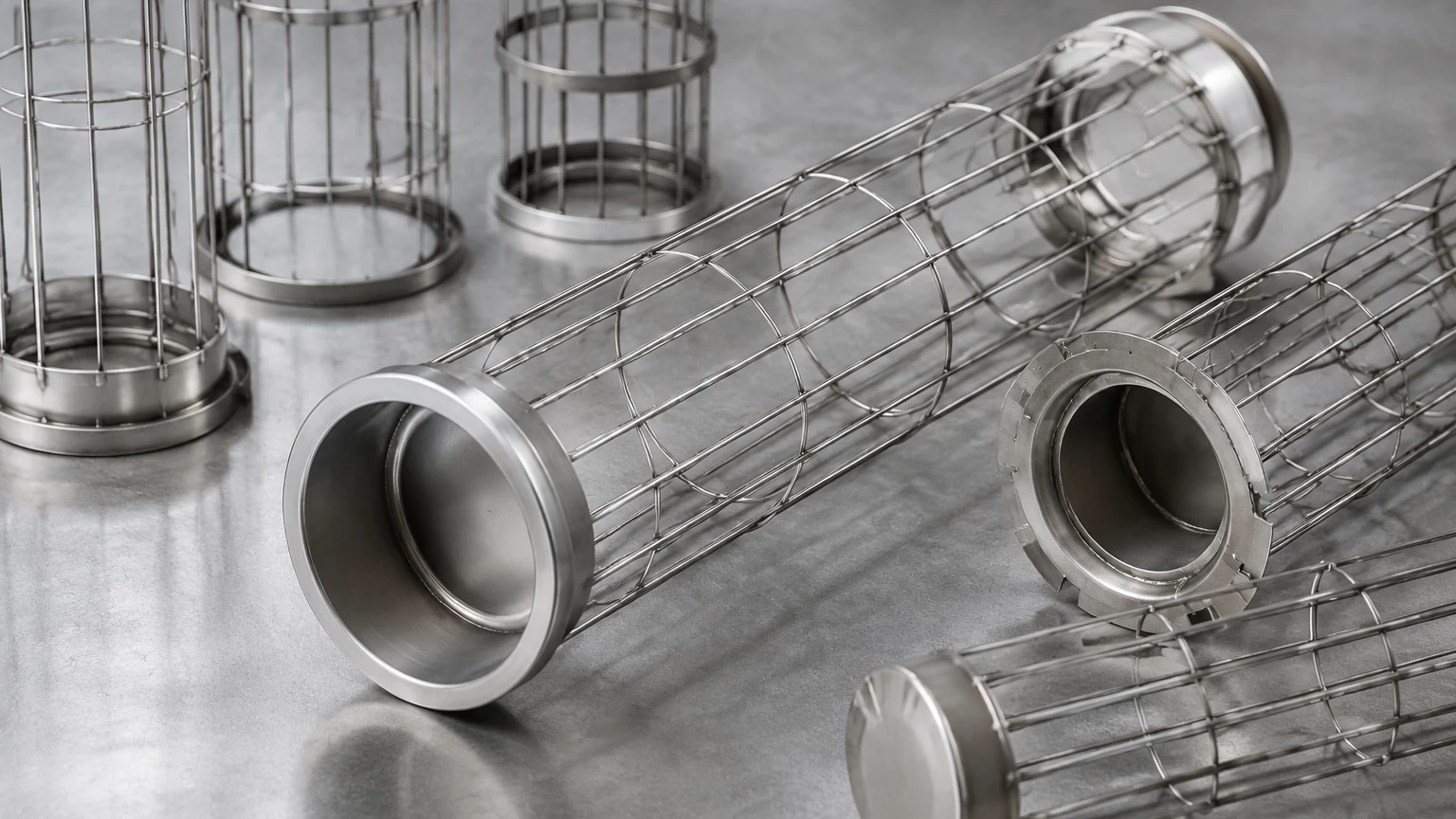
In industrial air pollution control, the efficiency of a pulse-jet baghouse is heavily dependent on the structural integrity of its internal components. Dust collector filter cages serve as the essential framework for filter bags, ensuring they remain open and functional during high-pressure filtration and aggressive cleaning cycles. Without a high-quality cage, the filter media would collapse under the pressure of the airflow, leading to a complete failure of the dust collection system.
For engineers and procurement professionals, selecting the correct dust collector filter cages involves more than just matching dimensions. It requires an understanding of material compatibility, wire configuration, and surface finishes to ensure long-term operational reliability and to minimize the total cost of ownership. This guide examines the technical specifications, engineering considerations, and selection criteria necessary for optimizing baghouse performance.
The Role of Filter Cages in Pulse-Jet Systems
Dust collector filter cages are the "skeleton" of the filtration system. In a pulse-jet baghouse, air laden with particulate matter enters the housing and passes through the filter media from the outside in. The dust is captured on the exterior surface of the bag, while clean air exits through the top.
During this process, the cage must withstand the continuous inward pressure of the exhaust fan. If the cage is too weak or improperly designed, the bag will deform, reducing the effective filtration area and increasing the pressure drop across the system. Furthermore, during the cleaning cycle, a burst of compressed air is sent down the center of the bag to dislodge the dust cake. The cage must provide enough support to prevent the bag from snapping inward too violently, which can lead to mechanical wear and premature bag failure.
Engineering Specifications and Wire Configurations
The performance of dust collector filter cages is determined by several geometric and structural variables. Engineers must specify these parameters based on the specific dust load, air-to-cloth ratio, and the type of filter media being used.
Wire Count and Diameter
The number of vertical wires in a cage typically ranges from 8 to 24. A higher wire count provides better support for the filter bag, reducing the amount of "flexing" the fabric undergoes during the cleaning pulse. This is particularly important for delicate or heavyweight media, such as fiberglass or PTFE membranes, which can crack if flexed over too wide a span. Common wire diameters range from 3mm to 4mm (approximately 11 to 8 gauge), depending on the height of the cage and the required rigidity.
Ring Spacing
Horizontal rings are welded to the vertical wires to maintain the cage's circular or oval shape. Standard ring spacing is usually 6 inches (150mm) or 8 inches (200mm). In high-pressure applications or for very long cages (exceeding 6 meters), tighter ring spacing may be required to prevent the vertical wires from bowing inward. Precision in ring placement ensures that the bag maintains a consistent seal against the cage surface.
Top and Bottom Construction
The top of the cage must interface perfectly with the baghouse tubesheet. Common designs include:
* Flange Tops: A flat plate that rests on the tubesheet.
* Rolled Tops: A curved edge that provides a smooth transition for the air.
* Venturi Tops: An integrated or removable cone-shaped component that accelerates the cleaning pulse, improving dust removal efficiency in long bags.
The bottom of the cage is typically sealed with a welded disk or a crimped end to prevent the filter bag from sagging or rubbing against the bottom of the hopper.
Material Selection for Corrosive and High-Temperature Environments
Material selection is perhaps the most critical factor in determining the lifespan of dust collector filter cages. While mild carbon steel is the standard for many ambient-temperature, non-corrosive applications, many industrial processes require specialized alloys.
Carbon Steel
Carbon steel is cost-effective and provides excellent structural strength. However, it is highly susceptible to oxidation. In environments with even moderate humidity, carbon steel cages can rust. Rust creates a rough surface that acts like sandpaper against the inside of the filter bag, leading to "inside-out" holes and requiring frequent bag replacements.
Stainless Steel (304 and 316L)
For industries such as food processing, pharmaceuticals, and chemical manufacturing, stainless steel is the preferred material. Stainless steel 304 offers excellent resistance to moisture and many organic chemicals. For more aggressive environments, such as those involving acid gases or high chloride concentrations, 316L stainless steel provides superior pitting resistance.
As a professional manufacturer, Kaifil specializes in custom stainless steel filtration solutions that address these demanding requirements. For more information on material capabilities and customized designs, you can visit the Main Page to explore technical support options.
Specialty Alloys
In extreme cases, such as waste-to-energy plants or specialized chemical reactors, cages may be fabricated from Hastelloy or other high-nickel alloys to withstand temperatures exceeding 250°C (480°F) and highly acidic flue gases.
Surface Treatments and Protective Coatings
If carbon steel is used, surface treatments are mandatory to prevent corrosion and ensure a smooth interface with the filter bag. The choice of coating depends on the operating temperature and the chemical composition of the gas stream.
1. Galvanization: Zinc plating provides a basic level of protection against atmospheric moisture. It is suitable for low-temperature applications where the gas remains above the dew point.
2. Epoxy Coating: Epoxy provides a smooth, hard finish that is resistant to many chemicals. However, it can become brittle and chip at higher temperatures.
3. Silicon-Barium Coating: This is a high-temperature finish often used in coal-fired power plants. It provides a slick surface that helps the filter bag slide on and off easily during maintenance while resisting heat up to 200°C.
4. Electropolishing: For stainless steel cages used in sanitary applications, electropolishing removes surface impurities and creates a mirror-like finish, preventing bacterial growth and ensuring the highest levels of cleanliness.
The Impact of Cage Quality on Filter Bag Lifespan
One of the most common causes of premature filter bag failure is poor cage quality. When evaluating suppliers, engineers should look for the following manufacturing defects that can compromise the system:
* Burrs and Sharp Edges: During the welding process, small beads of metal (splatter) or sharp wire ends can remain on the cage. These will quickly puncture the filter bag as it expands and contracts during cleaning cycles.
* Misaligned Rings: If the horizontal rings are not perfectly perpendicular to the vertical wires, the cage will be "corkscrewed." This makes installation difficult and creates uneven tension on the bag.
* Weak Weld Points: Pulse-jet cleaning involves thousands of high-pressure air bursts. If the spot welds between the wires and rings are weak, the cage will eventually vibrate apart, leading to a catastrophic collapse of the filter bag.
High-quality manufacturing processes, such as those employed by Kaifil, utilize automated welding lines to ensure consistent weld penetration and a smooth, burr-free finish across every cage produced.
Customization and OEM Considerations
Many industrial dust collectors are custom-built for specific factory layouts, meaning that off-the-shelf cages may not fit correctly. Customization is often necessary for:
* Split Cages: In facilities with low overhead clearance, it is impossible to install a 6-meter long cage in one piece. Split cages (two-piece or three-piece) use a locking mechanism—such as a slide-lock, claw-lock, or threaded connection—to allow for installation in sections.
* Oval and Flat Cages: Some high-density baghouses use oval or envelope-shaped bags to maximize the filtration surface area in a small footprint. These require precision-engineered flat or oval cages that maintain their shape under pressure.
* Specialized Venturis: Custom venturi designs can be engineered to match the specific pulse-jet valve pressure and nozzle distance of an OEM system, optimizing the cleaning energy delivered to the bottom of the bag.
When ordering custom dust collector filter cages, it is vital to provide accurate drawings or samples. Key dimensions include the outer diameter (OD), the total length, the tubesheet hole diameter, and the specific top-style requirements.
Maintenance and Total Cost of Ownership (TCO)
While filter cages are often viewed as a one-time purchase, they significantly influence the long-term operating costs of a dust collection system. A slightly more expensive, high-quality cage can extend the life of a filter bag from two years to four years, effectively halving the labor and material costs associated with bag change-outs.
When to Replace Filter Cages
Cages should be inspected during every bag change-out. Signs that a cage needs replacement include:
* Visible Corrosion: Any sign of rust on a carbon steel cage means the coating has failed. The rust will contaminate the new bags immediately.
* Bowed Wires: If the vertical wires are permanently bent inward, the cage will no longer provide adequate support, leading to bag collapse.
* Broken Welds: Check for any rings that have detached from the vertical wires.
In many cases, if a plant is experiencing frequent bag failures (e.g., every 6–12 months), the root cause is often an incompatible or degraded cage. Upgrading to a stainless steel cage or a higher wire count can often resolve these issues and provide a rapid return on investment through reduced downtime.
Conclusion
Dust collector filter cages are a fundamental component of industrial air filtration, serving as the structural backbone that allows pulse-jet systems to operate efficiently. By carefully considering material selection, wire configuration, and surface finishes, engineers can ensure that their filtration systems meet environmental compliance standards while minimizing maintenance costs.
Whether you are designing a new baghouse or looking to optimize an existing system, partnering with a manufacturer that understands the nuances of precision metal fabrication is essential. For those seeking reliable, high-performance filtration components, Kaifil provides the engineering expertise and manufacturing capabilities required to deliver customized solutions for the most demanding industrial environments. To explore the full range of stainless steel and custom filtration products, visit the Main Page for detailed technical specifications and procurement support.
