


Stainless Filter Housing
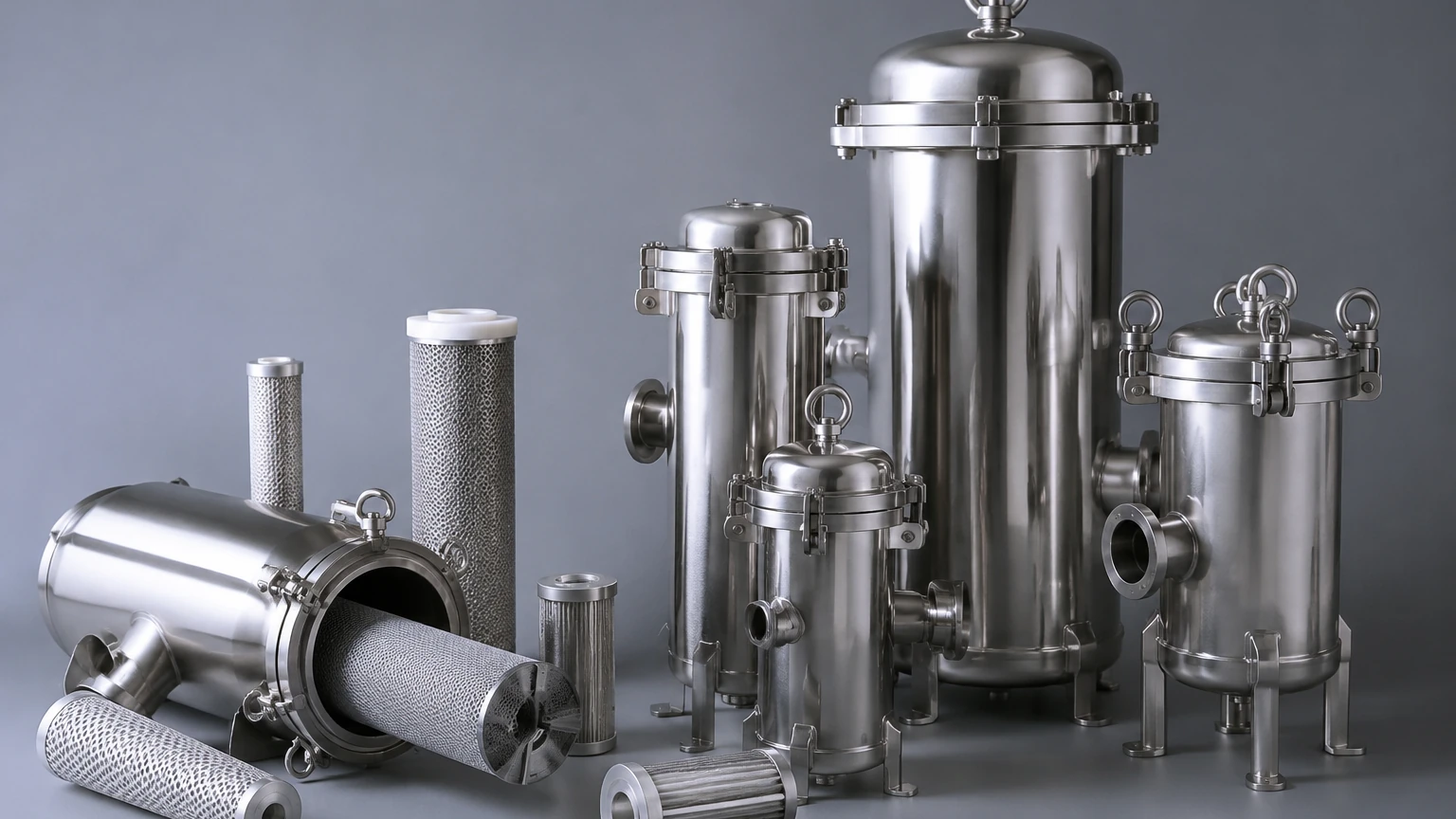
In industrial fluid processing, the stainless filter housing serves as the critical pressure vessel that contains and protects the filter media. Whether utilizing wire mesh, pleated cartridges, or depth filters, the housing provides the structural integrity necessary to withstand operational pressures and temperatures while ensuring that the fluid stream is directed accurately through the filtration element. For engineers and procurement teams, selecting the correct stainless filter housing involves a complex evaluation of metallurgy, pressure ratings, flow dynamics, and sealing mechanisms.
As a specialized manufacturer, Kaifil provides engineered filtration solutions that integrate high-performance filter elements with robust housing designs. Understanding the technical nuances of these components is essential for optimizing system performance and ensuring the longevity of the entire filtration assembly. On our Main Page, technical professionals can explore the full range of custom filtration components designed to meet specific industrial requirements.
Material Selection for Stainless Filter Housings
The choice of material is the primary factor in determining the chemical compatibility and service life of a stainless filter housing. While several grades of stainless steel are available, two specific alloys dominate the industrial filtration landscape: Grade 304 and Grade 316L.
Grade 304 Stainless Steel
Grade 304 is the standard choice for general industrial applications, including water treatment, cooling systems, and non-corrosive chemical processing. It offers excellent weldability and mechanical strength. However, in environments containing high concentrations of chlorides or aggressive acids, 304 may be susceptible to pitting corrosion.
Grade 316L Stainless Steel
Grade 316L (low carbon) is the preferred material for demanding environments, such as pharmaceutical manufacturing, food and beverage production, and marine applications. The addition of molybdenum enhances its resistance to chloride-induced pitting and crevice corrosion. The "L" designation indicates a lower carbon content, which minimizes carbide precipitation during welding, thereby maintaining the corrosion resistance of the heat-affected zones in the housing structure.
Surface Finishes and Treatment
Beyond the alloy selection, the internal and external surface finish of the stainless filter housing impacts both hygiene and flow efficiency. For sanitary applications, housings often undergo electropolishing to achieve a specific surface roughness (Ra) value, typically below 0.8 µm or even 0.4 µm. This process removes microscopic peaks and valleys where bacteria or contaminants could accumulate, facilitating more effective Clean-in-Place (CIP) procedures.
Structural Design and Pressure Management
A stainless filter housing is essentially a pressure vessel, and its design must adhere to rigorous engineering standards, such as those established by the ASME (American Society of Mechanical Engineers). The structural design determines the maximum allowable working pressure (MAWP) and the safety margins required for high-pressure industrial cycles.
Closure Mechanisms
The method used to seal the housing head to the body is a critical safety and operational consideration. Common closure types include:
* Swing Bolt Closures: These are used for high-pressure or heavy-duty applications. They provide a secure, robust seal and are designed for frequent opening during filter element replacement.
* V-Band Clamps: Ideal for low to medium-pressure applications, V-band clamps offer a lightweight and quick-access solution, though they may have lower pressure limits compared to bolted designs.
* Threaded Closures: Often found in smaller, single-cartridge housings, these provide a compact footprint but require careful maintenance to prevent thread galling over time.
Pressure Ratings and Testing
Standard industrial housings are typically rated for 150 psi (10 bar) or 300 psi (20 bar), though custom designs can exceed these limits significantly. Every stainless filter housing should undergo hydrostatic testing—typically at 1.5 times the design pressure—to verify the integrity of welds and seals before deployment in the field.
Connection Types and Sealing Mechanisms
The integration of a stainless filter housing into a piping system requires careful selection of inlet and outlet connections. The choice depends on the required flow rate, the pressure of the system, and the industry-specific standards for leak prevention.
Standard Connection Interfaces
* NPT/BSPT Threads: Common for small-scale industrial applications where ease of installation is prioritized.
* Flanged Connections (ANSI/DIN): The standard for high-pressure and large-diameter piping systems. Flanges provide a rigid, leak-proof connection that is easier to disassemble for maintenance in heavy industrial environments.
* Tri-Clamp (Sanitary): Essential for the food, beverage, and pharmaceutical sectors. These connections eliminate threads and crevices, allowing for a completely hygienic flow path.
Internal Sealing and O-Rings
Preventing fluid bypass—where unfiltered liquid escapes around the edge of the filter element—is the primary function of the internal seals. The housing must be compatible with various O-ring materials, such as EPDM, Viton (FKM), Silicone, or PTFE-encapsulated gaskets. Engineers must confirm that the seal material is chemically compatible with the process fluid and can withstand the operating temperature range without degrading or losing elasticity.
Sizing Criteria: Flow Rates and Pressure Drop
Sizing a stainless filter housing is not merely a matter of matching the pipe size. It requires a detailed calculation of the total system pressure drop (Delta P). The total pressure drop is the sum of the pressure drop across the clean filter element and the pressure drop caused by the housing itself.
Housing Flow Coefficient (Cv)
The geometry of the housing—specifically the inlet/outlet configuration and internal baffles—determines its Cv value. A higher Cv indicates lower resistance to flow. If a housing is undersized for the required flow rate, the fluid velocity increases, leading to excessive turbulence, potential erosion of the housing walls, and a significant reduction in the efficiency of the filter element.
Single vs. Multi-Round Configurations
* Single-Round Housings: Designed to hold one filter cartridge. These are used for lower flow rates or point-of-use filtration.
* Multi-Round Housings: Capable of holding anywhere from 3 to over 100 cartridges. These are used in high-volume industrial processes. Multi-round designs allow for higher flow capacities within a relatively compact footprint and reduce the frequency of system shutdowns by distributing the solids load across multiple elements.
Sanitary vs. Industrial Grade Requirements
The application environment dictates the specific design features required for a stainless filter housing. Distinguishing between sanitary and industrial grades is vital for compliance and process integrity.
Industrial Grade Housings
In sectors like chemical processing or hydraulic oil filtration, the focus is on durability, chemical resistance, and high-pressure tolerance. These housings often feature rugged exterior finishes and may include specialized coatings for extreme environments. They are designed to handle high dirt-loading capacities and protect downstream equipment like pumps and spray nozzles.
Sanitary Grade Housings
In the pharmaceutical and food industries, the housing must be "drainable." This means the internal design must ensure that no liquid remains trapped in the housing after a cycle, which could lead to microbial growth. Sanitary housings typically feature T-style or in-line configurations with specialized vent and drain ports that allow for complete evacuation of the vessel. All internal welds must be ground smooth and polished to meet stringent regulatory standards.
Maintenance, Cleaning, and Operational Safety
To maintain the performance of a stainless filter housing, a structured maintenance protocol is necessary. While the stainless steel body itself is highly durable, the peripheral components require regular inspection.
1. Gasket and O-ring Replacement: Seals should be inspected every time the housing is opened. Hardened or cracked seals are the leading cause of external leaks and internal bypass.
2. Venting and Draining: Before opening a housing for a filter change, it must be properly vented to atmospheric pressure and drained of process fluid. Failure to vent the housing can lead to dangerous pressure releases.
3. Cleaning Protocols: For housings used in batch processing, thorough cleaning between batches is required to prevent cross-contamination. In industrial settings, periodic descaling may be necessary if the process fluid tends to form mineral deposits on the stainless steel surfaces.
4. Monitoring Differential Pressure: Installing pressure gauges on the inlet and outlet of the housing is the most effective way to monitor the condition of the internal filter element. A sudden drop in differential pressure may indicate a ruptured element or a failed seal, while a rapid increase indicates the element has reached its dirt-holding capacity.
Conclusion
A stainless filter housing is a foundational component of any industrial filtration system. By selecting the appropriate material grade, ensuring the structural design meets pressure requirements, and accurately sizing the unit for flow dynamics, engineers can achieve a reliable and cost-effective filtration process. Whether the application involves high-purity pharmaceutical water or aggressive industrial chemicals, the housing must provide a secure environment for the filter media to function at peak efficiency.
For technical assistance in selecting the right configuration or to discuss custom OEM requirements for precision metal filtration components, we invite you to Review product options and application support on our main site. Kaifil's expertise in manufacturing durable, high-accuracy stainless steel filtration solutions ensures that your system components are engineered to meet the most demanding industrial standards.
