


Stainless Filter Screen
In industrial processing, the efficiency of a filtration system often dictates the quality of the final product and the longevity of downstream equipment. The stainless filter screen stands as a fundamental component in these systems, offering a combination of mechanical strength, chemical resistance, and precise aperture control that synthetic media cannot match. For engineers and procurement specialists, selecting the correct screen involves more than choosing a mesh size; it requires a deep understanding of material science, fluid dynamics, and manufacturing tolerances.
Kaifil, a specialist in custom stainless steel filtration solutions, provides the technical expertise necessary to navigate these variables. By focusing on precision-engineered metal filter components, the company supports industries ranging from chemical processing to food and beverage production, ensuring that every stainless filter screen meets the rigorous demands of industrial environments.
Understanding the Fundamentals of Stainless Filter Screen Technology
A stainless filter screen is a porous medium constructed from stainless steel wires woven, welded, or sintered together to form a consistent mesh. Unlike disposable paper or polymer filters, these metal screens are designed for durability and reusability. The primary function of the screen is to remove solid contaminants from a liquid or gas stream while maintaining a predictable flow rate.
The performance of a screen is defined by several key metrics:
* Mesh Count: The number of openings per linear inch. A higher mesh count indicates finer filtration but may result in a higher pressure drop.
* Wire Diameter: The thickness of the wire used in the weave. This affects the structural integrity and the total open area of the screen.
* Aperture (Pore Size): The clear distance between adjacent wires. This determines the largest particle that can pass through the screen.
* Open Area Percentage: The ratio of the area of the openings to the total area of the screen. A higher open area generally allows for higher flow rates and lower initial pressure drops.
For technical professionals, balancing these factors is essential. A screen with very fine filtration (high mesh count) but thin wires may fail under high-pressure differentials, whereas a robust screen with thick wires may restrict flow excessively for the specific application.
Material Specifications: 304, 316, and Specialized Alloys
The choice of alloy is the first critical decision in specifying a stainless filter screen. While "stainless steel" is a broad category, the specific grade determines the screen's resistance to corrosion, oxidation, and temperature extremes.
Grade 304 Stainless Steel
Grade 304 is the most common material for industrial screens. It provides excellent mechanical properties and good resistance to atmospheric corrosion. It is widely used in food processing, water filtration, and general industrial applications where high concentrations of chlorides or highly acidic environments are not present.
Grade 316 and 316L Stainless Steel
For more demanding environments, Grade 316 is the industry standard. The addition of molybdenum enhances its resistance to pitting and crevice corrosion, particularly in chloride-rich environments like seawater or chemical processing plants. 316L (low carbon) is often preferred for screens that require extensive welding, as it minimizes carbide precipitation that can lead to intergranular corrosion.
High-Temperature and Specialty Alloys
In extreme cases, such as high-temperature petrochemical refining or highly corrosive pharmaceutical synthesis, standard grades may be insufficient. In these instances, Kaifil works with clients to determine if specialized alloys or specific surface treatments are required to ensure the filter's service life meets operational expectations.
Weave Patterns and Their Impact on Filtration Performance
The method by which the stainless steel wires are interlaced significantly influences the screen's filtration characteristics. Different weave patterns offer varying levels of precision, strength, and flow capacity.
Plain Weave
This is the most straightforward pattern, where each warp wire crosses over and under each shute wire. It provides a consistent pore size and is ideal for general-purpose filtration where high flow rates are prioritized over extreme precision.
Twill Weave
In a twill weave, each wire passes over and under two successive wires. This allows for the use of heavier wires for a given mesh count, resulting in a stronger screen capable of handling higher mechanical loads. It is often used for finer meshes where a plain weave would be too delicate.
Dutch Weave (Plain and Twill)
Dutch weaves utilize different diameters for warp and shute wires. The shute wires are driven closely together, creating a dense, wedge-shaped opening. This pattern is essential for high-pressure filtration and applications requiring micron-rated precision. Plain Dutch weave offers high strength, while Twill Dutch weave allows for the finest filtration levels, sometimes reaching down to 1-5 microns.
Sintered Mesh
For the most demanding applications, multiple layers of stainless filter screen are sintered together. This process uses heat and pressure to fuse the wires at their contact points without melting them. The result is a multi-layered structure that combines a fine filtration layer with robust support layers, offering unmatched mechanical stability and the ability to be cleaned repeatedly via backwashing or ultrasonic methods.
Engineering Considerations for High-Pressure and High-Temperature Applications
When integrated into industrial systems, a stainless filter screen must withstand significant physical stresses. Engineers must account for the "Clean Pressure Drop" and the "Terminal Pressure Drop."
As contaminants accumulate on the surface of the screen, the differential pressure across the media increases. If the screen is not engineered to handle the maximum possible pressure differential of the pump or system, it may undergo mechanical deformation or "bursting." To prevent this, Kaifil often designs custom filter cartridges that incorporate internal support cores or external cages to reinforce the screen.
Temperature is another critical factor. While stainless steel maintains its structural integrity at much higher temperatures than polymers, thermal expansion must be considered in the design of the filter housing and the screen's mounting points. In cryogenic applications, the material's ductility is a primary concern. Providing accurate operating parameters during the design phase allows for the selection of a screen that will not fatigue or fail prematurely under thermal cycling.
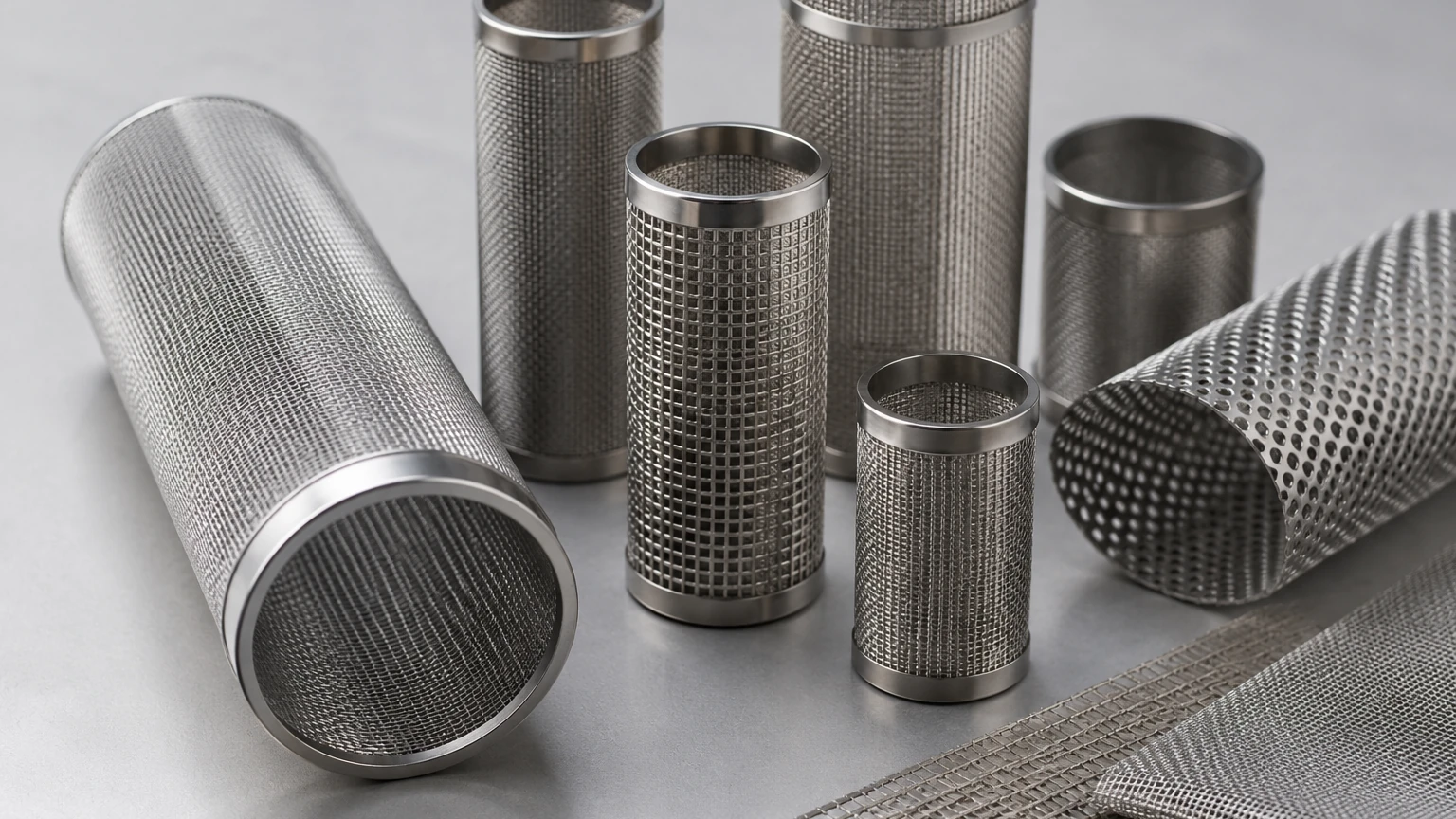
Customization and OEM Integration: Tailoring Solutions to Industrial Systems
Off-the-shelf filtration products rarely meet the specific needs of complex industrial machinery. Customization is often necessary to optimize the footprint, flow path, and maintenance accessibility of the filtration system. Kaifil specializes in providing OEM solutions that integrate seamlessly into existing equipment.
Customization options include:
* Geometry: Beyond flat sheets, screens can be formed into discs, cylinders, conical shapes, or pleated cartridges. Pleating a stainless filter screen significantly increases the Effective Filtration Area (EFA) within the same housing volume, leading to longer run times between cleanings.
* Edge Treatments: To ensure a bypass-free fit, screens can be finished with specialized gaskets, flanges, or welded end caps. Proper sealing is vital in pharmaceutical and high-purity chemical applications where even minor bypass can compromise the entire batch.
* Layering: Combining different mesh sizes into a single component allows for graduated filtration, where larger particles are trapped by an outer coarse screen, protecting the inner fine screen from rapid clogging.
By collaborating with a manufacturer that understands these nuances, purchasing teams can reduce the total cost of ownership by acquiring components that are precisely matched to their process requirements.
Maintenance Protocols and Extending the Service Life of Metal Screens
One of the primary advantages of a stainless filter screen is its ability to be cleaned and returned to service. However, the cleaning method must be compatible with both the contaminant and the screen structure.
1. Backwashing: This involves reversing the flow of the fluid to dislodge particles trapped on the surface of the screen. It is most effective for surface-loading weaves like plain or twill mesh.
2. Ultrasonic Cleaning: High-frequency sound waves create cavitation bubbles that lift microscopic contaminants from deep within the mesh. This is the preferred method for Dutch weaves and sintered media where particles may be deeply embedded.
3. Chemical Cleaning: Using solvents or acids to dissolve organic or mineral buildup. It is crucial to ensure the cleaning agent does not degrade the specific grade of stainless steel or the welds of the filter assembly.
Regular inspection for "blinding" (permanent clogging) or mechanical wear is essential. A well-maintained stainless screen can last for years, significantly reducing the waste and recurring costs associated with disposable filters.
Procurement Checklist: What Engineers Must Confirm Before Specification
To ensure the successful procurement of a stainless filter screen, engineers and technical buyers should confirm the following details before contacting a manufacturer:
* Fluid Characteristics: What is the chemical composition, viscosity, and density of the fluid?
* Contaminant Profile: What is the particle size distribution, shape, and concentration of the solids to be removed?
* Operating Conditions: What are the normal and maximum operating temperatures and pressures?
* Flow Requirements: What is the required flow rate, and what is the maximum allowable initial pressure drop?
* Compliance Standards: Does the application require FDA, 3A, or other industry-specific certifications for food or pharmaceutical contact?
By providing this data, you enable the engineering team at Kaifil to recommend a solution that balances filtration precision with mechanical durability. For more information on specific product configurations and to explore the full range of custom filtration components, technical teams are encouraged to visit the Main Page to review product options and application support.
In conclusion, the stainless filter screen is a critical asset in modern industry. Its selection should be treated as a technical engineering task rather than a simple commodity purchase. With the right material, weave, and structural design, these components provide the reliable, high-performance filtration necessary to maintain process integrity and operational efficiency in the world's most demanding sectors.
