


Stainless Steel Housing Water Filter
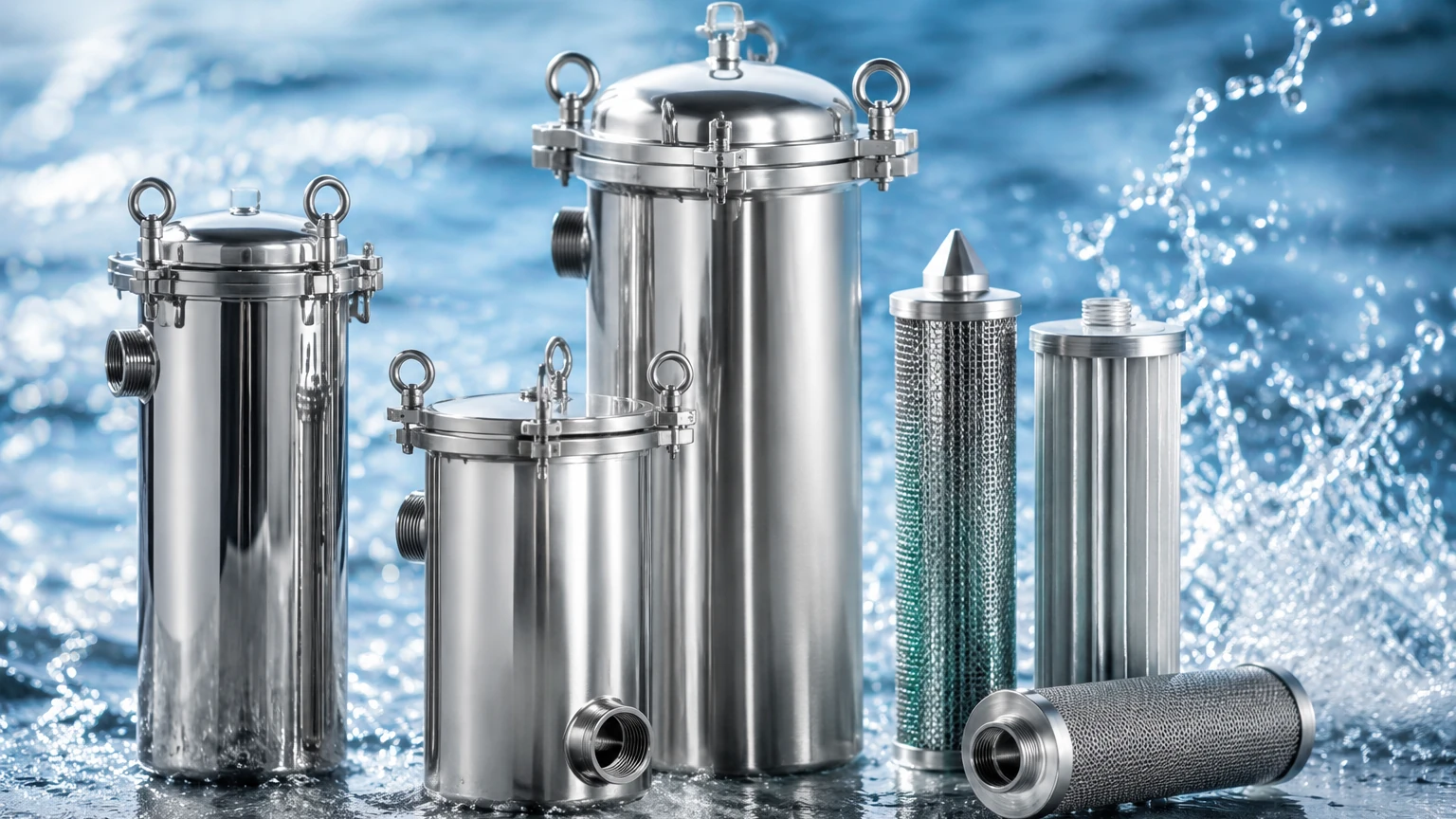
In industrial water treatment and liquid processing, the structural integrity of the filtration system is as critical as the filtration media itself. A stainless steel housing water filter serves as the pressure vessel designed to contain filter cartridges or bags, ensuring that the fluid stream is forced through the media without bypass. Unlike plastic alternatives, stainless steel housings offer the thermal stability, chemical resistance, and mechanical strength required for demanding B2B applications, ranging from municipal water pre-filtration to high-purity pharmaceutical processing.
Selecting the appropriate housing involves more than matching pipe sizes. Engineering teams must evaluate material grades, pressure ratings, seal compatibility, and internal geometries to ensure long-term operational efficiency. As a specialized manufacturer, Kaifil provides precision-engineered filtration components that address these technical requirements, supporting global industries with durable and customized solutions.
Material Selection: SS304 vs. SS316L
The primary decision in specifying a stainless steel housing water filter is the grade of the alloy. While both 304 and 316L offer excellent durability, their performance in specific chemical environments differs significantly.
* Grade 304 Stainless Steel: This is the standard choice for general industrial water applications. It provides good corrosion resistance against most oxidizing acids and is cost-effective for treated water, cooling towers, and food-grade applications where chloride concentrations are low.
* Grade 316L Stainless Steel: For environments involving high salinity, brackish water, or aggressive chemicals, 316L is the preferred specification. The addition of molybdenum enhances resistance to pitting and crevice corrosion, particularly in the presence of chlorides. The "L" designation signifies low carbon content, which is crucial for preventing carbide precipitation during welding, thereby maintaining the structural integrity of the housing joints.
Engineers must also consider the external environment. In coastal facilities or chemical plants with corrosive atmospheric vapors, a 316L housing may be required even if the internal process fluid is relatively inert.
Structural Design and Pressure Vessel Integrity
An industrial stainless steel housing water filter must withstand not only steady-state operating pressures but also hydraulic shocks, often referred to as water hammer. The design of the housing typically follows standard engineering principles for pressure vessels, focusing on wall thickness, weld quality, and closure mechanisms.
Closure Types
There are several methods for securing the housing lid, each impacting maintenance speed and pressure handling:
1. V-Band Clamps: Often used for low-to-medium pressure applications. They offer quick access for cartridge changes but may have lower pressure limits compared to bolted designs.
2. Swing Bolts: These are the industry standard for high-pressure and heavy-duty applications. They allow for frequent opening without the risk of losing hardware and provide a uniform seal across the gasket surface.
3. Threaded Caps: Common in smaller, single-cartridge housings, providing a compact footprint for point-of-use filtration.
Flow Dynamics
The internal geometry of the housing influences the pressure drop (ΔP). A well-designed housing minimizes turbulence at the inlet and outlet ports. For high-flow applications, multi-round housings—which contain multiple cartridges in a single vessel—are utilized to distribute flow evenly, reducing the face velocity at each individual filter element and extending the service life of the media.
Customization and OEM Configurations
Every industrial process has unique spatial and mechanical constraints. Standard off-the-shelf housings may not always align with existing piping or specific filtration goals. This is where customized manufacturing becomes essential. When evaluating a supplier, engineering teams should confirm the availability of tailored configurations, such as those offered on the Kaifil Main Page.
Customization options typically include:
* Inlet/Outlet Orientations: Side-in/side-out, bottom-in/bottom-out, or tangential entries to fit specific skid designs.
* Connection Types: Options range from NPT/BSP threads and ANSI/DIN flanges to sanitary Tri-clamp fittings for the food and pharmaceutical sectors.
* Surface Finishes: Industrial housings may be bead-blasted or pickled, while sanitary applications require electropolishing to reach specific Ra (Roughness Average) values, preventing bacterial adhesion.
* Additional Ports: Integration of pressure gauge ports, air vents, and sample valves directly into the housing body simplifies the overall system architecture.
Compatibility with Precision Filter Media
The stainless steel housing water filter is only as effective as the internal element it supports. The housing must provide a secure sealing interface to prevent "bypass," where unfiltered liquid escapes around the edges of the filter element.
Most industrial housings are designed to accommodate standard cartridge end-cap configurations, such as:
* DOE (Double Open End): Relies on compression gaskets at both ends.
* Code 7 (226 O-ring/Fin): Features a locking tab and double O-rings for a high-integrity seal, common in critical pharmaceutical and fine chemical processes.
* Code 3 (222 O-ring/Flat): Utilizes double O-rings without the locking tabs.
By ensuring the housing is compatible with high-performance wire mesh filters or pleated cartridges, operators can achieve precise micron ratings while maintaining the structural benefits of a metal vessel.
Application-Specific Engineering Requirements
Different industries impose varied regulatory and functional demands on filtration hardware. A stainless steel housing water filter must be selected with these specific contexts in mind:
Food and Beverage
In this sector, the primary concern is hygiene. Housings must be designed with "dead-leg" free zones to prevent product stagnation and microbial growth. 316L stainless steel is typically mandated, and all internal surfaces must be polished. Seals must be FDA-compliant materials such as EPDM, Silicone, or Viton.
Chemical and Petrochemical
Here, chemical compatibility is paramount. Beyond the housing material, the O-rings and gaskets must be resistant to the specific solvents or hydrocarbons in the process stream. PTFE-encapsulated gaskets are often used for their near-universal chemical resistance.
Hydraulic and Industrial Cooling
These systems often deal with high flow rates and high-viscosity fluids. The housing must be sized to keep the initial pressure drop low (typically under 2-5 PSI) to ensure that the system pump operates within its efficient range and to provide maximum "dirt-holding capacity" before the cartridges require replacement.
Maintenance and Total Cost of Ownership (TCO)
While the initial capital expenditure for a stainless steel housing water filter is higher than for plastic or carbon steel, the Total Cost of Ownership is significantly lower in industrial environments. Stainless steel does not degrade under UV exposure, does not become brittle over time, and can withstand repeated cleaning cycles.
Operational Efficiency
To optimize maintenance, engineers should look for features that reduce downtime. For example, a housing equipped with a specialized drain port allows for the vessel to be emptied quickly before a cartridge change, reducing mess and fluid loss. Furthermore, the use of permanent stainless steel wire mesh elements within the housing can eliminate the recurring cost of disposable filters in certain coarse filtration applications.
Replacement Cycles
The housing itself is a long-term asset, often lasting decades if maintained correctly. Maintenance primarily involves the periodic replacement of O-rings and gaskets to ensure a leak-proof seal. It is recommended to inspect the internal sealing surfaces for scratches or corrosion during every filter changeout, as even minor surface defects can lead to bypass.
Technical Evaluation Before Purchase
Before finalizing a specification for a stainless steel housing water filter, purchasing teams and engineers should verify the following data points with their manufacturer:
1. Maximum Allowable Working Pressure (MAWP): Ensure the housing is rated for the maximum surge pressure of the system, not just the operating pressure.
2. Temperature Limits: Confirm that both the metal and the seal materials can handle the peak process temperatures.
3. Flow Rate vs. Pressure Drop Curves: Request technical charts to ensure the housing size does not create a bottleneck in the system.
4. Compliance Certifications: Determine if the project requires specific stamps or certifications (e.g., CE, ASME, or industry-specific sanitary standards).
By focusing on these technical boundaries, industrial operators can implement a filtration solution that provides reliable performance, protects downstream equipment, and meets the rigorous standards of modern manufacturing. For those seeking specialized guidance on material selection or custom design, reviewing product options and application support from an experienced manufacturer like Kaifil ensures that the filtration system is optimized for its specific industrial role.
