


Strainer Mesh Sizes
In industrial filtration, the selection of strainer mesh sizes is one of the most critical engineering decisions impacting the longevity of downstream equipment and the efficiency of the entire process. Whether protecting high-pressure pumps, sensitive spray nozzles, or complex heat exchangers, the mesh size determines the balance between particulate retention and system pressure. For engineers and procurement teams, understanding the technical nuances of mesh measurement, open area percentages, and material performance is essential for optimizing filtration systems.
As a specialized manufacturer of stainless steel filtration solutions, Kaifil provides precision-engineered components designed to meet the rigorous demands of chemical, pharmaceutical, and food processing industries. Selecting the correct configuration requires a deep dive into the relationship between mesh counts, microns, and the physical properties of the fluid being processed.
Understanding the Technical Definition of Mesh
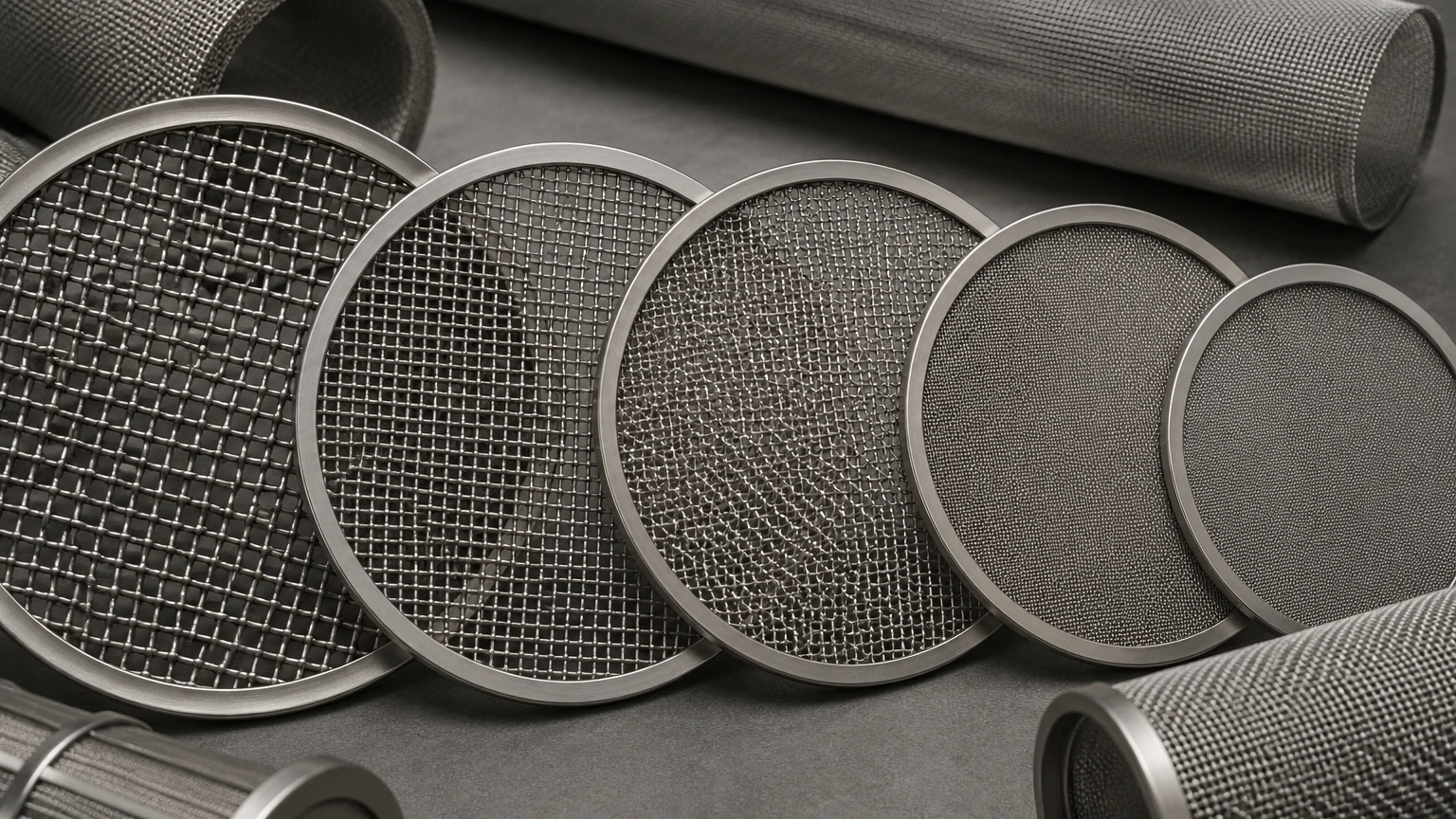
The term "mesh" refers to the number of openings per linear inch of the wire cloth. To calculate the mesh size, one counts the number of apertures starting from the center of any wire and moving one inch in a straight line. For example, a 20-mesh screen has 20 openings per inch in both directions.
However, mesh count alone does not fully define the filtration capability. The size of the actual opening—the aperture—is determined by both the mesh count and the wire diameter. As the mesh count increases, the size of the openings typically decreases, allowing for the capture of finer particles. Conversely, a lower mesh count indicates larger openings suitable for coarse straining.
In many technical specifications, engineers refer to microns (micrometers) to define filtration accuracy. One micron is one-millionth of a meter. While mesh is a count of openings, the micron rating is a measurement of the distance between the wires. Because different wire diameters can be used for the same mesh count, the micron rating can vary slightly between two different 100-mesh screens. This is why professional manufacturers like Kaifil emphasize the importance of viewing mesh and wire diameter as interdependent variables.
The Relationship Between Mesh Size and Open Area
One of the most overlooked factors in selecting strainer mesh sizes is the "percentage of open area." This metric represents the ratio of the total area of the openings to the total area of the screen. It is a vital calculation for determining the flow capacity and the potential pressure drop across the strainer.
The formula for calculating the percentage of open area is:
Open Area % = (Aperture Size² / (Aperture Size + Wire Diameter)²) x 100
A higher open area percentage generally results in a lower pressure drop and a higher flow rate. However, increasing the open area often requires using thinner wires, which can reduce the mechanical strength and durability of the filter. In high-pressure hydraulic or chemical applications, engineers must find a compromise. A heavy-duty mesh with a larger wire diameter may be necessary to withstand the physical stress of the flow, even if it results in a slightly higher initial pressure drop.
When reviewing options on the Main Page of a manufacturer’s catalog, it is important to consider how the effective filtration area (EFA) relates to the total surface area of the strainer element. Custom-designed cartridges often use pleating or specific geometries to maximize EFA, allowing for finer mesh sizes without compromising system throughput.
Engineering Considerations for Fluid Viscosity and Flow Rate
The physical properties of the fluid—specifically viscosity and flow velocity—dictate the limits of usable strainer mesh sizes.
Impact of Viscosity
Viscous fluids, such as heavy oils, resins, or syrups, offer significant resistance when passing through fine mesh. If a mesh size is too small for a high-viscosity fluid, the pressure drop ($ΔP$) will increase exponentially, potentially leading to pump cavitation or mesh deformation. For these applications, engineers typically specify coarser mesh sizes or increase the total surface area of the filtration component to maintain acceptable flow rates.
Flow Velocity and Particle Load
High flow velocities can force deformable particles through the mesh apertures, a phenomenon known as "extrusion." Additionally, if the fluid contains a high concentration of solids, a fine mesh will blind (clog) rapidly. In these scenarios, a multi-stage filtration approach is often recommended, where a coarse strainer removes large debris followed by a secondary fine mesh filter. This protects the finer, more expensive filter elements and extends the overall maintenance interval.
Material Selection and Structural Integrity
Industrial strainers are frequently exposed to corrosive chemicals, high temperatures, and abrasive particulates. Therefore, the material of the mesh is just as important as the size of the openings.
Stainless steel is the industry standard due to its excellent mechanical properties and corrosion resistance. The two most common grades used in precision filtration are:
* Grade 304: Suitable for general industrial use, offering good resistance to atmospheric corrosion and many organic and inorganic chemicals.
* Grade 316L: Contains molybdenum, providing superior resistance to chlorides and pitting. This is the preferred material for pharmaceutical, marine, and food-grade applications where hygiene and chemical stability are paramount.
Beyond the alloy, the weave type also affects performance. Plain weave is the most common for standard industrial straining, providing a straight-through flow path. For higher pressure or finer filtration requirements, Dutch weave or twilled weave patterns offer greater strength and more complex pore structures, which can improve the retention of needle-shaped or irregular particles.
Common Risks of Incorrect Mesh Selection
Selecting the wrong strainer mesh sizes can lead to significant operational failures. If the mesh is too coarse, large contaminants will pass through, causing erosion in high-speed pump impellers, clogging spray nozzles, or contaminating the final product. In the pharmaceutical industry, this can lead to entire batches being rejected due to purity failures.
Conversely, if the mesh is too fine, the system will suffer from:
1. Frequent Blinding: The filter will require constant cleaning or replacement, increasing labor costs and downtime.
2. Structural Failure: Excessive differential pressure caused by a clogged fine mesh can cause the wire cloth to tear or collapse, releasing both the captured contaminants and fragments of the mesh itself into the downstream flow.
3. Energy Inefficiency: Pumps must work harder to overcome the resistance of an overly restrictive filter, leading to higher electricity consumption and premature motor wear.
To mitigate these risks, engineers should perform a thorough analysis of the "worst-case" particle size and concentration before finalizing a specification.
Customization and OEM Solutions in Filtration
Standard off-the-shelf strainers often fail to meet the specific requirements of specialized industrial processes. This is where custom manufacturing becomes essential. Kaifil specializes in developing tailored filtration components that align with specific housing dimensions and performance parameters.
Customization options include:
* Layering: Sintered mesh laminates that combine a fine filtration layer with multiple support layers for maximum strength.
* Reinforcement: Adding perforated metal cores or external cages to support the mesh under high-pressure conditions.
* Geometry: Designing cylindrical, conical, or pleated shapes to fit unique vessel architectures.
By working closely with an OEM partner, purchasing teams can ensure that the strainer mesh sizes provided are optimized for both the immediate filtration task and the long-term total cost of ownership (TCO).
Maintenance, Cleaning, and Replacement Cycles
No matter how well-engineered, every strainer requires a maintenance strategy. The lifespan of a stainless steel mesh element is largely determined by the cleaning method and the nature of the contaminants.
In many B2B environments, automated backwashing systems are used to clear the mesh without interrupting the process. However, for manual cleaning, it is vital to avoid abrasive tools that could damage the wire weave or alter the aperture size. Ultrasonic cleaning is often the preferred method for fine mesh cartridges, as it can remove deeply embedded particles without mechanical stress.
Engineers should establish a "maximum allowable differential pressure" as the trigger for cleaning or replacement. Monitoring this $ΔP$ ensures that the mesh is serviced before it reaches the point of structural risk. For critical applications, maintaining a stock of replacement elements is a standard best practice to prevent extended downtime during unexpected surges in particulate load.
Conclusion
Selecting the appropriate strainer mesh sizes is a technical exercise that requires a comprehensive understanding of fluid dynamics, material science, and the specific goals of the filtration process. By balancing aperture size with open area and structural durability, engineers can protect their equipment and maintain process integrity.
For those seeking reliable, high-performance filtration components, Kaifil offers the expertise and manufacturing precision needed to solve complex industrial challenges. From initial material selection to the final production of custom stainless steel filter cartridges, our focus remains on delivering durability and accuracy. To explore our full range of capabilities and technical specifications, please visit our Main Page and consult with our engineering team for your next project.
