


Submersible Pump Screen
In industrial fluid handling, the submersible pump is a critical component for applications ranging from deep-well water extraction and mine dewatering to chemical processing and wastewater management. However, the efficiency and longevity of these pumps are heavily dependent on the quality of the intake protection. A submersible pump screen serves as the primary mechanical barrier, preventing large solids, debris, and abrasive particulates from entering the pump housing. Without an engineered filtration solution, impellers can suffer from premature wear, seals may fail, and the motor can overheat due to restricted flow or mechanical jamming.
For engineers and procurement professionals, selecting a submersible pump screen is not merely about finding a mesh cover; it is about balancing hydraulic performance with structural durability. As a specialized manufacturer of stainless steel filtration solutions, Kaifil focuses on providing precision-engineered screens that meet the rigorous demands of industrial environments.
The Engineering Function of Submersible Pump Screens
The primary role of a submersible pump screen is to protect the internal rotating components of the pump. In a submersible configuration, the pump is often located in environments where fluid quality is unpredictable. Whether it is a borehole, a sump, or a chemical tank, the intake is susceptible to various contaminants.
Protecting the Impeller and Volute
Industrial pumps are designed with specific tolerances. When solids larger than the designed clearance enter the pump, they can cause immediate mechanical damage. Abrasive particles like sand or grit can gradually erode the impeller blades, leading to a loss of hydraulic efficiency and increased energy consumption. By implementing a precisely rated submersible pump screen, operators ensure that only particles smaller than the allowable limit pass through the system.
Maintaining Net Positive Suction Head (NPSH)
A critical engineering consideration is the impact of the screen on the pump’s suction characteristics. Every screen introduces a degree of pressure drop (delta P). If a screen is poorly designed—with insufficient open area—it can restrict flow to the point where the pump experiences cavitation. Cavitation occurs when the pressure at the pump suction falls below the vapor pressure of the liquid, forming bubbles that collapse violently against the impeller. A high-quality submersible pump screen is engineered to maximize the open area ratio, ensuring that the pump maintains its required NPSH while providing adequate filtration.
Material Selection for Corrosive and Demanding Environments
In industrial filtration, material science is as important as mechanical design. Submersible pumps are frequently deployed in harsh conditions where corrosion and mechanical stress are constant threats. Stainless steel is the industry standard for these applications due to its superior strength-to-weight ratio and chemical resistance.
Stainless Steel 304 vs. 316L
For most general-purpose industrial water applications, Grade 304 stainless steel provides excellent durability and corrosion resistance. However, in more aggressive environments—such as seawater intake, chemical processing, or pharmaceutical manufacturing—Grade 316L is preferred. The addition of molybdenum in 316L enhances resistance to pitting and crevice corrosion, particularly in chloride-rich environments. Kaifil utilizes high-grade stainless steel to ensure that the submersible pump screen remains structurally sound over long service cycles, even when submerged in corrosive media.
Specialized Alloys and Coatings
In extreme cases, such as high-temperature chemical baths or highly acidic mine tailings, standard stainless steels may require additional treatments or the use of duplex alloys. Engineering teams must confirm the chemical compatibility of the screen material with the fluid being pumped to prevent galvanic corrosion or rapid material degradation.
Technical Design Variations: Wedge Wire vs. Perforated Metal
There are several methods for constructing a submersible pump screen, each offering distinct advantages depending on the application requirements.
Wedge Wire (V-Wire) Screens
Wedge wire is widely considered the premium choice for industrial pump intakes. It consists of V-shaped profile wires resistance-welded onto support rods. The unique V-shape creates a slot that widens inwardly. This design is inherently non-clogging; if a particle manages to pass through the narrowest part of the slot at the surface, it will flow freely through the rest of the screen without getting stuck. This is particularly beneficial in applications involving fibrous materials or irregularly shaped debris.
Perforated Metal Screens
Perforated metal screens are created by punching holes into a stainless steel sheet, which is then rolled and welded into a cylindrical shape. These screens offer high mechanical strength and are cost-effective for larger-scale applications where the debris is relatively uniform. However, they may have a lower open area compared to wedge wire and are more prone to "blinding" if the debris size matches the hole diameter.
Multi-Layer Wire Mesh Screens
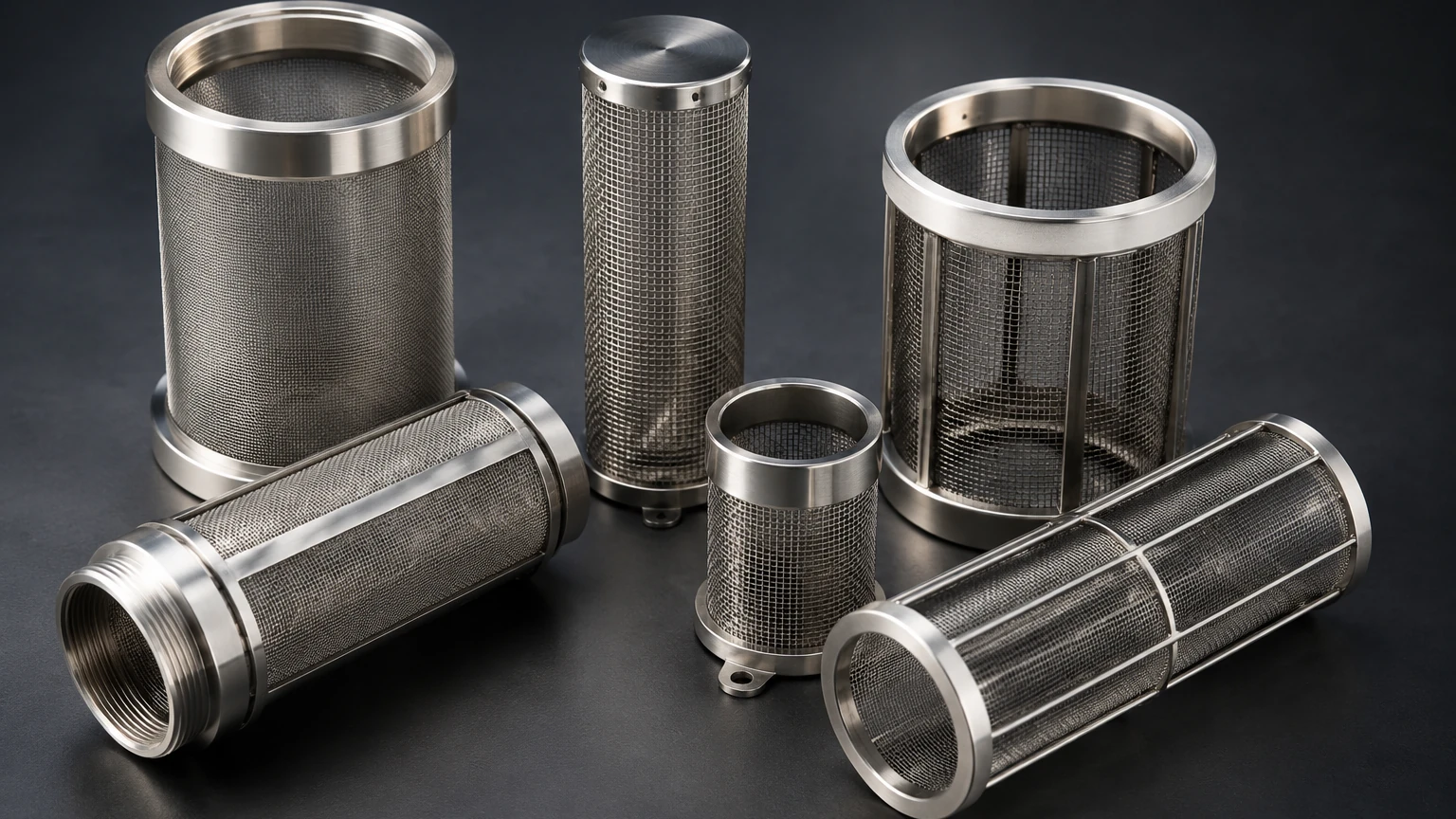
For applications requiring fine filtration—such as protecting high-pressure multi-stage pumps—a multi-layer woven wire mesh screen may be used. These screens can achieve much finer micron ratings. To ensure structural integrity, the fine mesh is often sintered or supported by a heavier perforated metal core. This combination provides the precision of fine mesh with the collapse resistance required for deep-submergence applications.
Customization and OEM Integration
Off-the-shelf filtration products rarely meet the specific needs of complex industrial systems. Every pump model has unique intake dimensions, flow requirements, and mounting configurations. Customization is a core aspect of the solutions provided by Kaifil.
Tailored Dimensions and Mounting
A submersible pump screen must fit securely to the pump intake to prevent "bypass," where unfiltered fluid enters through gaps. Custom manufacturing allows for the integration of specific flange types, threaded connections, or clip-on mechanisms that match the pump manufacturer's specifications. This ensures a leak-proof seal and simplifies the installation process for field technicians.
Optimized Filtration Ratings
Not all applications require the same level of filtration. A screen designed for a wastewater pump might have 5mm openings, whereas a screen for a high-speed centrifugal pump in a water treatment plant might require 500-micron protection. By customizing the slot width or mesh size, engineers can optimize the balance between protection and maintenance frequency.
Maintenance, Cleaning, and Total Cost of Ownership
While the initial purchase price of a submersible pump screen is a factor, the total cost of ownership (TCO) is driven by maintenance requirements and the lifespan of the pump it protects. A screen that clogs frequently requires expensive downtime for cleaning or replacement.
Self-Cleaning Properties
As mentioned, wedge wire designs offer superior self-cleaning properties due to their geometry. In some advanced systems, screens can be equipped with air-burst or backwash systems that use pressurized air or water to clear the screen surface without removing the pump from the water. This is a vital feature for remote or deep-well installations where manual cleaning is logistically difficult.
Replacement Cycles
The lifespan of a screen depends on the flow velocity, the abrasiveness of the solids, and the chemical environment. High-quality stainless steel screens from professional manufacturers typically last several years. However, regular inspection is recommended to check for mechanical impact damage or signs of scaling. In many industrial settings, it is more cost-effective to replace a screen during scheduled maintenance than to risk the catastrophic failure of the pump unit.
Selection Criteria for Engineering and Purchasing Teams
When specifying a submersible pump screen for a project, technical teams should evaluate the following criteria to ensure optimal performance:
1. Flow Rate and Velocity: Ensure the screen's total open area is sufficient to keep the intake velocity low, reducing the risk of drawing in heavy debris and minimizing pressure drop.
2. Solids Loading: Analyze the type and concentration of solids in the fluid. High solids loading may require a larger screen surface area to extend the time between cleanings.
3. Structural Integrity: For deep-submergence or high-suction applications, the screen must be designed to resist collapse. This often involves adding internal support rings or using thicker gauge materials.
4. Chemical Compatibility: Confirm that the stainless steel grade (304, 316L, etc.) is appropriate for the fluid's pH levels and temperature.
5. Regulatory Compliance: In industries like food and beverage or pharmaceuticals, the screen must meet specific sanitary standards regarding surface finish and weld quality.
Conclusion
The submersible pump screen is a small but vital component in the industrial fluid handling chain. By preventing debris from entering the pump, these screens safeguard expensive machinery, reduce energy consumption, and prevent unplanned downtime. Whether through the non-clogging advantages of wedge wire or the robust protection of perforated stainless steel, selecting the right screen requires a deep understanding of hydraulic principles and material science.
Kaifil provides the technical expertise and manufacturing precision necessary to deliver customized filtration solutions for the most demanding industrial applications. By focusing on durability and performance, we help engineers ensure their pumping systems operate at peak efficiency. For more information on our custom stainless steel filter cartridges and industrial mesh solutions, please visit our Main Page.
By partnering with a manufacturer that understands the nuances of OEM requirements and industrial filtration, purchasing teams can secure components that offer long-term reliability and a lower total cost of ownership. When the protection of a high-value submersible pump is at stake, the quality of the intake screen is never a detail to be overlooked.
