


Titanium Felt
In the landscape of high-performance industrial materials, titanium felt stands as a specialized porous medium designed for environments where standard stainless steel or polymer-based filters fail. As industries push toward higher efficiencies in hydrogen production, chemical processing, and aerospace engineering, the demand for materials that combine extreme corrosion resistance with high permeability has grown. Titanium felt, produced through a sophisticated sintering process of micron-sized titanium fibers, provides a three-dimensional network structure that offers unique advantages in both filtration and electrochemical applications.
For engineers and procurement professionals, understanding the technical nuances of titanium felt is essential for optimizing system performance and ensuring long-term reliability. This guide examines the structural characteristics, application-specific benefits, and critical selection criteria for this advanced material.
The Fundamentals of Sintered Titanium Fiber Felt
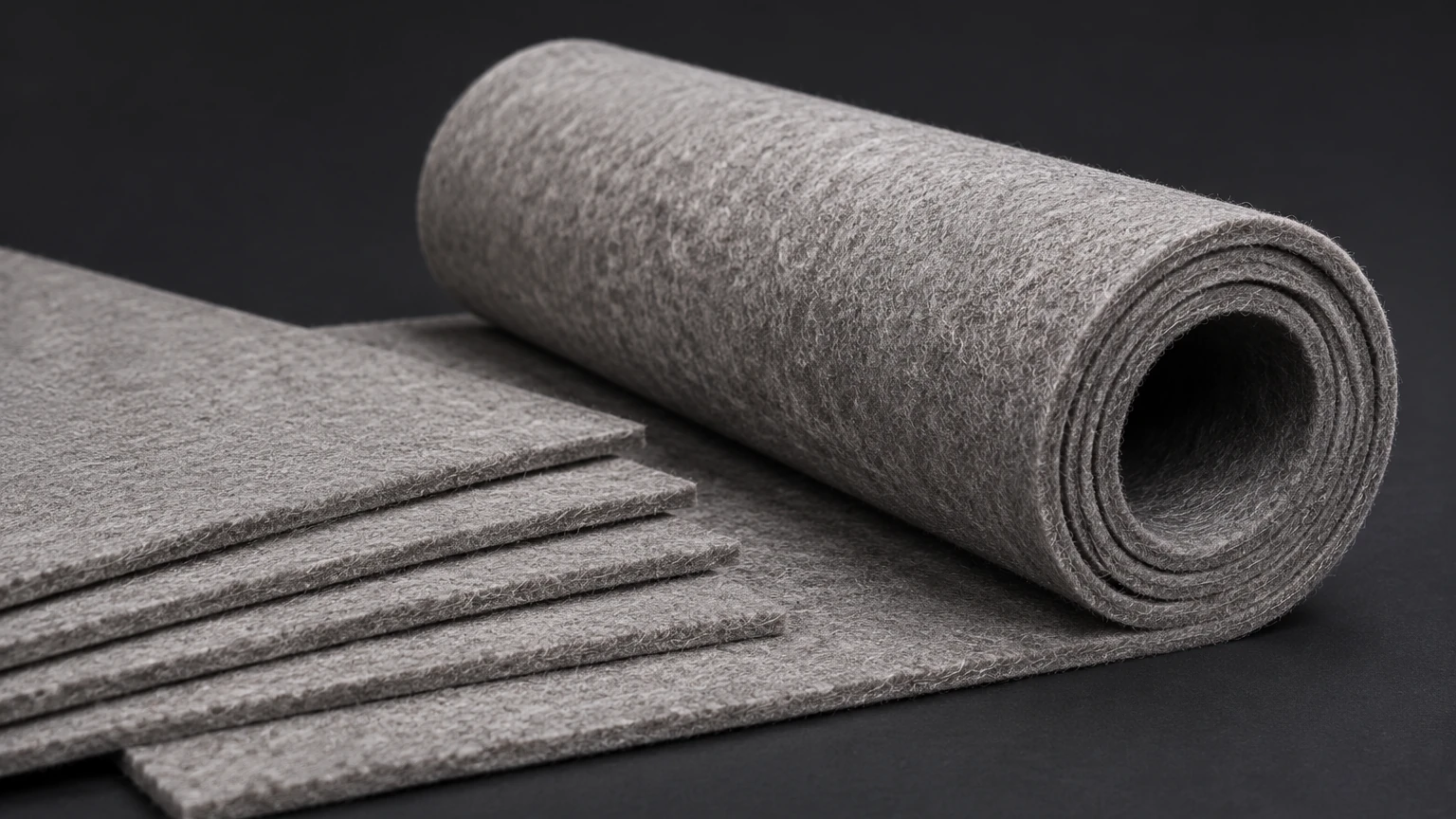
Titanium felt is not a woven product; rather, it is a non-woven porous material composed of titanium fibers that are randomly laid and then bonded through high-temperature vacuum sintering. This process creates a rigid, integrated structure where the fibers are fused at their contact points. Unlike powder-sintered plates, which can be heavy and have limited porosity, fiber-based felt offers a significantly higher void volume, typically ranging from 60% to 80%.
The manufacturing starts with the production of fine titanium fibers, often through a mechanical drawing or melt-spinning process. These fibers, which can have diameters as small as 10 to 100 micrometers, are layered to a specific thickness and density. The subsequent sintering stage is critical; it must be performed under high vacuum to prevent the titanium from reacting with oxygen or nitrogen, which would embrittle the material. The result is a metallic felt that retains the inherent ductility and corrosion resistance of pure titanium while providing a complex, tortuous path for fluid or gas flow.
Material Properties and Engineering Advantages
The primary reason engineers specify titanium felt over other porous media is its unique combination of physical and chemical properties. These characteristics make it a "problem-solver" material in demanding industrial circuits.
Exceptional Corrosion Resistance
Titanium naturally forms a stable, protective oxide layer (TiO2) when exposed to oxygen. This layer makes titanium felt nearly inert in many aggressive environments, including seawater, wet chlorine, and various acidic solutions where stainless steel would suffer from pitting or stress corrosion cracking. This is particularly vital in electrochemical cells where the material is subjected to high oxidative potentials.
High Porosity and Low Pressure Drop
Because the structure is composed of thin fibers rather than spherical powders, titanium felt achieves much higher porosity for the same filtration rating. This high voidage translates to lower resistance to fluid flow, which reduces energy consumption in pumping systems. Furthermore, the three-dimensional structure provides a higher dirt-holding capacity compared to two-dimensional mesh, extending the intervals between cleaning or replacement.
Thermal and Mechanical Stability
Titanium maintains its mechanical integrity at temperatures far exceeding those of most polymers. While it is lighter than steel, its strength-to-weight ratio is superior. Sintered titanium felt can withstand significant pressure differentials and thermal cycling without shedding fibers or deforming, ensuring the purity of the filtrate and the stability of the system.
Critical Role in Hydrogen Energy: PEM Electrolyzers
One of the most significant modern applications for titanium felt is in the field of green hydrogen production, specifically within Proton Exchange Membrane (PEM) electrolyzers. In these systems, titanium felt serves as the Liquid/Gas Diffusion Layer (LGDL) on the anode side.
In a PEM electrolyzer, the anode environment is highly corrosive due to the presence of oxygen, water, and acidic conditions at high electrical potentials. Carbon-based diffusion layers, commonly used in fuel cells, would rapidly oxidize and fail in this setting. Titanium felt provides the necessary electrical conductivity to facilitate the reaction while resisting oxidation. Its high porosity allows for the efficient transport of water to the catalyst layer and the rapid removal of generated oxygen bubbles. Engineers often specify platinum or iridium coatings on the titanium felt to further reduce contact resistance and enhance long-term stability in these high-stakes energy applications.
Industrial Filtration in Corrosive Environments
Beyond the energy sector, titanium felt is a staple in the chemical and pharmaceutical industries. Its use is often dictated by the chemical compatibility of the process fluid. For instance, in the filtration of strong oxidizing acids or high-purity chemicals, titanium felt ensures that no metallic ions leach into the product, preserving the integrity of the batch.
In the pharmaceutical industry, the ability to withstand rigorous cleaning protocols—including Steam-in-Place (SIP) and Clean-in-Place (CIP) cycles—is paramount. Titanium felt’s resistance to thermal shock and chemical attack allows it to be reused over many cycles, offering a lower total cost of ownership compared to disposable polymer filters, despite the higher initial material cost. For more information on how these materials fit into broader filtration systems, you can visit the Main Page to review product options and application support.
Technical Selection and Evaluation Criteria
Selecting the correct grade of titanium felt requires a balance between filtration efficiency, mechanical strength, and flow requirements. Engineers should evaluate the following parameters during the design phase:
1. Fiber Diameter: Thinner fibers create smaller pores and a higher surface area but may result in a more delicate felt. Typical industrial fibers range from 20μm to 80μm.
2. Porosity: Most applications require a porosity between 60% and 80%. Higher porosity improves flow but reduces the mechanical support for the membrane or catalyst layer.
3. Mean Pore Size: This determines the filtration rating. Unlike absolute ratings in membranes, felt ratings are often expressed as a range based on the distribution of the fiber network.
4. Thickness: Standard thicknesses range from 0.2mm to 1.0mm. In PEM applications, thinner felts are preferred to reduce the stack size and ohmic resistance, provided they can still manage gas/liquid transport effectively.
5. Surface Smoothness: For applications where the felt is in direct contact with a delicate membrane, a "smooth side" or a secondary calendering process may be necessary to prevent fiber penetration into the membrane.
Operational Lifespan and Maintenance Considerations
While titanium felt is highly durable, its lifespan is influenced by the operating conditions and maintenance practices. In filtration applications, the primary failure mode is irreversible fouling. While titanium felt can be cleaned using ultrasonic baths, backwashing, or chemical solvents, certain types of scaling or deep-seated particulate matter may eventually restrict flow beyond acceptable limits.
In electrochemical applications, the degradation of surface coatings (like platinum) is often the limiting factor rather than the titanium structure itself. Monitoring the voltage drop across the cell can provide early warnings of increased contact resistance. It is critical to ensure that the titanium felt is not exposed to hydrofluoric acid or very concentrated hot reducing acids, as these can strip the protective oxide layer and lead to rapid material thinning.
Collaborative Customization for Industrial Applications
Because every industrial process has unique requirements regarding flow rates, chemical exposure, and mechanical housing, off-the-shelf solutions are rarely sufficient for high-end applications. Customization of titanium felt involves adjusting the sintering density, fiber orientation, and even the alloy composition (though Grade 1 or Grade 2 pure titanium is most common).
Working with a manufacturer like Kaifil allows engineering teams to specify exact dimensions and performance tolerances. Whether the requirement is for a specific disc diameter for a laboratory-scale electrolyzer or large-format sheets for industrial chemical processing, precision in manufacturing ensures that the porous structure remains uniform across the entire surface area. This uniformity is vital for preventing "hot spots" in electrochemical cells or bypass lanes in filtration units.
When evaluating a supplier for titanium felt, it is important to confirm their testing capabilities, such as bubble point testing for pore size verification and permeability testing to validate flow characteristics. These data points provide the factual basis for performance guarantees in the field.
In conclusion, titanium felt represents a pinnacle of porous metal technology, offering a robust solution for the most challenging industrial environments. By leveraging its high porosity, chemical inertness, and structural integrity, engineers can design systems that are more efficient, longer-lasting, and capable of operating under conditions that would compromise traditional materials.
