


Tubular Backwash Filters
In industrial liquid processing, maintaining continuous flow while managing suspended solids is a critical engineering challenge. Tubular backwash filters have emerged as a primary solution for applications requiring high-efficiency filtration without the downtime associated with manual cleaning or the waste generated by disposable cartridges. These systems are designed to provide a self-cleaning mechanism that ensures operational continuity, making them indispensable in sectors such as chemical processing, water treatment, and food production.
As a specialized manufacturer of stainless steel filtration solutions, Kaifil provides the technical foundation for these systems, focusing on the precision engineering of the internal filter elements. Understanding the mechanics, material requirements, and selection criteria for tubular backwash filters is essential for engineers and procurement teams looking to optimize their filtration processes.
The Engineering Principles of Tubular Backwash Filtration
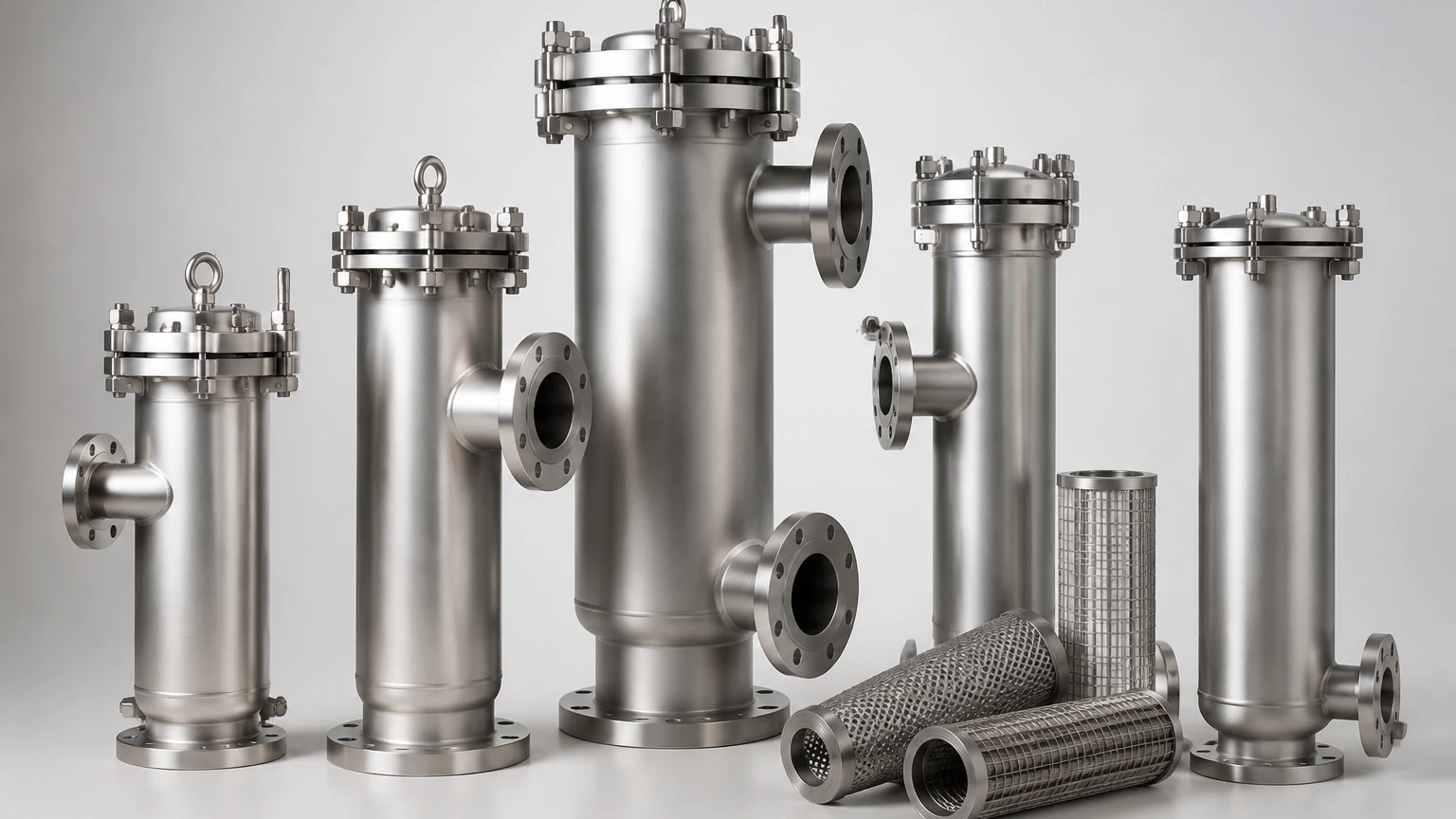
Tubular backwash filters operate on the principle of pressure differential. The system typically consists of one or more cylindrical filter elements housed within a pressure vessel. During the standard filtration cycle, the process fluid enters the housing and passes through the filter media. Contaminants are retained on the surface or within the structure of the filter element, while the clarified liquid exits the system.
The Filtration Cycle
Most tubular systems utilize an "outside-in" or "inside-out" flow pattern, depending on the specific design and particle characteristics. In an inside-out configuration, solids collect on the internal surface of the tube. This design is often preferred for backwashing efficiency, as the concentrated waste can be easily flushed out of the center of the element.
The Backwash Mechanism
As solids accumulate, the flow resistance increases, leading to a rise in differential pressure (dP). Once a pre-set dP threshold is reached—or a specific time interval has elapsed—the backwash cycle is triggered. In a multi-tube system, the control logic isolates a single tube (or a group of tubes) from the main flow. A portion of the clean filtrate, or an external cleaning fluid, is forced in the reverse direction through the filter media. This reverse flow dislodges the accumulated "filter cake" and flushes it out through a dedicated drain valve. Because only one section is cleaned at a time, the rest of the system continues to provide filtered fluid to the downstream process, ensuring zero downtime.
Core Components and Material Selection
The performance of tubular backwash filters is heavily dependent on the construction of the filter elements. Given the mechanical stresses involved in high-pressure back-pulsing, the materials must exhibit high fatigue resistance and structural integrity.
Stainless Steel Filter Media
Stainless steel is the industry standard for tubular backwash elements due to its corrosion resistance and mechanical strength. Common grades include:
* 304 Stainless Steel: Suitable for general industrial water and non-corrosive chemical applications.
* 316L Stainless Steel: The preferred choice for pharmaceutical, food and beverage, and highly corrosive chemical environments due to its superior resistance to pitting and crevice corrosion.
Filter Element Structures
There are several types of metal media used within these filters:
1. Wedge Wire: Constructed from V-shaped profiles welded onto support rods. Wedge wire is exceptionally robust and provides a smooth surface that is easy to clean, making it ideal for fibrous or sticky contaminants.
2. Sintered Wire Mesh: Multiple layers of stainless steel wire mesh are sintered together to create a porous, stable structure. This provides high filtration accuracy (down to sub-micron levels) while maintaining the strength required for backwashing.
3. Perforated Metal: Often used as a support layer for finer mesh, providing the necessary rigidity to prevent the media from collapsing under high differential pressure.
Technical Specifications and Performance Criteria
When evaluating tubular backwash filters, engineers must look beyond simple flow rates. Several technical parameters dictate the long-term success of the installation.
Filtration Accuracy (Micron Rating)
Tubular backwash filters can be engineered for a wide range of particle sizes, typically ranging from 10 microns to 1,000 microns. The choice of micron rating must balance the required fluid purity with the frequency of the backwash cycle. Finer filtration results in faster cake buildup and more frequent cleaning cycles.
Flow Rate and Velocity
The system must be sized to handle the peak flow requirements of the facility. High fluid velocity can cause impingement erosion on the filter media, while excessively low velocity may not provide enough force to keep particles in suspension until they reach the filter surface. Proper manifold design is crucial for ensuring even flow distribution across all tubes in a multi-element system.
Operating Temperature and Pressure
Unlike plastic or fabric-based filters, stainless steel tubular systems can operate in extreme environments. They are frequently rated for temperatures exceeding 200°C and pressures up to 50 bar, depending on the housing and seal specifications. This makes them suitable for steam-jacketed processes and high-pressure hydraulic circuits.
Industry-Specific Applications
The versatility of tubular backwash filters allows them to be adapted for various demanding industrial roles.
Chemical and Petrochemical Processing
In chemical plants, these filters protect downstream equipment like heat exchangers and reactors from particulate contamination. Their ability to handle aggressive solvents and high temperatures without media degradation is a primary advantage. Furthermore, the automated cleaning reduces operator exposure to potentially hazardous chemicals.
Food and Beverage Production
For the food industry, hygiene is paramount. Stainless steel tubular filters with high-polish finishes prevent bacterial growth and allow for effective Clean-in-Place (CIP) procedures. They are commonly used for filtering process water, syrups, and oils.
Water Treatment and Desalination
Tubular backwash filters serve as effective pre-filtration units for Reverse Osmosis (RO) membranes. By removing larger suspended solids and organic matter, they extend the life of expensive membranes and reduce the overall maintenance costs of the water treatment facility.
Maintenance, Service Life, and Total Cost of Ownership
One of the most compelling arguments for adopting tubular backwash filters is the reduction in Total Cost of Ownership (TCO). While the initial capital expenditure (CAPEX) is higher than that of bag or cartridge filters, the operational expenses (OPEX) are significantly lower.
Elimination of Consumables
Traditional filtration relies on the constant purchase, storage, and disposal of filter cartridges or bags. Tubular backwash systems utilize permanent stainless steel elements that can last for years. This not only saves money but also aligns with corporate sustainability goals by reducing industrial waste.
Labor Savings
Manual filter changes require labor and often necessitate a process shutdown. The automated nature of backwash filters allows maintenance personnel to focus on higher-value tasks. Routine maintenance is generally limited to periodic inspections of seals, valves, and the control system.
Replacement Cycles
The service life of a stainless steel filter element depends on the abrasiveness of the contaminants and the frequency of the backwash cycles. In many applications, a well-maintained Kaifil filter element can provide reliable service for 5 to 10 years before requiring replacement or deep ultrasonic cleaning.
Customization and Engineering Support
Every industrial process has unique variables, from fluid viscosity to particle morphology. Off-the-shelf filtration solutions often fall short in specialized environments. Customization is where engineering expertise becomes vital.
Kaifil works closely with global customers to develop tailored filtration components. This includes adjusting the length and diameter of the filter tubes, selecting specialized alloys for extreme corrosion resistance, and designing custom mesh configurations to target specific particle distributions. For engineers, confirming the compatibility of the filter media with the chemical composition of the process fluid is the first step in a successful procurement process.
When designing a system, it is important to consider the "backwash fluid source." Some systems use the filtered product itself, while others may require an external source of clean water or compressed air to assist in the cleaning process. These decisions impact the overall system footprint and piping complexity.
Conclusion
Tubular backwash filters represent a sophisticated intersection of mechanical engineering and process automation. By providing a continuous, self-cleaning solution, they solve the inherent inefficiencies of traditional batch filtration. For industries where uptime is the most critical metric, the transition to automated stainless steel filtration is a strategic investment that pays dividends in reduced waste, lower labor costs, and consistent product quality.
For technical professionals seeking to specify or source high-performance filter components, reviewing detailed product specifications and manufacturing capabilities is essential. To explore the full range of custom stainless steel filtration solutions, including wire mesh and precision filter cartridges, visit the Kaifil Main Page. By focusing on quality materials and precise filtration accuracy, Kaifil supports the most demanding industrial applications worldwide.
