


V Bank Air Filter
In the landscape of industrial air filtration, the V bank air filter represents a significant engineering evolution over traditional flat-panel or standard box filters. Designed to handle high airflow volumes while maintaining low resistance, these filters are critical components in HVAC systems, cleanrooms, and industrial intake systems. For engineers and facility managers, understanding the technical nuances of the v bank air filter is essential for optimizing system performance, reducing energy consumption, and ensuring the longevity of downstream equipment.
As industrial processes become more stringent regarding air purity—particularly in sectors like pharmaceutical manufacturing, semiconductor fabrication, and food processing—the demand for high-capacity filtration solutions has grown. The V-bank design addresses these needs by maximizing the effective media area within a compact frame, providing a balance between filtration efficiency and operational economy.
Understanding the V-Bank Configuration in Industrial Filtration
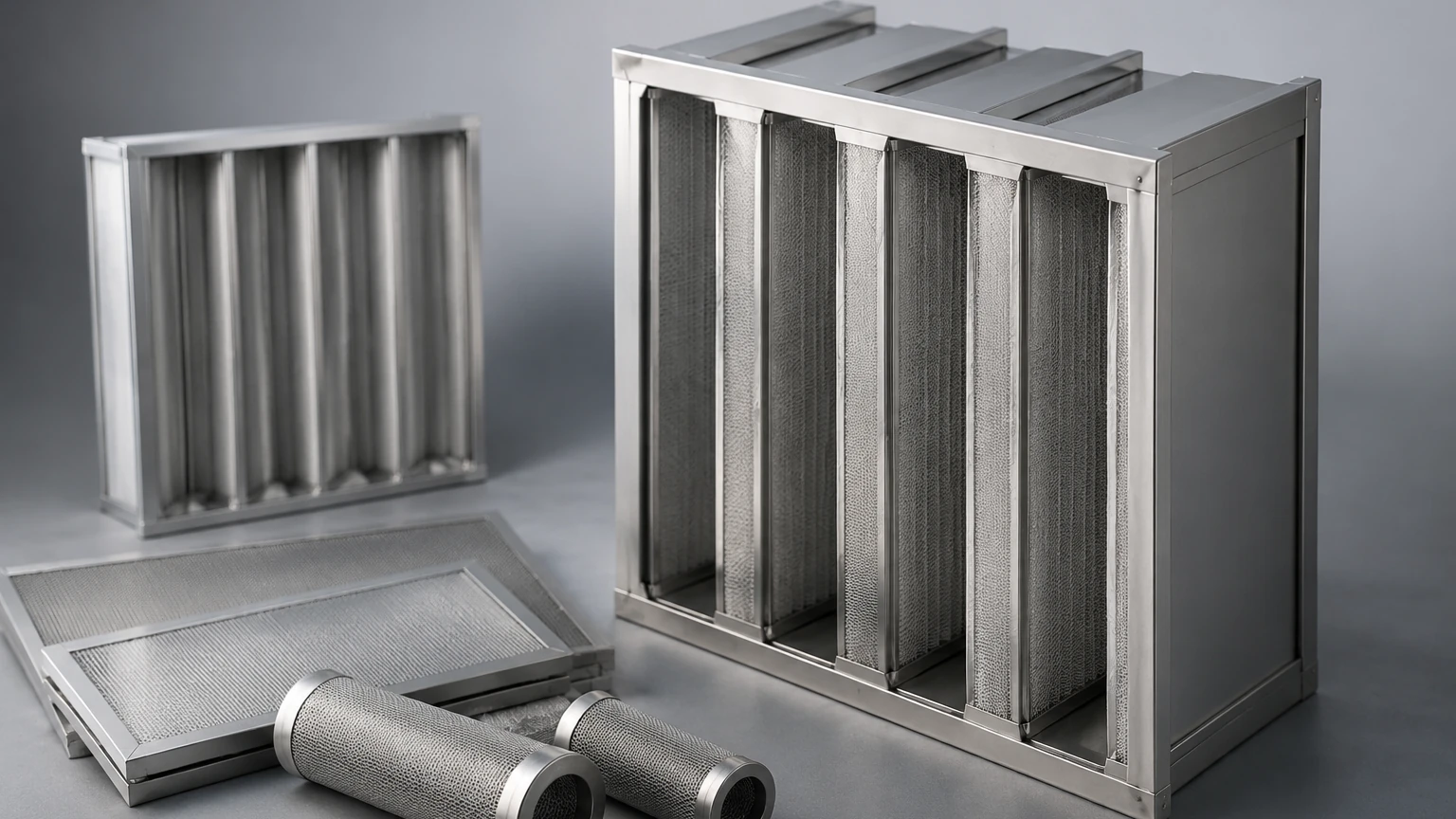
The fundamental advantage of a v bank air filter lies in its geometry. Unlike a standard pleated filter where the media is arranged in a single plane, a V-bank filter consists of multiple pleated media packs arranged in a series of "V" shapes (typically 2 to 5 Vs) within a rigid header frame.
This configuration significantly increases the surface area of the filtration media. In a standard 24x24x12 inch footprint, a V-bank filter can offer up to 200 square feet of media, which is substantially more than a traditional deep-pleat box filter. This increased surface area is the primary driver behind the filter's high dust-holding capacity and low initial pressure drop. By spreading the incoming air across a larger surface, the "media velocity" (the speed at which air passes through the actual filter material) is reduced, even if the "face velocity" (the speed of air entering the filter frame) remains high. Lower media velocity is directly correlated with higher filtration efficiency and lower mechanical stress on the fibers.
Technical Specifications and Material Composition
When specifying a v bank air filter for industrial applications, engineers must evaluate the materials used in both the media and the frame to ensure compatibility with the operating environment.
Filtration Media
Most high-performance V-bank filters utilize micro-glass fiber paper or synthetic polymer media. Micro-glass is preferred for HEPA-level efficiency due to its consistent pore structure and resistance to moisture. Synthetic media, on the other hand, is often chosen for its durability and resistance to mechanical damage during handling. The media is typically mini-pleated, with thermoplastic glue-bead separators ensuring uniform pleat spacing. This uniformity is vital for preventing "pleat bunching," which can cause localized high-velocity zones and premature filter failure.
Frame Construction
The frame, or header, must provide structural rigidity to prevent bypassing and to withstand the static pressure of the system. Common materials include:
* ABS Plastic: Lightweight, corrosion-resistant, and fully incinerable, making it ideal for facilities with strict waste management protocols.
* Galvanized Steel: Provides high structural strength for high-pressure systems or large-scale air handling units (AHUs).
* Stainless Steel: Utilized in highly corrosive environments or where stringent hygiene standards are required, such as in chemical processing or offshore applications.
For specialized industrial environments requiring extreme durability, consulting with manufacturers who specialize in metal filtration components, such as those found on the Main Page, can help engineers identify the best material pairings for custom housings and pre-filtration stages.
Aerodynamics and the Advantage of Lower Pressure Drop
Pressure drop (resistance) is a critical metric in fan energy consumption. The V-bank design is engineered to minimize this resistance. In a typical HVAC system, the air filter can account for a significant portion of the total system static pressure.
Because the v bank air filter provides a larger surface area, the initial pressure drop is lower than that of a standard pleated filter of the same efficiency rating. For example, a MERV 14 V-bank filter might have an initial resistance of 0.25 to 0.35 inches water gauge (w.g.) at a nominal airflow of 2000 CFM. A comparable box filter might start at 0.50 inches w.g. or higher.
This lower resistance allows the system's supply fan to operate at lower speeds, leading to substantial energy savings over the filter's lifespan. Furthermore, the rate at which pressure drop increases as the filter loads with dust is much slower in a V-bank configuration. This results in longer service intervals and reduced labor costs associated with filter changes.
Efficiency Standards: From MERV to HEPA/ULPA
V-bank filters are available across a wide spectrum of efficiency ratings, allowing them to serve as either primary filters or pre-filters for even more sensitive stages.
1. Fine Dust Filtration (MERV 11-16 / ePM1): Often used as the final stage in general commercial buildings or as pre-filtration in cleanrooms. These filters effectively capture particles in the 0.3 to 10.0-micron range.
2. HEPA Filtration (E10 to H14): V-bank HEPA filters are essential for environments requiring 99.97% to 99.99% efficiency at 0.3 microns. The V-bank HEPA is particularly valued because it can handle much higher airflows (up to 2000-2400 CFM for a 24x24x12 unit) compared to traditional "standard capacity" HEPAs which may be limited to 1000-1200 CFM.
3. Molecular Filtration: Some V-bank designs incorporate activated carbon or chemical media between the pleats to remove Volatile Organic Compounds (VOCs) and odors alongside particulate matter.
Engineers must ensure that the selected v bank air filter complies with international standards such as ISO 16890 or EN 1822 to guarantee performance in critical applications.
Engineering Considerations for System Integration
Integrating a v bank air filter into an existing or new industrial system requires careful consideration of several physical and mechanical factors:
Face Velocity and Airflow Capacity
Standard V-bank filters are designed for face velocities between 400 and 600 feet per minute (fpm). Exceeding the rated airflow can lead to a sharp increase in pressure drop and potential media migration or frame deformation. Engineers should size the filter bank to ensure that the system operates within the "sweet spot" of the filter's performance curve.
Gasket and Sealing Mechanisms
Even the highest efficiency filter is useless if air can bypass the frame. V-bank filters typically feature a header (flange) that slides into a holding frame or a side-access housing. Sealing options include:
* Dry Gaskets: EPDM or neoprene foam gaskets applied to the header to create a compression seal.
* Gel Seals: A specialized channel filled with silicone or polyurethane gel that mates with a knife-edge on the housing, providing a leak-free seal for HEPA applications.
Temperature and Humidity Constraints
Standard ABS-framed filters are usually rated for temperatures up to 70°C (158°F). If the application involves higher temperatures—such as in drying ovens or hot exhaust streams—metal-framed V-bank filters with high-temperature glass fiber media and specialized adhesives must be specified.
Maintenance, Lifecycle, and Total Cost of Ownership
In a B2B procurement context, the initial purchase price of a v bank air filter is only a small fraction of the Total Cost of Ownership (TCO). The TCO is comprised of the purchase price, energy costs, and disposal/maintenance costs.
Monitoring and Replacement
Filters should never be changed based on a calendar schedule alone. Instead, differential pressure gauges (manometers) should be used to monitor the pressure drop across the filter bank. The "final pressure drop"—the point at which the filter must be replaced—is typically defined by the system designer, often around 1.0 to 1.5 inches w.g. for fine dust filters.
Energy Impact
Because energy costs can account for up to 70% of the total cost of operating a filtration system, the lower average pressure drop of the V-bank design often makes it the most cost-effective choice over a 12-to-24-month period, despite a higher upfront cost compared to standard pleats.
Disposal
For facilities looking to minimize their environmental footprint, plastic-framed V-bank filters are often preferred because they can be completely incinerated, reducing the volume of waste sent to landfills compared to metal-framed alternatives.
Customization and Specialized Filtration Solutions
While the v bank air filter is a staple of air handling, many industrial processes require a hybrid approach to filtration. For instance, in chemical processing or heavy industrial manufacturing, the air intake may contain abrasive or corrosive particulates that would quickly degrade standard synthetic media.
In these scenarios, custom-engineered solutions are required. This might involve using stainless steel wire mesh pre-filters to capture large debris and moisture droplets before the air reaches the high-efficiency V-bank stage. Kaifil specializes in these types of precision metal components, providing the durability needed for the most demanding environments. By combining the high-capacity particulate removal of a v bank air filter with the robust protection of custom metal filtration, engineers can create a multi-stage system that maximizes both air purity and component lifespan.
When evaluating a filtration partner, it is important to look for manufacturers who understand the interplay between different filtration technologies. Whether you are designing a new cleanroom or upgrading an existing industrial HVAC system, reviewing the technical capabilities and product ranges available on the Main Page can provide the necessary context for selecting components that meet specific chemical compatibility and durability requirements.
Conclusion
The v bank air filter is an essential tool for modern industrial air management. Its ability to deliver high-efficiency filtration at high flow rates with minimal energy impact makes it a superior choice for a wide range of B2B applications. By focusing on technical specifications—such as media surface area, frame integrity, and pressure drop curves—engineers can ensure they select a filtration solution that provides the best balance of performance and value. As industrial standards continue to evolve, the V-bank design remains at the forefront of efficient, high-capacity air purification technology.
